

Weightlifting Plates for the snatch and clean & jerk: What Olympic lifters actually need
By Flexi Muscles — 29 September 2026 · 11 min read
Weightlifting plates are rubber bumper plates made to be dropped from overhead after a snatch or clean and jerk. Every full-size plate measures 450mm across, so the bar starts at the same height whether it holds 30kg or 130kg. For home training, buy black training bumpers, a pair of technique plates and a set of change plates. Skip calibrated competition plates unless you are entering meets.
Shop Strength Training Equipment at Flexi Muscles
This guide is for people doing the two Olympic lifts, or planning to learn them. If you squat, bench and deadlift and lower the bar under control, you want our guide to cast iron, bumper and Olympic weight plates instead. The plates are different, and so is the money.
What makes a plate a weightlifting plate
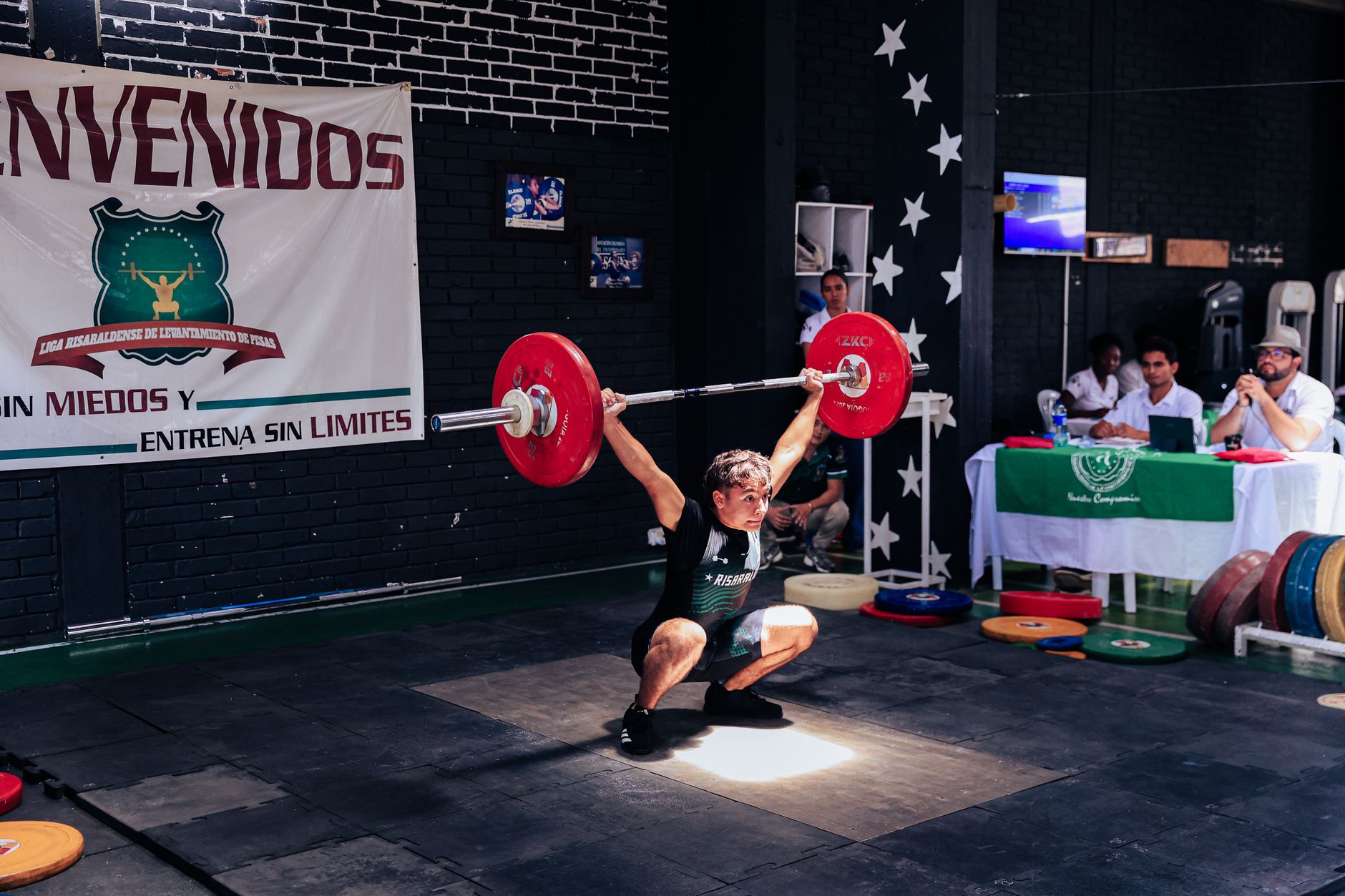
Three features separate weightlifting plates from general gym plates. They are built to be dropped, they share one diameter, and they fit a 50mm Olympic sleeve.
They are built to be dropped
A snatch finishes with the bar at arm's length overhead. Lowering 80kg back down to the floor under control is slow and hard on the shoulders and lower back, and in competition it is simply not done. Lifters drop the bar. Rubber plates absorb that impact so the barbell sleeves, the plates and the floor survive it. Cast iron plates would crack, and the bar would bend over time.
Every full-size plate is 450mm across
Cast iron plates get smaller as they get lighter. A 5kg iron plate is a fraction of the size of a 20kg one. Weightlifting plates keep the same 450mm outer diameter from 10kg upwards and change thickness instead. That puts the centre of the bar about 225mm off the floor every time. Your starting position for the pull stays identical from your warm-up set to your heaviest attempt, which is the whole point.
They fit a 50mm Olympic sleeve
Weightlifting plates use the 50mm hole found on every Olympic barbell. Men's bars weigh 20kg with a 28mm grip. Women's bars weigh 15kg with a 25mm grip and a shorter shaft. The plates fit both. If you are still choosing a bar, our barbell buying guide covers sleeve rotation, which matters far more for the Olympic lifts than for powerlifting.
Competition vs training olympic weightlifting plates
All olympic weightlifting plates are bumpers, but they come in two very different grades. The gap in price is large. The gap in what you feel under the bar is small.
| Feature | Competition plates | Training bumpers |
|---|---|---|
| Weight accuracy | Within +0.1% / -0.05% (about +20g / -10g on a 20kg plate) | Typically around ±1% (about ±200g on a 20kg plate) |
| Construction | Steel disc core with a thin rubber skin | Solid rubber with a steel or brass hub |
| Thickness | Thin, so more load fits on the sleeve | Thicker for the same weight |
| Colour | Full IWF colour code | Usually black, sometimes coloured |
| Bounce | Very low, the bar lands and stays | Low to moderate, depends on the rubber |
| Best for | Sanctioned meets, clubs that host competitions | Home gyms, garages, CrossFit boxes, daily training |
The thinner profile of competition plates is a real advantage, but only at the top end. Thin plates keep the load closer to the lifter's hands, so the bar whips less and feels more stable. You notice that at 150kg. You do not notice it at 60kg.
Here is our one strong view on this. Buying competition plates for a home gym is money spent on a number nobody is checking. A training bumper that is 1 per cent out is roughly 200g off on a 20kg plate. That is less than a full 500ml bottle of water. Your programme, your sleep and your technique will each move your lifts far more than 200g ever will.
Rubber gym plates compared: virgin, crumb and urethane
Not all rubber gym plates are the same rubber. What the plate is made of decides how it bounces, how it smells, how thick it is and how long it lasts.
Virgin rubber
New rubber, moulded into a dense plate. It is thinner than recycled options, bounces less and has little smell. Most mid-range training bumpers are virgin rubber. For a home lifter doing the snatch and clean and jerk several times a week, this is the sensible default.
Crumb (recycled) rubber
Ground-up tyres bonded together. Crumb plates are the cheapest bumper option and very tough. The trade-offs are a strong rubber smell for the first few weeks, a lot more bounce, and a much thicker plate. On a standard sleeve, thick crumb bumpers can run out of room before you run out of strength. Fine for a beginner. Less fine at 120kg.
Urethane
A harder, more durable polymer over a steel or iron core. Urethane plates resist chipping and scuffing, barely smell and last for years in commercial gyms. They also cost the most. Many urethane plates are not full bumpers, so check that the product is rated for drops before you assume it is.
What about cast iron and rubber-coated iron?
They are not weightlifting plates. Rubber-coated iron plates look similar, but the coating is thin and the plate diameter drops with the weight. They protect your floor from a careless set-down, not from an overhead drop. Keep them for squats and presses, and load them outside your bumpers if you ever need the extra weight on a pull.
The IWF colour code and change plates

The colours are not decoration. The International Weightlifting Federation (IWF) set them so that lifters, loaders and judges can read the bar from across a room. The small change plates repeat the same colour sequence at a tenth of the weight.
| Colour | Bumper plate | Change plate |
|---|---|---|
| Red | 25kg | 2.5kg |
| Blue | 20kg | 2kg |
| Yellow | 15kg | 1.5kg |
| Green | 10kg | 1kg |
| White | 5kg | 0.5kg |
Competition collars weigh 2.5kg each, so a men's bar with collars and no plates already weighs 25kg. Plates always load heaviest first, closest to the lifter, with the change plates on the outside. That order keeps the heavy discs doing the landing and stops the small metal plates taking the impact.
Change plates are usually steel or iron with a rubber coat. They are not made to be dropped by themselves. They sit outside a bumper, and the bumper does the work. You need them anyway. Olympic lifts go up in small jumps, and the difference between a 2kg and a 5kg increase on a snatch is often the difference between making the lift and missing it.
Technique plates: where beginners should start
This is the gap in almost every weightlifting plates guide. A beginner learning the snatch might need to work with 25kg to 35kg on the bar. A 20kg bar plus two 5kg bumpers gets you there, but standard 5kg bumpers are smaller than 450mm. The bar starts too low, and the lifter learns a pull from the wrong height.
Technique plates fix this. They are light, full-diameter plates, usually 2.5kg or 5kg, made from plastic or aluminium. They put an empty-ish bar at the same 225mm height as a loaded one. You learn the right start position from day one, and nothing about it changes when you add real weight.
Technique plates are not for dropping heavy. Drop them from the hip or overhead with a light bar only, and move to bumpers once you pass roughly 40kg. Coaches in clubs keep a pair around for years because every new lifter starts on them.
Life has its ups and downs. In weightlifting, the downs are what you pay for, so pay for the right ones.
A home set of lifting plates for the snatch and clean and jerk
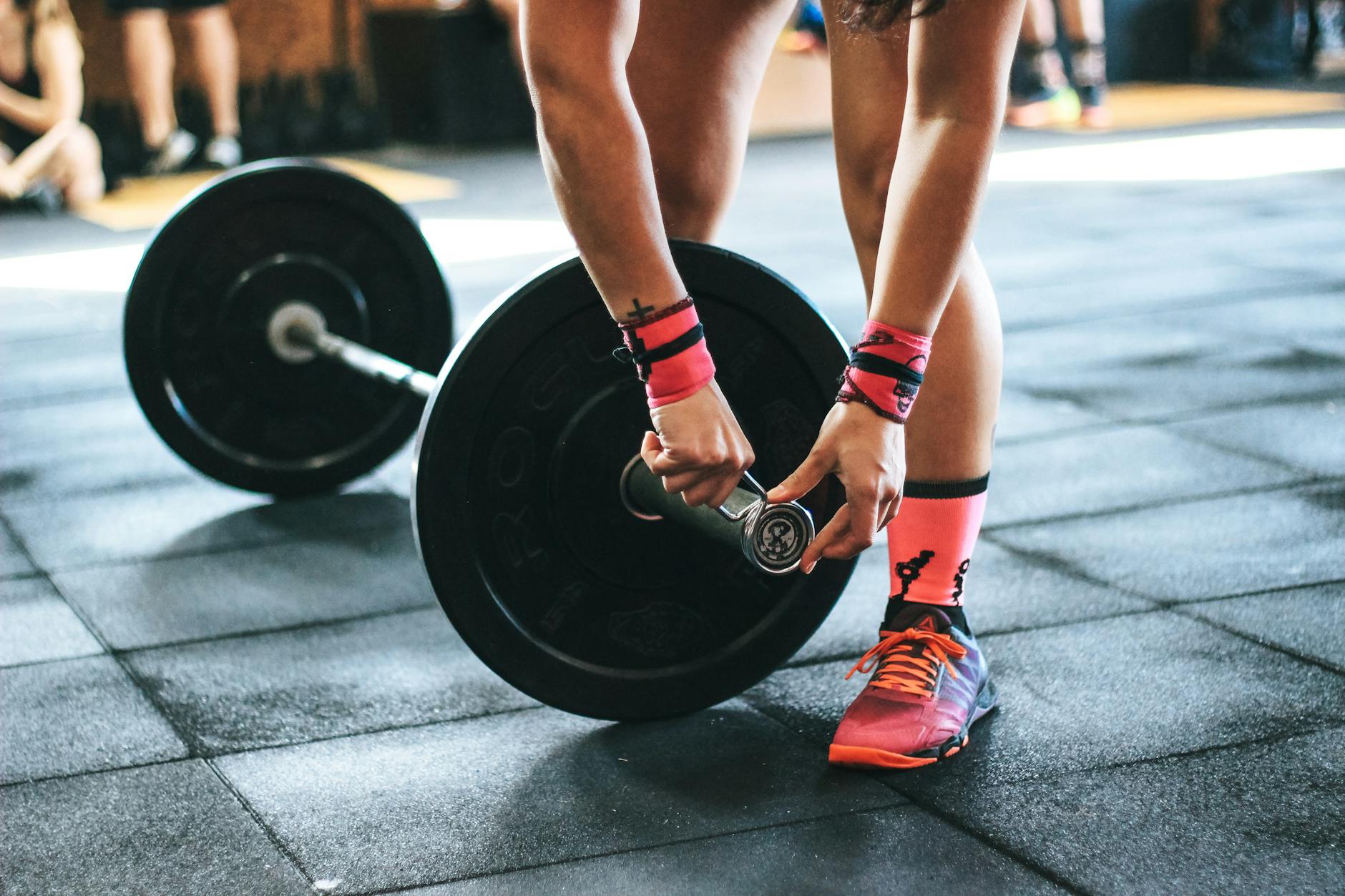
The set below is built for Olympic lifting specifically. It avoids thin 5kg bumpers, uses thicker training 10kg plates that can take a drop, and includes change plates for small jumps.
| Plate | Pairs | Why |
|---|---|---|
| 5kg technique plates | 1 | Correct bar height for light technique work |
| 10kg training bumpers | 1 | Lightest plate that can safely take drops, if it is a thick training plate |
| 15kg training bumpers | 1 | Fills the gap between 10kg and 20kg jumps |
| 20kg training bumpers | 1 | Your working plate for most sessions |
| Change plates, 0.5kg to 2.5kg | 1 set | Jumps of 1kg to 5kg on the bar |
With a 20kg bar and 2.5kg collars, this set runs from 30kg up to 130kg. For a 15kg women's bar, it runs from 25kg to 125kg. That covers the snatch and clean and jerk for most recreational lifters for a long time. When you outgrow it, add a pair of 25kg bumpers before anything else.
Two practical notes. Thin 10kg bumpers are the most common plate to fail. Dropped on their own, they flex at the hub, and repeated drops can bend or crack them. Either buy thick training 10kg plates or never drop 10kg without a heavier bumper on the bar. Second, plan your storage. A vertical plate tree keeps bumpers off the floor and stops them warping; our guide to weight trees for bumper plates covers the options.
The floor under your plates
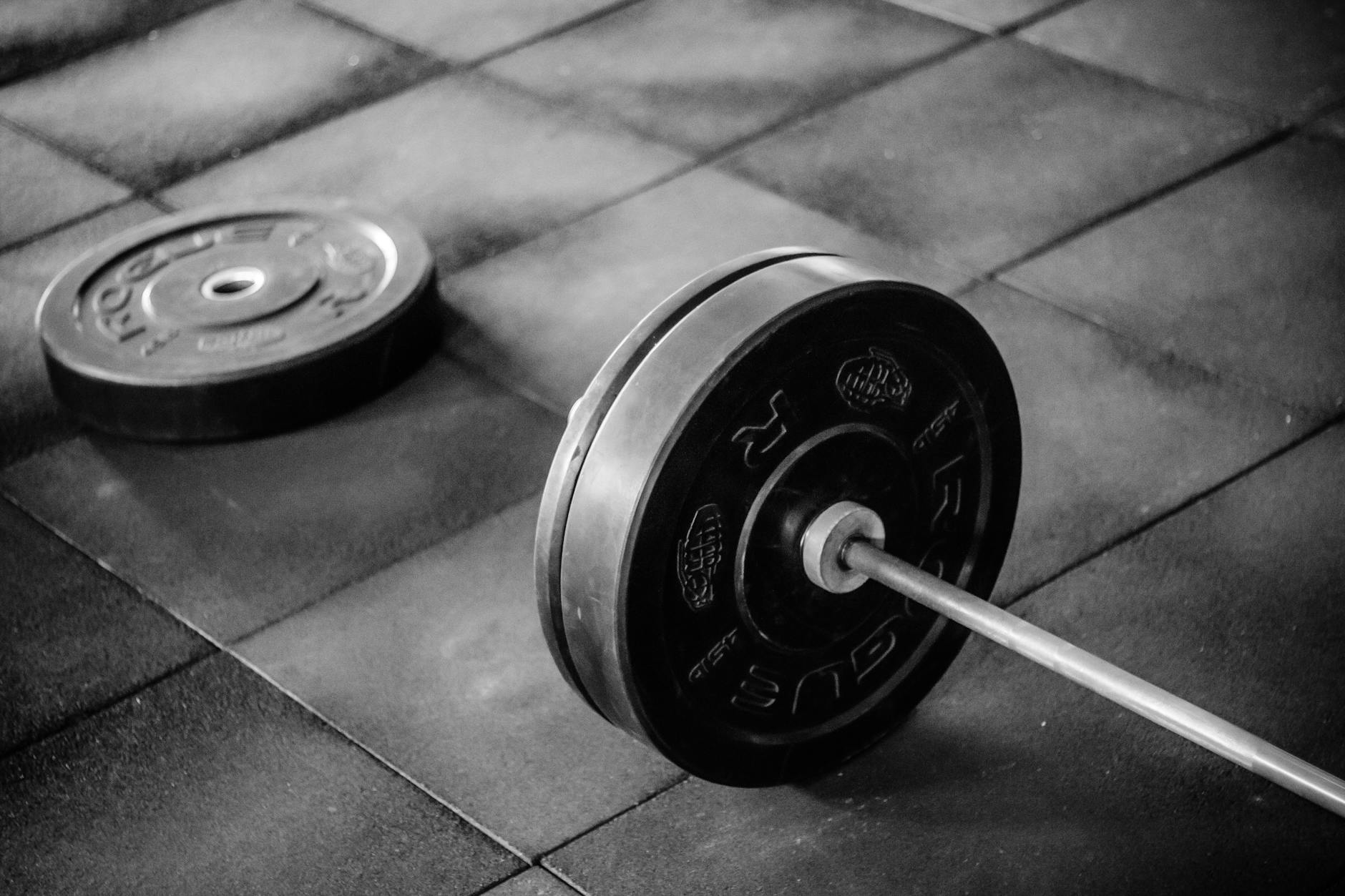
Bumper plates protect the bar and themselves. They do not protect the floor on their own. A loaded bar dropped from overhead onto bare concrete will chip the concrete and send a shock through the plates and the sleeves. On tiles, it will crack them.
- Garage or concrete slab: lay rubber tiles of 15mm or thicker over an area of roughly 2.4m by 2.4m. That gives you room to miss a lift forwards or backwards and still land on rubber.
- Lifting platform: a centre board of plywood or hardwood with rubber strips on each side where the plates land. The bar lands on rubber, and your feet stand on a firm, flat surface.
- Upper floors and suspended wooden floors: do not drop the bar. The noise and vibration travel through the building, and the structure is not designed for it.
Many South African home gyms are in garages or on patios with concrete slabs, which is the easiest setup to get right. Budget for the matting at the same time as the plates, not afterwards.
Weightlifting plates for sale: what to check before you buy
When you are comparing weightlifting plates for sale, the listing photos all look the same. These are the details that separate a plate that lasts from one that splits in a year.
- Hub material. Look for a steel or brass insert bonded into the rubber. A plate without a proper hub wears its centre hole oval and starts to rattle on the sleeve.
- Hole size. The inner hole should be 50mm or very slightly more. Too tight and loading becomes a fight. Too loose and plates slide and spin.
- Diameter. Full-size bumpers should be 450mm. Some budget plates are a few millimetres smaller, which changes your starting height.
- Thickness of the 10kg plate. Ask for it. It tells you whether the plate is built to be dropped alone.
- Stated tolerance. A seller who lists the tolerance is a seller who has checked it. A seller who does not is guessing.
- Rubber type and smell. Crumb rubber is cheaper but smells and bounces. If you train indoors, that matters.
- Weigh them. A kitchen scale is fine for change plates. A bathroom scale will show if a 20kg bumper is obviously out.
If you are buying second-hand weight lifting plates, check the hub first. Separation between the steel insert and the rubber is the most common failure, and it is hard to fix.
When you should not buy weightlifting plates
Plenty of people buy bumpers and never drop them once. If this sounds like you, spend the money elsewhere.
- You do not snatch or clean and jerk. If your programme is squats, bench, overhead press and controlled deadlifts, cast iron plates do the same job for less.
- You train in a rack. If the bar lives on the J-hooks and returns there after every set, you will never need a drop-rated plate.
- You have nowhere to drop. A flat, an upper floor or a spare bedroom with a wooden floor rules out Olympic lifting at home. Buy for what you can actually do there.
- You are mainly deadlifting heavy. Two bumpers on the inside for floor protection and cast iron on the outside is cheaper and fits more weight on the sleeve. Our home deadlift setup guide walks through that combination.
- You have not learned the lifts yet. Take a few coached sessions first. You will learn whether you enjoy the snatch before you buy the plates for it.
If you are doing the Olympic lifts, though, bumpers are not optional. They are the only plates designed for the way the lift ends.
Frequently asked questions
What is the difference between weightlifting plates and ordinary weight plates?
Weightlifting plates are rubber bumper plates made to be dropped from overhead after a snatch or clean and jerk. Every full-size plate is 450mm across, so the bar sits at the same height whatever the load. Ordinary cast iron plates change diameter with weight and are not built to be dropped.
Why are Olympic weightlifting plates different colours?
So lifters, loaders and judges can read the bar at a glance. Under the IWF standard, 25kg is red, 20kg is blue, 15kg is yellow, 10kg is green and 5kg is white. The small change plates repeat the pattern: 2.5kg red, 2kg blue, 1.5kg yellow, 1kg green and 0.5kg white.
Can you drop 10kg bumper plates on their own?
Not repeatedly. Thin 10kg and 5kg bumpers take the full impact without a heavier plate beside them, and they can bend or crack at the hub over time. If you train light, buy thicker training 10kg bumpers or technique plates, or add a 15kg or 20kg bumper before you start dropping the bar.
Are competition plates worth buying for a home gym?
For most people, no. Competition plates are calibrated to within 0.1 per cent of their stated weight. A training bumper around 1 per cent out is about 200g off on a 20kg plate. That gap only matters if you are lifting in a sanctioned meet.
What weightlifting plates should a beginner buy?
A pair of 5kg technique plates, one pair each of 10kg, 15kg and 20kg training bumpers, and a set of change plates from 0.5kg to 2.5kg. With a 20kg bar and 2.5kg collars, that takes you from 30kg up to 130kg in small jumps.
Do I need a platform to drop weightlifting plates at home?
You need at least thick rubber matting. Bumper plates protect the bar and the plates, not the floor underneath. On concrete, lay rubber tiles of 15mm or more over an area of roughly 2.4m by 2.4m. On a suspended wooden floor or an upper storey, do not drop the bar at all.
Related at Flexi Muscles
- Strength Training Equipment: barbells, plates and racks
- Lifting Accessories: straps, belts and wrist wraps
- Browse All Gym Equipment