

Deadlift Equipment for Home: What You Actually Need (and What You Don't)
By Flexi Muscles — 12 September 2026 · 10 min read
Deadlift equipment for home comes down to two things you cannot skip — a barbell and weight plates — and a short list of accessories that earn their place once those two are covered. A platform, collars, a belt, straps, and chalk all improve the experience, but none of them make the lift possible on their own. Most guides sell the platform first. It should be closer to fourth.
Shop Barbells, Plates & Strength Equipment at Flexi Muscles
Deadlift equipment for home: the two pieces you can't skip

A deadlift is a bar loaded with weight, lifted from the floor to standing. That's the whole movement, and the honest answer to what equipment do you need to deadlift is shorter than most buying guides make it sound: a barbell, and enough plates to load it. Nothing else is required to perform the lift itself.
An Olympic barbell is 2.2 metres long, weighs 20kg unloaded, and takes plates through a 50mm sleeve. That standardisation matters more than it sounds — it means a bar bought today still takes plates bought next year, and it's the same spec used in every commercial gym, so technique carries over directly. A shorter or non-standard bar saves a little space but starts limiting plate choice and loading options almost immediately.
Plates are the second half of the list, and here the choice is between cast iron and rubber-coated. Cast iron is cheaper per kilogram and takes up less shelf space for the same load. Rubber-coated plates protect flooring better and run quieter, which matters more in a home than it ever does in a commercial gym. Either works for building the lift from scratch; the honest answer is that most people should buy iron first and add rubber-coated plates later if noise or flooring becomes a real issue, not a hypothetical one.
Everything covered from here on — platform, collars, belt, straps, chalk — sits on top of these two items. Barbell and plates for deadlifting are the only genuinely required purchase; the rest of this page is optional until a specific need arises.
A deadlift platform for home gym use: when it actually earns its price

Most deadlift buying guides lead with the platform. It's the most expensive single item on the list, which makes it the easiest thing to sell, but it's rarely the first thing a home lifter actually needs.
A deadlift platform is optional under about 100kg on the bar, lifted with control rather than dropped. Above that, especially once the bar is coming down fast on the last rep of a set, an unprotected concrete or tiled floor takes real, cumulative damage — hairline cracks in tiles, dust and spalling on bare concrete, dented boards on a wooden floor. It's the plates that usually chip first, not the floor, but neither is cheap to replace.
A full plywood-and-rubber platform is the permanent fix and the most expensive one. A stack of interlocking rubber stall mats, roughly 2 metres by 1.5 metres, does most of the same job for a fraction of the cost and rolls up when the room needs to be a room again rather than a gym corner. For anyone lifting under 100kg, or lifting lighter and lowering the bar under control every rep, a single dense rubber mat under the bar's landing zone is often enough on its own.
The honest advice: buy plates and a barbell first, train on bare floor at whatever weight is comfortable, and add floor protection once the load or the noise actually demands it. Buying a platform on day one, before there's any weight on the bar heavy enough to need it, is spending on a problem that hasn't happened yet.
The accessories worth buying, and the order to buy them in
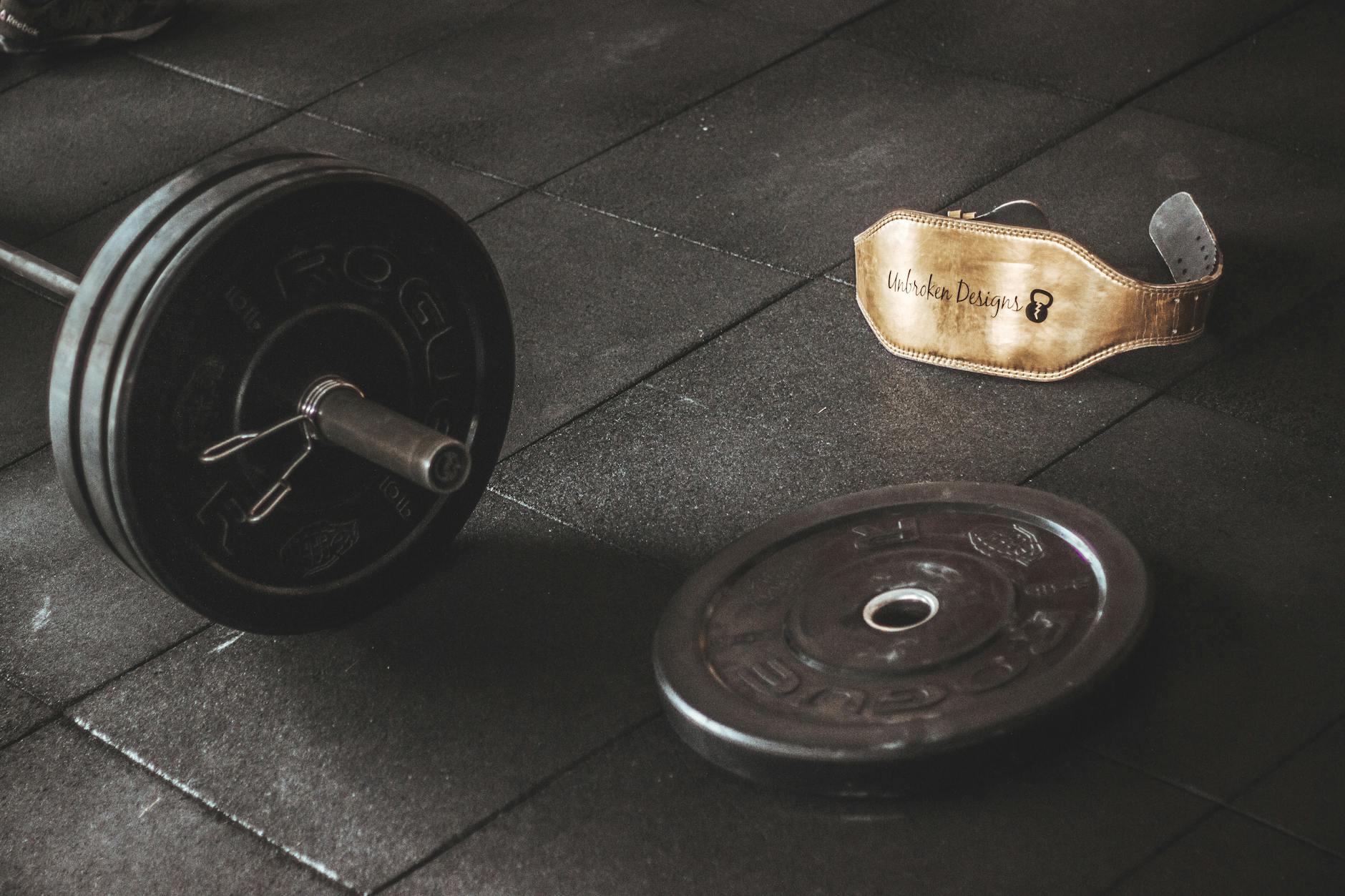
Once the bar, plates, and any needed floor protection are sorted, four accessories cover the rest of what a home deadlift setup can genuinely use. They're listed here in the order they're worth buying, not the order most shops list them in.
Barbell collars
Collars lock plates in place so they don't slide sideways mid-rep. They're inexpensive, they solve a real safety issue, and they should be the first accessory purchase after the bar and plates themselves — ahead of anything else on this list.
Chalk
Chalk dries sweat off the palms and keeps grip consistent as reps add up. It costs very little, lasts a long time, and directly prevents the bar rolling out of the hands on a heavy set, which is a more common failure point than most beginners expect.
Lifting straps
Straps take grip out of the equation on heavier pulls, letting the back and legs keep working after the hands would otherwise give out first. They're worth buying once grip is genuinely the limiting factor, not before — used too early, they slow down the grip strength that would otherwise develop on its own.
A lifting belt
A belt gives the core something to brace against, which helps at heavier loads once bracing technique is already solid. It's deliberately last on this list. Buying a belt before bracing technique is solid usually just papers over a technique gap that's better fixed without one, and a belt bought too early tends to sit in a cupboard rather than get used correctly.
A minimalist setup for beginners
The full list above is the complete picture, not a shopping cart everyone needs to fill on day one. A genuinely minimalist deadlift setup for beginners is three items: a barbell, a set of plates loaded to a comfortable starting weight, and a pair of barbell collars. That's enough to train the lift properly, safely, for months.
- Start here: Barbell, plates, collars. Covers the lift completely.
- Add once technique is consistent: Chalk, then a rubber mat if the floor or the noise needs it.
- Add once load genuinely demands it: Straps when grip becomes the limiting factor, a belt once bracing is solid, a full platform once the bar is regularly loaded past 100kg.
Buying everything on this page in one order on day one is the single most common overspend in home strength training. Most of it gets used eventually. Very little of it is needed on the first session.
How much space and ceiling height you actually need

A deadlift needs less floor space than most home gym equipment, which is part of why it's such a practical first lift to set up for. Roughly two metres by one and a half metres of clear floor is enough — space to stand with the bar, step back, and set it down without anything in the path.
Ceiling height matters more than most buyers expect going in. The lift finishes with the lifter standing fully upright, bar at hip height, arms straight. A low ceiling doesn't stop the lift itself, but it does rule out anything that adds height under the feet, and it's worth checking before assuming a garage or a room with exposed beams will work without a second thought.
Flooring type changes the calculation more than square metreage does. Concrete and tile transmit noise and vibration to anything below or beside the room; carpet over a wooden subfloor muffles sound but flexes under a dropped plate in a way that isn't good for the boards long-term. Neither rules out deadlifting at home. Both are reasons a rubber mat is one of the cheaper, more useful purchases on this list, well before a full platform becomes necessary.
Buying deadlift equipment in South Africa
A barbell and a stack of plates share one advantage that a lot of home gym equipment doesn't: none of it needs power. Load shedding doesn't touch a deadlift session the way it stops a treadmill or a powered cable machine mid-set.
Weight is the other local factor worth planning for. Plates are heavy, and shipping heavy steel any real distance costs more, in both money and time, than shipping almost anything else in a home gym. Buying a full plate set from a local supplier with stock on hand avoids both the freight cost and the wait that comes with importing something this heavy from overseas.
Humidity near the coast affects cast iron faster than most buyers expect, showing up as surface rust within months if plates are stored in a damp garage without a wipe-down after sweaty sessions. Rubber-coated plates sidestep this almost entirely, which is worth weighing against their higher price if the equipment is going to live somewhere humid rather than in a climate-controlled spare room.
When a home deadlift setup isn't the right call
None of the above means everyone should build a home deadlift setup, and it's worth being straight about who it doesn't suit.
- You're on an upper floor of an apartment building. Even with a mat, a dropped bar transmits impact through a suspended floor in a way that a ground-floor or garage setup doesn't. This is the one scenario where a home deadlift setup is a genuine neighbour problem, not just a noise preference.
- You can't commit to floor protection once load increases. Buying a barbell and plates without a plan for a mat or platform once the weight passes 100kg means a choice between stalling progress on purpose or damaging a floor that isn't yours to damage.
- You're still learning the movement pattern from scratch. A few sessions with a coach or an experienced training partner, even before buying anything, catches technique issues a home setup with no feedback won't.
- A commercial gym is genuinely convenient and affordable for you. A gym membership includes a deadlift platform, collars, chalk, and usually a full plate tree already, for less upfront cost than replicating all of it at home. Home equipment wins on convenience and long-term cost, not on being the objectively better choice for everyone.
If none of those apply, a barbell and a set of plates is a genuinely small, genuinely worthwhile purchase. A deadlift platform won't make the lift any easier. It will, at least, stop the downstairs neighbours from knowing exactly when leg day happened.
Frequently Asked Questions
What's the minimum equipment to deadlift at home?
A barbell and a set of weight plates. That's the whole non-negotiable list. Everything else — a platform, collars, a belt, straps, chalk — makes the lift safer, quieter, or more comfortable, but the movement itself only requires a loaded bar.
Do I need a deadlift platform at home?
Not below roughly 100kg on the bar, lifted with control. Above that, especially with iron plates dropped rather than lowered, an unprotected concrete or tiled floor takes real damage over time. A platform or a set of rubber stall mats solves this for a fraction of what refinishing a cracked floor costs.
Should I buy bumper plates or iron plates for deadlifts?
Iron plates are the standard choice for deadlifts specifically, since the lift is meant to be lowered under control rather than dropped. Bumper plates matter more for Olympic lifts where the bar gets released from height. Buying bumpers purely for deadlifting is spending more for a feature the lift doesn't use.
How much space do you need to deadlift at home?
Roughly two metres by one and a half metres of clear floor, plus ceiling height enough to stand fully upright with the bar at lockout. A garage, a spare room, or a cleared corner of a lounge all work, provided nothing overhangs the lift path.
Is a lifting belt necessary for deadlifts?
No, and it shouldn't be the first purchase. A belt helps you brace against heavier loads once bracing technique is already solid. Buying one before that point usually just masks a technique gap that would be better fixed without it.
Can I deadlift on a concrete floor without protection?
Yes, at lighter loads lowered under control. The risk isn't the concrete itself, it's repeated impact from a loaded bar being dropped rather than placed down, which chips both the floor and the plates over time.
Related at Flexi Muscles
- Shop barbells, weight plates & racks
- Shop lifting belts, straps & chalk
- Shop dumbbells
- Shop the full equipment range