

Weight Plates Explained: Cast Iron, Bumper and Olympic — Which Do You Actually Need?

By Flexi Muscles — 3 July 2026 · 9 min read
For most home gym setups, cast iron Olympic weight plates are the right choice. They cost 40 to 60 per cent less than rubber bumper plates, stack tighter on a rack, and handle every standard compound lift without issue. Buy bumper plates only if you plan to drop the bar from overhead — for cleans, snatches, or very heavy deadlifts over unprotected flooring. If that does not describe your training, cast iron is your answer.
Shop Strength Training Equipment at Flexi Muscles
What are weight plates?

Weight plates are the removable discs you load onto a barbell to adjust resistance. They come in two hole sizes — 50mm (Olympic) and 25mm (standard) — and several materials: cast iron, rubber-coated cast iron, solid rubber (bumper), and urethane. The hole size determines which barbell they fit. The material determines what happens when the bar hits the floor.
Most plates sold in South Africa are either cast iron with a basic paint finish or rubber-coated cast iron. True bumper plates are a separate category, designed for a specific job. Understanding the difference prevents a costly mistake.
Cast iron plates

Cast iron is the default material for gym plates and has been for decades. The reason is straightforward: cost. Cast iron plates are the cheapest way to put weight on a bar, and they do not degrade. A quality set of cast iron plates bought today will still be usable in 30 years with basic maintenance.
Cast iron plates come in two main profiles:
- Smooth (flat) plates — the most common. They sit flush against each other on the bar and load more compactly on a storage rack. The trade-off is they can be awkward to grip when picking them up off the floor.
- Flanged plates — have a raised lip around the outer edge, making them far easier to grab. If you are loading and unloading a bar regularly, flanged plates save real time and frustration. Worth the marginal extra cost.
Rubber-coated cast iron is a common variant. The coating reduces noise when plates knock together, protects the floor if you set them down carelessly, and slows corrosion. Most gym-quality cast iron plates in South Africa come with at least a basic enamel or rubber coating.
The hard limit of cast iron: these plates are not designed to be dropped from above knee height. Drop a cast iron plate onto concrete from shoulder height and you risk cracking the plate, damaging the barbell sleeve, and putting a permanent mark on your floor. Use cast iron for lifts where the bar is lowered under control.
Bumper plates
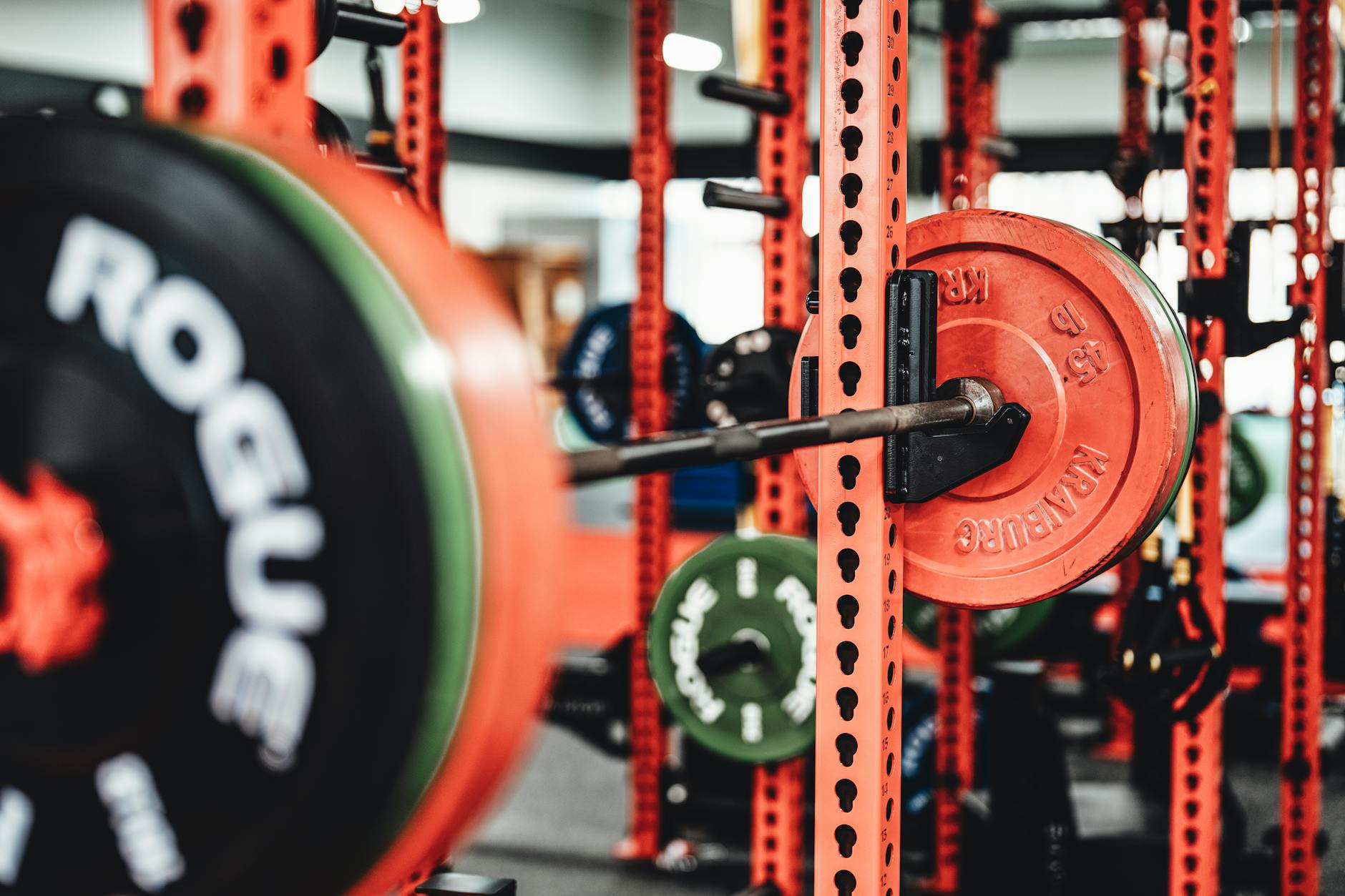
Bumper plates are built around a specific requirement: the bar must be droppable from overhead without damaging the bar, the plate, or the floor. To do this, they replace cast iron with dense vulcanised rubber bonded to a steel or brass hub.
Two features follow from this design that matter for day-to-day training:
- Consistent diameter. Every bumper plate, regardless of weight, has the same outer diameter — 450mm per International Weightlifting Federation standards. A 5kg bumper and a 25kg bumper sit at identical heights off the floor. This standardised starting height is essential for the pulling position in cleans and deadlifts done from a fixed height.
- Quieter drops. Rubber absorbs impact. On proper rubber gym flooring, dropping a loaded bumper bar makes a dull thud rather than a loud crack. In a home gym adjacent to other rooms, this distinction matters.
Bumper plates come in two grades. Training bumpers — usually all black — have tolerances of plus or minus 10g to 25g per plate. Competition bumpers — colour-coded to IWF standards (red 25kg, blue 20kg, yellow 15kg, green 10kg, white 5kg) — are certified to plus or minus 10g. For a home gym, training bumpers are more than adequate. Competition bumpers are priced significantly higher and the accuracy matters only if you are lifting in certified competition.
The trade-off with bumper plates is sleeve space. Rubber is bulkier than iron per kilogram. A bar loaded with 120kg of bumper plates uses considerably more sleeve space than the same load in cast iron. For very heavy lifting, this can become a practical limit.
Olympic vs standard hole size
This is the one compatibility decision that will cost you money if you get wrong before buying. Olympic plates have a 50mm centre hole. Standard plates have a 25mm centre hole. They do not fit on each other's bars.
Every barbell worth buying uses a 50mm sleeve — this has been the industry standard for decades. Standard 25mm bars still exist on the budget end of the market, but they have lower weight capacities, flex more under load, and are not compatible with the wider plate selection. If someone offers you a set of standard plates for free, the shipping is probably not worth it unless you already own a standard bar.
Buy Olympic plates (50mm hole). If you are shopping for a barbell at the same time, confirm the sleeve diameter is 50mm before ordering. You will not need to think about this again.
Building your first plate collection

A practical starter set of cast iron Olympic weight plates for a home gym:
| Plate weight | Quantity | Total added |
|---|---|---|
| 20kg | 2 | 40kg |
| 10kg | 2 | 20kg |
| 5kg | 2 | 10kg |
| 2.5kg | 2 | 5kg |
| 1.25kg | 2 | 2.5kg |
With a standard 20kg barbell, this gives you a working range of 22.5kg to 97.5kg total load, with 2.5kg increments. That covers most beginners through the first 12 to 18 months of consistent training on squats, bench press, and deadlifts. When your numbers start moving fast, add a second pair of 20kg plates first — that is where you will need the load before anything else.
If your training includes heavier pulls and you plan to deadlift on a hard floor without rubber matting, consider replacing the 20kg cast iron plates with 20kg bumpers. Load bumpers closest to the collar, then stack cast iron outside them. You get a consistent bar height and floor protection for heavy pulls, while keeping the cost of the remaining plates low.
When bumper plates are not worth it
If your training is bench press, squats, barbell rows, and deadlifts lowered under control, you do not need bumper plates. You are not dropping the bar from overhead. Cast iron plates will do everything bumpers do for those lifts at a fraction of the cost. Paying the rubber premium buys you a feature you will never use.
Do not buy bumper plates if:
- You do not do Olympic lifts (clean and jerk, snatch)
- You train in a home gym with a concrete or tile floor — buy a rubber mat instead, it is cheaper
- Your barbell setup is primarily for bench press and squats with a rack (the bar always returns to the rack, not the floor)
- Budget is a constraint — cast iron is the better use of the money
Bumper plates make straightforward sense in a CrossFit box where the bar is dropped from overhead 30 times a session and the floor is already rubber. In a garage gym where the neighbours can hear everything, they make slightly less sense — but a lot of people buy them anyway because they look good in training photos. That is a valid reason, just not a functional one.
The honest version: start with cast iron, train for six months, and then decide if your programme actually requires bumpers. Most people find it does not.
Frequently asked questions
Can I mix cast iron and bumper plates on the same bar?
Yes, provided both have 50mm holes. The standard approach is to load bumper plates closest to the collar, then stack cast iron outside them. This keeps the bar at a consistent height off the floor for deadlifts while letting you use cheaper cast iron for the bulk of the load.
What is the difference between Olympic and standard weight plates?
The hole size. Olympic plates have a 50mm centre hole designed for modern Olympic barbells. Standard plates have a 25mm hole for older or budget bars. Buy Olympic plates — every quality barbell sold today uses a 50mm sleeve, and standard plates cannot be used on them without an adapter.
Are bumper plates worth the extra cost?
Only if you do Olympic lifts such as cleans or snatches, or regularly drop the bar from overhead. For bench press, squats, rows, and controlled deadlifts, cast iron plates do the same job at 40 to 60 per cent of the price.
What weight plates should a beginner buy?
A practical starter set: two 20kg plates, two 10kg, two 5kg, two 2.5kg, and two 1.25kg. With a 20kg bar this covers a range from 22.5kg to 97.5kg total load with 2.5kg increments — enough for 12 to 18 months of consistent progress on the main compound lifts.
What does "Olympic weight plate" actually mean?
In everyday use, it means any plate with a 50mm hole designed for a standard Olympic barbell. It does not mean competition-grade. IWF-certified competition bumper plates are a specific subset with strict weight tolerances and mandatory colour coding — a different category from general Olympic plates.
Do cast iron weight plates rust?
Bare cast iron will develop surface rust in humid conditions. Most plates sold today have a paint or enamel coating that slows this. Wipe them down after use and store them off bare concrete. Treated this way, a set of cast iron plates will last decades without significant degradation.
Related at Flexi Muscles
- Strength Training Equipment — barbells, plates and racks
- Lifting Accessories — straps, belts and barbell accessories
- Browse All Gym Equipment