

Leg Equipment for Gym: What to Buy for Leg Day at Home (and What to Skip)

By Flexi Muscles — 13 August 2026 · 10 min read
Leg equipment for gym use at home splits into three groups: resistance bands and ankle weights, free weights (dumbbells and kettlebells), and racks (squat rack and bench). Most people only need the first two groups. A rack is the last thing to add, not the first, and a commercial leg press or hack squat machine is rarely worth buying for a home gym at all — the space it needs alone rules it out for most rooms.
Shop Leg Day Equipment at Flexi Muscles
What "Leg Equipment for Gym" Actually Covers
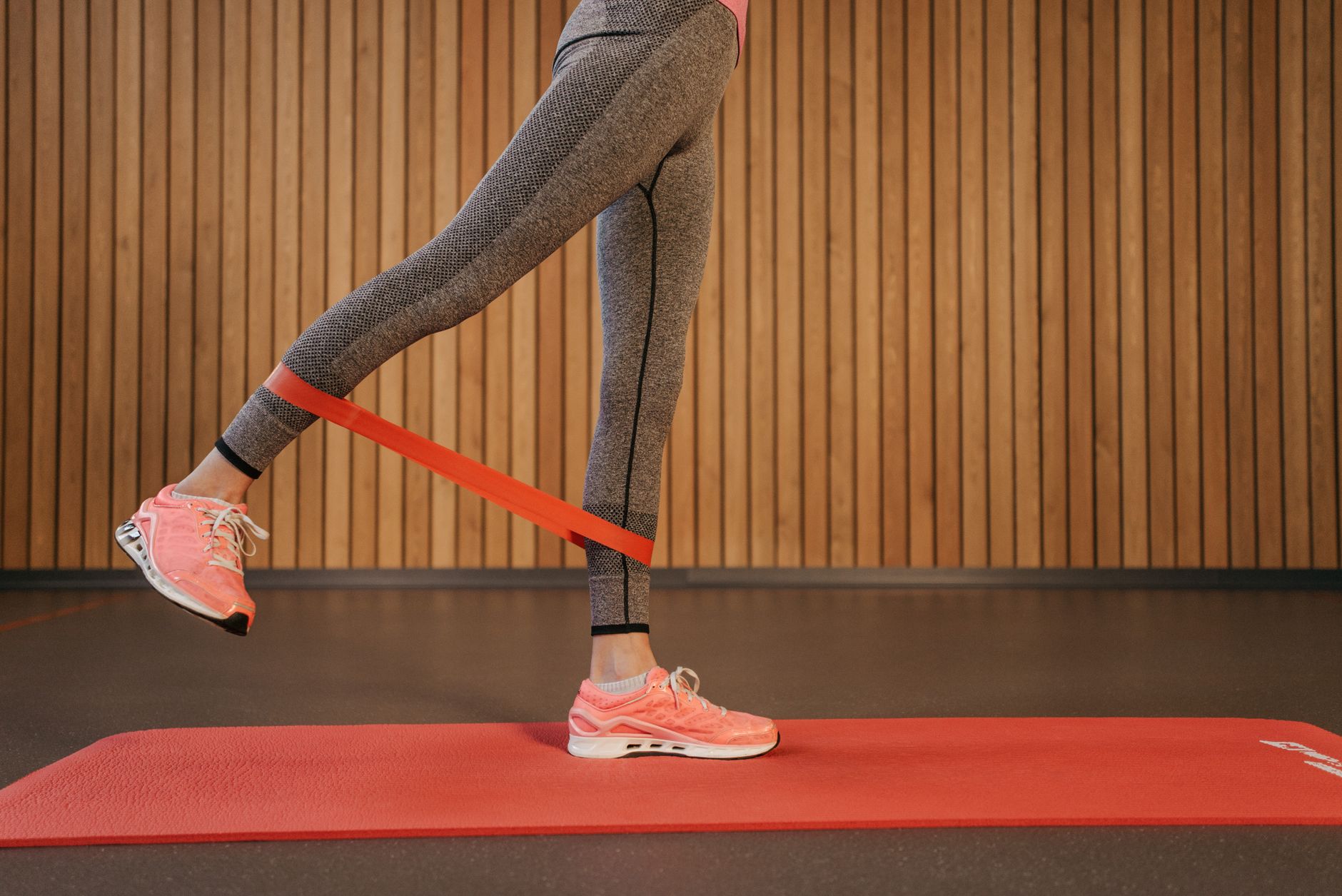
Search "leg equipment for gym" and most results default to commercial-gym machines: leg press, hack squat, leg extension, leg curl, all built for a facility with a maintenance contract and a concrete floor. That is a different shopping list to a home gym, where floor space and budget are the two real constraints, not machine variety.
For a home setup, the category narrows to three groups: bands and ankle weights (cheap, small, no installation), free weights (dumbbells and kettlebells, the most versatile group for legs), and racks (a squat rack and bench, for once bodyweight and dumbbells stop being enough resistance). Almost every home leg day, from a beginner doing bodyweight squats with a band around the knees to someone loading a barbell, is built from some combination of those three groups.
The rest of this guide goes through each group in the order most people actually buy them, then covers the machines worth skipping and what a full setup costs at Flexi Muscles.
Ankle Weights and Resistance Bands: The Low-Cost Start
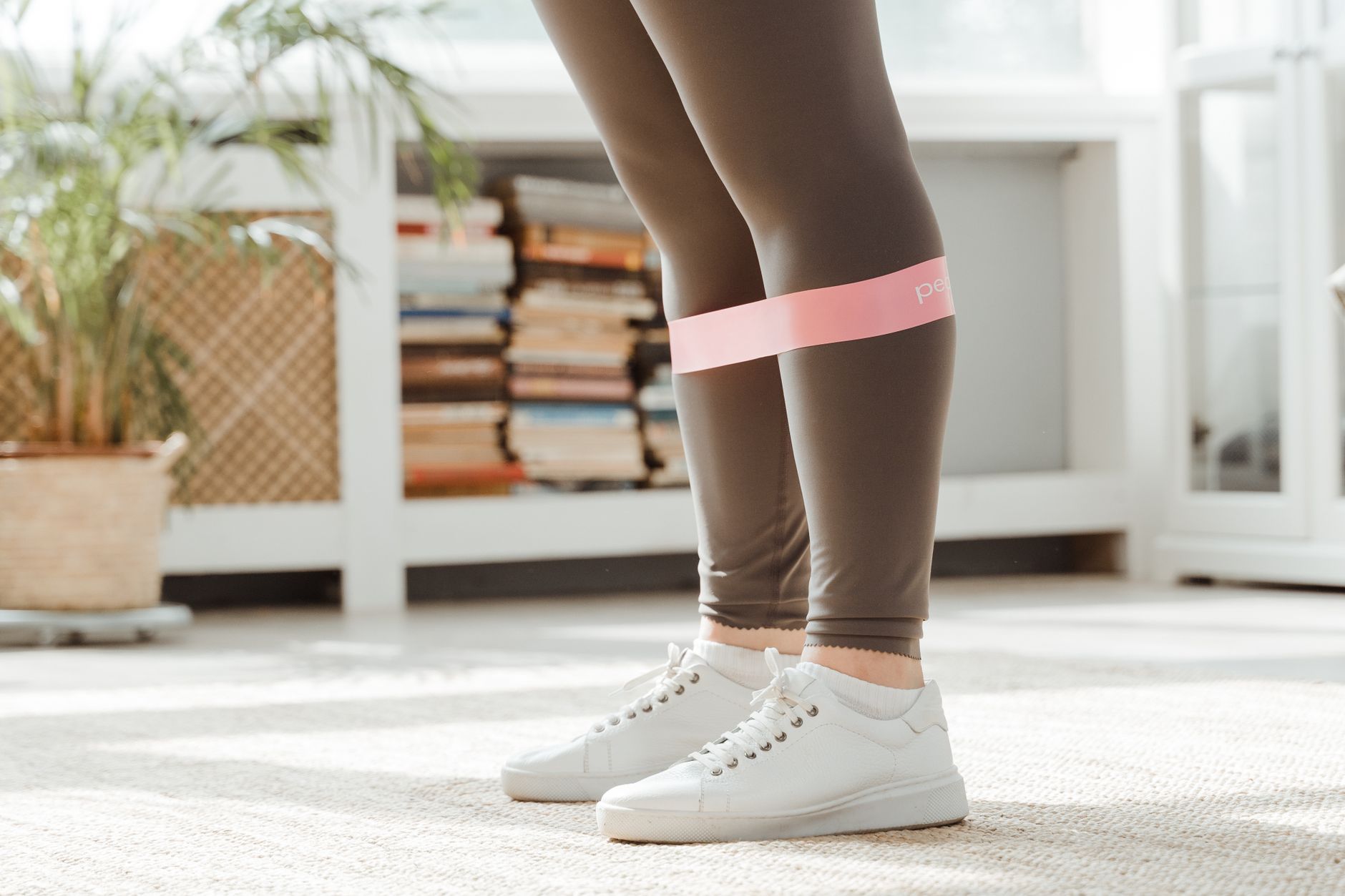
This is the group most people start with, and for good reason: it needs no floor space, no assembly, and covers the exercises — squats, kickbacks, lateral walks, leg curls, clamshells — that build the glute and hip strength most home leg days are missing.
- Ankle Resistance Bands with Ankle Cuffs (R399) — three resistance levels in one set, for glute kickbacks and hip work.
- Fabric Booty Bands (R399) — three-level fabric loop bands for squats, lateral walks, and glute bridges; fabric grips the leg better than latex during lateral movement.
- Workout Resistance Bands Set (R229) — a five-band latex set covering light to heavy resistance for leg curls and extensions.
- Ankle Straps for Cable Machine (R299) — padded neoprene straps for cable kickbacks and hip abduction, if you already have a cable setup.
Buy one loop band set and one pair of ankle straps or cuffs, not every option on this list. The loop bands cover squats and lateral work; the ankle cuffs cover kickbacks and leg curls. That combination handles the bulk of a bodyweight-based leg programme.
Dumbbells and Kettlebells: Free Weight Options for Legs

Once bodyweight and bands stop being enough resistance, dumbbells and kettlebells are the next step, and they cover more leg exercises between them than any single machine: goblet squats, lunges, step-ups, Romanian deadlifts, and kettlebell swings for the posterior chain.
| Product | Price from | Best for |
|---|---|---|
| Rubber Coated Cast Iron Kettlebell (2–10kg) | R279 | Swings, goblet squats, lunges |
| Hexagon Rubber Coated Dumbbell, single (5–15kg) | R329 | Lunges, step-ups, RDLs |
| 24kg Adjustable Single Weight Dumbbell | R2,199 | Progressive loading in one unit |
A kettlebell is the better first buy for most people: one 8–10kg bell covers swings, goblet squats, and lunges in a single piece of equipment. Add a second, heavier kettlebell or an adjustable dumbbell once bodyweight-plus-single-kettlebell squats stop feeling like real resistance.
Squat Racks and Benches: Going Heavier Safely

A squat rack becomes worth buying once a barbell can load more weight than your heaviest dumbbell or kettlebell. Flexi Muscles' Multi-Purpose Squat Rack and Bench Press Rack (R1,899) has adjustable safety catches, which matter more at home than in a commercial gym since there is usually no spotter around to bail you out on a missed rep.
Pair it with a flat weightlifting bench (R1,799) for step-ups and single-leg work, or the Weight Lifting Bench with Barbell Rack (R1,999) if you want the rack and bench storage combined into one footprint. Either bench works for elevated split squats and Bulgarian split squats, which are two of the higher-value single-leg exercises a home rack setup unlocks.
This is the group to add last. A rack and bench without the strength to use a loaded barbell yet is dead floor space; bands, ankle weights, and a kettlebell will keep progressing leg strength for longer than most people expect before a rack becomes the limiting factor.
Which Leg Machines to Skip at Home
Most "best leg equipment" articles are written for commercial gyms and list a leg press, hack squat, and Smith machine as the priority buys. For a home gym, that advice does not transfer, and it is worth saying so directly rather than letting a buying guide imply otherwise.
Even the most compact leg press machines on the market need roughly 1.2 by 1 metre of permanently dedicated floor space, and most models sit closer to 1.3 by 1.65 metres once you account for the sled travel. A hack squat or Smith machine needs a comparable footprint plus ceiling clearance for the frame. That is a spare room's worth of space, occupied full-time, for equipment that trains largely the same muscles as a squat rack, a bench, and a pair of dumbbells — equipment that fits against a wall.
The honest recommendation for most home lifters is to skip the dedicated leg machine entirely. A squat rack covers barbell squats, a bench covers split squats and step-ups, and dumbbells or a kettlebell cover everything a leg extension or leg curl machine isolates. The exception is a genuine home gym room with space to spare and a training goal that specifically needs machine-based isolation, which is a small minority of home setups.
Building a Leg Day Setup in Three Budget Tiers
Since the SERP guides for this topic are priced in dollars against US retailers, here is what the three equipment groups above actually cost at Flexi Muscles, in rand.
| Tier | What's included | Approx. cost |
|---|---|---|
| Starter | Ankle Resistance Bands with Cuffs + Workout Resistance Bands Set | R628 |
| Mid | Starter tier + one 8kg kettlebell + a hexagon dumbbell pair (10kg) | ~R2,265 |
| Complete | Mid tier + Squat Rack + Flat Weightlifting Bench | ~R5,963 |
Most people plateau on the starter or mid tier for months before a rack becomes necessary, which is the reason to buy in this order rather than all at once: the cheaper tiers are not a compromise version of leg day, they are the version most home lifters actually use longest.
Bands or Weights: Which Actually Works Better
Research comparing elastic-band training directly against free weights for lower-body work has found no significant difference in strength outcomes between the two. The mechanism differs — a dumbbell applies constant resistance through the whole movement, while a band's resistance increases as it stretches, loading the top of a squat or kickback harder than the bottom — but the strength result lands in the same place.
Free weights tend to activate the primary target muscle slightly more; bands engage stabiliser muscles more, since the leg has to control the band's pull rather than just move a fixed load. In practice this means bands are not a lesser substitute for dumbbells, they train a genuinely different quality, and a leg day that uses both gets more out of a given week than one that relies on only one type.
Frequently Asked Questions
What equipment do I actually need for a leg workout at home?
A set of resistance bands or ankle weights and one pair of adjustable dumbbells covers most leg exercises: squats, lunges, RDLs, kickbacks, and leg curls. A squat rack and bench only become necessary once you are loading a barbell heavier than a pair of dumbbells can match.
Are resistance bands as effective as weights for leg day?
For strength gains, research directly comparing the two finds no significant difference in outcomes for lower-body training. Free weights activate the main target muscle slightly more; bands activate stabiliser muscles more, since resistance increases as the band stretches rather than staying constant.
Do I need a squat rack for leg day at home?
Only once bodyweight, bands, and dumbbells stop being enough resistance, which for most people is well into a training programme, not week one. A squat rack with safety catches lets you load a barbell without a spotter, but it is the last piece to add, not the first.
Should I buy a leg press machine for a home gym?
For most home setups, no. Even the most compact leg press machines on the market run roughly 1.2 by 1 metre of permanently dedicated floor space, and most sit closer to 1.3 by 1.65 metres. A squat rack, bench, and dumbbells train the same muscles in a fraction of the footprint.
What's the cheapest way to equip a home leg day?
A set of ankle resistance bands with cuffs and a basic loop band set covers squats, kickbacks, lateral walks, and leg curls for well under R1,000 combined, with no other equipment required to start.
What's the difference between leg weights and ankle weights?
In practice the terms are used interchangeably for the strap-on weighted cuffs worn around the ankle during walking, marching, or leg-raise exercises. Weighted ankle bands and hip-and-glute resistance bands are a separate category — the resistance comes from elastic tension rather than added mass.
Related at Flexi Muscles
- Fitness Accessories (Bands & Ankle Weights)
- Dumbbells
- Strength Training Equipment
- Ankle Weights Guide
- Best Kettlebells for Home Gym
- Squat Rack Guide