

Squat Rack Buying Guide: How to Choose the Right One for Your Home Gym

By Flexi Muscles — 2 July 2026 · 16 min read

A squat rack gives you a safe, independent way to load a barbell for squats, presses, and rows — without needing a gym membership or a training partner standing over you. Which one works for your home gym depends on three things: your ceiling height, available floor space, and whether you plan to train alone or with a spotter. This guide covers every type of squat rack on the market, the build features that actually matter, how to plan your space, and the training setups where a squat rack is not the right investment.
Shop Strength Training Equipment at Flexi Muscles
Types of Squat Rack
There are four main types. Each solves a different problem.
Power Rack (Full Cage)
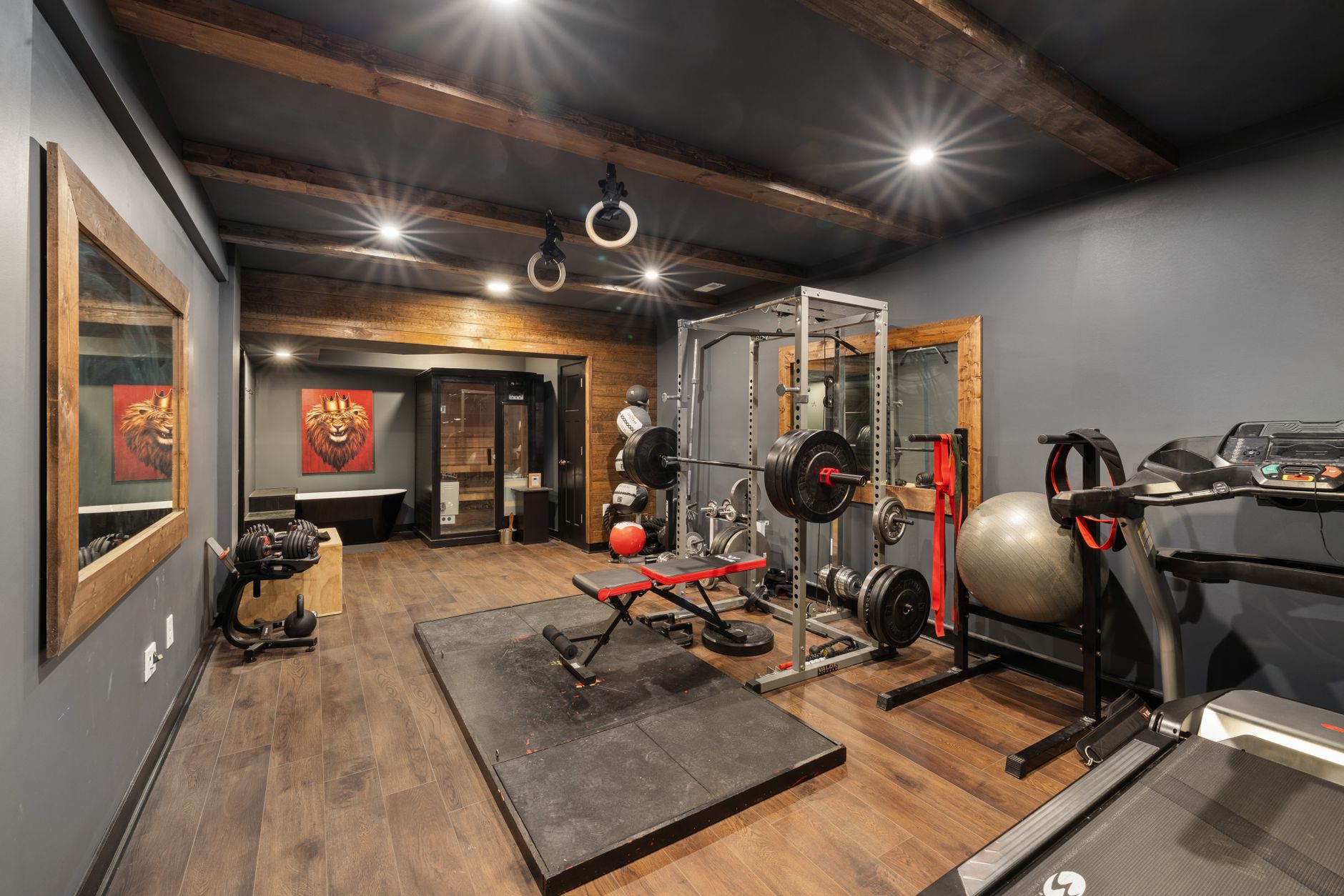
A power rack — sometimes called a full cage or power cage — has four vertical uprights joined by crossbeams at the top and, on many models, at the base as well. The result is an enclosed training cage with safety pins or straps running between the uprights at adjustable heights.
When you miss a heavy squat, the bar lands on those safeties. Not on you. This is what makes a power rack the correct choice for anyone training alone at serious loads.
Most power racks include a pull-up bar integrated across the top frame, making a squat rack with pull up bar a single purchase that covers both lower and upper body compound work. Their main downside is size. A typical full cage runs about 1.2 m wide, 1.5 m deep, and 2.0–2.4 m tall. You need meaningful room, and your ceiling height needs to match.
Half Rack
A half rack has two uprights connected at the back only, leaving the front open. Safety spotter arms project forward from the uprights. You can approach the bar from the front or side, which some lifters prefer for Olympic-style movements.
Half racks take up less floor space than a full cage but are less inherently stable. They rely on rear base plates and sometimes floor anchoring for rigidity under load. On a rubber mat over concrete, a quality half rack handles most home gym loads without bolting down. On timber flooring, anchor it.
A half rack is a reasonable middle ground: more safety than squat stands, less space than a full cage.
Squat Stands (Free-Standing Uprights)
Squat stands are two independent uprights — one for each end of the barbell — each sitting on a foot plate. They are the smallest, least expensive, and most portable option in the category.
Most squat stands have no integrated safety bars. You rely on a training partner or your own ability to dump the bar forward safely on a missed lift. Some stands do support add-on safeties, which improves the risk profile considerably.
They suit garage gyms where the rack needs to move around between sessions, lifters who always train with a partner, or those working at loads where a catastrophic miss is a low-probability event. They are not appropriate for heavy solo training without safety attachments.
Wall-Mounted Folding Rack
A wall-mounted rack brackets directly to the studs or masonry of a wall and folds flat against it when not in use. It is the answer to a very small space — a single-car garage bay, a spare bedroom, or a flat where floor space is at a premium.
The requirements: structural walls, correct mounting hardware for the substrate, and the ability to permanently fix the rack to the property. Wall-mounted racks cannot be installed in most rented properties without landlord approval and are not suited to timber-frame walls unless you hit the right stud centres with appropriate fixings.
Into brick or concrete block, a quality wall-mounted rack is highly stable and genuinely frees up the space when training is done for the day.
What to Look for When Buying a Squat Rack
Steel Gauge and Weight Capacity
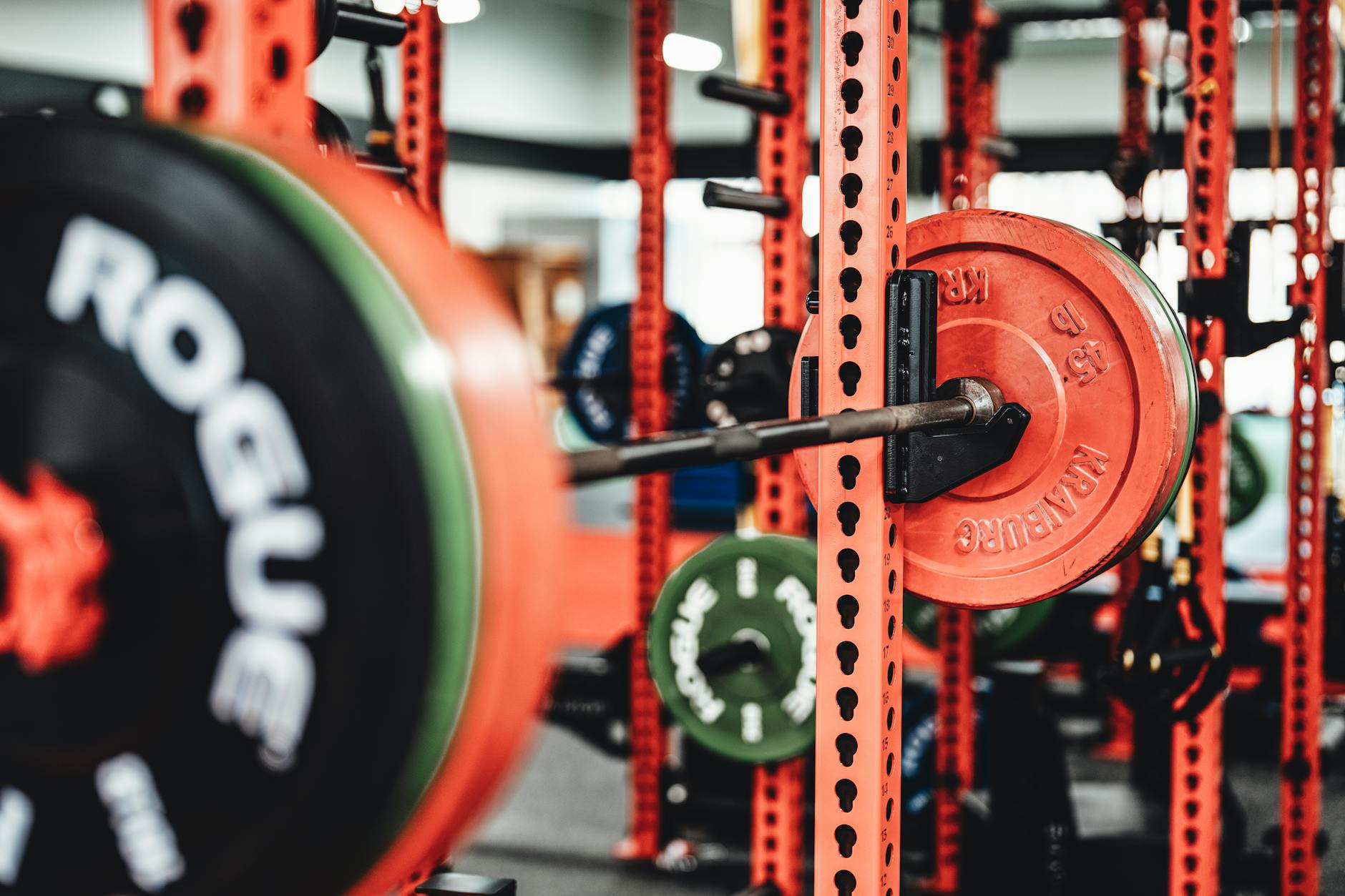
Gauge is the measure of steel thickness. The lower the gauge number, the thicker the steel. An 11-gauge or 12-gauge rack is appropriate for a home gym used at serious training loads. A 14-gauge rack will flex under heavy weight bars, wear out j-hook contact points faster, and is generally not worth the lower purchase price.
Weight capacity figures published by manufacturers vary in how they are tested. Some figures reflect the structural load of the entire rack; others reflect only the j-hook load point. A high capacity number from a thin-gauge rack tells you very little. Prioritise gauge first, then use capacity as a secondary check. For most home gym lifters working in the 80 kg to 180 kg loading range, a quality 11-gauge rack with a genuine 250–300 kg rating is more than adequate for years of progressive training.
J-Hooks and Safety Bars
J-hooks hold the barbell at your chosen height before and after each set. Look for j-hooks lined with UHMW plastic or nylon inserts. These protect your barbell's knurling from metal-to-metal contact every time you re-rack. Bare steel j-hooks will gradually destroy the knurling on any olympic barbell over time.
Safety bars are what the barbell lands on when you miss a lift. Upright hole spacing matters here. Many budget racks use 75 mm (3-inch) hole spacing, which limits how precisely you can position the safeties relative to your actual sticking point. Quality racks use 50 mm (2-inch) spacing on the uprights through the main working zone. For a lifter with a 5 cm difference between their sticking point and full-depth position, that 25 mm difference is meaningful.
Integrated Pull-Up Bar
A squat rack with a pull up bar is considerably more useful than one without. Pull-ups are among the most effective upper-body exercises you can do with your own bodyweight, and having them available on the same piece of strength training equipment removes any logistical reason for skipping them.
Check that the pull-up bar offers at least two grip widths — standard and close — ideally with a neutral (parallel grip) option. Check the bar's weight rating accounts for added load from a dipping belt, not just unweighted bodyweight.
Upright Height and Overall Footprint
Standard home gym power racks come in heights ranging from 1.85 m to 2.4 m. If your ceiling is under 2.4 m, measure before buying. You need the rack height plus clearance above the bar for full pull-up range of motion at your height.
Footprint figures from manufacturers describe only the rack's base dimensions. That is not the space you actually need. The full picture includes bar clearance on both sides (a 220 cm barbell extends roughly 90 cm beyond each upright), loading space behind and beside the rack, and training clearance in front. Plan the full training envelope before purchase, not after it arrives.
Space Requirements for a Home Gym Squat Rack
This is where most home gym setups go wrong. People measure the rack; they forget to measure the room they need around it.
A full power rack uses more space than the rack's base footprint suggests. Work through this checklist before committing to a purchase:
- Ceiling height: Most power racks need at least 2.1 m to fit, and at least 2.4 m for full pull-up range. Low-ceiling models exist, but check the pull-up bar accessibility for your height before buying.
- Side clearance: A standard 220 cm barbell extends roughly 90 cm beyond the rack upright on each side. If there is a wall closer than 90 cm to the upright, the bar will not load properly.
- Rear clearance: Leave at least 1 m behind the rack for adding and removing weight plates. Less than this and loading becomes awkward enough to slow every session.
- Training space: Allow at least 1.5 m clear in front of the rack for a safe squat path. More is better if the layout allows.
Working it all out, a realistic minimum for a full power rack setup is around 3.5 m × 3.5 m of usable floor area. A full power rack takes up roughly the same floor space as a large wardrobe — if you are honest about it, probably more. If that calculation does not work in your space, a half rack or wall-mounted option saves significant room without eliminating the safety features that make solo training viable.
What You Can Train on a Squat Rack

The primary search term is "squat rack" but the equipment covers far more than squats once it is set up.
Barbell back squat — what the rack was built for. Free bar, loaded to any depth, with safety bars as a backstop on missed lifts.
Barbell front squat — the bar sits across the front of the shoulders rather than the traps. Same safety setup applies.
Bench press — place an adjustable bench inside the rack with the safety bars set at chest height. You can bench alone at heavy loads without a spotter and without meaningful risk of being pinned.
Overhead press — stand inside the rack and press the barbell overhead. Safety bars below catch the bar if you lose it overhead.
Rack pulls — a partial deadlift started with the bar set at mid-shin height or higher on the j-hooks. Useful for building lockout strength without the full loading demands of a conventional deadlift from the floor.
Romanian deadlift and good mornings — hip hinge movements where the bar starts at hip height in the j-hooks rather than from the floor.
Pull-ups and chin-ups — if the rack includes an integrated pull-up bar. Standard wide, close, and neutral grip options from the same piece of kit.
A quality power rack with an integrated pull-up bar and a separate adjustable bench covers the majority of compound barbell and bodyweight training. It is one of the highest-value investments you can make in a home gym — but only if your training actually involves a barbell.
When NOT to Buy a Squat Rack
Your ceiling is below 2.1 m. Most full power cages will not fit. A wall-mounted folding rack may work, but you lose the independent freestanding safety system. Low-ceiling half racks exist at around 1.85 m, but confirm whether the pull-up bar is usable at your height before ordering one.
You do not own a barbell and have no plan to buy one. A squat rack without a barbell is a very expensive pull-up bar. If your training is built around dumbbells, resistance bands, or bodyweight movements, the budget is better invested there. A pair of adjustable dumbbells and a dedicated pull-up bar will serve a general fitness programme better and cost considerably less than a full rack setup.
You rent your property and cannot anchor anything permanently. Most quality power racks are stable enough at moderate loads without floor anchoring on rubber matting over concrete. But if you plan to squat at or above your bodyweight on the bar, an unanchored rack on timber flooring carries real risk. Know what your floor structure can handle before setting anything up.
Your training goal is general fitness at moderate loads. A full power rack is designed around compound barbell loading at serious weights. If your programme is built around lighter loads, cardio, and general conditioning rather than progressive barbell strength work, the space a rack occupies and the price it carries are hard to justify. Resistance bands, a rebounder, and a cardio machine will serve those goals more efficiently.
Frequently Asked Questions
What is the difference between a squat rack and a power rack?
"Squat rack" is the general term most people use for any equipment that holds a barbell at height for squatting or pressing. A power rack — also called a full cage or power cage — is a specific type with four uprights forming an enclosed structure and integrated safety pins or straps. When someone says they want a "squat rack," they usually mean a power rack or half rack rather than a pair of free-standing squat stands.
What is the difference between a squat rack and a barbell rack?
A barbell rack is any structure that holds a barbell — including squat racks, power racks, and simple wall-mounted barbell storage pegs on a weight tree. A squat rack is specifically designed for performing exercises with the barbell at shoulder height or lower, with adjustable j-hooks and safety bars. When people search for "barbell rack," they typically want a squat rack rather than barbell storage.
Do I need to bolt my squat rack to the floor?
For most quality power racks on rubber matting over concrete, moderate loads under 120 kg on the bar can be managed safely without anchoring. At heavier loads, or on timber or floating floors, floor anchoring is the right call. Wall-mounted racks always require anchoring by design. If your rack came with anchoring hardware and you train alone, install it — eliminating that risk takes less than an hour.
What ceiling height do I need for a squat rack?
Plan for at least 2.4 m for a standard power rack. Most racks stand between 2.0 m and 2.2 m tall, and you need clearance above the pull-up bar for a full range of motion at your standing height. Low-ceiling models exist under 2.0 m, but typically compromise pull-up bar usability for taller lifters. If your ceiling is 2.1 m or below, measure the exact rack height and your standing reach before ordering.
What weight capacity should I look for in a squat rack?
Use steel gauge as your primary indicator of build quality, not the headline capacity figure. An 11-gauge steel rack is appropriate for serious home gym loading. Avoid racks made from 14-gauge or lighter steel regardless of what capacity is stated on the spec sheet. For most lifters working in the 80 to 160 kg loading range, a quality rack with a genuine 250 to 300 kg rating is more than sufficient for long-term progressive training.
Can I use a squat rack without a spotter?
Yes — with a full power rack or half rack equipped with safety bars or spotter arms. Set the safeties just below your sticking point, lift, and if you miss, step back and lower the bar onto the safeties. A pair of bare squat stands without safety attachments does not allow this safely. Training solo at heavy loads without a safety system in place is the primary cause of serious barbell accidents at home.
Related at Flexi Muscles
- Strength Training Equipment — Barbells, Racks & Accessories
- Lifting Accessories — Belts, Straps & Supports
- Browse All Flexi Muscles Products