

Bench to Exercise: 12 Flat Bench Moves for a Full-Body Workout

By Flexi Muscles — 8 October 2026 · 9 min read
A flat bench is enough to exercise your whole body. Use the bench to exercise your chest with presses and push-ups, your back with single-arm rows, your legs with split squats and step-ups, and your core with leg raises. Do 2 to 3 sets of 8 to 12 reps, two or three times a week. Add a pair of dumbbells and you have a complete programme.
Shop Benches and Strength Equipment at Flexi Muscles
Why use a bench to exercise
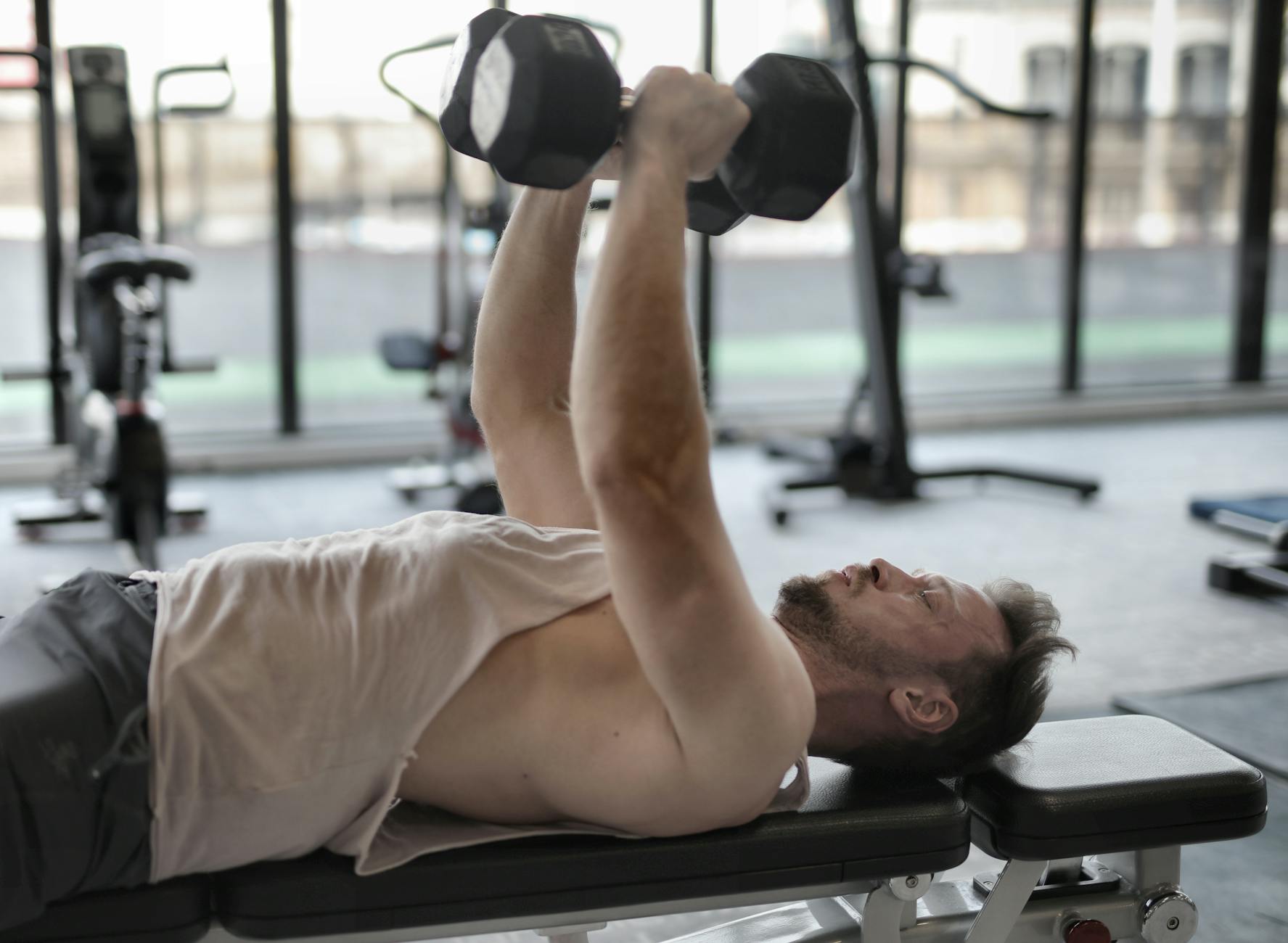
A bench does three jobs. It supports you, it raises you, and it gives you something to push against.
- Support. Lying on a pad lets you press dumbbells without your back fighting to stay stable. That means more of the effort goes into your chest and triceps.
- Elevation. Putting a foot or your hands on the bench changes the angle. A push-up with feet on the bench loads your upper chest and shoulders. A split squat with your back foot raised puts almost all the work on the front leg.
- Range of motion. On the floor, your elbows hit the ground at the bottom of a press. On a bench, they travel lower. More range means more muscle worked per rep.
The result: one piece of kit covers push, pull, legs and core. For a home setup, that is hard to beat for the floor space it takes.
Check your bench before you load it
Most bench workout guides skip straight to the exercises. A wobbly or underrated bench is a bigger risk than bad form. Run through these four checks before your first session.
- Height. Aim for 42 to 45 cm from floor to pad top. That is the range the International Powerlifting Federation uses. Too high and your feet dangle during presses.
- Wobble test. Sit on one end and rock side to side. If the frame shifts, do not lie on it holding weights.
- Weight rating. Add your body weight to the heaviest dumbbells you plan to use. The total should sit well under the bench's rated load.
- Floor. Use a rubber mat or a hard floor. Thick carpet lets the legs sink and the bench slide during step-ups.
Shopping for a bench? Our weight bench buying guide covers frame specs, pad width and price ranges.
How to structure bench weight training
Keep it simple. Three full-body sessions a week beats one exhausting session you dread.
Frequency
Train 2 to 3 days a week with a rest day between sessions. The NHS guidelines ask adults for strength work on at least 2 days a week. Full-body sessions hit every major muscle group each time, so two is a solid minimum.
Sets, reps and rest
- Sets: 2 to 3 per exercise when starting, up to 4 once you are consistent.
- Reps: 8 to 12 for most moves. Core and bodyweight moves can go to 15.
- Rest: 1 to 2 minutes between sets.
This lines up with the American College of Sports Medicine's position stand on resistance training for healthy adults.
Progression
When you finish every set at 12 reps with clean form, make it harder. Add 1 to 2 kg to the dumbbells, slow the lowering phase to 3 seconds, or add a set. Change one thing at a time.
12 exercises for your workout bench

Here is our one strong opinion: skip the adjustable bench for your first purchase. All 12 moves below work on a flat bench. Spend the difference on a decent pair of dumbbells instead.
Push: chest, shoulders, triceps
1. Dumbbell bench press. Lie flat, feet planted, dumbbells at chest level. Press up until your arms are straight, then lower for 2 seconds. Keep your shoulder blades pinched together throughout.
2. Incline push-up (hands on bench). Hands on the edge of the bench, body in a straight line. Lower your chest to the pad and push back up. This is the easier push-up, so beginners start here.
3. Decline push-up (feet on bench). Feet on the bench, hands on the floor. The raised feet shift more load to your upper chest and shoulders. Harder than a floor push-up.
4. Bench dips. Hands on the bench edge behind you, fingers forward. Bend your elbows to about 90 degrees, then press up. Bend your knees to make it easier, straighten your legs to make it harder.
Pull: back and biceps
5. Single-arm dumbbell row. One knee and one hand on the bench, back flat. Pull the dumbbell towards your hip, not your chest. Lower slowly. This is the most important move on the list because most home routines skip the back.
6. Dumbbell pullover. Lie across the bench with your upper back on the pad. Hold one dumbbell with both hands above your chest. Lower it behind your head with a slight elbow bend, then pull it back over. Works lats and chest together.
Legs and glutes
7. Bulgarian split squat. Back foot on the bench, front foot about a stride ahead. Lower until your back knee nearly touches the floor. Drive up through the front heel. Expect your legs to complain the next day.
8. Step-up. Step onto the bench with one foot, drive through that heel and stand tall. Step down under control. Life has its ups and downs. We call them step-ups.
9. Hip thrust. Upper back against the bench edge, feet flat, a dumbbell on your hips. Drive your hips up until your body forms a straight line from knees to shoulders. Squeeze your glutes at the top for 1 second.
10. Bench squat. Stand in front of the bench holding a dumbbell at your chest. Sit back until you lightly touch the pad, then stand. The bench sets your depth every rep, which is useful when learning to squat.
Bench abs: core
11. Lying leg raise. Lie flat and grip the bench behind your head. Keep your legs straight and raise them to vertical. Lower slowly without letting your lower back arch off the pad.
12. Seated knee tuck. Sit on the bench edge, hands behind you, lean back slightly. Pull your knees to your chest, then extend your legs without touching the floor.
Want more core work? Our guide to adjustable bench exercises covers incline and decline options once you upgrade.
A no-weights bench routine
You do not need weights on the bench to get a training effect. Nine of the 12 moves work with bodyweight alone. Run this as a circuit, resting 60 seconds after each round:
- Incline push-up — 12 reps
- Bulgarian split squat — 10 reps each leg
- Bench dips — 10 reps
- Step-up — 12 reps each leg
- Single-leg hip thrust — 10 reps each leg
- Lying leg raise — 12 reps
Do 3 rounds. The gap in this routine is your back. A resistance band looped under the bench leg gives you a row without dumbbells.
Sample 3-day exercise workout bench plan

Each day is full-body, but the emphasis shifts. Run it Monday, Wednesday and Friday, or any three non-consecutive days.
| Day | Exercises | Sets × reps |
|---|---|---|
|
Day 1 Push focus |
Dumbbell bench press Bulgarian split squat Single-arm row Bench dips Lying leg raise |
3 × 10 3 × 10 each 3 × 10 each 3 × 12 3 × 12 |
|
Day 2 Legs and glutes |
Hip thrust Step-up Decline push-up Dumbbell pullover Seated knee tuck |
3 × 12 3 × 10 each 3 × 8 3 × 10 3 × 15 |
|
Day 3 Pull focus |
Single-arm row Bench squat Dumbbell bench press Dumbbell pullover Lying leg raise |
4 × 10 each 3 × 12 3 × 8 3 × 10 3 × 12 |
A session takes 40 to 50 minutes with rest. Warm up for 5 minutes first: a few minutes of marching or skipping, then one light set of your first exercise.
Mistakes to avoid
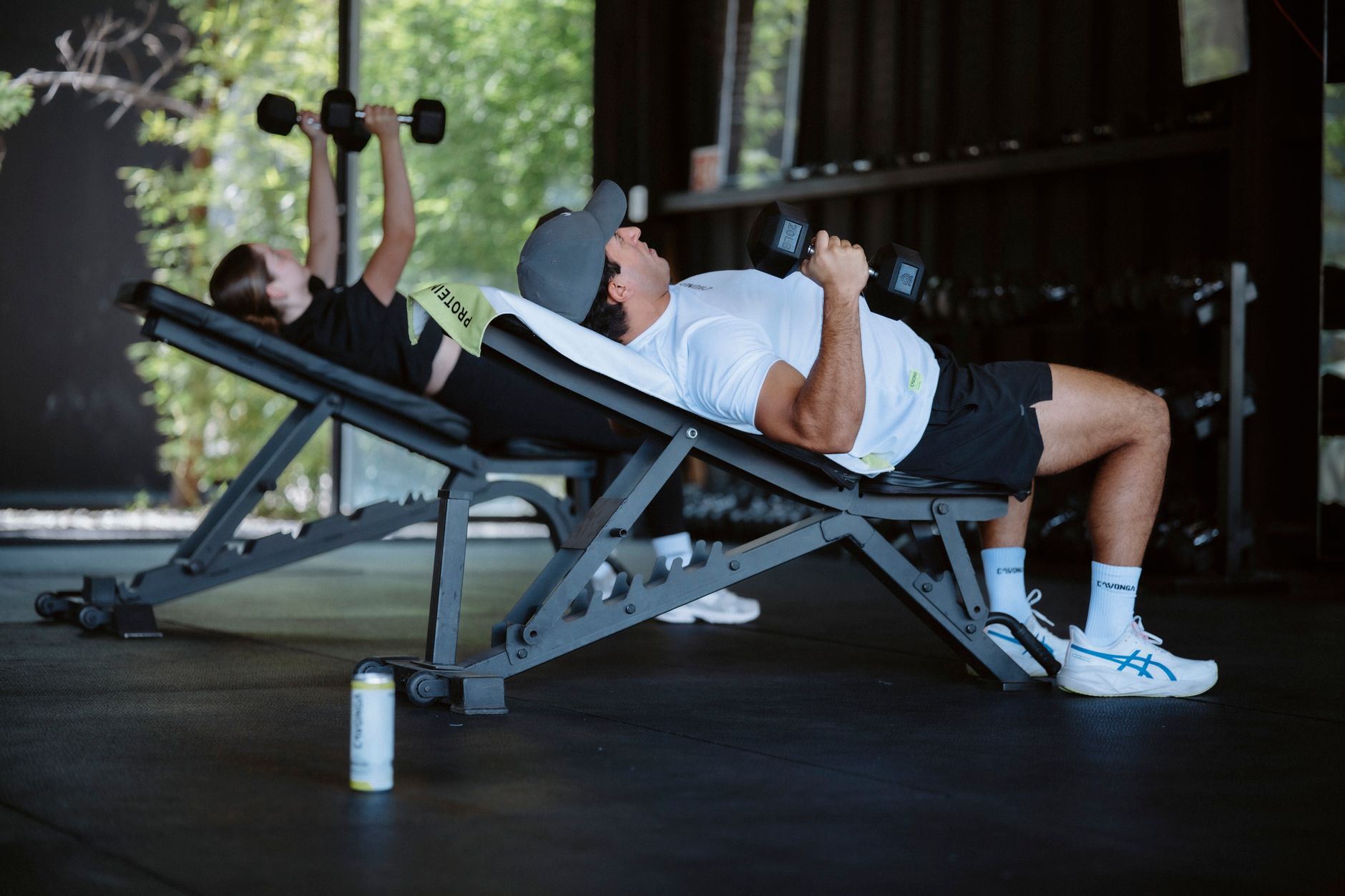
- Only pressing. The bench press gets all the attention. Match every set of pressing with a set of rows, or your shoulders round forward over time.
- Skipping legs. Split squats and hip thrusts are the hardest moves on the list. They are also the ones that build the most muscle. Do them first in the session.
- Feet off the floor during presses. Planted feet give you a stable base. Lifting them makes the bench rock and reduces the weight you can handle.
- Dropping into dips. Going below 90 degrees at the elbow strains the front of the shoulder. Stop at 90.
- Bench too close to the wall. Leave at least 60 cm behind the head end for pullovers and enough room in front for split squats.
Lifting heavier dumbbells? A pair of lifting straps or wrist wraps helps your grip on rows and your wrists on presses.
When a bench is the wrong tool
A bench is not for everyone. Do not buy one if:
- Your goal is mostly cardio or weight loss. A bench builds strength. If you want to raise your heart rate for 30 minutes, a cardio machine or rebounder will do more for you.
- You have no weights and no plan to buy any. The no-weights routine above works, but a sturdy chair and a step cover most of it. The bench earns its place once dumbbells are involved.
- You have a shoulder injury. Dips and pressing both load the front of the shoulder. Get it cleared by a physiotherapist first.
- You have under 2 square metres of free floor. You need room around the bench for split squats and pullovers. Cramped space leads to banged knees.
Frequently Asked Questions
Can you get a full-body workout with just a bench?
Yes. With bodyweight alone you can train chest and triceps (push-ups and dips), legs and glutes (split squats, step-ups, hip thrusts) and core (leg raises, knee tucks). Back training is the weak spot without weights, so add a pair of dumbbells or a resistance band for rows.
Do I need an adjustable bench for these exercises?
No. All 12 exercises in this guide work on a flat bench. An adjustable bench adds incline pressing and seated shoulder work, which is useful later but not needed to start.
How often should I do a bench workout?
Two to three full-body sessions a week, with at least one rest day between them, suits most people. The NHS recommends strength work on at least 2 days a week for adults.
What height should an exercise bench be?
Around 42 to 45 cm from floor to pad top. That is the range the International Powerlifting Federation sets for competition benches, and it lets most people press with feet flat on the floor.
Can I use a chair or couch instead of a bench?
For dips, incline push-ups and step-ups, a solid chair against a wall works. For anything where you lie down with weights, such as presses and pullovers, use a proper bench. Chairs tip and couches are too soft to brace on.
How many sets and reps should I do on a bench?
Start with 2 to 3 sets of 8 to 12 reps per exercise and rest 1 to 2 minutes between sets. When you can complete every set at the top of the range with clean form, add weight or reps.
Related at Flexi Muscles
- Strength training equipment — benches, racks and weights
- Dumbbells — the best add-on for any bench workout
- Resistance bands — back and glute work without weights
- Weight bench buying guide — how to choose the right bench