

Adjustable Bench: Angle Settings, Exercises, and How to Choose One

By Flexi Muscles — 30 August 2026 · 10 min read
An adjustable bench is worth the extra cost over a flat bench for one reason: it turns a single piece of equipment into six or seven different exercise positions. Set the backrest between 30 and 45 degrees for incline pressing, upright around 80 degrees for seated shoulder work, and flat for everything else. The angle you choose determines which muscles do the work, so knowing the settings matters more than any other spec on the listing.
Shop Strength Training Equipment at Flexi Muscles
What is an adjustable bench

An adjustable bench has a backrest that moves through a range of positions, usually from flat up to around 85 degrees. Most models offer between five and eight fixed positions, set with either a ladder mechanism or a spring-loaded pop-pin. Some also have an adjustable seat pad, which stops you sliding down the bench during incline pressing above 45 degrees.
The point of the adjustment is not the bench itself — it is the exercise variety it enables. A flat bench handles pressing, rows, and step-ups. An adjustable bench adds incline pressing, seated overhead work, and chest-supported rows, all from the same footprint. For anyone training primarily with dumbbells at home, that variety is the main reason to pay more for an adjustable model over a flat one.
Some adjustable benches also drop below flat into a decline position, usually 10 to 30 degrees below horizontal. These are sold as FID benches (flat, incline, decline). Decline is the least commonly used setting, which the exercise breakdown below makes clear.
For a small adjustable bench gym setup, pairing one bench with a single pair of dumbbells covers more training ground than any other two-item combination available at a similar price.
Adjustable bench angle chart
Every backrest position trains a slightly different part of the target muscle group. Use this as a quick reference rather than trying to memorise exact degrees mid-workout — most benches mark their positions with numbered notches anyway.
| Angle | Position | Best for |
|---|---|---|
| 0° | Flat | Flat press, rows, step-ups, tricep extensions |
| 15–30° | Low incline | Chest-supported rows, light incline flyes |
| 30–45° | Standard incline | Incline dumbbell press, incline dumbbell curl |
| 45–60° | High incline | Front-delt-dominant pressing, incline front raise |
| 60–85° | Seated / upright | Seated shoulder press, seated lateral raise |
| −10–−30° | Decline (FID only) | Decline sit-ups, lower-chest-focused pressing |
Below 30 degrees, incline pressing recruits the chest and front delts almost identically to a flat press. Above 45 degrees, the front deltoids start taking over from the chest. If your aim is upper chest development specifically, 30 to 45 degrees is the range to stay in.
Best adjustable bench exercises by muscle group

Thirteen bench lifting exercises cover every major muscle group using nothing but an adjustable bench and a pair of dumbbells.
Chest
- Flat dumbbell bench press — bench flat. Trains the mid and lower chest, front deltoids, and triceps.
- Incline dumbbell press — backrest at 30–45 degrees. Shifts emphasis to the upper chest.
- Dumbbell flyes — flat or low incline. An isolation movement using a wider arc than pressing.
Shoulders
- Seated dumbbell shoulder press — backrest at 80–85 degrees. Back support makes overhead pressing safer solo.
- Seated lateral raise — sit upright, raise dumbbells to the sides. Targets the lateral deltoids directly.
- Incline front raise — lie chest-down on a low incline, raise dumbbells forward. Isolates the front deltoids.
Back
- Single-arm dumbbell row — one knee and hand on the flat bench, row with the other arm.
- Chest-supported row — backrest at a low incline, lie chest-down, row with both arms. Removes lower back strain entirely.
Arms
- Incline dumbbell curl — backrest at around 60 degrees, sit back and curl. The stretched start position changes the stimulus from standing curls.
- Lying tricep extension — bench flat, extend dumbbells from behind the head. Works all three heads of the tricep.
Legs and core
- Bulgarian split squat — rear foot elevated on the flat bench. A demanding single-leg movement without a rack.
- Step-ups — step onto the flat bench holding a dumbbell in each hand. Builds quad strength and single-leg balance.
- Decline sit-up (FID bench only) — anchor your feet, lie back on the decline. A harder variation of the standard sit-up.
Only the decline sit-up requires a decline setting. The other twelve exercises work on a standard flat/incline adjustable bench, which is the more useful buy for most home gym training with dumbbells — a decline setting earns its keep only if lower-chest work is a deliberate, recurring part of your programme.
Sample adjustable bench workout routine
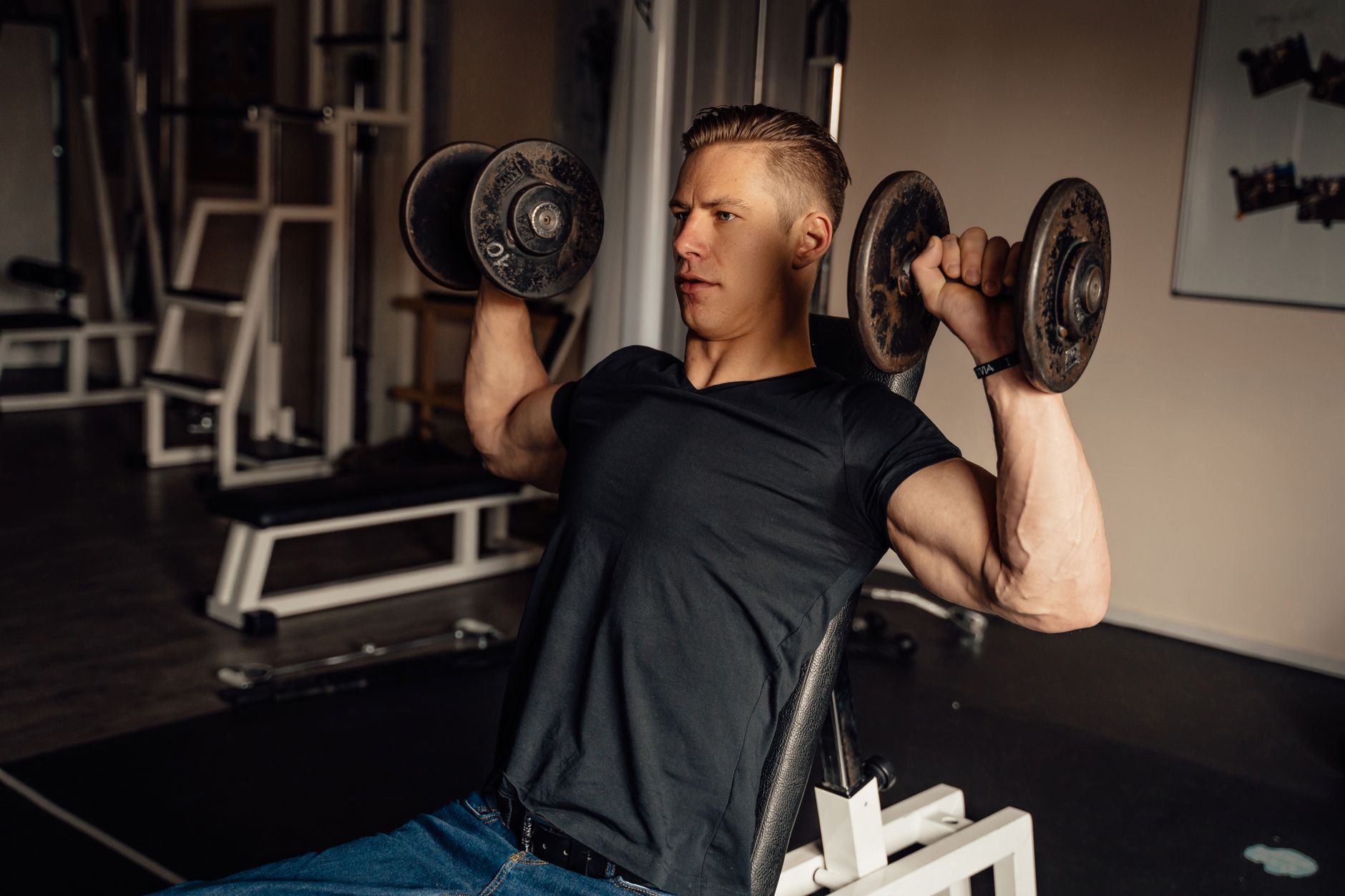
Here is a single upper-and-lower training bench press session that moves through three backrest positions and trains every major muscle group covered above. Rest 60 to 90 seconds between sets.
- Flat dumbbell press — 4 sets of 8 reps (flat)
- Incline dumbbell press — 3 sets of 10 reps (35 degrees)
- Seated dumbbell shoulder press — 3 sets of 10 reps (80 degrees)
- Single-arm dumbbell row — 3 sets of 10 reps per side (flat)
- Bulgarian split squat — 3 sets of 10 reps per leg (flat, rear foot elevated)
- Incline dumbbell curl — 2 sets of 12 reps (60 degrees)
That is six exercises, three angle changes, and a complete session for chest, shoulders, back, legs, and arms. Run it twice a week with a day of rest between sessions, and add weight once you can complete every set at the top of the rep range with good form.
Adjustable dumbbells and bench remain the simplest combination for progressing this routine over time. Pair it with a set of adjustable dumbbells from Flexi Muscles so you can increase load in small steps as you progress.
How to choose an adjustable bench
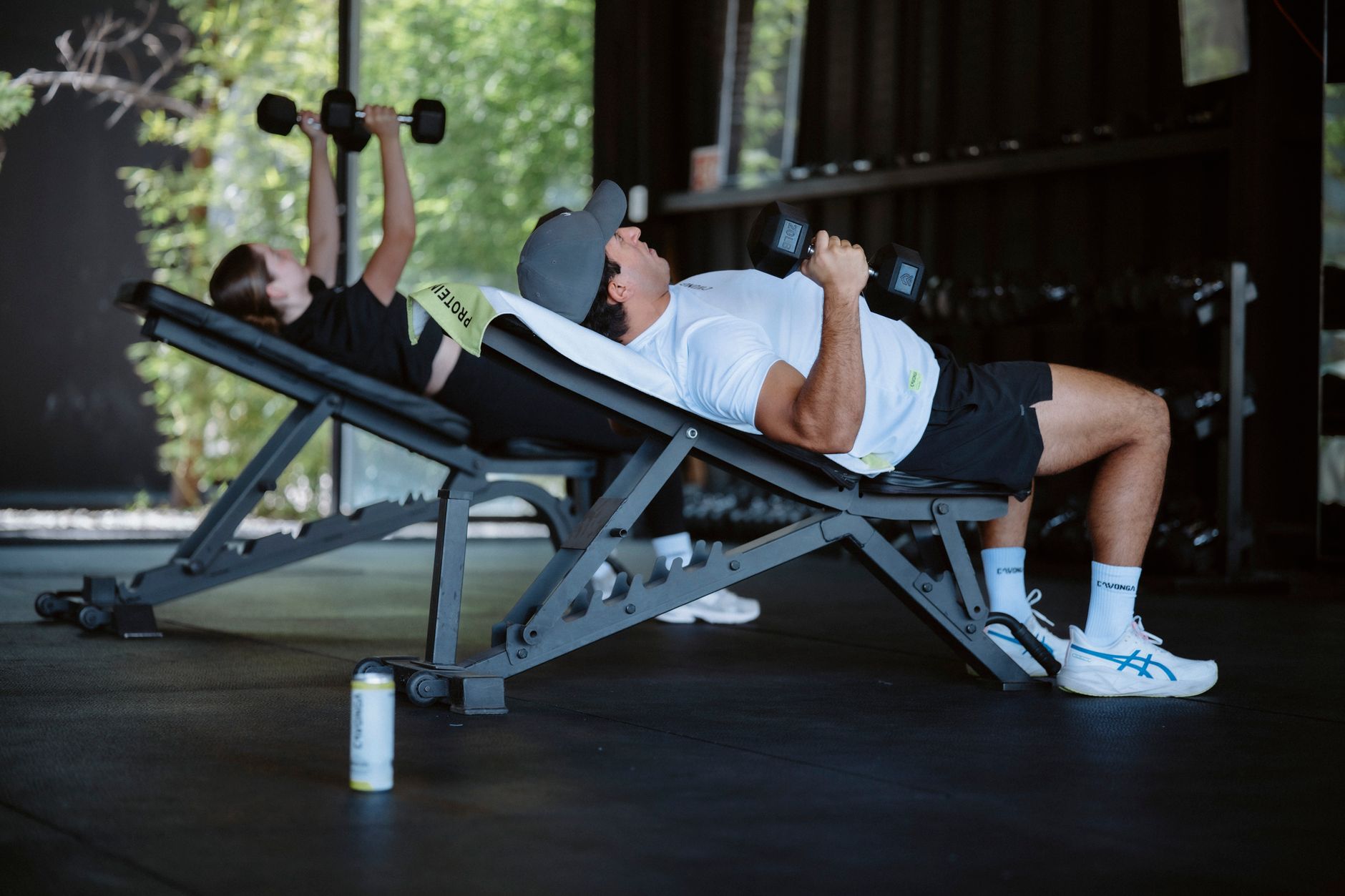
Adjustment mechanism
A ladder mechanism catches a bar in notches along a curved rail, adjusted with a lever. A pop-pin mechanism drops a spring-loaded pin into a hole at each position. Ladder systems generally hold up better under heavy, repeated use. Pop-pin systems adjust faster between exercises but wear sooner. Whichever type, the lock should feel firm and should not creep once you load the bench.
Number of positions
Five to eight backrest positions is standard and covers every angle in the chart above. More positions do not add much in practice — what matters is whether the bench has a position near 35 degrees and another near 80 degrees, since those two cover incline pressing and seated shoulder work, the two most-used non-flat settings.
Weight capacity
A bench rated to at least 272 kg (600 lb) covers your body weight plus a loaded pair of dumbbells for most recreational lifters. The rating includes your own body weight, not just what is in your hands, so factor that in before assuming a lower-rated bench has enough headroom.
Footprint and storage
A standard adjustable bench runs 120 to 130 cm long and 60 to 65 cm wide. Many models fold the backrest down and stand upright for storage, which matters in a garage or spare room where the bench is not permanently set up. Confirm vertical storage before buying if your space is shared with anything else.
Most adjustable benches get set to one or two angles and never touched again after the first week — usually flat and whichever incline felt right by feel. That is not a reason to avoid buying one; it just means the adjustment range matters more when you are deciding which bench to buy than it does once you own it.
When NOT to buy an adjustable bench
Straight up: an adjustable bench is not always the right buy. Here is when to hold off.
You do not have weights to use with it
A bench without dumbbells or a barbell is a seat with angle settings. If you are building a home gym from nothing, buy the weights first and add the bench once you know how much load you are actually training with.
Your space cannot fit it
You need roughly 2 m by 2 m of clear working area to use a bench without constantly reorganising around it — room for your arms during pressing and space to move around the bench for rows and step-ups. If your space is smaller than that, resistance bands or adjustable dumbbells alone are more practical.
Your training is not press-based
If your programme runs on rebounder cardio, walking, or bodyweight circuits, an adjustable bench adds nothing. It is a platform for pressing and supported positions. Do not buy equipment for training you are not currently doing.
You only train competition powerlifting movements
If your training is strictly barbell bench press, squat, and deadlift with no accessory dumbbell work, a simple flat bench inside a power rack covers what you need. The incline and seated positions on an adjustable bench go unused in a programme built entirely around the three competition lifts.
An FID bench with a decline setting is the one upgrade most people should skip. Of the thirteen exercises in this guide, only the decline sit-up needs it, and a flat bench handles that movement almost as well. Spend the difference on better dumbbells instead.
Frequently Asked Questions
What angle should I set an adjustable bench to for incline dumbbell press?
Set the backrest between 30 and 45 degrees for incline dumbbell press. This range shifts emphasis toward the upper chest and front deltoids without turning the movement into a shoulder press. Below 30 degrees the exercise behaves almost like a flat press; above 45 degrees the front delts start doing more of the work than the chest.
Do I need a bench with a decline setting?
Most home gym users training with dumbbells do not need a decline setting. Out of the thirteen exercises in this guide, only one relies on decline, and it has a flat or low-incline alternative that works just as well for most training goals. A decline setting mainly benefits lifters who specifically want to target the lower chest as a deliberate part of a programme.
What is the difference between a ladder and a pop-pin adjustment mechanism?
A ladder mechanism uses a bar that catches in notches along a curved rail, adjusted with a lever or handle. A pop-pin mechanism uses a spring-loaded pin that drops into a hole at each position. Ladder systems tend to hold up better under repeated heavy use, while pop-pin systems are usually quicker to adjust between exercises. Either works fine at home if the locking action feels firm and does not creep under load.
What weight capacity do I need for an adjustable bench?
For most recreational lifters, a bench rated to at least 272 kg (600 lb) covers your body weight plus a loaded pair of dumbbells with room to spare. Lifters pressing heavier loads consistently should look for a rating of 450 kg (1,000 lb) or above. The rating includes your own body weight, not just the load in your hands.
Can I get a full workout using only an adjustable bench and dumbbells?
Yes. Between flat, incline, and seated positions, an adjustable bench and a pair of dumbbells cover chest, shoulders, back, arms, and legs without any other equipment. The sample routine in this guide trains all of those muscle groups in one session using six exercises and three backrest positions.
When should I not buy an adjustable bench?
Skip the adjustable bench if you do not yet own dumbbells or a barbell to use with it, if your training space cannot fit roughly 2 m by 2 m of clear working area, or if your programme is built around cardio or bodyweight training rather than pressing movements. In those cases, the bench sits unused while resistance bands or adjustable dumbbells alone would serve you better.
Related at Flexi Muscles
- Strength Training Equipment — benches, barbells, plates, and racks for your home gym
- Dumbbells — adjustable and fixed-weight dumbbells to pair with your bench
- Lifting Accessories — belts, straps, and gloves to support your pressing
- All Products — the full Flexi Muscles range