

Rowing Machine Buying Guide: Which type to buy and what to check

By Flexi Muscles — 14 October 2026 · 9 min read
The right rowing machine comes down to three things: the resistance type, the floor space you actually have, and whether the rail is long enough for your legs. Magnetic rowers are the quietest and usually fold. Water rowers feel closest to real rowing. Air rowers suit hard training in a garage. Hydraulic piston rowers are the cheapest, and the feel shows it. Everything else, from the screen to the app, matters less than those three.
Shop Cardio Machines at Flexi Muscles
Rowing Machine Types: Air vs Magnetic vs Water vs Hydraulic
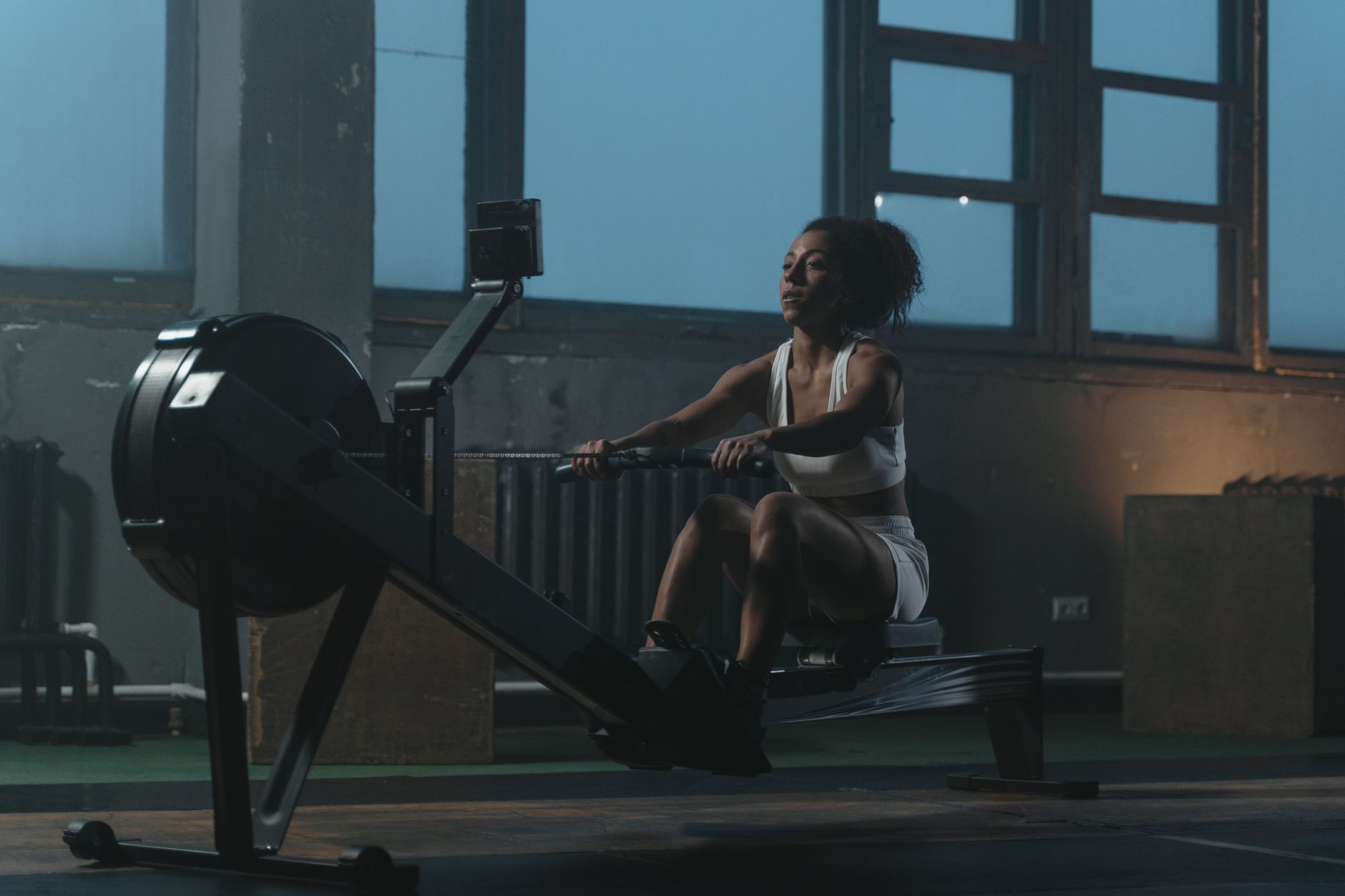
Resistance type is the biggest difference between a budget rower and a premium one. It decides how the stroke feels, how loud the machine is and whether it folds. Pick this first.
| Type | How it feels | Noise | Best for |
|---|---|---|---|
| Air (fan) | Pull harder, get more resistance | Loudest | Garages, interval training, CrossFit-style sessions |
| Magnetic | Smooth, set level stays fixed | Near silent | Flats, beginners, early-morning sessions |
| Water | Closest to rowing on water | Soft whoosh | People who want a natural stroke and will row often |
| Hydraulic (piston) | Short, jerky stroke | Quiet | Very tight budgets and very small rooms |
Air vs magnetic rowing machine
This is the comparison most buyers get stuck on. An air rower has no levels. The fan resists you in proportion to how hard you pull, so an easy stroke is easy and a sprint is brutal. A damper lever changes how much air reaches the fan, but your effort still sets the load. That makes air rowers excellent for intervals and honest about how hard you're working.
A magnetic rower uses magnets near a metal flywheel. You choose a level and it stays there. That's easier for beginners, who can concentrate on the leg drive instead of the load.
Water rowers
A paddle spins inside a sealed tank. Water is about 800 times denser than air, so the resistance builds and fades through the stroke the way a boat does. You set the base intensity by how much water is in the tank. Our Water Rowing Machine works this way, with adjustable footrests and a 35.6 kg shipping weight. Water rowers need a purification tablet in the tank now and then, and most don't fold.
Hydraulic piston rowers
Two pistons under the arms provide the resistance. They're cheap and compact, but the stroke doesn't feel like rowing, and the resistance can change as the oil warms up through a longer session. Buy one only if the budget or the room leaves no alternative.
Space and Storage: Do You Need a Foldable Rowing Machine?

A rowing machine is longer than most people expect. Concept2's RowErg is 244 cm long and 61 cm wide, and the company specifies a working area of 274 cm by 122 cm. That extra room covers the handle travelling forward and your elbows at the finish. Leave at least 30 cm on each side.
Measure before you buy:
- Working length. Machine length plus about 30 cm behind the seat end.
- Storage footprint. Check the folded or upright dimensions on the listing, not just the in-use size.
- Ceiling height. Rowers that stand on end need clearance above the rail.
- Route to the room. A one-piece water rower won't turn a tight corner in a passage.
A foldable rowing machine makes sense if it has to share a lounge or a spare bedroom. Most magnetic models fold the rail up. If the machine has a permanent spot in a garage, skip the fold and put the money into a better flywheel. A rower that lives under the bed gets used about as often as the treadmill that became a clothes rail.
Seat, Rail and Footplates: Will It Fit Your Body?
A machine that forces a bad position will shorten your sessions, then end them. Check three things.
Rail length
Tall users run out of rail first. Concept2's standard monorail fits an inseam up to 96.5 cm. Budget rowers often have shorter rails than that, so if you're over about 1.85 m, look for the rail length in the specs. If your legs straighten before the seat reaches the end of its travel, the rail is long enough. If the seat hits the stopper first, it isn't.
Seat and user weight limit
Weight ratings vary widely. Concept2 tests the RowErg to 227 kg. Many cheaper home rowers rate far lower. Elite Fitness notes that the polyurethane seat wheels used on many home machines suit users up to about 120 kg. If you're close to the stated limit, size up.
Footplates and straps
Adjustable footplates let you set the strap across the widest part of your foot. That keeps your shins vertical at the catch, the front of the stroke. Fixed footplates are a red flag on any rower.
If you can, sit on the machine and row at least 10 strokes before buying. If you can't, read reviews that mention the seat specifically.
Build Quality, Monitor and Warranty

- Frame. Aluminium rails glide smoothly and don't rust. Steel is heavier and stiffer. Either works if the joints don't flex when you pull hard.
- Chain, strap or rope. Chains are durable but need occasional oil. Nylon straps are quieter and need nothing. Water rowers often use a strap.
- Monitor. You need time, distance, strokes per minute and a 500 m split. Anything beyond that is a bonus. Apps and touchscreens add cost without adding fitness.
- Warranty. Elite Fitness puts frame warranties at 5 or 10 years and parts at 90 days to 3 years. Compare the frame and parts terms separately, since they're rarely the same.
Rowing Machine Price in South Africa: Where Your Money Goes
The price goes up with resistance type before anything else. Hydraulic rowers sit at the bottom. Basic magnetic rowers come next. Water and good air rowers sit in the middle and upper range. A commercial air rower like the Concept2 is at the top. Our water rower is R7,599.
Here's the opinion we'll stand behind. Spend your budget on resistance and rail quality, not on a screen. A R7,599 rower used three times a week for one year is 156 sessions, or R48.71 per session. A built-in tablet doesn't lower that number. Getting on the machine does, and a smooth stroke gets people back on more than a screen does.
Power Cuts, Noise and Complex Living
Power. Air, water and hydraulic rowers make their own resistance. Most monitors on these run on batteries, so a power cut doesn't stop your session. Magnetic rowers split in two: manual tension-knob models need no plug, while motorised or electromagnetic ones do. Check for a power cable before you buy.
Noise. In a sectional-title complex or an upstairs flat, an air rower at 5 am will make you unpopular. Magnetic is close to silent. Water makes a steady whoosh you'll hear in the next room but rarely through a wall. Whatever you buy, put a rubber mat under it. That cuts vibration through the floor and protects tiles from the rail feet.
Buying a Second-Hand Rowing Machine
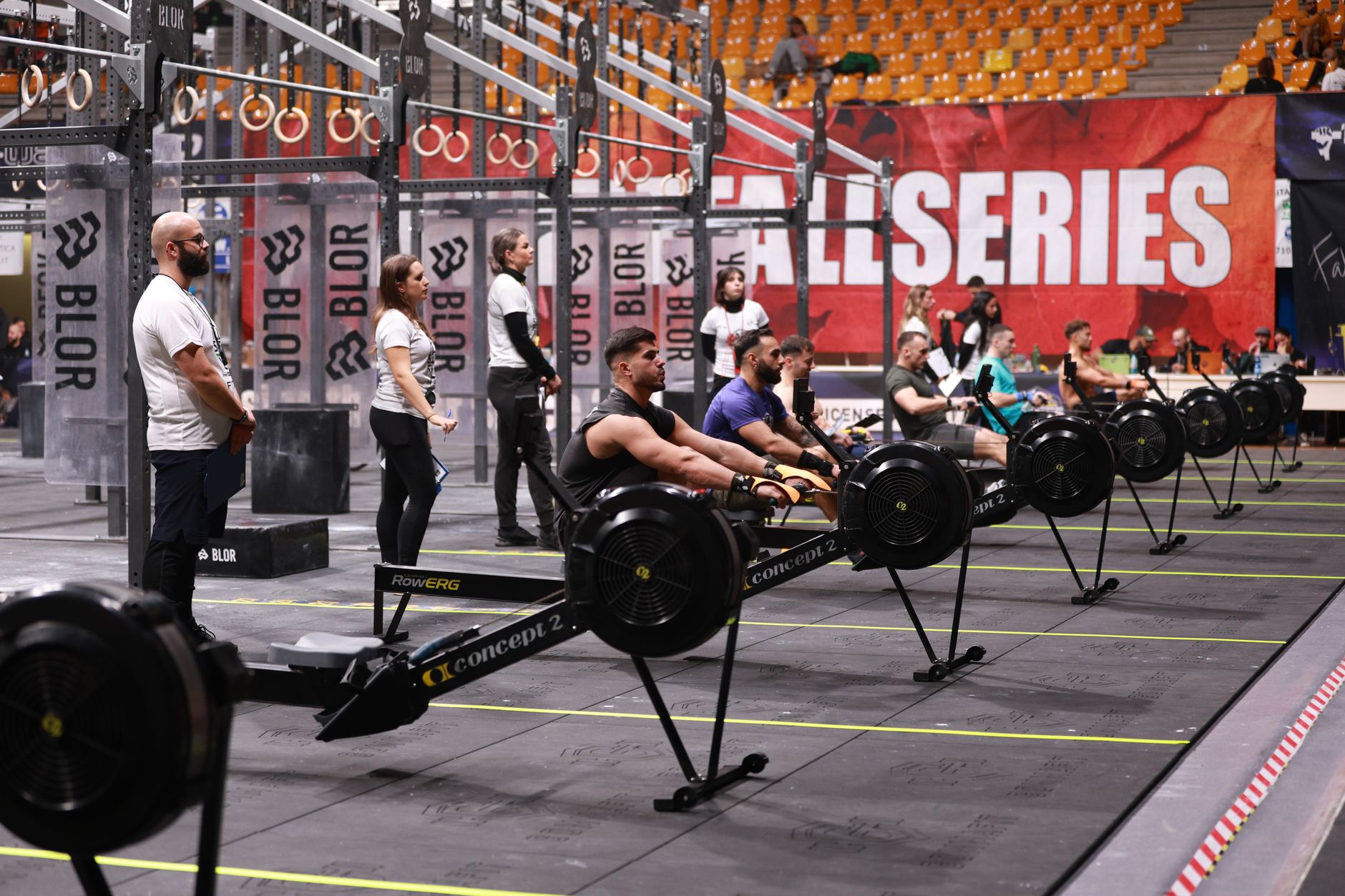
Rowers turn up regularly on Gumtree and Facebook Marketplace, often barely used. A second-hand one can be good value if you check it in person:
- Row 20 hard strokes. Listen for grinding, clicking or a slipping strap.
- Run a finger along the rail. Grooves or pitting make the seat judder.
- Spin the seat wheels. They should roll freely without flat spots.
- On a water rower, look for cloudy water or a scum line. It means the tank hasn't been treated.
- Make sure the monitor powers on and shows a 500 m split.
Walk away from any hydraulic rower that leaks oil, and any rower whose seller won't let you sit on it.
When Not to Buy a Rowing Machine
A rowing machine is the wrong buy if:
- You have a back injury or disc problem and haven't been cleared. Rowing loads the lower back on every stroke. Get medical sign-off first.
- You want to build strength. The resistance is too light. Buy strength training equipment instead, or alongside it.
- You'd have to unpack and pack it away every session, and you know you won't. A spin bike or stepper that stays set up beats a rower that doesn't come out.
- You already have cardio equipment you use. Adding a rower won't double your fitness. Using what you have more often will.
- Your room is under 2.7 m in any usable direction. A stepper or bike will fit where a rower won't.
If you're buying to learn the stroke and build a routine, our rowing machine workout guide covers technique and beginner plans. For reference, Harvard Health puts 30 minutes of moderate rowing at 252 calories for a 70 kg person.
Frequently Asked Questions
What type of rowing machine is best for home use?
For most homes, a magnetic or water rowing machine. Magnetic rowers are the quietest and most of them fold, which suits flats and shared walls. Water rowers give the closest feel to rowing on water and make a softer whoosh than an air fan. Air rowers suit people who train hard and have a garage or a room where noise doesn't matter.
Is a magnetic or air rowing machine better for beginners?
Magnetic is easier for most beginners. You pick a resistance level and it stays put, so you can focus on technique. An air rower's resistance rises the harder you pull, which is great once your stroke is solid but can push beginners into pulling with their arms and back instead of their legs.
How much space do you need for a rowing machine?
Plan for roughly 2.7 m by 1.2 m. Concept2 specifies 274 cm by 122 cm for its RowErg, which is 244 cm long on its own. That extra length and width covers the handle travelling past the front and your elbows swinging out at the finish.
Do rowing machines fold for storage?
Many do, but not all. Most magnetic rowers fold the rail up, and many hydraulic rowers are compact to begin with. Water rowers rarely fold because of the tank, though some stand upright on their end. Check the folded dimensions on the listing before you buy, not just the in-use size.
What is the weight limit on a rowing machine?
It varies a lot by model, so read the spec sheet. Concept2 tests its RowErg to 227 kg. Cheaper home rowers often rate much lower, and Elite Fitness notes that the polyurethane seat wheels used on many home machines suit users up to about 120 kg.
Can a rowing machine replace weight training?
No. Rowing builds fitness and muscular endurance across the legs, back and arms, but the resistance is too light to build serious strength. If strength is the goal, pair two or three rowing sessions a week with dumbbells or a barbell rather than swapping one for the other.
Related at Flexi Muscles
- Cardio equipment, including our water rowing machine
- Strength training equipment to pair with rowing
- Rowing machine workout guide: technique and plans