

Rowing Machine Workout Guide: Technique, Plans and What to Buy

By Flexi Muscles — 2 August 2026 · 13 min read
A rowing machine workout uses a sliding seat and a resistance flywheel to move your legs, back, core and arms through one continuous pulling motion, which is why it reads as a closer to full-body exercise than a stationary bike or treadmill. Harvard Health puts the calorie burn at 252 for a 155lb person doing 30 minutes at a moderate pace, rising to 369 at a vigorous effort — a bigger jump than most cardio machines offer for the same time investment. Technique matters more than resistance setting here, and getting it wrong is the main reason people either strain their lower back or abandon the machine within a month of buying it.
Shop Cardio Equipment at Flexi Muscles
What Is a Rowing Machine Workout?
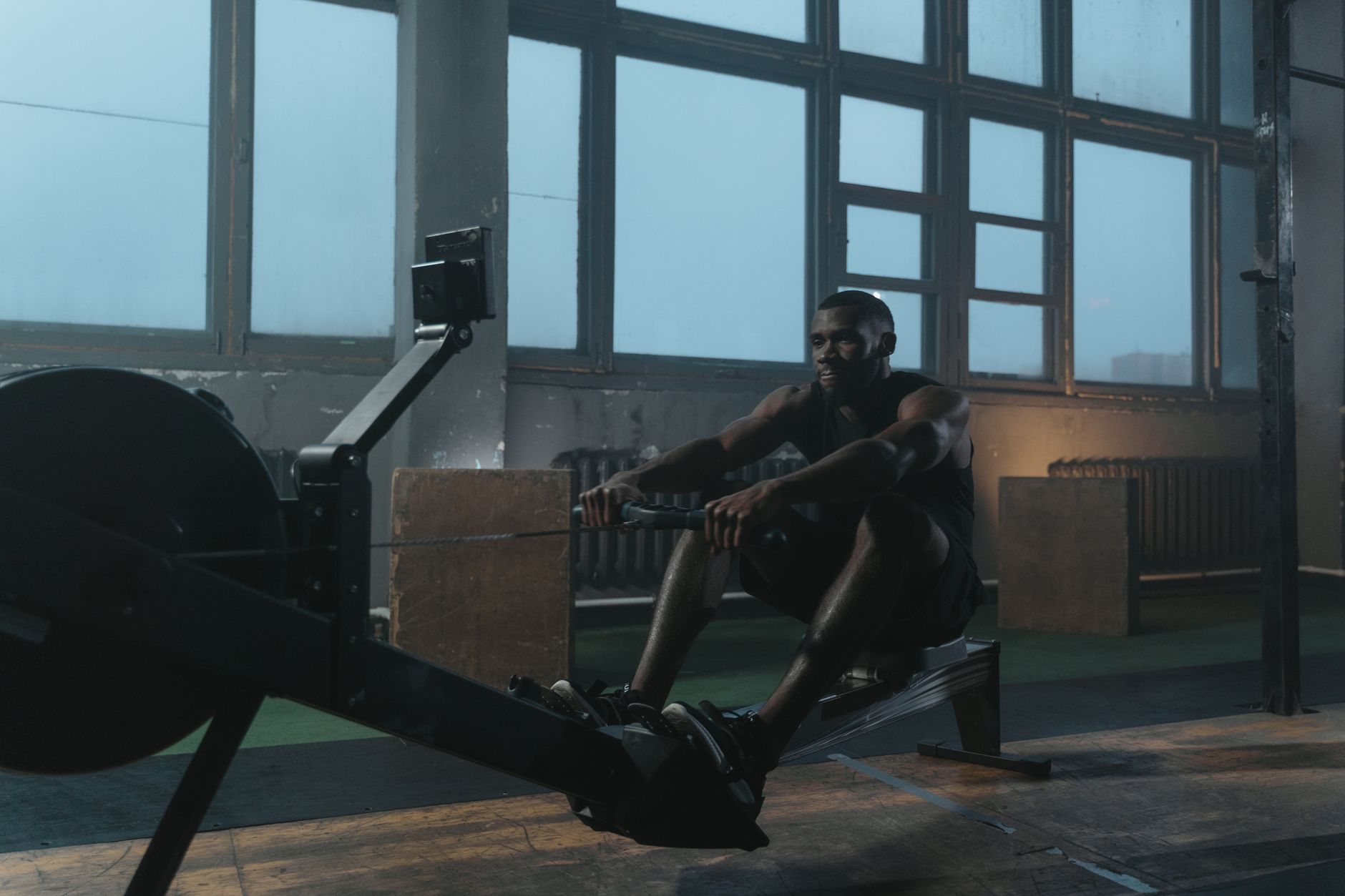
A rowing machine, or ergometer, pairs a sliding seat with a resistance flywheel and a handle attached by chain or strap. Each stroke drives you backward using your legs first, then your back, then your arms, before you glide forward to reset — the same sequence used in on-water rowing, just without the water or the boat.
That sequencing is the whole point. Because the stroke recruits your lower body, core and upper body in a fixed order rather than isolating one group, a rowing machine workout trains cardiovascular fitness and muscular endurance in the same session, which is harder to get from a bike or treadmill on its own.
Rowing exercise vs cycling and running
A stationary bike keeps most of the load in your legs; a treadmill adds impact through your joints with every stride. Rowing spreads the work across roughly 86 percent of your muscles by most trainer estimates, while staying seated and low-impact throughout — you get more total muscle recruitment for a comparable joint cost, provided your technique holds up.
Muscles a Rowing Machine Works
Cleveland Clinic breaks the rowing stroke down into three working groups, and none of them sits idle for long:
- Legs — the biggest contributor, especially as resistance increases; your quads, hamstrings and glutes drive the initial push in the "drive" phase
- Core — your abdominals, obliques, lower back and glutes stabilise your torso through the whole stroke, which is what protects your spine when form is correct
- Upper back and arms — your lats, rear delts, biceps and forearms finish the pull toward your chest, with upper-back engagement doubling as a posture benefit for anyone who sits at a desk all day
Arms feel like they're doing the most work because they're the last thing that moves, but they're the smallest contributor of the three. Rowing hard with your arms and shoulders while your legs stay passive is the fastest way to turn a leg-dominant exercise into an arm workout that fatigues in two minutes.
Types of Rowing Machines: Which One to Buy
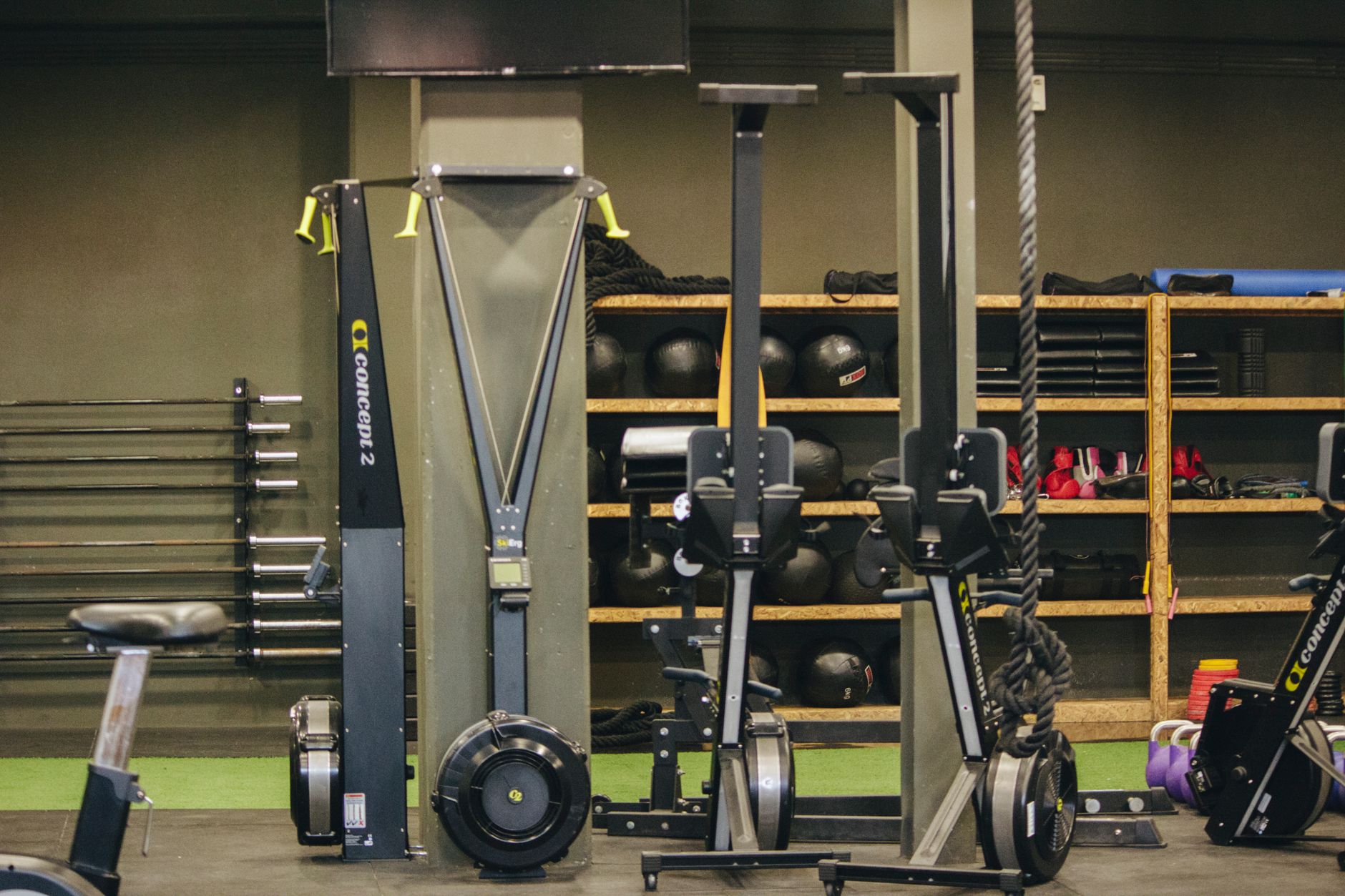
Four resistance types cover almost every rowing machine sold for home use, and they feel different enough under the hands that picking the wrong one is the top reason people stop using theirs.
Air resistance
A spinning fan generates resistance that scales with how hard you pull — row harder, get more resistance, with no dial to set. It's the closest feel to rowing on water and the standard choice for serious training, though the fan is the loudest of the four types, which matters in a flat or a shared room.
Magnetic resistance
A magnetic brake against the flywheel gives smooth, silent, adjustable resistance at a fixed level you set yourself rather than one that responds to effort. It suits early-morning or late-night sessions where noise is a real constraint, at the cost of the more dynamic feel air resistance provides.
Hydraulic piston
Compact, affordable and often foldable, hydraulic rowers use piston cylinders instead of a flywheel, which keeps the footprint small but delivers a choppier, less consistent stroke than air or magnetic models. They're a reasonable entry point for a small space and a tight budget, not the machine to buy if serious training is the goal.
Water resistance
A paddle spinning inside a water tank produces resistance and a genuine splashing sound that mimics being on the water, which is either the main selling point or entirely irrelevant depending on what you're after. Water rowers tend to sit at the premium end of the price range and take up more visual space with the tank, even when the footprint is otherwise similar to an air rower.
For most home gyms, air or magnetic resistance covers the two real priorities — training quality and noise — better than hydraulic or water models do. Browse rowing machines and cardio equipment to compare what's in stock.
How to Use a Rowing Machine: The 4-Phase Stroke

Cleveland Clinic breaks the rowing stroke into four phases, and rushing any one of them is where most bad habits start.
1. The catch
Sit with knees bent, feet secured in the straps, and grab the handle with your shins close to perpendicular to the ground and your upper body tilted forward to roughly the 10 o'clock position on a clock face. This is your loaded starting point for every stroke.
2. The drive
Push back through your legs first, then lean your torso back using your core, and only then pull the handle toward your chest with your arms. Legs, core, arms — in that order, every time, is the entire technique in three words.
3. The finish
Legs fully extended, torso leaned back to roughly 2 o'clock, handle pulled in toward your solar plexus rather than your chin. This is the position most people shorten by accident once fatigue sets in.
4. The recovery
Extend your arms forward first, then hinge your torso forward, then bend your knees to glide back to the catch position. It's the drive sequence in reverse, done slower and with less tension, ready to load the next stroke.
Common mistakes to avoid
- Knees bowing outward during the drive, which strains the hips over repeated sessions
- Locking the knees out hard at the finish instead of extending them under control
- Hunching the shoulders or rounding the upper back, which Cleveland Clinic links to back and shoulder issues over time
- Letting the core disengage, so the lower back takes load it isn't built to carry
- Pulling the handle to the chin instead of the chest, which pulls the shoulders out of alignment
Rowing Machine Workout Plans
Steady state (beginner)
10 to 15 minutes at a pace where you can still hold a conversation, three times a week. Spend this phase locking in the catch-drive-finish-recovery sequence before you worry about speed.
Interval rowing
Once steady state feels easy, alternate 20 seconds of hard effort with 40 seconds of easy rowing, repeated for 10 to 15 rounds. This raises average intensity without pushing the session much past 20 minutes.
Building a weekly plan
Three to five sessions a week of 20 to 30 minutes, mixing steady state with one or two interval sessions, covers the CDC's weekly moderate-activity minimum with room to spare for strength training on the days between:
| Day | Session | Duration |
|---|---|---|
| Monday | Steady state | 15 min |
| Wednesday | Interval rowing | 20 min |
| Friday | Steady state | 20 min |
| Saturday | Interval rowing (optional) | 15 min |
Add five minutes to the steady-state days once the plan feels manageable, rather than bolting on a fifth session immediately. A rower you use three times a week beats one you use twice before it becomes a towel rack.
Training strength on the off days? Browse strength training equipment to round out the week.
Health Benefits of a Rowing Machine Workout
Harvard Health lists moderate-pace rowing at 210 calories in 30 minutes for a 125lb person, 252 for a 155lb person, and 294 for a 185lb person. Push to a vigorous effort and those figures climb to 255, 369 and 440 — a jump of roughly 46 percent at the 155lb mark, for the same 30 minutes on the clock.
Beyond the calorie count:
- Low-impact, high-cardio — Cleveland Clinic calls rowing a low-impact, high-cardio option that reduces wear on the knees and hips compared with running, at a comparable intensity
- Full-body muscle recruitment — legs, core and upper back all work every stroke, which is more than most single cardio machines ask of you
- Postural benefit — the upper-back engagement in each pull counteracts the forward-hunched posture of a desk-bound day
- Core stability — your abdominals and obliques stabilise the torso through the whole stroke, adding a core workout on top of the cardio
- No weather dependency — unlike on-water rowing, a home machine works at 6am in winter
My honest opinion: the calorie-burn number everyone quotes undersells rowing. A 46 percent swing in calories burned between a moderate and a vigorous 30-minute session on the exact same machine, at the exact same weight, means the biggest lever you have isn't a better rower or a pricier resistance type — it's rowing at a pace that actually raises your heart rate instead of one that lets you read your phone between strokes.
Who Should Be Careful With a Rowing Machine
A rowing machine isn't the right first buy for everyone. Get medical clearance first, or consider a different machine, if any of these apply:
- Existing lower back injury or herniated disc — the repeated forward-and-back spinal motion can aggravate a pre-existing injury if form breaks down or the range of motion goes beyond the 10 o'clock to 2 o'clock torso position
- You lean on your arms to finish each pull — if your legs aren't doing the first two-thirds of the work, you're training your arms and shoulders, not getting the full-body benefit the machine is built for
- You can't maintain the 10-2 torso range without extra lean — overreaching at the catch or overleaning at the finish is exactly where the back issues Cleveland Clinic warns about tend to start
- Shoulder impingement or a recent shoulder injury — the pulling motion loads the shoulders through a full range on every stroke, which can aggravate an existing issue before it's fully healed
If none of those apply, a rowing machine gives more muscle recruitment per session than most single pieces of cardio equipment, provided the technique comes before the resistance setting.
Frequently Asked Questions
How many calories does a rowing machine workout burn?
Harvard Health puts moderate-pace rowing at 210 calories in 30 minutes for a 125lb person, 252 for a 155lb person, and 294 for a 185lb person. Push to a vigorous effort and those numbers jump to 255, 369 and 440 — close to a 46 percent increase for the same 30 minutes, just from working harder.
What muscles does a rowing machine work?
Cleveland Clinic identifies the legs as doing the biggest share of the work, particularly as resistance increases, alongside the upper back for posture and a core group that includes the abdominals, obliques, lower back and glutes. The arms finish each stroke but aren't the primary movers, which is why rowing reads as a full-body exercise rather than an arm workout.
Is a rowing machine bad for your back?
Not with correct form, but Cleveland Clinic notes that common mistakes — hunching the shoulders, rounding the upper back, or letting the core disengage during the drive — can lead to back issues, spasms and shoulder problems. Anyone with an existing lower back injury or herniated disc should get medical clearance and keep the range of motion within the 10 o'clock to 2 o'clock torso position rather than leaning further back.
How long should a rowing machine workout be?
20 to 30 minutes, three to five times a week, covers the CDC's 150-minute weekly moderate-activity guideline comfortably. Beginners should start at 10 to 15 minutes of steady, conversational-pace rowing and add time before adding intensity.
What's a good rowing machine workout for beginners?
Row for 10 to 15 minutes at a pace where you could still hold a conversation, focusing entirely on the catch, drive, finish and recovery sequence rather than speed or resistance. Once the technique feels automatic, add short 20-second intervals of harder effort followed by 40 seconds of easy rowing, building up gradually from there.