

Kettlebell Exercises for Beginners: 8 Moves and a 4-Week Plan

By Flexi Muscles — 15 October 2026 · 9 min read
The best kettlebell exercises for beginners are the deadlift, goblet squat, two-handed swing, single-arm row and overhead press, learned in roughly that order. Add a farmer's carry, a single-leg deadlift and the halo, and you have 8 moves that train every major muscle group with one bell. Do them 3 days a week, 3 to 4 sets each, and add reps before you add weight.
Shop Kettlebells and Strength Equipment
Before you start: weight, space and floor
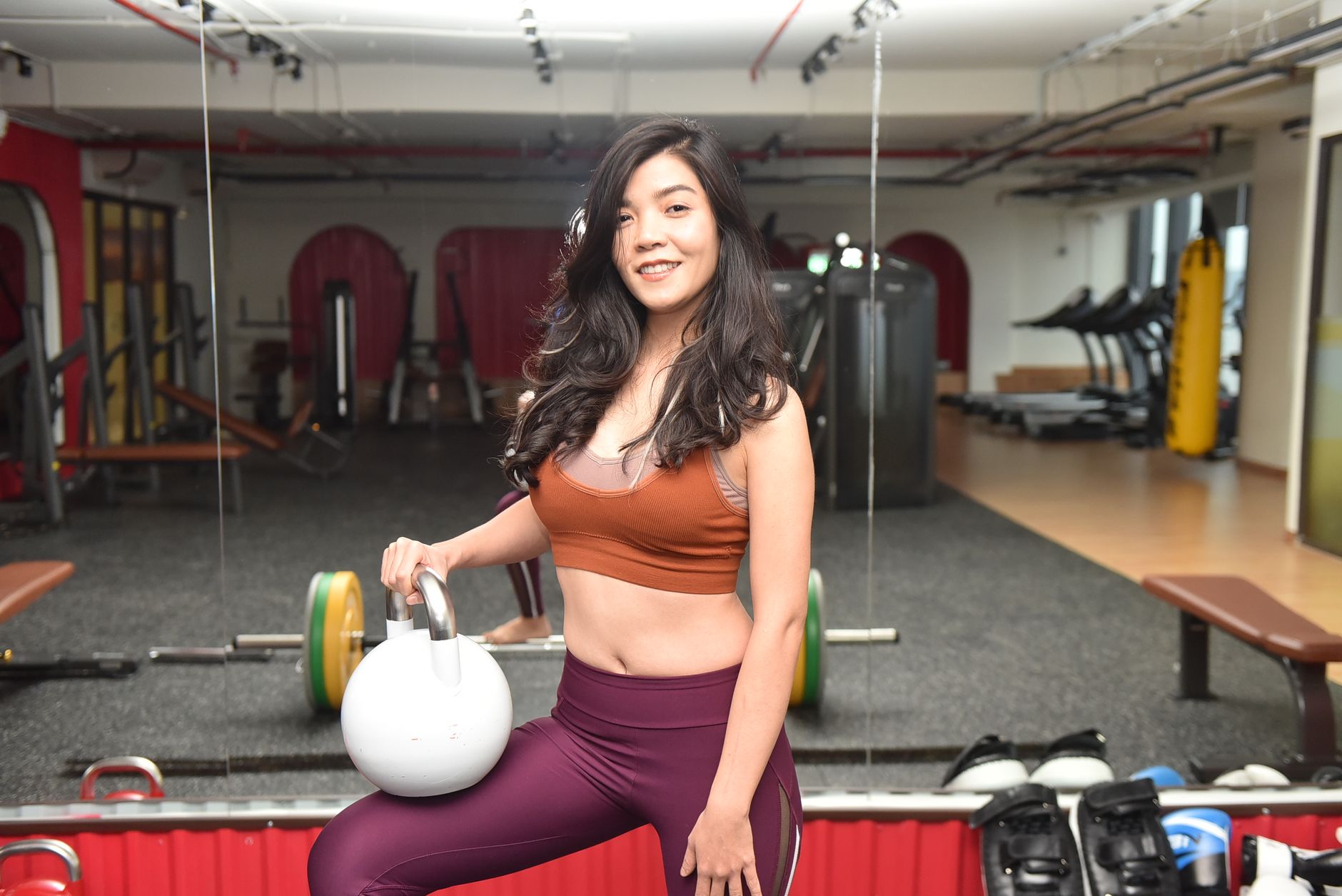
Pick one bell
Most women new to weight training start at 8 to 12 kg. Most men start at 12 to 16 kg. Test it with 10 goblet squats. If the last two or three reps are hard but your form holds, the weight is right.
Here's our view: don't buy a set. One 12 kg bell at R879 runs every session in the plan below. Buy the second bell when the first one gets easy, not before.
Our rubber-coated cast iron kettlebells come in 2 kg to 32 kg. The range jumps from 14 kg to 20 kg, so if you'd normally start at 16 kg, take the 14 kg and progress with reps.
Clear the space
You need a patch about 2 m by 2 m. Swings travel forward, so stand facing a wall, not the TV. A bell that slips goes where your hips sent it, and your hips don't know what the TV cost.
Protect the floor
Most South African homes have tiles. A rubber-coated bell is kinder to them than bare iron, but put a rubber mat down anyway. Never drop a bell from the top of a swing or press. Lower it with control every time.
8 kettlebell exercises for beginners, in learning order

The order matters. Each move teaches something the next one needs. For full step-by-step form on the swing, goblet squat, row, press and Turkish get-up, see our kettlebell buying and technique guide.
1. Halo (warm-up)
Hold the bell upside down by the horns at chest height. Circle it slowly around your head, keeping it close. It warms up the shoulders and teaches you to brace your trunk. 5 to 8 circles each direction.
2. Kettlebell deadlift
Stand over the bell, feet hip-width apart. Push your hips back, keep your back flat, and grip the handle. Stand up by driving through your heels. This is the hip hinge, and every swing you ever do depends on it. 3 sets of 8 to 10.
3. Goblet squat
Hold the bell by the horns against your chest. Squat between your heels with your chest tall and elbows inside your knees. The weight in front helps most people squat deeper than they can without it. 3 sets of 8 to 10.
4. Two-handed swing
Start with deadstop swings. Hike the bell back, drive your hips forward so it floats to chest height, then park it on the floor before the next rep. Each reset lets you check your setup. Move to continuous swings once the deadstop version feels automatic. 4 sets of 10 to 15.
5. Single-arm row
Put one hand and knee on a bench or chair. Pull the bell to your hip with a flat back and no twisting. It balances out all the pressing and builds grip. 3 sets of 8 to 10 per side.
6. Overhead press
Hold the bell in the rack position: handle in your palm, bell resting on your forearm, elbow tucked. Press straight up until your bicep is by your ear. Expect to press less than you swing. 3 sets of 5 to 8 per side.
7. Farmer's carry
Pick the bell up in one hand and walk tall without leaning. Your core works to stop you tipping sideways. It's the easiest move here to learn and one of the hardest to finish. 3 walks of 15 to 30 m per side.
8. Single-leg deadlift
Hold the bell in one hand. Hinge on the opposite leg with a soft knee while your free leg extends behind you. Go slowly. Balance is the hard part, not the weight. 3 sets of 6 to 8 per side.
Leave the Turkish get-up until after week 4. It's worth learning, but it has seven steps, and you'll learn it faster once the basics feel natural.
A 4-week kettlebell workout for beginners

Train 3 days a week and alternate Day A and Day B: Monday A, Wednesday B, Friday A, then B, A, B the next week. That clears the CDC guideline of at least 2 days of muscle-strengthening activity a week. Rest 60 to 90 seconds between sets. Start every session with the halo.
| Weeks | Day A | Day B |
|---|---|---|
| 1–2: learn | Deadlift 3×10 Goblet squat 3×8 Row 3×8 per side Farmer's carry 3×15 m per side |
Deadlift 3×10 Deadstop swing 4×8 Press 3×5 per side Single-leg deadlift 2×6 per side |
| 3–4: build | Goblet squat 3×10 Swing 4×12 Row 3×10 per side Farmer's carry 3×30 m per side |
Deadlift 3×10 Swing 4×15 Press 3×8 per side Single-leg deadlift 3×8 per side |
Each session takes 25 to 35 minutes. If a set breaks your form, stop the set there. A rep done badly teaches the wrong pattern.
How to progress after week 4
Add one rep per set each week until you reach the top of the range. Then go up a weight, drop back to the bottom of the range, and build again.
- Swings and squats go up first. Your legs and hips will outgrow the bell long before your shoulders do.
- Keep the lighter bell for presses. That's when a second bell earns its place.
- Add the Turkish get-up. Start with 1 to 3 slow reps per side with a light bell.
- Try a swing finisher. 15 swings at the start of every minute for 5 minutes, then stop.
If you'd rather add weight in 1 or 2 kg steps, especially for presses, dumbbells and other strength equipment make smaller jumps easier.
Beginner mistakes that stall progress

- Squatting the swing. If your knees travel forward and your hips drop, you're squatting. Push your hips back instead, like closing a car door with your bum.
- Lifting with the arms. In a swing, your arms are ropes. The hips do the work.
- Starting too light. A 4 kg bell won't teach you to brace. If 10 swings feel like nothing, go heavier.
- Bruised forearms. In the rack and press, the bell should roll around your wrist, not flip over and slam into it. Keep your grip loose and your wrist straight.
- Torn hands. Calluses tear on swings. Keep them filed down, and stop when your grip starts sliding. A pair of training gloves or grips helps if your hands are still toughening up.
When kettlebells aren't the right tool
- You have a lower-back injury or disc problem. Swings load the lower back at speed. Get cleared first, and start with deadlifts only.
- You want big arms or a bigger chest. Kettlebells are awkward for curls and bench work. Dumbbells do that job better.
- You have no clear floor space. If 2 m by 2 m isn't free, swings aren't safe. Stick to squats, rows and presses, or train outside.
- You want to lift very heavy. A barbell lets you load far more than any single kettlebell.
For pure fitness, the American Council on Exercise found experienced users burned an average of 272 calories in a 20-minute kettlebell snatch workout. You'll burn less while learning, and that's fine. Technique first.
Frequently Asked Questions
What size kettlebell should a beginner buy?
Most women new to weight training start at 8 to 12 kg and most men at 12 to 16 kg. If you can do 10 goblet squats and the last two or three are hard but your form holds, the weight is right.
Should a beginner start with kettlebells or dumbbells?
Either works for squats, rows and presses. Kettlebells are better if you want swings and carries that train strength and fitness together. Dumbbells are better if you want to add weight in small steps or train arms and chest in isolation.
How many days a week should a beginner train with kettlebells?
Three days a week with a rest day between sessions. That clears the CDC guideline of at least 2 days of muscle-strengthening activity a week and gives your hands and lower back time to adapt.
Can you build muscle with kettlebell training?
Yes, especially in the legs, glutes, back and shoulders, as long as the weight keeps going up. Once a single bell gets easy for presses and squats, you need a heavier bell or a second one to keep building.
Should you learn the kettlebell swing or the press first?
Learn the deadlift first, then the swing. The swing is a fast deadlift, so the hip hinge has to be solid before you add speed. The press can be learned alongside either one with a lighter bell.
How many calories does a kettlebell workout burn?
In an American Council on Exercise study, experienced kettlebell users burned an average of 272 calories in a 20-minute snatch workout. Beginners doing slower deadlifts and squats will burn less, but swings push the number up quickly.
Related at Flexi Muscles
- Rubber coated cast iron kettlebells, 2 kg to 32 kg
- Strength training equipment
- Lifting accessories
- Best kettlebells for a home gym