

Exercise Jump Rope: 10 skipping exercises and a 4-week plan

By Flexi Muscles — 25 October 2026 · 7 min read
An exercise jump rope gives you a hard cardio workout in 10 minutes. Start with the basic bounce for 30 seconds, rest for 30, and repeat. Then add footwork such as high knees, side-to-side jumps and the boxer step. Three short sessions a week is enough to build fitness.
Why skipping exercise works
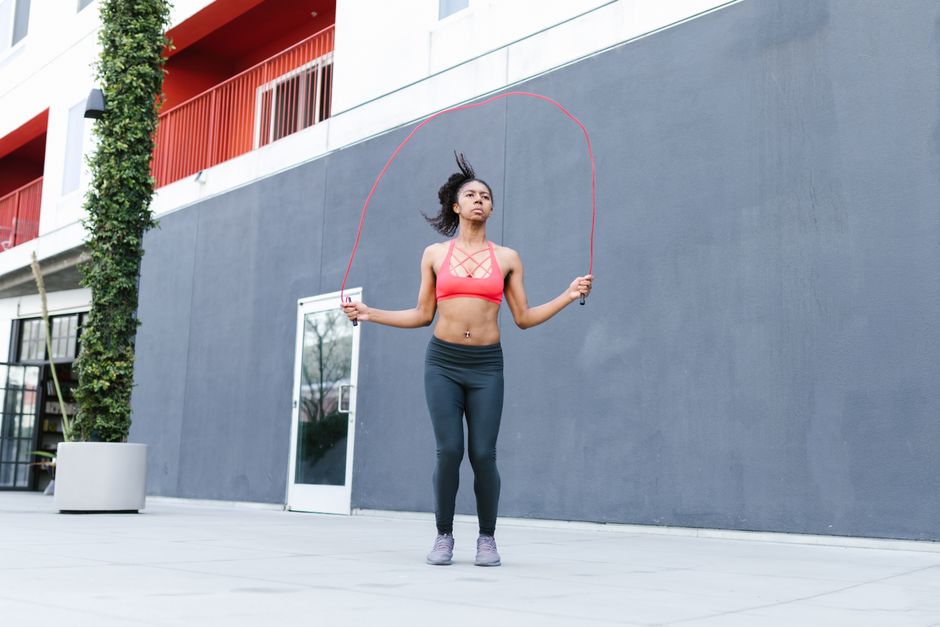
- It's hard cardio. The 2024 Adult Compendium of Physical Activities rates general rope skipping at 11.0 METs. That's about 128 calories in 10 minutes for a 70kg person.
- It trains coordination. Your hands, feet and timing all have to work together, which is why boxers have used it for decades.
- It works your legs and more. Calves and ankles do most of the work, with your thighs, core and shoulders helping.
- It's cheap and portable. A rope fits in a pocket. You can skip in a garage, on a patio or in a hotel car park.
- You choose the intensity. Slow and steady is a warm-up. Fast intervals are as hard as a sprint.
Our view: you don't need long sessions. Most people quit skipping because they try to go for 30 minutes and their calves give up after five. Ten good minutes, three times a week, beats one heroic session that leaves you limping. At 128 calories for 10 minutes, it's already one of the most efficient things you can do with a spare quarter of an hour.
Sizing your exercise jump rope, plus shoes and surface

Rope length
Stand on the middle of the rope with one foot and pull the handles up. For beginners, the tops of the handles should reach your armpits. Once you're comfortable, shorten it so they reach your lower chest. A rope that's too long catches the floor in front of you, and a rope that's too short hits your feet.
Our adjustable jump rope has a steel cable with small screws at each handle. To shorten it, loosen the screw, slide the cable through to the length you want and tighten it again. Wait a week before you trim the extra cable with wire cutters, in case you want it longer again.
Shoes
Wear trainers with some cushioning under the ball of the foot. Running or cross-training shoes are fine. Don't skip barefoot or in flat canvas shoes on a hard floor; your calves and shins will feel it the next day.
Surface
Best to worst: a sprung wooden floor, a rubber gym floor or an exercise mat, a wooden deck, concrete or tiles. Avoid grass and carpet, which catch the rope. If you only have tiles, put a firm mat down. Also check the ceiling: you need about 30cm of clear space above your head.
How to jump rope with good form
- Elbows close to your sides. Your hands sit just in front of your hips.
- Turn the rope with your wrists. Big arm circles tire you out and slow the rope.
- Jump low. About 2–3cm off the floor, just enough for the rope to pass.
- Land on the balls of your feet. Knees slightly bent, heels just off the floor.
- Look ahead. Looking down at your feet pulls your shoulders forward.
If you can't get the timing yet, practise without the rope. Hold both handles in one hand and swing the rope at your side while you bounce. Your feet learn the rhythm without the trips.
10 exercises using a rope

Beginner
- Basic bounce. Both feet together, one small jump per turn of the rope. Master this first.
- Alternate foot step. Like jogging on the spot, one foot at a time over the rope. Easier on the calves.
- Side-to-side. Feet together, hop a few centimetres left, then right.
- Front-to-back. Feet together, hop forward, then back.
Intermediate
- Boxer step. Shift your weight from one foot to the other with a small bounce on each. This is how boxers skip for rounds at a time.
- High knees. Jog over the rope, lifting each knee to hip height. Great for intervals.
- Butt kicks. Jog over the rope, kicking your heels towards your bum.
- Single-leg hops. Five hops on one foot, then five on the other. Builds ankle strength.
Advanced
- Criss-cross. Cross your arms in front of you on every second turn, then open them again.
- Double unders. Jump a little higher and spin the rope twice under your feet in one jump. Expect a few whipped shins while you learn.
Jump rope workouts for every level
Beginner: 10 minutes
30 seconds of basic bounce, 30 seconds rest. Repeat 10 times. Swap in the alternate foot step whenever your calves burn.
Intermediate: 15 minutes
Three rounds of: 1 minute boxer step, 30 seconds high knees, 30 seconds side-to-side, 1 minute basic bounce. Rest 1 minute between rounds.
Advanced: 20 minutes
Ten rounds of: 20 seconds double unders or fast high knees, 40 seconds boxer step, then 1 minute rest.
Combining it with other training
- As a warm-up: 3–5 minutes of easy skipping before lifting.
- In a circuit: 1 minute of skipping between sets of squats, push-ups and rows.
- As a finisher: 5 minutes of intervals at the end of a strength session.
For more ways to build cardio at home, see our cardio exercise guide.
A 4-week plan for beginners

Three sessions a week with a rest day between. The goal is 10 minutes of skipping in total by week four.
| Week | Work / rest | Rounds | Total skipping |
|---|---|---|---|
| 1 | 20 sec / 40 sec | 8 | About 3 minutes |
| 2 | 30 sec / 30 sec | 10 | 5 minutes |
| 3 | 45 sec / 30 sec | 10 | 7.5 minutes |
| 4 | 1 min / 30 sec | 10 | 10 minutes |
If your shins or calves are still sore two days later, repeat the week instead of moving on. After week four, start adding the intermediate moves. If you want a full programme to pair it with, our 4-week home gym programme fits around three skipping days.
When skipping isn't for you
- You have joint, shin or Achilles problems. Skipping is high-impact. Check with a physio and pick a low-impact option such as a bike or rower.
- You're returning from an ankle sprain. Rebuild balance and strength first, then start with the alternate foot step.
- You have no space. You need clear floor, a firm surface and head room. A low ceiling or a soft carpet will fight you.
- You live upstairs with thin floors. Your downstairs neighbours will hear every jump. Skip outside instead.
- You hate the sting. A steel cable speed rope like ours spins fast, and it stings when it catches your legs. A thicker PVC rope is slower and kinder while you learn.
The rope also comes in handy for boxing and HIIT; browse the rest of our fitness accessories for gloves, wraps and more.
Frequently Asked Questions
Is jumping rope for 10 minutes enough?
Yes, for most people. Ten minutes of steady skipping is a hard cardio session, and it burns roughly 128 calories for a 70kg person. Do it three times a week and build up from there if you want more.
How often should I do a jump rope workout?
Three times a week is a good start, with a rest day between sessions. Skipping is high-impact, so your calves, ankles and shins need time to adapt. Once 10 minutes feels easy, you can add a fourth day.
Can jumping rope help with weight loss?
It can help, because it burns a lot of energy in a short time. Weight loss still depends mostly on your total diet and activity across the week. Skipping is a good way to add cardio, not a replacement for eating well.
How long should my jump rope be?
Stand on the middle of the rope with one foot. For a beginner, the handles should reach your armpits. As you get better, shorten it so the handles reach your lower chest. A shorter rope spins faster but is less forgiving.
Is jumping rope bad for your knees?
Not when done with good form: small jumps, soft landings on the balls of your feet and a forgiving surface. If you have existing knee or joint problems, check with a doctor or physio first and start with very short sets.