

Best weights for a home gym beginner: What to buy first, and what can wait
By Flexi Muscles — 1 October 2026 · 9 min read
The best weights for a home gym beginner are a pair of adjustable dumbbells and a set of resistance bands. That pair covers every main movement, fits in a cupboard, and keeps working as you get stronger. Add one kettlebell after about three months. Leave the barbell, plates and rack until your dumbbells stop being heavy enough, usually six to twelve months in.
Shop Dumbbells at Flexi Muscles
Three questions to answer before you buy
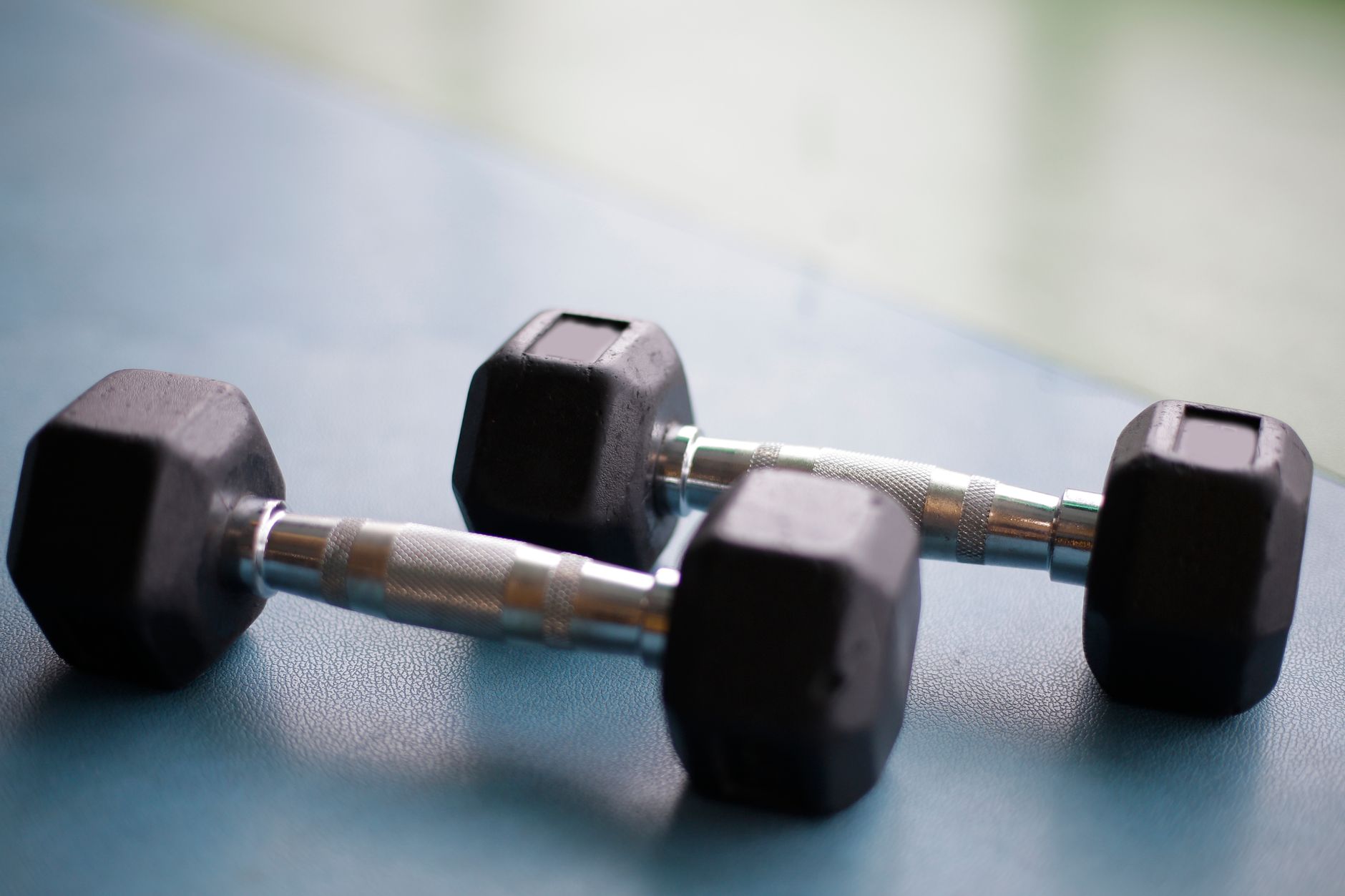
Most beginners buy weights twice. They buy a cheap light set, outgrow it, then buy what they should have bought first. Three answers stop that from happening.
1. What is the goal?
General fitness and toning need a range of light to moderate weights. Building muscle needs weights that keep getting heavier. Getting strong on squats and deadlifts eventually needs a barbell. If you are not sure yet, plan for muscle. It is the most common goal and the easiest to scale back from.
2. How much floor space can you give up?
A pair of adjustable dumbbells and a band set fit in under a square metre. A barbell needs roughly 2.5 metres of width plus room to load plates. Measure before you buy, not after.
3. Who else will use it?
If a partner or teenager will train too, you need a wider spread of weights and something quick to change. That pushes you toward dial-type adjustable dumbbells over spin-lock handles.
The best weights for a home gym beginner, in buying order
This is the order we would buy weight lifting equipment for beginners in. Each step only makes sense once the one before it is too easy.
| When | Buy | Why now |
|---|---|---|
| Day one | Adjustable dumbbells, resistance bands, a mat | Covers every main movement in the least space |
| Around 3 months | One kettlebell, a flat or adjustable bench | Adds swings and carries; the bench opens up presses and rows |
| 6 to 12 months | Barbell, plates, squat rack | Only once dumbbells max out on squats and deadlifts |
Day one: adjustable dumbbells and bands
Adjustable dumbbells replace a whole rack of fixed pairs. You can press, row, squat, lunge and deadlift with them, one arm or two. Resistance bands fill the gaps dumbbells handle badly: pull-apart movements, glute work, and assisted pull-ups later on. They also travel.
Around three months: a kettlebell and a bench
Swings, goblet squats and carries are easier to learn with a kettlebell than a dumbbell. One moderate bell is enough at this stage. A bench turns floor presses into proper bench presses and makes rows steadier.
Six to twelve months: the barbell, if you need it
Buy a barbell when your heaviest dumbbells feel light on squats and deadlifts. Not before. It is the most expensive, heaviest and largest step, and it needs a rack to be safe on squats.
Home gym free weight equipment compared

Here is how the main types of home gym free weight equipment stack up for someone just starting.
| Type | Good for beginners? | Space | Main catch |
|---|---|---|---|
| Adjustable dumbbells | Best first buy | Very small | Slower to change; not for dropping |
| Fixed dumbbells | Good, if you buy several pairs | Grows with every pair | One pair is rarely enough |
| Resistance bands | Yes, alongside weights | A drawer | Hard to measure progress |
| Kettlebell | Second buy | Small | One weight can't suit every exercise |
| Barbell and plates | Later | Large | Needs a rack and bench to use safely |
What to check before you pay
Material
Cast iron is the cheapest per kilogram and lasts forever, but it marks floors and can rust in a damp garage. Rubber coating protects tiles and keeps the noise down, which matters in a flat. Neoprene and vinyl are fine for light pairs but tear over time.
How it adjusts
Spin-lock handles use collars that screw on and off. They are cheap and sturdy, but each change takes a minute. Dial and selector designs change in seconds and cost more. If you switch weight between exercises a lot, the faster system is worth it.
The smallest jump
Look at the gap between settings. Jumps of 2 to 2.5 kg per hand are fine for squats. For shoulder presses, a big jump can stall you for weeks. Smaller steps are better for beginners.
Hole size, for plates
Standard plates have a 25 mm (1-inch) hole. Olympic plates have a 50 mm hole. They do not swap. If you might buy a barbell later, choose a system that uses Olympic plates now.
How heavy to start

Pick a weight you can lift for 10 to 15 clean reps, where the last two feel hard. For most beginners that is roughly 2 to 7 kg per hand for presses and curls, and 5 to 12 kg per hand for squats, lunges and rows. That spread is the whole argument for adjustable dumbbells. No single fixed pair covers it.
Here is our one strong opinion: skip the bright 1 to 3 kg vinyl dumbbell sets sold as “beginner” kits. Your legs and back are already far stronger than your arms, and those weights are too light to challenge them from week one. You end up buying again within a month. Life is short, as the gym saying goes. Lift heavy things, once your form is ready.
For a full breakdown by experience level and goal, see our guide to dumbbell weight for home workouts.
Compact weights for home: small flats and shared rooms
None of the top buying guides deal with the most common South African home gym: a corner of a bedroom, a spare room that is also an office, or a flat with neighbours below. Compact weights for home use need to pass three tests.
- Storage. Adjustable dumbbells in their cradles slide under a bed or into a cupboard. A band set fits in a drawer. Avoid anything that needs its own rack in year one.
- Noise. Rubber-coated weights and a thick mat keep the people downstairs on your side. Cast iron on tiles does not.
- Floor. A 10 to 15 mm rubber mat under your training spot protects tiles and laminate from the day you set a weight down too hard.
With dumbbells, bands and a mat, a full-body session needs only about 2 by 2 metres of clear floor.
The best place to buy weights for a home gym

The best place to buy weights for a home gym is a local specialist that shows real weights, sizes and delivery terms up front. Weights are heavy, so delivery and returns matter more than with most products.
Local fitness store, online
You get local delivery, a local returns address, and someone to ask if a part is missing. Check that the listing gives the weight per dumbbell, not per pair, and that the plate hole size is stated.
Large marketplaces
The range is wide, but weights shipped from overseas take longer and are costly to send back. Read reviews for loose collars, mislabelled weights and coatings that peel.
Second-hand
Cast iron plates and fixed dumbbells buy well second-hand. Weigh them if you can. Avoid used adjustable dumbbells unless you can test every setting, because a worn locking mechanism is a safety problem, not a cosmetic one.
When not to buy weights yet
We sell weights, and these are the times we would tell you to wait:
- You have never trained at all. Two to four weeks of bodyweight squats, push-ups and lunges, plus a band set, will show you whether the habit sticks before you spend more.
- You have a current injury. Get it cleared by a physio first. They may want you on bands before weights anyway.
- You already have a gym membership you use. Buy a band set for the days you can't get there and keep the membership.
- You are shopping for a barbell in month one. Buy dumbbells. The barbell will still be there when you need it.
If none of those apply, two strength sessions a week is the target. That is the World Health Organization's recommendation for adults, and dumbbells plus bands are enough to hit it.
Frequently Asked Questions
What weights should a beginner buy first for a home gym?
A pair of adjustable dumbbells and a set of resistance bands. Together they cover pushing, pulling, squatting and hinging, they fit in a cupboard, and the dumbbells grow with you. Add a kettlebell after about three months and a barbell only once you have outgrown the dumbbells.
Are adjustable dumbbells good for beginners?
Yes. They replace a rack of fixed pairs, take up the floor space of a shoebox, and let you add small amounts of weight as you get stronger. Spin-lock models are cheaper and slower to change. Dial or selector models cost more but change in seconds, which matters if two people share them.
How heavy should beginner dumbbells be?
Heavy enough that you can do 10 to 15 clean reps and the last two feel hard. For most beginners that is roughly 2 to 7 kg per hand for presses and curls, and 5 to 12 kg per hand for squats, lunges and rows. That spread is why one adjustable pair beats a single fixed pair.
Do I need a barbell as a beginner?
No. A barbell only earns its space once your dumbbells max out on squats and deadlifts, which for most people takes six to twelve months. It also needs plates, a rack and a bench to be useful and safe, so it is the most expensive and space-hungry step.
Are kettlebells or dumbbells better for beginners?
Dumbbells. They suit more exercises and are easier to learn with. A kettlebell is a strong second purchase for swings, goblet squats and carries, but one fixed kettlebell cannot cover the range of weights a beginner needs across different exercises.
Can I drop adjustable dumbbells?
No. Most adjustable dumbbells are not built to be dropped, and dial or selector models can crack or jam. Lower them to the floor or back into their cradle. If you train somewhere you are likely to drop weights, rubber-coated fixed dumbbells are the safer buy.
Related at Flexi Muscles
- Dumbbells — adjustable and fixed pairs for your first purchase
- Resistance Bands — the cheapest way to fill the gaps dumbbells leave
- Strength Training Equipment — kettlebells, benches, barbells and racks for later stages