

Dumbbell Weight for Home Workouts: How Much Should You Buy?

By Flexi Muscles — 5 July 2026 · 12 min read
The right dumbbell weight for a home workout is not one number — it depends on the exercise, your experience, and your sex. As a starting point, most beginners need a light pair between 2 and 5 kg for isolation moves like curls and raises, and a heavier pair between 8 and 12 kg for compound moves like rows and squats. From there, the weight you should buy comes down to whether you are training for muscle, strength, or fat loss.
Shop Dumbbells at Flexi Muscles
Dumbbell weight for home workouts, by experience level
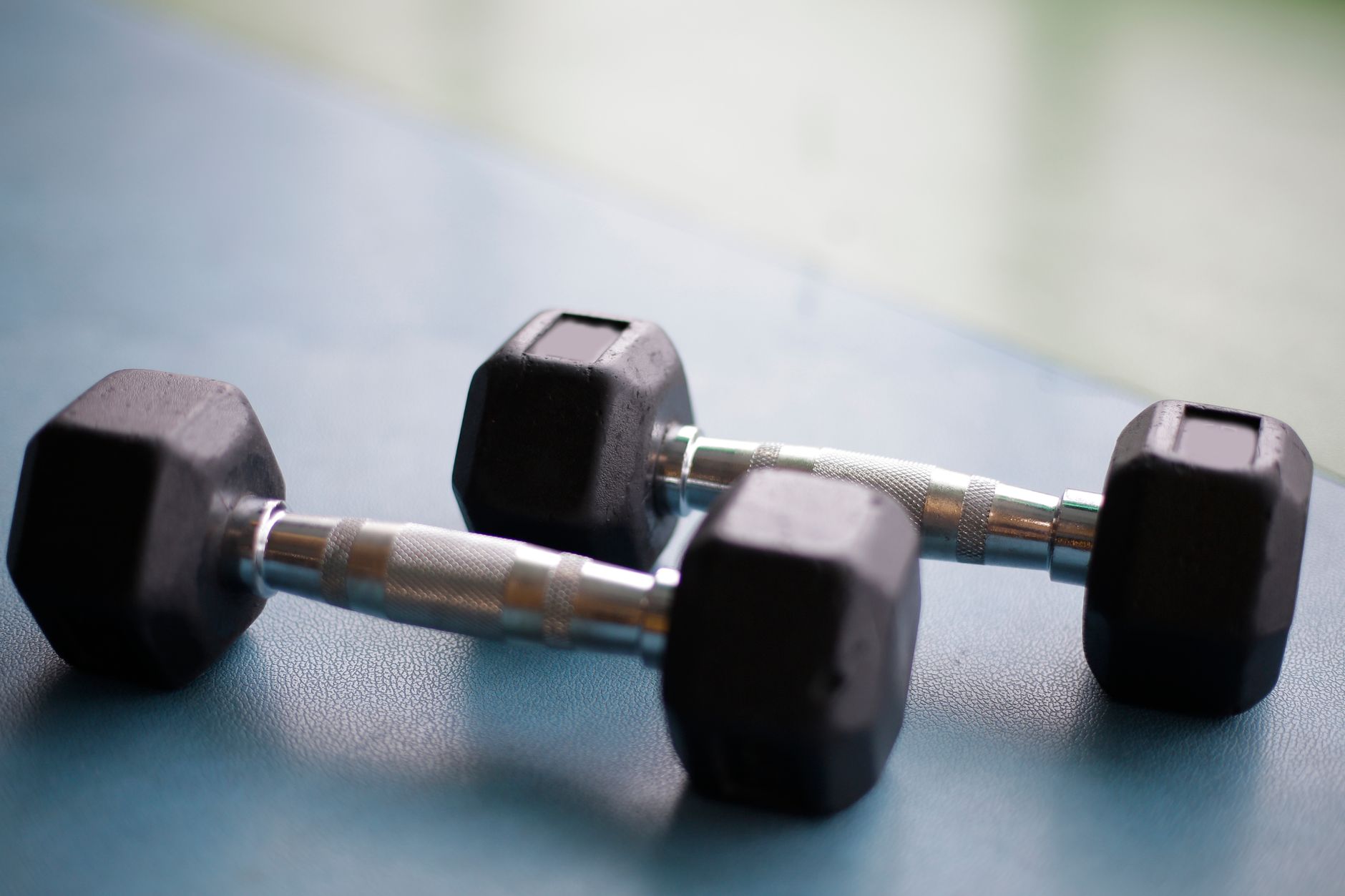
Experience level is the single biggest factor in what dumbbell weight to buy, more so than age or general fitness. The best dumbbell weight for beginners is almost always lighter than people expect, because form breaks down long before muscles give out.
Beginner
If this is your first time training with weights, start with 2 to 5 kg for upper body isolation work and 5 to 10 kg for lower body and compound movements. The best dumbbell weight to start with is whatever lets you complete 12 to 15 reps with strict form and still have two or three reps left at the end of the set. Buying heavier because the light pair feels easy in the shop is a common mistake — feel it out over your first two or three sessions instead.
Intermediate
Once you have three to six months of consistent training behind you, working weights typically move to 8 to 15 kg for upper body and 12 to 20 kg for lower body and compound lifts. At this stage you will usually need at least two working pairs, because a single weight that suits your rows will be too light for your shoulder press and too heavy for your lateral raises.
Advanced
Advanced lifters with a year or more of progressive training often work in the 18 to 30 kg range per hand for compound lifts, sometimes higher for exercises like Romanian deadlifts or weighted step-ups. At this level, a fixed dumbbell rack or a heavy-duty adjustable set becomes worth the investment, since you are less likely to need the lighter end of the range for basic movements.
Dumbbell weight by training goal
Experience level sets the range. Your goal narrows it down further.
Building muscle
The best dumbbell weight for building muscle is one that brings you close to failure within 8 to 12 reps. Too light, and you will grind through 20-plus reps without recruiting enough muscle fibre to drive growth. Too heavy, and form collapses before you get near the rep range that builds size. For most people, that means working sets in the 10 to 20 kg range per hand, adjusted up or down by exercise.
Strength
Pure strength work uses lower reps — typically 4 to 6 — at a heavier load, close to 80 to 85 percent of what you could lift for a single rep. This is where dumbbells start to show their limits compared with a barbell, since jumping in fixed increments of 2 or 2.5 kg per hand is harder to fine-tune at heavier loads. An adjustable set with small increment steps solves this better than a rack of fixed pairs spaced 5 kg apart.
Weight loss and toning
The best dumbbell weight for weight loss has less to do with the number on the dumbbell and more to do with keeping rest periods short and moving through multiple muscle groups per session. A moderate load in the 6 to 10 kg range, used for circuits of 12 to 20 reps with 30 to 45 seconds rest, raises heart rate and burns more total calories per session than very light dumbbells used for high-rep isolation work alone.
Dumbbell weight for men vs women
The best dumbbell weights for women are, on average, 30 to 40 percent lighter than men's for upper body exercises like presses and curls, mostly due to differences in upper body muscle mass rather than overall fitness. For lower body moves — squats, lunges, deadlifts — that gap narrows substantially, since leg strength differences between trained men and women are far smaller.
In practice, this means many women training lower body will use a similar or only slightly lighter weight than men at the same training age, while upper body pairs are noticeably lighter. The number that actually matters is not a sex-based average but the load that gets you to 8 to 12 reps with your last rep genuinely hard. Buying based on a generic chart instead of your own performance is how dumbbells end up too light within a month.
Fixed vs adjustable dumbbells
Once you know roughly what weight range you need, the next decision is whether to buy fixed pairs or an adjustable set.
Fixed dumbbells
Fixed dumbbells have one weight per pair, permanently. They are faster to pick up and put down mid-set, which matters for supersets and circuits. The trade-off is floor space and cost: covering a useful range from 2 kg to 20 kg in 2 kg increments requires nine separate pairs, which needs a rack and a meaningful chunk of a room.
Adjustable dumbbells
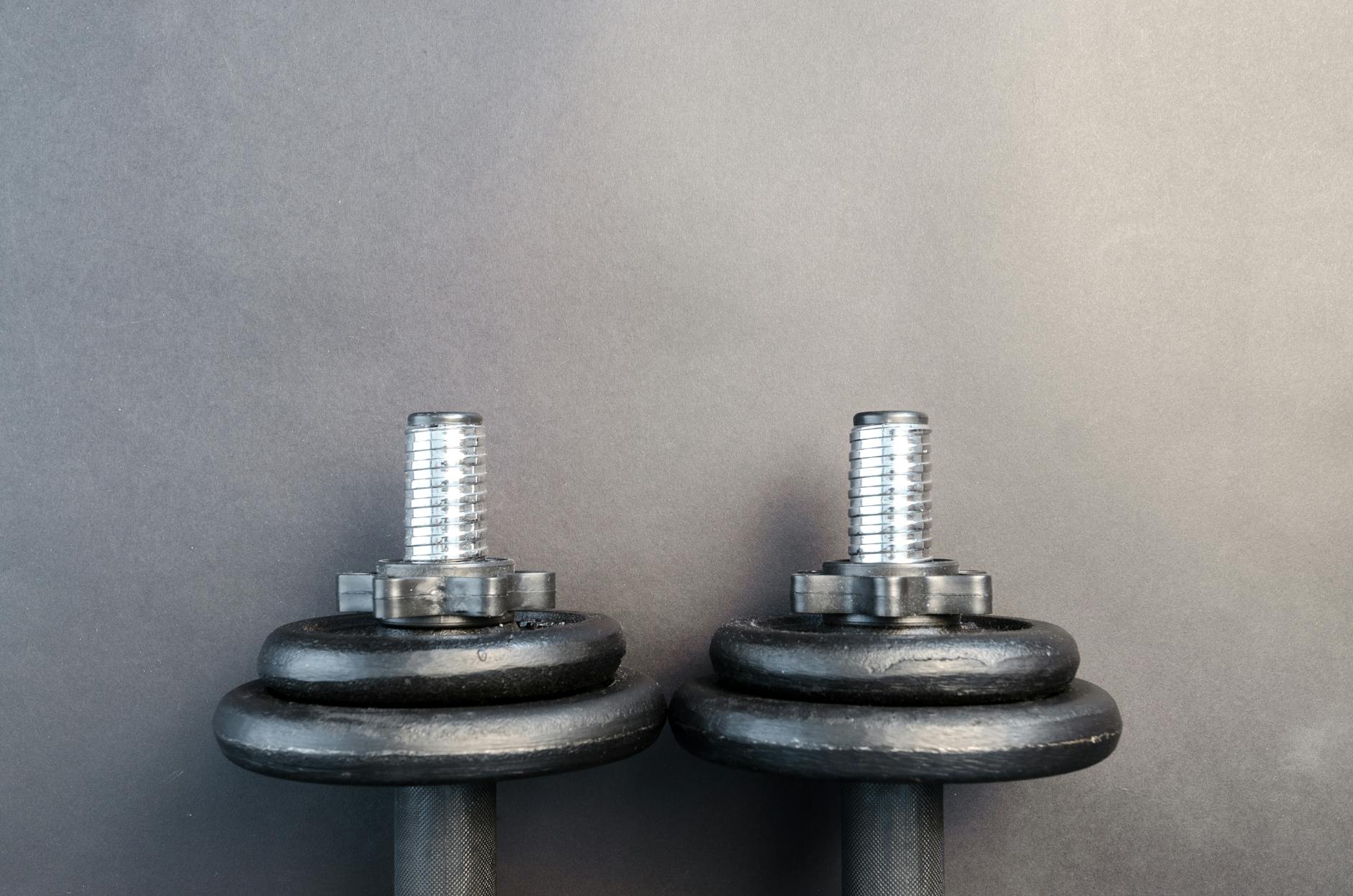
An adjustable set replaces that entire rack with one pair that dials up or down, typically in 2 to 2.5 kg steps, across a range that commonly goes up to 24 kg or 40 kg per hand depending on the model. One strong view worth stating: for almost any home gym with limited space, buying a single adjustable pair that covers your full range is the better purchase than three or four fixed pairs, because it takes up the footprint of two dumbbells while replacing five or six.
The trade-off is speed between sets — adjusting the dial or pin takes a few seconds longer than grabbing a different fixed pair, which matters more in fast-paced circuit training than in straight sets with longer rest.
Browse the full range of strength training equipment at Flexi Muscles to compare fixed and adjustable options.
When to increase your weight — and when not to buy heavier yet
When to size up
Increase weight once you can complete every prescribed set and rep with two clean reps left in reserve on the final set, for two workouts in a row. For most exercises, that is a jump of 1 to 2.5 kg per hand. Fixed dumbbells sold in large jumps — say 5 kg increments — often force you to skip a sensible progression step, which is one more argument in favour of an adjustable set with finer increments.
When not to buy heavier dumbbells yet
Do not buy a heavier pair because a single hard set felt tough on a bad day, or because you saw someone else lifting more. Buying a 20 kg pair on ambition alone is how dumbbells end up living under the bed by week three, unused because every exercise at that weight turns into a form disaster. If your last three sessions at your current weight have all felt genuinely easy for the full prescribed reps, that is the signal to size up — not a single good day.
Equally, do not buy dumbbells at all if you are not planning to train with any regularity. Dumbbells sitting unused do nothing for your fitness regardless of the weight printed on them.
A workout to test your numbers
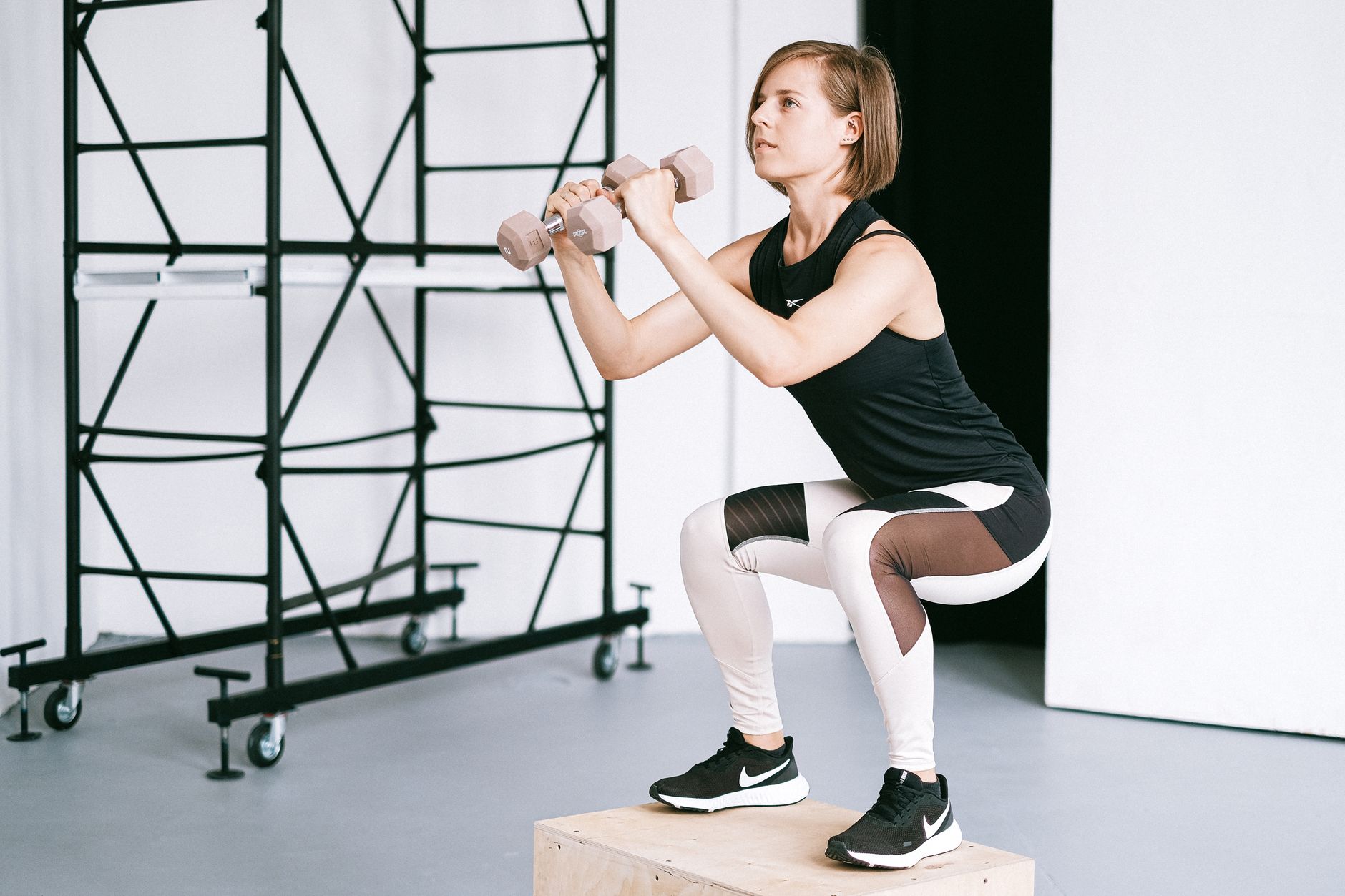
Charts and averages only get you so far. The fastest way to find your actual working weight is to test it directly, across a mix of upper body, lower body, and compound movements. Run this full-body session with a light and a heavier pair on hand, and note which weight gets you to the target rep range with two reps in reserve on the last set.
| Exercise | Sets × reps | Typical starting load |
|---|---|---|
| Goblet squat | 3 × 12 | 8–15 kg |
| Single-arm row | 3 × 10 per side | 8–14 kg |
| Flat or floor press | 3 × 10 | 6–12 kg |
| Romanian deadlift | 3 × 12 | 10–18 kg |
| Lateral raise | 3 × 15 | 2–5 kg |
| Bicep curl | 3 × 12 | 4–8 kg |
Whichever weight leaves you two reps short of failure on the last set of each movement is your real starting number — not the number a chart assigned you before you picked anything up.
What to spend

| Option | Price range (ZAR) | What you get |
|---|---|---|
| Single fixed pair | R250–R900 | One weight, no flexibility. Fine as a first purchase to test the water, but you will outgrow it within weeks. |
| Rack of 3–4 fixed pairs | R2,500–R5,000 | Covers a working range for one training goal, but takes up real floor space and stops covering you once you outgrow the top pair. |
| Adjustable set (up to ~24 kg per hand) | R3,000–R6,500 | Replaces five or six fixed pairs in the footprint of two. The sensible default for most home gyms with limited space. |
| Adjustable set (up to ~40 kg per hand) | R6,500–R11,000+ | Suited to intermediate and advanced lifters who expect to keep progressing well past beginner loads. |
For most people starting out, the single fixed pair is a reasonable way to confirm you will actually train consistently before spending more. Once that is established, an adjustable set in the 24 kg range covers years of progression for most goals other than dedicated powerlifting.
Pair your dumbbells with the right accessories — lifting accessories at Flexi Muscles — including gloves and wrist support for heavier pressing work.
Frequently Asked Questions
What weight dumbbells should a beginner buy for a home workout?
Most beginners get the most use out of two pairs: something in the 2 to 5 kg range for isolation moves like lateral raises and curls, and 8 to 12 kg for compound moves like rows and squats. Start lighter than you think you need. You can always add weight once your technique holds up for 12 to 15 clean reps, but you cannot fix bad form by taking weight away mid-set.
Do women need lighter dumbbells than men?
On average, women start 30 to 40 percent lighter than men for the same exercises, mainly due to differences in upper body strength rather than lower body strength. For lower body moves like squats and lunges, the gap narrows considerably. The number that matters is not your sex but the load that lets you complete 8 to 12 reps with good form on your last set.
Should I buy fixed dumbbells or an adjustable set?
Buy adjustable dumbbells if you expect your strength to change over the next year or you are short on floor space. A single adjustable pair going up to 24 kg per hand replaces what would otherwise be five or six fixed pairs. Buy fixed dumbbells only if you already know your working weights and want the fastest possible transition between sets, since adjustable sets take a few seconds longer to change.
When should I increase my dumbbell weight?
Increase weight once you can complete all prescribed sets and reps with two reps still left in the tank on the final set, for two workouts in a row. For most exercises, that means moving up by 1 to 2.5 kg per hand. Jumping straight from 8 kg to 15 kg because a set felt easy is how shoulders and elbows get injured.
What dumbbell weight works best for weight loss and toning?
For weight loss, the dumbbell weight matters less than the fact that you are training with resistance at all. A moderate load you can lift for 12 to 20 reps, working multiple muscle groups in circuits with short rest, burns more calories per session than very light weights done for high reps. Most people training for fat loss do well with 6 to 10 kg pairs used across full-body circuits.
How many pairs of dumbbells do I actually need at home?
Two pairs of fixed dumbbells cover most home workout programmes: one light pair for isolation exercises and one heavier pair for compound lifts. If you would rather buy once, a single adjustable set with a range of roughly 2.5 to 24 kg per hand covers the same spread and leaves room to grow as you get stronger.
Related at Flexi Muscles
- Strength Training Equipment — dumbbells, barbells, plates, and racks for your home gym
- Lifting Accessories — gloves, straps, and wraps to support heavier pressing and pulling
- All Products — the full Flexi Muscles range