

Best Home Dumbbell Set: Weight Range, Material and Set Size

By Flexi Muscles — 19 August 2026 · 12 min read
The best home dumbbell set is not the one with the most pairs — it is the smallest set that covers your full range of exercises without leaving you short on either end. For most beginners that means three pairs: one light enough for isolation work, one mid-weight for pressing, and one heavy enough for rows and squats. Buying a wide range from day one wastes money on weights you will not touch for a year, and buying too narrow a range means outgrowing half the set within a few months.
This guide covers how many pairs to actually buy, which material holds up under home use, when a fixed set beats adjustable dumbbells, how to store a growing collection, what different budget tiers actually get you, and the situations where a full dumbbell set is the wrong purchase entirely.
Shop Dumbbells at Flexi Muscles
What Makes a Good Home Dumbbell Set
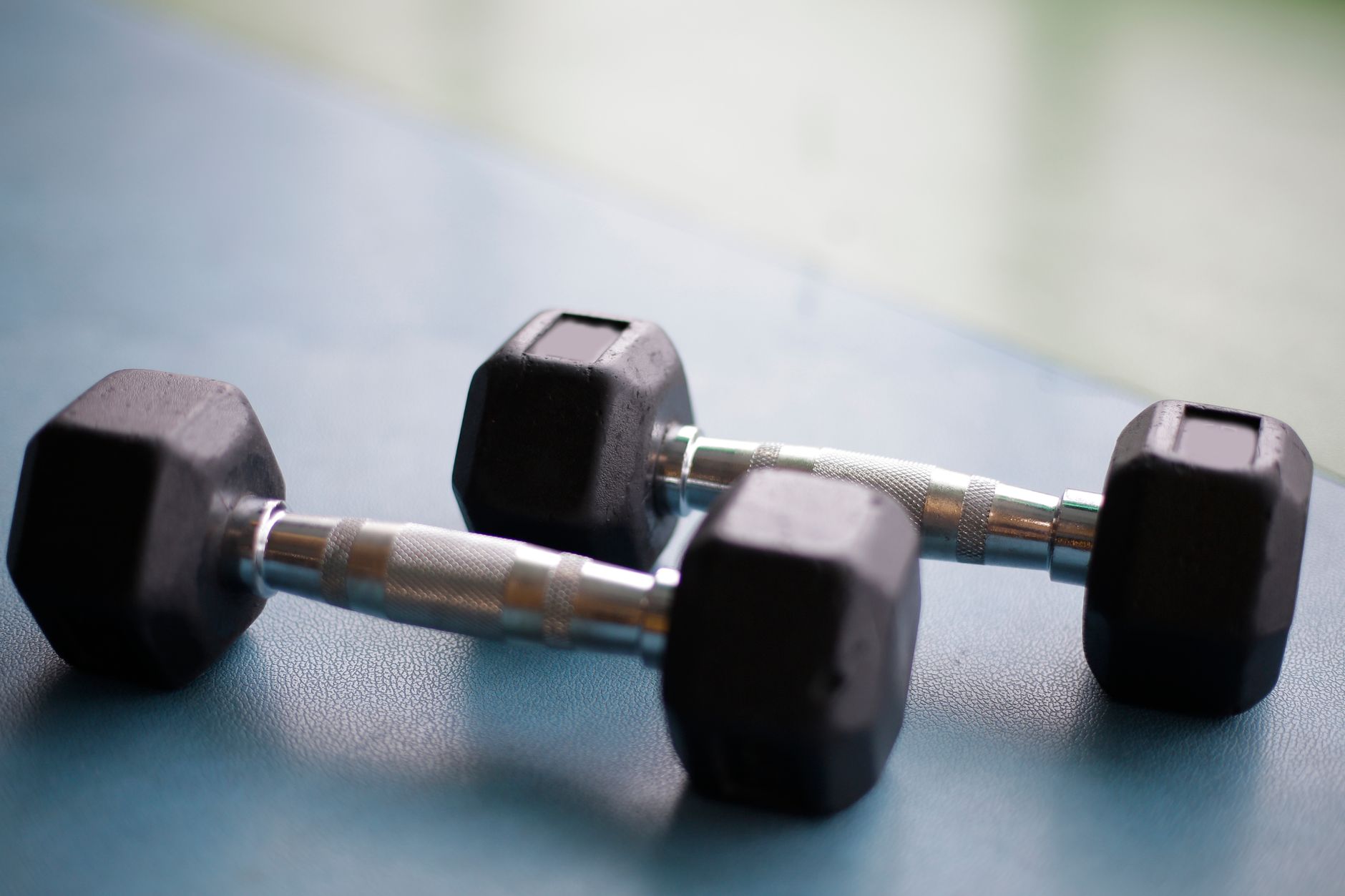
The head material determines how a dumbbell set holds up to years of home use, and it is the first thing to check before weight range or price. Four materials cover almost everything sold for home training.
Rubber hex
A cast iron core with a moulded rubber shell, cast in a hexagonal shape so the dumbbell cannot roll. This is the best default for a home gym: the rubber protects tiled and wooden floors when the dumbbell is set down without care, the hex shape keeps pairs stacked neatly, and the coating adds only minor cost over bare iron. New rubber can carry a faint smell for the first few weeks — it fades with use.
Cast iron or chrome
Bare metal, usually round-headed rather than hex, and the cheapest option per kilogram. Fine for a garage or a dedicated training room with a rubber gym mat underneath. Two things to weigh up: bare iron will chip tiled or wooden floors if dropped, and in humid coastal conditions — Durban and Cape Town summers, in particular — unpainted cast iron can develop surface rust if left in a damp garage. Chrome resists rust better than raw iron but shows fingerprints and scratches more visibly over time.
Neoprene or vinyl coated
Bright, colour-coded, and marketed heavily at beginners and women's fitness ranges. The coating itself is fine. The problem is what is usually underneath it: most vinyl-coated dumbbells are filled with sand or poured concrete rather than solid iron, which makes actual weight inconsistent between units of the same stated size and gives the dumbbell a larger, bulkier profile for its weight than a hex or cast iron equivalent. The coating also splits and peels within a year or two of regular use. Treat these as a starter option only, not a long-term set.
Urethane
The material used in most commercial gyms. Dense, near-silent when set down, and the most resistant to chipping, cracking, or coating failure of any option on this list. The trade-off is cost — urethane runs noticeably more per kilogram than rubber hex. Worth it if you train daily and set weights down hard at the end of heavy sets. Difficult to justify for occasional home use, where rubber hex delivers most of the durability at a fraction of the price.
For most home setups, rubber hex is the correct default. Reserve cast iron for a dedicated space with a proper floor mat, skip vinyl-coated sets except as a genuine budget starting point, and only consider urethane if training frequency and set-down force both justify it.
Handle diameter and grip
Head material gets most of the attention, but the handle is what your hand actually interacts with on every rep. A handle between 25mm and 32mm in diameter suits most hand sizes across the full range of dumbbell exercises. Wider handles, common on some heavier cast iron pairs, force a more open grip that fatigues faster on high-rep sets and rows. Knurling — the crosshatched texture cast or cut into the handle — should be present but not aggressive; a lightly knurled or matte handle grips securely without shredding skin over long sessions the way overly rough knurling does on some budget imports. If you can handle a dumbbell before buying, a few reps of a shoulder press or a row tells you more about handle comfort than any spec sheet.
How Many Pairs You Actually Need

The mistake most first-time buyers make is optimising for range instead of coverage. A set that jumps from 4kg straight to 20kg looks impressive on a shelf and is useless in practice — there is nothing to use for the exercises that sit between those numbers. Coverage across light, medium, and heavy work matters more than how far the top pair reaches.
Starter set: three pairs
Women new to training: 2kg for lateral raises and rear delt work, 6kg for pressing and rows, 10–12kg for squats and lunges. Men new to training: 4kg for isolation work, 10kg for pressing, 16–20kg for rows and squats. Three pairs, chosen at these spreads, cover a genuine full-body programme without a single exercise left short of load or overloaded from day one.
Intermediate set: five to six pairs
Once the starter pairs stop challenging you — typically 3 to 6 months of consistent training — the next step is filling in the gaps rather than replacing what you own. A five-to-six-pair spread commonly looks like 4kg, 8kg, 12kg, 16kg, 20kg, and 24kg. This is enough range to progress pressing and rowing movements independently of squats and lunges, which tend to outpace upper-body pressing strength for most trainees.
Full range: eight-plus pairs
An eight-to-ten-pair set spanning 2kg to 32kg or higher is what a dedicated home gym or small studio needs — enough weights that every exercise in a programme has its own dedicated pair, with no need to share a weight between two different movements in the same session. This is a large, heavy, and expensive purchase. It belongs in a space where the equipment stays out permanently, not a spare room that doubles as a guest bedroom.
The practical test for whether you have outgrown a pair: if the last three reps of a working set stop breaking down in form, the weight is too light for that exercise. Move up one pair rather than buying an entirely new spread.
Matching pairs to exercises, not exercises to pairs
A common error is buying a spread and then forcing every exercise into whichever pair happens to be closest. Lateral raises, front raises, and rear delt flyes need noticeably less load than a bent-over row or a goblet squat performed with the same pair of dumbbells — trying to use one mid-weight pair for both leaves isolation work too heavy to control and compound work too light to matter. Assign pairs by movement pattern before your first session: one pair for shoulder isolation, one for pressing and rowing, one for lower-body work. If a single pair is doing double duty across unrelated movements, that is the signal you need a fourth.
Fixed Set or Adjustable: Which to Buy
This decision comes down to training style and available floor space, not which option is objectively better — both are.
Choose a fixed set if: you train circuits or supersets with fast transitions between exercises, you set weights down with any force at the end of a set, or more than one person in the household uses the equipment. Fixed dumbbells have no mechanism to fail and tolerate handling that would damage an adjustable pair within months.
Choose adjustable dumbbells if: floor space is the binding constraint, you follow a structured programme with controlled tempo, and you are training alone. One adjustable pair replaces the footprint of five or six fixed pairs, at the cost of a slower changeover between weights and a mechanism that needs reasonably gentle handling.
Cost per kilogram is the other factor worth weighing before deciding. A fixed set of the same total weight range is almost always cheaper to buy outright than an equivalent adjustable pair, because you are not paying for a dial, tray, or locking mechanism on top of the metal. Adjustable dumbbells earn back that premium in saved floor space — a single adjustable pair replacing five or six fixed pairs is a real saving in a small room, but in a garage or dedicated space where footprint is not the constraint, fixed pairs are typically the better value per kilogram.
For the full breakdown of dial, pin, plate-loaded, and quick-lock adjustment mechanisms — including which one holds up best under home use — see our adjustable dumbbells buying guide.
Storage and Space Planning
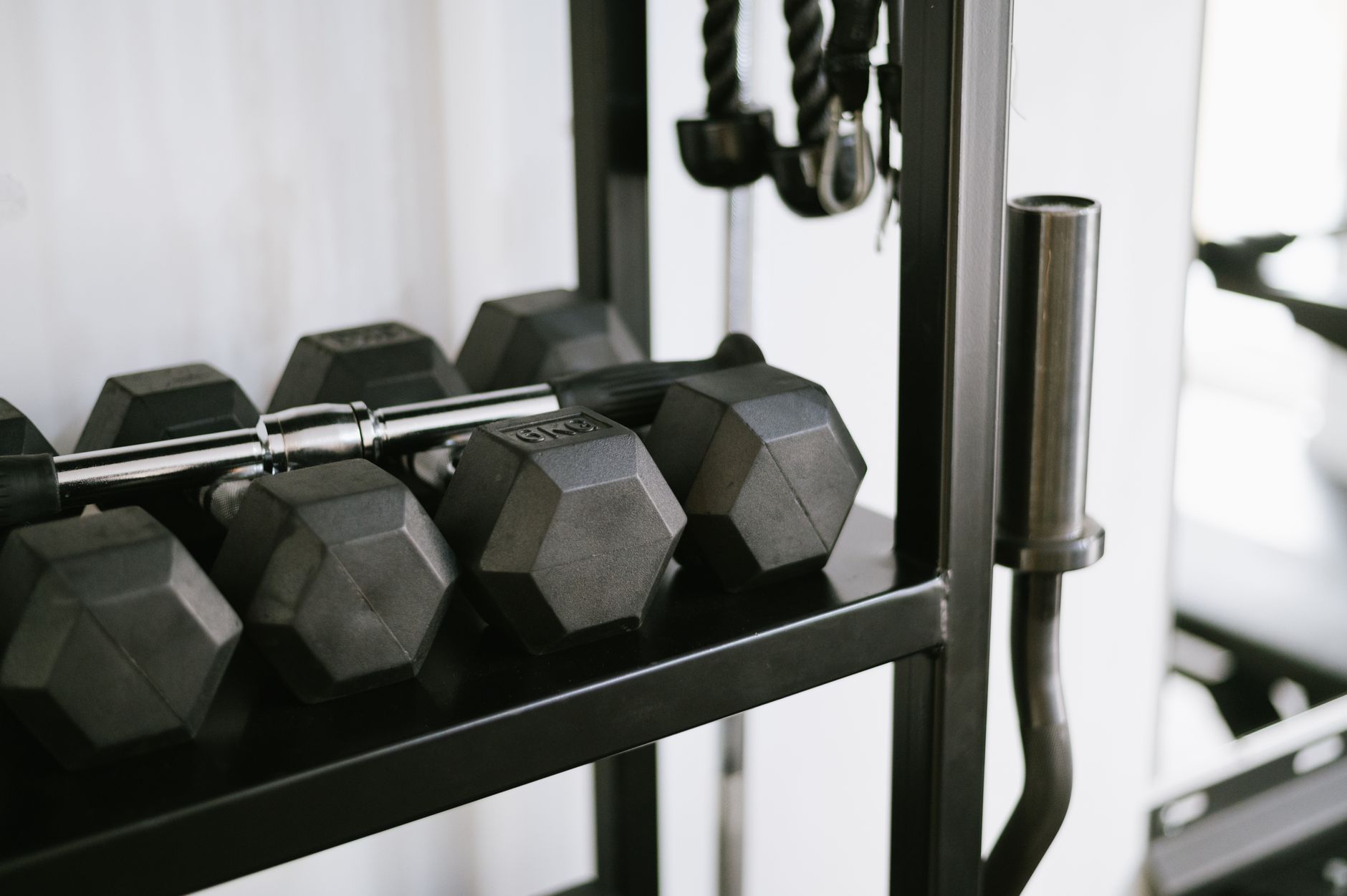
Three pairs stores fine on a shelf, in the base of a storage ottoman, or stacked in a corner. Nothing dedicated is needed at this scale.
Past four or five pairs, loose dumbbells on the floor become a genuine trip hazard and slow down training — hunting for the right pair between exercises breaks the rhythm of a session. A basic dumbbell rack solves both problems: pairs stay sorted by weight, off the floor, and visible at a glance mid-set. Racks range from simple two-tier stands to full A-frame units built for eight-plus pairs.
Plan the storage location before the set arrives, not after. A rack pushed into a corner after the fact rarely fits as cleanly as one measured for the space in advance, and dumbbells left without a proper home tend to end up scattered around the room within a few weeks.
Weight also matters when planning where a set lives. A full eight-pair spread from 2kg to 32kg totals well over 100kg of equipment once both dumbbells in each pair are counted. On a wooden floor above ground level, that concentrated load is worth checking against the floor's rated capacity, particularly in older homes. On a concrete slab or ground-floor room it is a non-issue.
Browse storage racks and home gym equipment at Flexi Muscles to plan the space alongside the dumbbells themselves.
Budget Tiers: What Each Level Gets You
| Tier | Typical material | Cost per kg | Best for |
|---|---|---|---|
| Entry | Vinyl or neoprene coated | Lowest | Testing the habit before committing further |
| Standard | Rubber hex | Moderate | Most home gyms, long-term daily use |
| Premium | Urethane | Highest | Daily heavy training, shared or high-traffic use |
The jump from entry to standard buys durability and weight accuracy — the two things that actually affect training outcomes. The jump from standard to premium buys quieter set-downs and marginally better floor protection, which matters far more in a shared or high-traffic space than in a spare room used by one person. Most home trainees get the best return on the standard tier: rubber hex, in the weight spread that matches where their training actually is, not where they hope it will be in two years.
The one place it is worth spending above the standard tier: a household training with more than one person, where the equipment sees more sessions per week and more variation in how carefully weights get set down.
When Not to Buy a Full Dumbbell Set
Straight up: a full dumbbell set is not always the right purchase, regardless of budget.
If floor space is genuinely limited: a single adjustable pair covers the same exercise range in a fraction of the footprint. Buying three or more fixed pairs into a small room usually ends with weights stacked wherever they fit rather than stored properly.
If your goal is maximal strength on the big barbell lifts: dumbbells top out well below what a trained lifter eventually squats, deadlifts, or benches with a barbell. A dumbbell set builds excellent general strength and hypertrophy, but it is not the tool for peaking a one-rep max.
If you already own an adjustable pair that covers your current range: adding a fixed set on top is duplication, not progression. Extend the adjustable set's range first, or add a heavier fixed pair only for the specific movement that has outgrown it.
If you are not yet training consistently: a single adjustable pair or a resistance band set is a lower-cost way to build the habit before committing to a full multi-pair spread. Consistency, not equipment variety, is what determines results in the first few months.
A dumbbell set earns its shelf space when the weight range genuinely matches your training and the equipment gets used most weeks. Bought ahead of either condition, it is an expensive way to store potential rather than build strength.
Frequently Asked Questions
How many dumbbells do I need for a home gym?
For a first set, three pairs is enough to train a full-body programme: a light pair for isolation work such as lateral raises, a medium pair for pressing movements, and a heavy pair for rows and squats. Most beginners outgrow the light pair within a few months and the heavy pair within six to nine months, at which point adding a fourth pair makes more sense than replacing what you already own.
Should I buy a fixed dumbbell set or adjustable dumbbells?
Buy fixed if you train fast circuits, drop weights between sets, or share the equipment with more than one person — fixed pairs tolerate rough handling and never have a mechanism to fail. Buy adjustable if floor space is limited and you follow a structured programme with controlled tempo.
What is the best material for a home dumbbell set — rubber, cast iron, or urethane?
Rubber hex is the best balance of durability and floor protection for most home setups. Cast iron and chrome are cheaper but risk chipping tiled or wooden floors and can rust in humid coastal climates. Urethane is the most durable and quietest option but costs noticeably more per kilogram. Avoid vinyl or neoprene-coated sand-filled dumbbells — they run inconsistent in actual weight and the coating splits within a year or two.
How much weight range should a beginner dumbbell set cover?
Women new to training are typically covered by 2kg to 12kg per hand across three pairs. Men new to training are typically covered by 4kg to 20kg per hand. The lower end matters as much as the top end — a set that starts at 8kg has no option for isolation exercises like lateral raises, which need far less load than presses or rows.
Do I need a rack to store a home dumbbell set?
Not for three pairs — a shelf or a corner of the floor works fine. Once a set grows past four or five pairs, dumbbells left loose on the floor become a trip hazard and are harder to grab quickly mid-set. A basic dumbbell rack becomes worthwhile once the collection outgrows a single shelf.
Is a full dumbbell set worth it if I have limited space?
Not usually. A full fixed set spanning multiple pairs needs a metre or more of storage. If floor space is the binding constraint, a single adjustable pair or a compact three-pair starter set covers the same exercise variety in a fraction of the footprint. Reserve a full multi-pair fixed set for a dedicated training space where the equipment can stay out permanently.
Related at Flexi Muscles
- Dumbbells for Sale — fixed and adjustable dumbbell sets in a range of weights
- Lifting Accessories — gloves, straps, and grip aids to pair with your dumbbell training
- All Products — browse the full Flexi Muscles range
Sources
- ACE Fitness Exercise Library — technique reference for dumbbell-based strength exercises
- NSCA — National Strength and Conditioning Association — evidence-based guidance on resistance training progression
- BarBend — Dumbbell Testing and Reviews — comparative material and durability testing across dumbbell types