

Adjustable Dumbbells: What to Look for Before You Buy

By Flexi Muscles— 26 June 2026 · 10 min read
Adjustable dumbbells replace a full rack of fixed weights with one pair that changes weight via a built-in mechanism. They cost more upfront than a single fixed pair, save a significant amount of floor space, and cover virtually every upper- and lower-body dumbbell exercise. The catch: the adjustment mechanism is the most important thing to evaluate, and not all of them hold up equally well under regular heavy training. Most buyers focus on the wrong thing — brand name or price — and end up with a mechanism that fails within two years.
Shop Adjustable Dumbbells & Strength Equipment at Flexi Muscles
Adjustable vs Fixed Dumbbells: The Real Trade-off
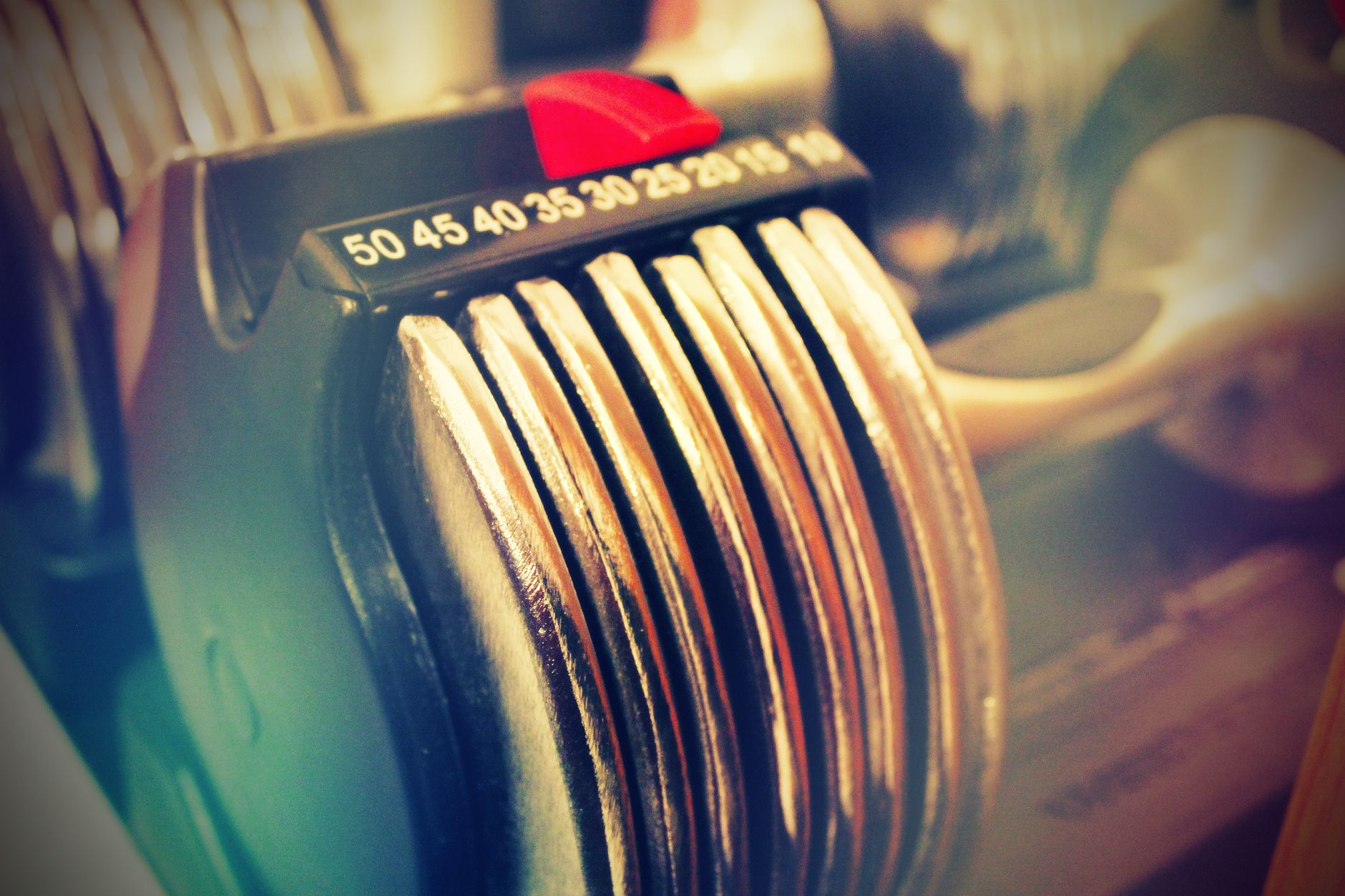
Fixed dumbbells are simple and close to indestructible. Pick them up, put them down. An adjustable set adds a mechanism between the handle and the weight plates, and that mechanism is where every trade-off lives.
The argument for adjustable is mostly about space. A complete rack of fixed dumbbells from 5 kg to 40 kg requires around 15 pairs and takes up roughly 3 to 4 metres of wall space. An adjustable pair sits on a small tray and occupies less than half a metre. For most home gym setups, that difference settles the question before any other factor comes into play.
The argument for fixed comes down to durability and simplicity. Fixed dumbbells tolerate more abuse. You can put them down hard, use them in fast circuit work, and not worry about a mechanism rattling loose or a selector dial cracking under load. If your training involves quick transitions between exercises, dynamic movements, or dropping weights from hip height, fixed dumbbells are the safer choice — not because adjustable ones cannot do the work, but because the mechanism cannot take the same level of treatment.
For structured strength training — working sets, controlled tempo, progressive overload over months — adjustable dumbbells are a practical replacement for a full rack. The exercises are identical. The stimulus is identical. The only meaningful difference is that you are now responsible for not damaging the mechanism that makes the whole system work.
Browse the full range of strength training equipment at Flexi Muscles, including adjustable and fixed dumbbell options.
The Four Adjustment Mechanisms
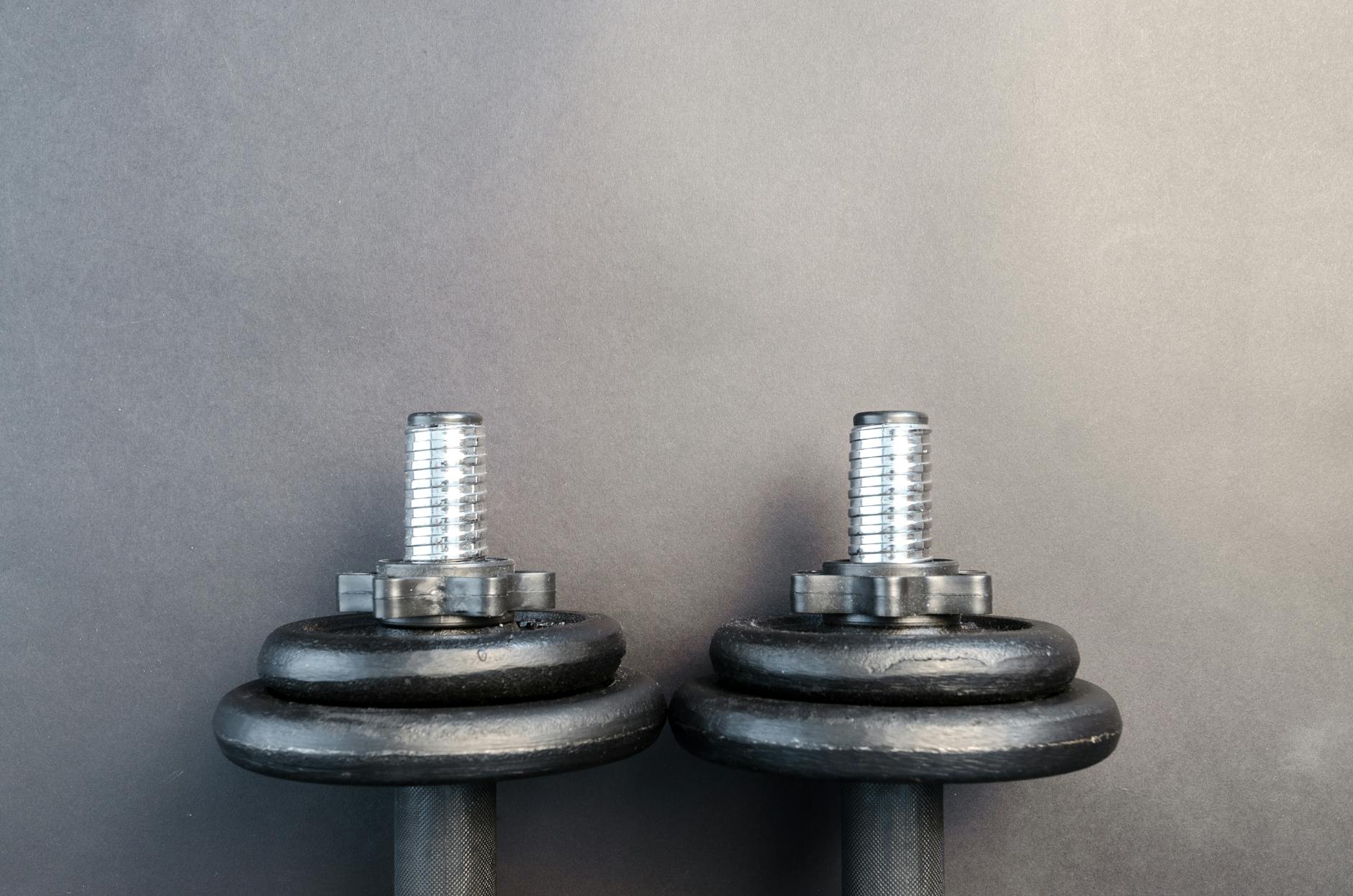
Every adjustable dumbbell uses one of four systems to change the weight. Understanding each before you buy prevents expensive mistakes.
Dial / selector mechanism
A numbered dial at one or both ends of the handle lets you turn to the target weight and lift — the mechanism retains the correct plates and leaves the rest in the tray. This is the fastest system for changing weights mid-session and the most widely sold in consumer fitness retail.
The drawback is mechanical. The dials, selector rails, and locking tabs in these systems are predominantly plastic. They perform well under controlled home use. Drop the dumbbell from hip height, set it down hard after a heavy set of bent-over rows, or subject it to the lateral stress that comes from swinging exercises, and the failure rate climbs sharply. Dial systems are a convenience product first. They are not engineered for rough handling.
Pin / selector stack
A pin inserts through the handle into a stack of weight plates. To change the load, you pull the pin, remove or add a plate from the stack, and re-insert the pin. Mechanically simpler than a dial, with fewer plastic components to fail. This system is common on rectangular block-style dumbbells where the plates are enclosed within a frame. Slightly slower to adjust than a dial but more forgiving under moderate misuse.
Plate-loaded handles
Standard weight plates slide onto dumbbell handles and lock with a collar. The simplest mechanism possible — because there is no mechanism. Just plates, handles, and a collar. These are the most durable option, the most cost-effective over time (standard plates can be added incrementally as your strength increases), and the most inconvenient to adjust mid-session. Changing from 10 kg to 20 kg requires removing collars, sliding off plates, adding plates, and replacing collars. That takes 30 to 60 seconds per dumbbell.
For home gyms where training follows a programme with predictable weight progressions and the user rarely changes weight between exercises in a circuit, plate-loaded handles are an underrated option. You are not paying a premium for a precision mechanism. You are buying handles and standard plates separately, which usually works out cheaper per kilogram than a dedicated adjustable set — and there is nothing to break.
Quick-lock / lever mechanism
A lever or thumb screw at each end clamps the selected plates in place. Adjustment is manual but faster than a collar system — typically 5 to 10 seconds per dumbbell. Found on a smaller number of premium adjustable sets. Slower than a dial, more durable than a dial, and more expensive than plate-loaded. The right choice for people who want the durability of a mechanical clamp without the full inconvenience of a collar system.
Choosing the right mechanism
| Mechanism | Adjustment speed | Durability | Cost per kg |
|---|---|---|---|
| Dial / selector | Fastest | Lowest | Highest |
| Pin / selector stack | Fast | Moderate | High |
| Plate-loaded | Slowest | Highest | Lowest |
| Quick-lock | Moderate | High | Moderate |
What Weight Range Do You Actually Need

This is where most buyers get it wrong. The target weight at purchase should not be what you currently lift — it should be what you will be lifting in 18 months of consistent training. People who buy based on their current strength typically find themselves at the upper limit of a light adjustable set within a year on compound exercises, and they either tolerate the limitation or buy again.
Beginners (first 6 to 12 months of training)
A range of 2.5 kg to 24 kg per dumbbell covers most exercises comfortably at the start: chest press, shoulder press, dumbbell rows, lunges, goblet squats, and most isolation work. The exercises you outgrow first are the compound pulling movements — single-arm rows and goblet squats progress faster than pressing movements, and 20 kg per hand starts to feel light on those exercises within 6 to 9 months for most trainees who are consistent.
Intermediate lifters
A range that reaches 40 kg per dumbbell is a practical upper limit for the majority of dumbbell-based home gym work. Beyond 40 kg, barbells become the more efficient and better-balanced tool for the compound movements where those loads are relevant. If your training is dumbbell-only and you are pressing over 40 kg per hand, you have already outgrown the exercise category.
Specific starting-point guidance
- Women starting out: a set covering 2.5 kg to 24 kg handles chest press, shoulder press, bent-over rows, split squats, and the majority of isolation work without running out of range too quickly. Starting weight of 2.5 kg matters for exercises like lateral raises and face pulls where lighter loads are appropriate.
- Men starting out: 4 kg to 32 kg covers the same exercises with appropriate room for progression. A set that starts at 8 or 10 kg (common with some budget dial systems) limits lighter isolation work from day one.
- Both: if the set you are looking at tops out at 25 kg per hand, factor in whether it is expandable before buying. A non-expandable 25 kg system is outgrown on lower-body exercises and rows within 12 to 18 months for most people who train seriously.
Weight increments
Increments matter as much as the maximum weight. A system that jumps from 10 kg to 15 kg in one step is a 50% increase — too large for most isolation exercises where progressive overload relies on small jumps. The closer a system gets to 2.5 kg increments throughout its range, the more useful it is for steady progression on exercises where the weights change frequently.
Plate-loaded handles let you set any increment you want, limited only by the plates you own. Most dial systems work in 2.5 kg steps at lighter weights and move to 5 kg steps in the heavier range. Check the increment table for any specific system before buying — this information is always in the product specs and is rarely highlighted in the marketing copy.
What Else to Check Before Buying
Handle diameter and length
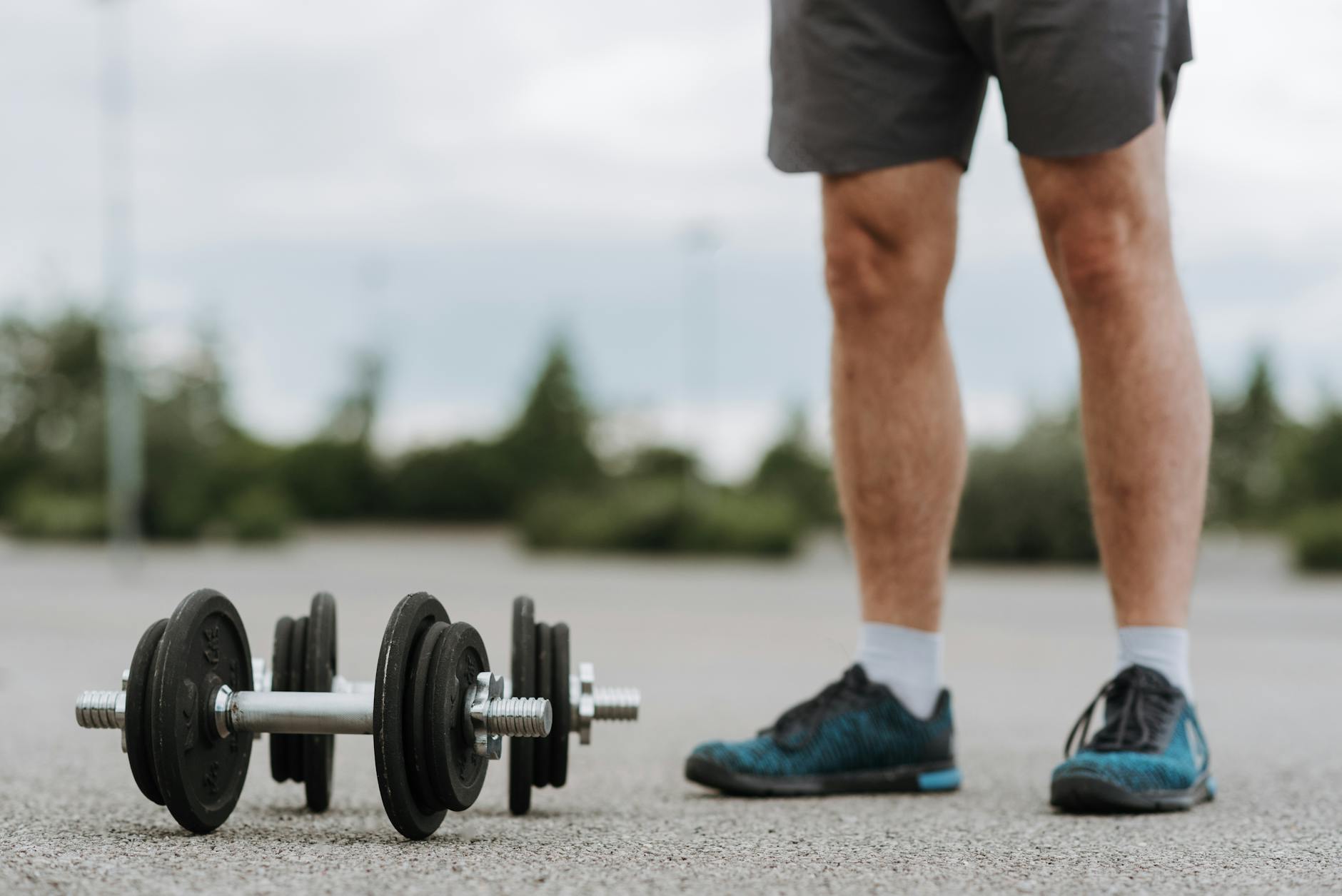
Dumbbell handles in the 28 mm to 32 mm diameter range suit most hand sizes for the majority of exercises. Wider than 34 mm and smaller hands lose grip security during pressing movements. Handle length also affects performance: a dumbbell that is too short for its maximum weight has its mass concentrated close to the hands, which changes the feel on pressing movements and can make heavy sets feel unstable compared to well-proportioned designs.
Tray quality on dial systems
Dial-mechanism dumbbells come with a storage tray that houses the unused plates between sets. The quality of that tray varies considerably between products. A tray that flexes or warps when the dumbbell is replaced can prevent the selector from seating correctly — leaving loose plates in the handle at heavier settings or preventing accurate adjustment at lighter ones. Pick up the tray and apply hand pressure to the centre before committing to a dial system. If it flexes noticeably, the mechanism will have problems over time.
Footprint in your training space
Standard dial dumbbells at maximum weight are roughly 36 cm long. A pair with two trays needs approximately 80 cm of linear space on a bench, shelf, or dedicated stand. Plate-loaded handles are shorter but require separate plate storage nearby. Think through the actual layout before buying: adjustable dumbbells that end up on the floor because there is nowhere to set the tray properly get used less consistently, and they are more prone to mechanism damage from improper storage.
A dedicated dumbbell rack keeps the trays stable and at the correct height for picking up and replacing the dumbbells safely. It is worth factoring that into the total cost if your training space does not already have a bench or shelf at the right height.
Noise during sets
Dial and pin systems produce a low rattling or clicking sound during lifts because the unused plates remain loosely seated in the tray or within the mechanism while you work. This is normal and harmless to the mechanism. It is a more noticeable issue in shared living spaces or apartment settings during early morning or late evening sessions. Plate-loaded and quick-lock systems are quieter because only the plates you are lifting are in the dumbbell at all.
Availability of spare parts
The plastic components in dial and pin systems do fail eventually, particularly the selector dials and locking tabs. Before buying any dial-mechanism system, check whether the brand sells replacement parts — dials, trays, selector rails — and whether those parts are available in South Africa without importing them. A dumbbell set that becomes unusable because a R150 plastic dial cannot be sourced locally is an expensive lesson.
For accessories that complement your dumbbell training — lifting straps for heavy rows, wrist wraps for pressing work, and grip support — browse lifting accessories at Flexi Muscles.
When to Skip Adjustable Dumbbells
Straight up: if any of the following describes your training, adjustable dumbbells are the wrong choice, regardless of budget.
- You train in a circuit or HIIT format with fast transitions between exercises at different weights. Even the fastest dial system takes 3 to 5 seconds to change weight. When you are moving between 8 exercises in a 20-minute session, those transitions break the format.
- You drop weights at the end of sets. This is less about style and more about fatigue — if sets end with the dumbbell falling from chest height, the mechanism will not last. No adjustable dumbbell on the consumer market is rated for repeated drops.
- You primarily use dumbbells above 40 kg per hand. At those loads, fixed dumbbells are safer, better balanced, and more stable. The adjustable mechanism adds length and shifts the weight distribution in ways that become more noticeable at very heavy loads.
- You share equipment with multiple people across a day. Adjustable dumbbells accumulate wear faster when several people are constantly selecting and re-selecting weights. Commercial gyms use fixed dumbbells for exactly this reason.
- You want something that requires zero maintenance and lasts indefinitely. Cast iron or rubber-coated hex fixed dumbbells will outlast any mechanism-based system. A R400 pair of fixed 20 kg dumbbells will still work perfectly in 20 years. A R3,000 dial-mechanism set may not.
Adjustable dumbbells work best for people who follow structured programmes, train alone, have limited floor space, and handle the equipment with care. If those four conditions apply to your setup, the convenience trade-off is worth it. If two or more of them do not apply, fixed dumbbells are the more honest choice.
See the full range of gym equipment at Flexi Muscles — including fixed and adjustable options across all weight ranges.
Frequently Asked Questions
Are adjustable dumbbells as good as fixed dumbbells for building muscle?
Yes, for the vast majority of exercises. The mechanics of the lift are identical — the same muscle does the same work through the same range of motion. The only practical difference is that fixed dumbbells are faster to pick up between sets and more tolerant of rough handling. For structured hypertrophy training with a programme, adjustable dumbbells are fully equivalent to fixed ones.
What weight should a beginner start with on adjustable dumbbells?
For most beginners, a set covering 2.5 kg to 25 kg per dumbbell handles every exercise comfortably for the first 6 to 12 months of training. The more important consideration than starting weight is the upper limit — a set that tops out at 15 or 20 kg will be outgrown on compound movements like rows and goblet squats faster than the price difference justifies.
Can you drop adjustable dumbbells?
Not safely, and not without damaging them. Dial and pin systems are not designed to absorb the impact of being dropped. Cracks in the selector dial or plate retention components are the most common failure point on systems that have been dropped. Set the dumbbell down with control at the end of each set — this extends the life of the mechanism considerably.
How long do adjustable dumbbells last?
Plate-loaded handles and quick-lock systems last decades with basic maintenance. Dial systems depend heavily on how they are used — gentle home training can see them last 5 to 10 years without issues; heavier daily use accelerates wear on plastic components. Check whether replacement parts are available before committing to a dial system.
What is the best adjustment mechanism for home gym use?
For home gym users following structured programmes who want fast weight changes between exercises: a dial or selector system is the most convenient option. For users who prioritise durability over adjustment speed and are comfortable with a slightly slower process: plate-loaded handles with standard plates offer better long-term value and no failure risk from mechanical components. The mechanism matters more than the brand.
Are adjustable dumbbells suitable for women?
The mechanism works identically regardless of who is using the dumbbell. Look for sets that start at 2.5 kg or 4 kg rather than systems with a minimum weight of 8 or 10 kg — the lower starting point makes them practical for isolation exercises where lighter loads are appropriate, such as lateral raises and face pulls. A handle diameter under 32 mm is also more comfortable for smaller hands during pressing movements.
Can I do every dumbbell exercise with an adjustable set?
Every controlled strength training movement, yes. The exercises where adjustable dumbbells are less suited are: floor press variations where the tray gets in the way of the set-up position, drop sets where you need to cycle through three or four weights within a single set, and any exercise involving fast swinging movements or throws that put dynamic stress on the adjustment mechanism.