

Weightlifting Belt Guide: What It Does, When to Wear One, and When to Skip It

By Flexi Muscles — 25 June 2026 · 9 min read
A weightlifting belt stabilises the spine during heavy compound lifts by giving you something rigid to brace against, which increases intra-abdominal pressure beyond what bare training allows. It does not protect a weak back, fix poor technique, or replace the core strength you need to build first. Most lifters do not need one in their first year of training — and some never need one at all. The right time to add a belt is after you have already developed a solid brace without it.
Shop Weightlifting Belts & Lifting Accessories at Flexi Muscles
What a Weightlifting Belt Actually Does

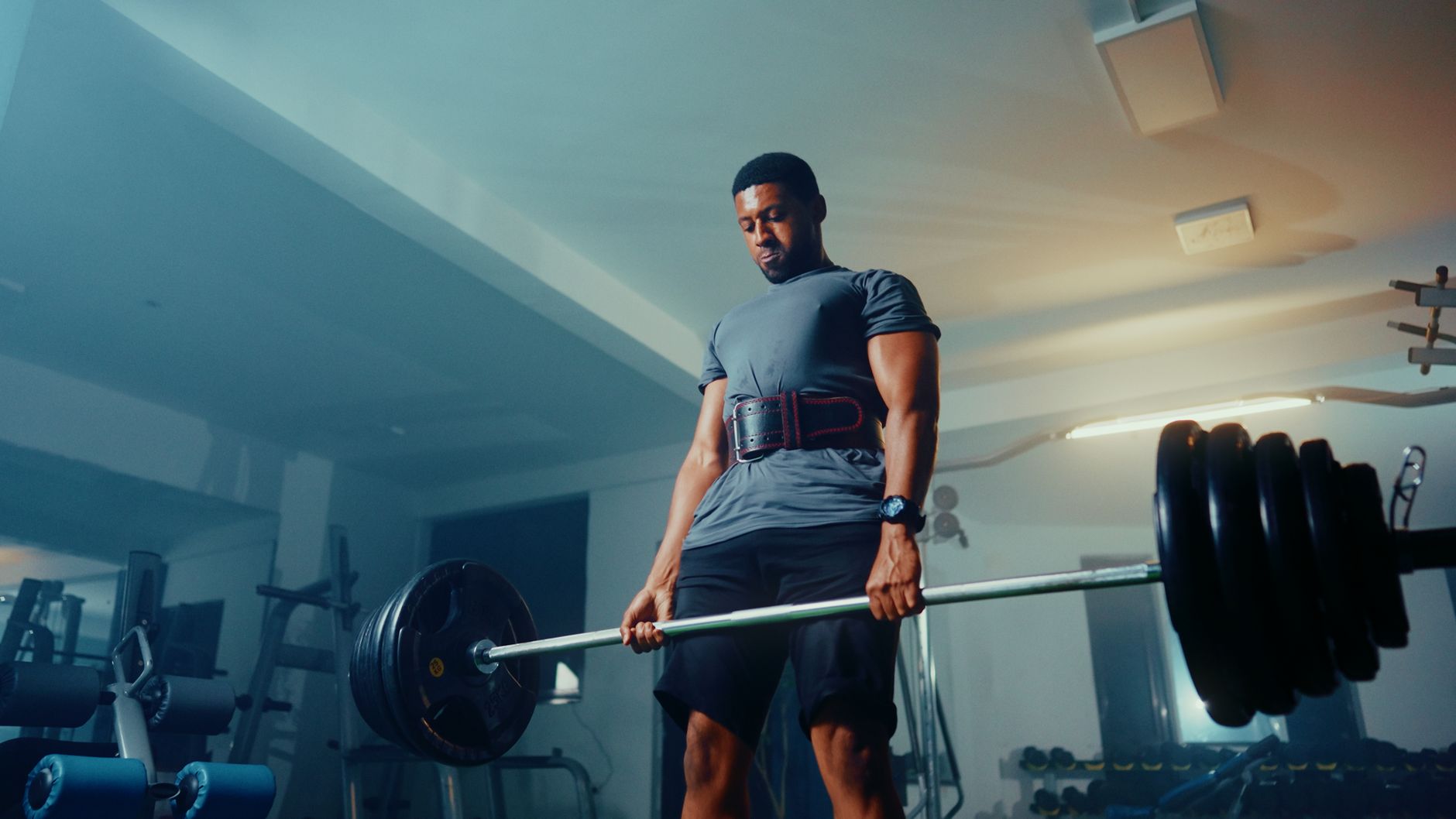
When you brace your core before a heavy squat or deadlift, you are building intra-abdominal pressure — tension within the abdominal cavity that acts as a rigid column of support around the lumbar spine. A belt gives you a firm surface to brace against. You push your abdomen outward into the belt and that resistance helps you generate more pressure than you can achieve beltless.
Research indicates a belt can increase intra-abdominal pressure by roughly 20 to 40 percent compared to beltless lifting under equivalent loads. On the deadlift specifically, that translates to a performance increase of somewhere between 5 and 15 percent for most lifters — once they have learned to use the belt effectively. The range is wide because the gain depends on how well you have trained the brace without the belt first.
Three things a quality weightlifting belt does:
- Increases intra-abdominal pressure — giving you a rigid surface to brace against, which stiffens the torso and reduces the compressive load on the lumbar discs during heavy pulls and squats
- Provides proprioceptive feedback — you can feel the belt pressing against your abdomen, which cues a harder and more consistent brace across every rep of a working set
- Allows slightly heavier working loads — with a stronger brace, many lifters can handle 5 to 15 percent more weight on their primary compound movements without form degrading
Straight up: if your lower back rounds on a heavy deadlift because the weight is too much for your current strength level, a belt will not fix that. It amplifies whatever is already there. A weak brace with a belt becomes a slightly less weak brace with a belt — not a strong one. The belt works best when it is supporting a technique you have already built, not building one for you.
Types of Weightlifting Belt
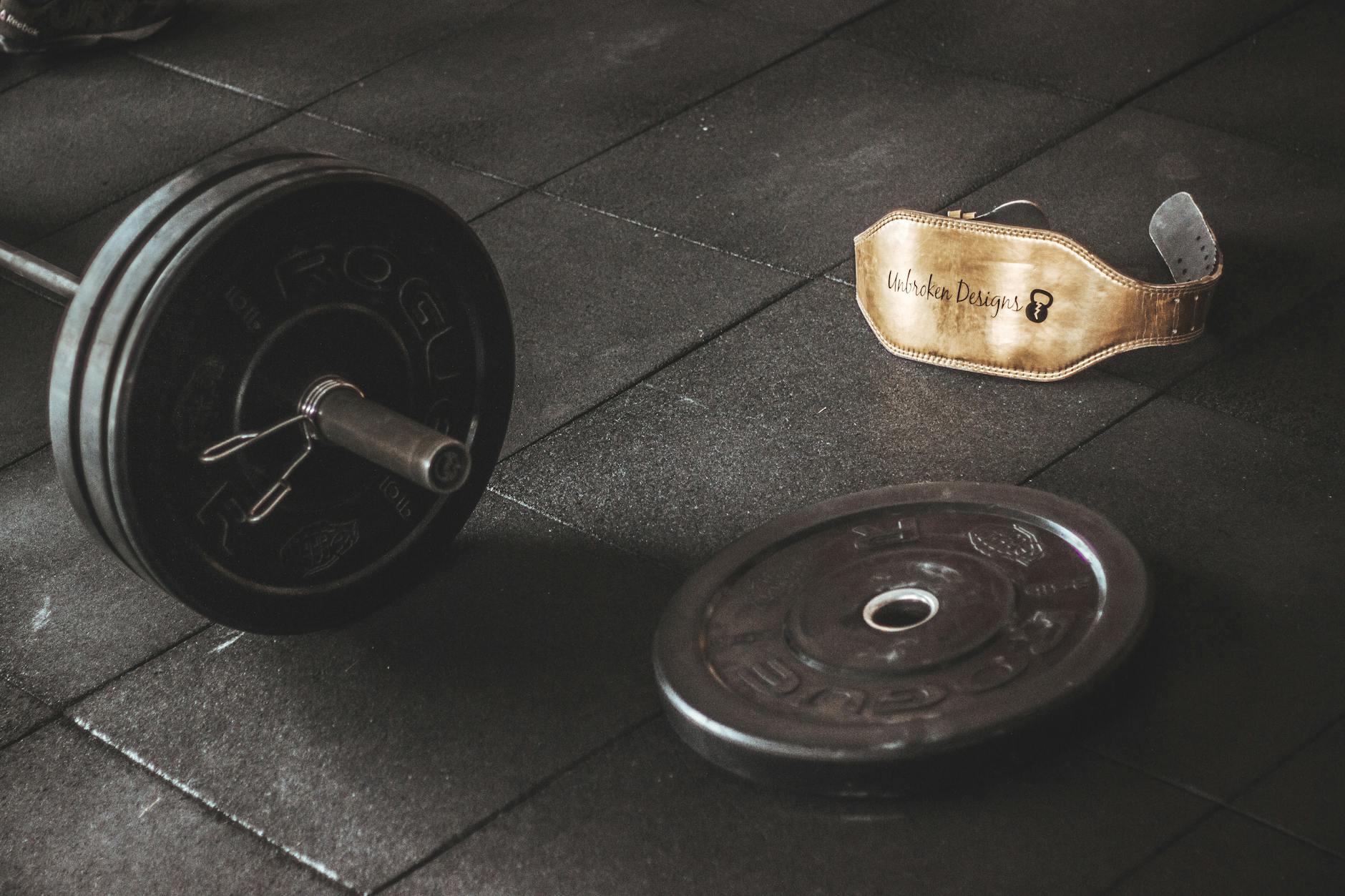
By closure type
Lever belt — the fastest to put on and take off, and locks into one fixed position every time. Popular for powerlifting because the fit is identical set to set. The drawback is that adjusting tightness between exercises requires a screwdriver to reposition the lever. If your waist circumference changes with weight fluctuations or different clothing, it is a less flexible option than a prong belt.
Prong belt (single or double prong) — the most common type for general training. Adjustable between holes on the fly, which makes it practical when you want slightly different tightness for squats versus deadlifts. Double-prong versions are marginally more secure but take longer to fasten between sets.
Velcro (nylon) belt — light, flexible, and quick to adjust mid-session. Better suited to CrossFit-style training where you move between exercises rapidly and need some support without the rigidity of leather. Not the right choice for max-effort powerlifting — the velcro can slip under extreme loads and nylon compresses more than leather, reducing support at precisely the moment you need it most.
By width
The standard for a powerlifting belt is 10 cm (4 inches) all the way around. This even width distributes support uniformly across both the lower back and the abdomen. Tapered belts — wider at the back, narrower at the front — allow more torso mobility but provide less abdominal support. For heavy compound work, a uniform-width belt is the practical choice.
By thickness
10 mm is the standard for most lifters. It breaks in faster than 13 mm and is comfortable enough to wear across a full training session. 13 mm leather is used by competitive powerlifters who want maximum rigidity at peak loads — it takes considerably longer to break in and is noticeable to wear for extended periods. For training purposes, 10 mm is sufficient for the vast majority of people who are not competing in powerlifting.
How to Choose the Right Weightlifting Belt
Material
Leather provides the most rigidity and durability. A quality leather belt moulds to your body over time and, with consistent use, can last well over a decade. The break-in period for stiff leather takes a few months of regular training before it feels fully comfortable — but once broken in, it holds its shape far better than nylon alternatives.
Nylon is lighter, more flexible from day one, and significantly less expensive. For moderate training loads and varied workouts that include upper body work, conditioning, and some compound lifting, a nylon belt works well. For consistently heavy squat and deadlift work, leather is the better long-term investment.
Sizing
Measure your waist at your belly button — not your trouser size, which sits lower. Belt sizing is based on circumference at the navel. When in doubt, size down rather than up. A belt that is even slightly too loose does not provide the support that justifies wearing one. The belt needs to stay in position throughout an entire set. If it migrates up or down under load, it is sized wrong or too flexible for the purpose.
Choosing a belt for women
The mechanics are identical — material, thickness, and width matter the same way regardless of who is wearing the belt. Look for brands that size on actual waist circumference starting at XS with measurement references, rather than vague S/M/L labels. A correctly fitted lifting belt for women will feel completely different from one that is one size too large. The same rule applies as for any lifter: buy for fit, not brand name.
Budget
Heads up: a mid-range belt you wear consistently for five years costs less per session than a cheap one you replace every six months because the velcro gives out or the leather cracks. Fit matters more than price point. If you are new to belted lifting, start with a mid-range nylon belt before committing to a lever belt — the form cues change when you add a belt and there is no point in spending heavily before you have decided it is a permanent part of your training.
Browse the full range of weightlifting belts and lifting accessories at Flexi Muscles, including prong belts, lever belts, and nylon options.
When to Wear a Weightlifting Belt — and When to Leave It Off

Wear a weightlifting belt for:
- Working sets at or above 85% of your estimated 1RM on squat and deadlift — these are the loads where intra-abdominal pressure is a real limiting factor and the belt earns its place
- Romanian deadlifts at heavy loads — the extended lower back position under a heavy bar benefits from the same bracing support as a conventional deadlift
- Overhead pressing when lower back extension is limiting you — a belt cues you to brace harder and reduces the tendency to hyperextend the lumbar spine under a heavy overhead load
- Competition preparation — if you compete in powerlifting, practise with a belt regularly so the performance difference on the day is not a surprise
Leave the weightlifting belt off for:
- Warm-up sets — you are practising the movement pattern and reinforcing technique; adding a belt at submaximal loads delays the bracing development your working sets depend on
- Training below 80% of 1RM — at volume loads, beltless work develops the core endurance the belt is amplifying. Using the belt here means your core never has to adapt
- The first six to twelve months of barbell training — build the brace first. A belt introduced before you have developed a solid beltless technique does not give you a foundation to stand on; it just makes the absence of one less noticeable
- Olympic lifting (snatch and clean and jerk) — these movements require the bar to travel through a path that the rigidity of a thick belt interferes with; Olympic lifters use much thinner, more flexible belts when they use one at all
- Isolation exercises and machine work — there is no meaningful spinal loading on a cable row, leg extension, or lat pulldown that a belt addresses. Wearing one here is a statement, not a training choice — and we will leave it at that
The most useful frame for the decision: a belt should let you lift slightly more than beltless because your brace is better, not because the belt is compensating for a brace you have not built. If a belt is the thing making a movement feel stable at moderate weights, that is a signal to put it away and do the beltless work first.
If your grip is the thing failing before your target muscles do, rather than lower back support, lifting straps are a more targeted solution for heavy pulling movements. They extend how long you can hold a heavy bar without requiring a bracing change.
For a complete overview of strength training equipment, browse the strength training range at Flexi Muscles.
Frequently Asked Questions
Does a weightlifting belt make you stronger?
Not directly. A weightlifting belt increases intra-abdominal pressure, which allows you to express more of the strength you already have on heavy compound lifts. On the deadlift, a belt can add roughly 5 to 15 percent to working loads once you have learned to use it correctly. That gain depends entirely on whether you have already built a solid beltless brace. The belt amplifies what is there — it does not create it.
When should you start using a weightlifting belt?
After at least six to twelve months of consistent barbell training without one. Beltless training develops the core strength and bracing technique the belt is designed to support. Adding a belt before that foundation exists means you are skipping the step that makes the belt useful. Most intermediate lifters introduce a belt when they are regularly handling loads above 80 to 85 percent of their estimated 1RM on squat and deadlift.
How tight should a weightlifting belt be?
Before you brace, you should be able to fit two fingers under the belt. Once you take a deep breath and push your abdomen outward against the belt, it should feel firm and immovable. Too loose and it offers no useful support. Too tight before you have braced and you cannot draw enough air to build a proper brace in the first place.
Is a lever belt or prong belt better for weightlifting?
For competitive powerlifting where a consistent fit across every working set matters, a lever belt is the cleaner choice. For general training where you want to adjust tightness between squat and deadlift work, a prong belt is more practical. Both provide the same level of support at equivalent thickness and material. The difference is convenience, not performance.
Should beginners wear a weightlifting belt?
No. The first year of barbell training is when you build the bracing ability and core strength a belt is designed to augment. Adding one before that foundation exists means the belt is doing work your body should be developing. Train beltless, build the technique, then introduce a belt at heavier working weights. The belt will be more useful and the transition less confusing.
Can you wear a weightlifting belt for deadlifts?
Yes. Many lifters wear the belt slightly looser for deadlifts than for squats. The setup position — hips lower, torso more inclined — can make a very tightly cinched belt uncomfortable at the start of the pull. Experiment with tightness: you want enough feedback from the belt to brace against, but not so tight that it changes your start position or forces you into an awkward setup.
What is the difference between a powerlifting belt and a regular gym belt?
A powerlifting belt is the same width all the way around — typically 10 cm — and is made from thick leather with a lever or prong closure. A standard gym belt is often tapered, wider at the back and narrower at the front, which allows more torso mobility but provides less abdominal support. For heavy compound work on the squat and deadlift, a uniform-width powerlifting-style belt is the better choice. For general gym training at moderate loads, a tapered nylon belt is adequate.