

Weightlifting Bands: How to use them on squats, bench and deadlifts
By Flexi Muscles — 3 October 2026 · 8 min read
Weightlifting bands are 41-inch loop bands that you hook between a barbell and a fixed anchor, so the load gets heavier as you stand up or press out. They make the top of a squat, bench or deadlift harder and the bottom easier. Use them for bar speed and lockout strength once your basic technique is solid. Don't use them to fix a lift you can't yet do cleanly with straight weight.
Shop Weightlifting Bands at Flexi Muscles
What Are Weightlifting Bands?

Weightlifting bands are long, continuous loops of layered latex, almost always 41 inches (about 104cm) long. That length is the point. It reaches from the base of a rack or bench up to a barbell sleeve, which short mini bands and tube bands with handles can't do.
Bands are sold by width. Wider means thicker latex and more tension. Colour coding changes between brands, so read the width and tension range on the packaging, not the colour.
| Band width | Best barbell use |
|---|---|
| Thin (about 13mm) | Bench press, first banded squats, light pull-up help |
| Medium (about 22mm) | Squats and deadlifts for intermediate lifters |
| Wide (about 32mm) | Heavy squats, deadlifts, strong pull-up assistance |
| Extra wide (45mm and up) | Advanced deadlifts and reverse-band work |
Always buy bands in matching pairs. One band per side of the bar, same width, same brand. Two different bands give uneven tension, and the bar tilts toward the lighter side.
Why Add Bands to a Barbell?
Every barbell lift has a weak point and a strong point. You're weakest in the bottom of a squat and strongest near lockout. A plain barbell weighs the same the whole way, so the load that feels heavy at the bottom feels easy at the top.
Bands fix that mismatch. They go slack at the bottom and stretch near the top, so the load climbs where you're strongest. Coaches call this accommodating resistance. Most lifters who use resistance bands for powerlifting do so for three reasons:
- Bar speed. You push hard all the way up, because the bar gets heavier the faster you rise.
- Lockout strength. The top of the lift gets real work instead of coasting.
- Lower joint stress at the bottom. Lighter bar weight in the deepest position, where knees, hips and shoulders are under the most strain.
Here's the honest version, though. Bands are a speed tool, not a strength shortcut. A 2022 meta-analysis in the Journal of Science and Medicine in Sport compared band and chain training with normal lifting and found no significant difference in maximal strength for the lower body (p = 0.46). A separate 2022 review in PeerJ, pooling 16 studies, did find bands improved peak velocity and power more than straight weight. So bands make you faster. They won't make you stronger than a well-run straight-weight programme would.
How Much Weight Do Bands Add?
Nobody can give you an exact figure, because tension depends on how far the band stretches in your setup. A tall lifter on a low anchor stretches the band further than a short lifter on a high one. The tension number printed on the packaging is a range, not a promise.
Measure it yourself in five minutes with a bathroom scale:
- Set up the band exactly as you'll use it, anchored and looped over the empty bar.
- Rest one end of the bar on the scale at bottom height and the other end on something the same height. Read the number and subtract half the bar's weight.
- Raise both supports to lockout height and repeat.
- Double both numbers for two bands. That's the band tension at the bottom and top of your lift.
Write those two numbers on tape and stick them on the band. Now your training log means something.
Start with the bar alone and the thinnest band you own. Add plates only once the bar path feels the same as your normal lift.
Banded Squats
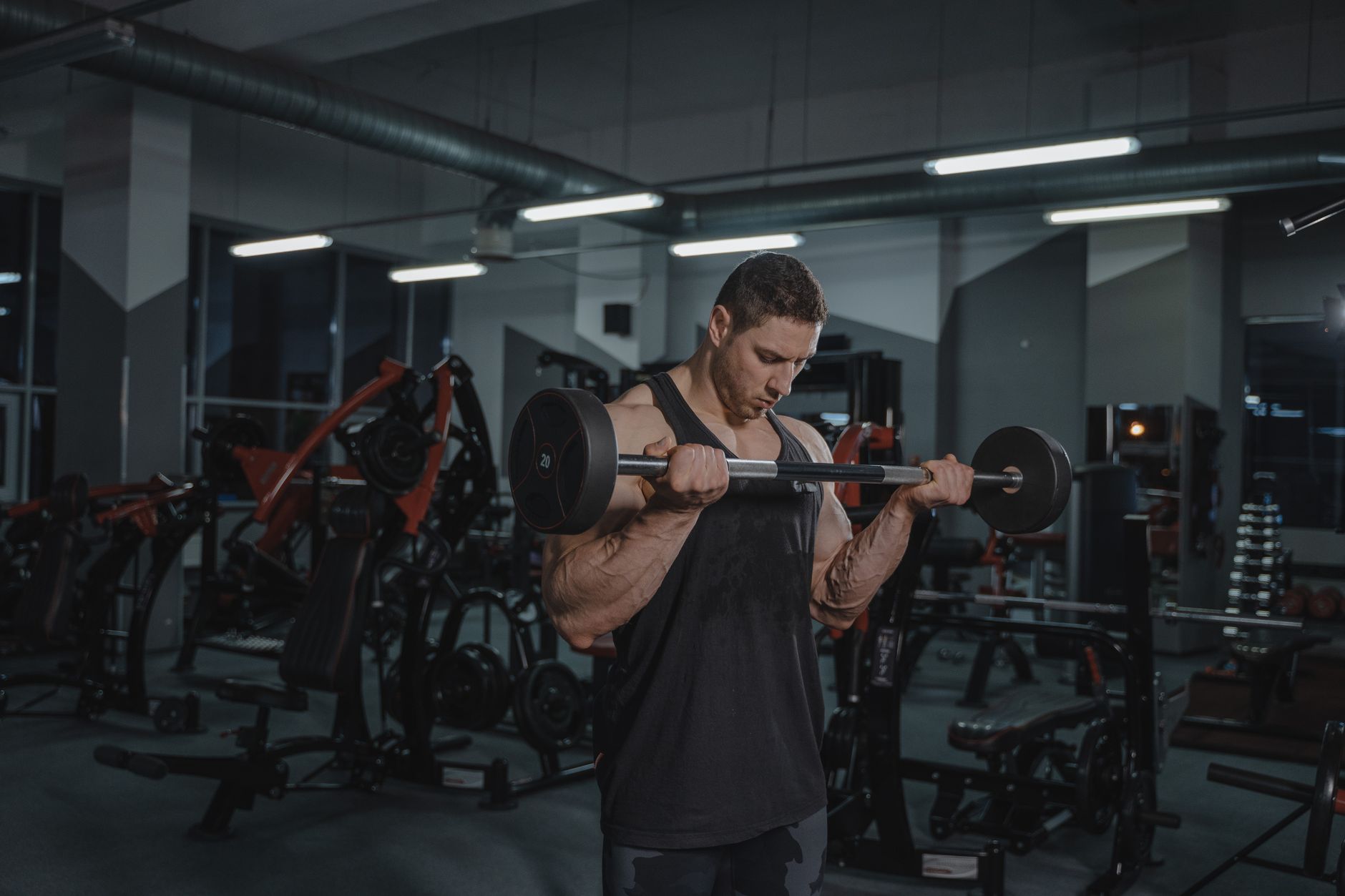
Banded squats need a rack. Loop each band around the band pegs or the base of the rack uprights, then pull the top of the loop over the barbell sleeve, inside the collar. Check the band is under tension when you unrack. If it goes completely slack at the bottom, choke it shorter by wrapping it once more around the anchor.
Walk the bar out in two short steps, not four. Bands pull the bar back toward the anchor point, and a long walkout lets them drag you out of position.
The top of a banded squat is where you find out how much you were coasting before. There's an old gym line: "I'm sorry for what I said during burpees." The last few centimetres of a banded squat produce the same apology.
A second, smaller use: a mini band looped just above the knees. It gives your knees something to push out against and helps lifters whose knees cave inward. That's a technique drill, not a loading method, and it works with a light bar.
Banded Bench Press

The banded bench press is the easiest banded lift to set up at home. Pass each band under the bench frame or around its front legs, then up over each end of the bar. On a flat bench with a narrow frame, a pair of heavy dumbbells on the floor works as anchors too.
Use the thinnest band you own. Your pressing muscles are smaller than your legs, and band tension adds up fast. If the bar wobbles at lockout, the band is too heavy.
Reverse bands are the advanced version. Hang the bands from the top of the rack so they help lift the bar at the bottom and let go near lockout. You handle heavier weight at the top while getting help at your weakest point. Leave this one until you've trained with normal bands for a few months.
Banded Deadlift
The banded deadlift has two setups. The simplest is standing on the band. Step onto the middle of a loop with both feet, then pull each end over the bar sleeves. It's quick, but the tension varies if your stance shifts.
The more consistent setup anchors each band to something heavy beside the bar: a loaded dumbbell, a stack of plates, or the base of a deadlift platform. Loop the band over the bar sleeve and check both sides feel even before you lift.
Expect bands to make the lockout brutal. If you usually stall just below the knee, though, bands won't help, because they're slack there. Fix that weak point with paused deadlifts and straight weight.
A lighter option for home: stand on a single band and hold the ends for a banded Romanian deadlift. No barbell needed, and 3 sets of 15 makes a solid finisher after your main lift.
Band Assisted Pull Ups

Band assisted pull ups use the same 41-inch bands in reverse. The band takes some of your bodyweight at the bottom, where a pull-up is hardest, and less at the top.
Loop the band around the pull-up bar, pull it through itself to lock it, then put one knee or both feet in the bottom of the loop. Pick the band that lets you do 5 clean reps from a full hang. Once you can manage 3 sets of 8, step down one width. Keep stepping down until the thinnest band feels easy, then try a rep with no band at all.
How Often to Train With Bands
Once a week per lift is plenty. Bands are hard on recovery, because every rep ends at the heaviest point. Keep your other sessions for that lift on straight weight, where progress is easy to track.
For speed work, use a bar weight you could lift for many more reps than you're doing, with light bands added. Do short sets of 2 or 3 reps, moving the bar as fast as you can with good form. If the bar slows down, the session is over.
For a home gym without band pegs, anchoring is the main problem. Heavy dumbbells or plate stacks work for bench and deadlifts. Never anchor a band to a door, a garden tap or furniture. The band will move before you do. Our strength training equipment range has racks and benches with frames solid enough to anchor to.
When Not to Use Weightlifting Bands
Skip weightlifting bands if you're still adding weight to the bar most weeks. That kind of beginner progress comes from straight weight, and bands add a variable you don't need yet.
Skip banded squats if you don't have a rack with safety arms. A missed banded squat with no safeties is a dangerous place to be.
Skip them if your problem is the bottom of the lift. Bands help lockout. They do almost nothing for a squat that stalls in the hole or a deadlift that won't leave the floor.
And skip them if you have a latex allergy, unless you can find non-latex bands in the width you need.
Before every session, run your hands along each band. Small nicks, cracks or a sticky feel mean it's time to replace it. A band that snaps under a loaded barbell sends the bar sideways. Our lifting accessories pair well with banded work, especially wrist wraps for heavy bench sessions.
Frequently Asked Questions
What size weightlifting bands do I need for barbell lifts?
41-inch continuous loop bands. Shorter mini bands and tube bands with handles can't reach from an anchor point to the barbell sleeve. For a first pair, buy two of the thinnest or second-thinnest width so both sides of the bar get matching tension.
How much weight do bands add to a barbell?
It depends on the band width and how far it stretches. A band adds the most tension at lockout and the least at the bottom of the lift. The only reliable way to know your number is to measure it with a bathroom scale at the bottom and top positions of your own setup.
Do banded squats build more strength than normal squats?
Not on their own. A 2022 meta-analysis in the Journal of Science and Medicine in Sport found variable resistance training and traditional training were equally effective for maximal strength. Bands earn their place for bar speed, lockout practice and variety, not as a shortcut.
Can I use weightlifting bands without a power rack?
Yes, for bench presses and deadlifts. Loop the bands around the bench frame, a pair of heavy dumbbells or stacked plates. Banded squats are different: without a rack you have no safe way to bail, so skip the bands until you have safety arms.
Which band should I use for band assisted pull ups?
The band that lets you complete 5 clean reps with a full hang at the bottom. Wider bands give more help. Move down one width once you can do 3 sets of 8 with your current band.
Related at Flexi Muscles
- Resistance bands: loop bands for barbell work, pull-up assistance and warm-ups
- Strength training equipment: barbells, plates, racks and benches to anchor your bands to
- Lifting accessories: wrist wraps, belts and straps for heavy sessions
- Flexi Muscles blog: more training and equipment guides