

Weighted Pull-Up Belt: Chain vs Strap, Fit, and How to Use One Properly

By Flexi Muscles — 20 August 2026 · 12 min read
A weighted pull-up belt — also called a dip belt — is a padded belt with a chain or strap hanging from it, letting you clip on a weight plate, kettlebell, or dumbbell at your hips. It exists for one reason: once bodyweight pull-ups, dips, or belt squats stop being hard, a weighted pull up belt is the cleanest way to keep adding resistance without switching to machines. The chain sits low at your hip bones, the plate hangs between your legs, and every rep now moves your bodyweight plus whatever you loaded onto it.
This guide covers chain versus strap attachment, correct fit and positioning, which exercises actually benefit from added load, the mistakes that make a dip belt dangerous rather than useful, and the honest rep benchmark to hit before you buy one at all.
Shop Lifting Accessories at Flexi Muscles
What a Weighted Pull-Up Belt Actually Does
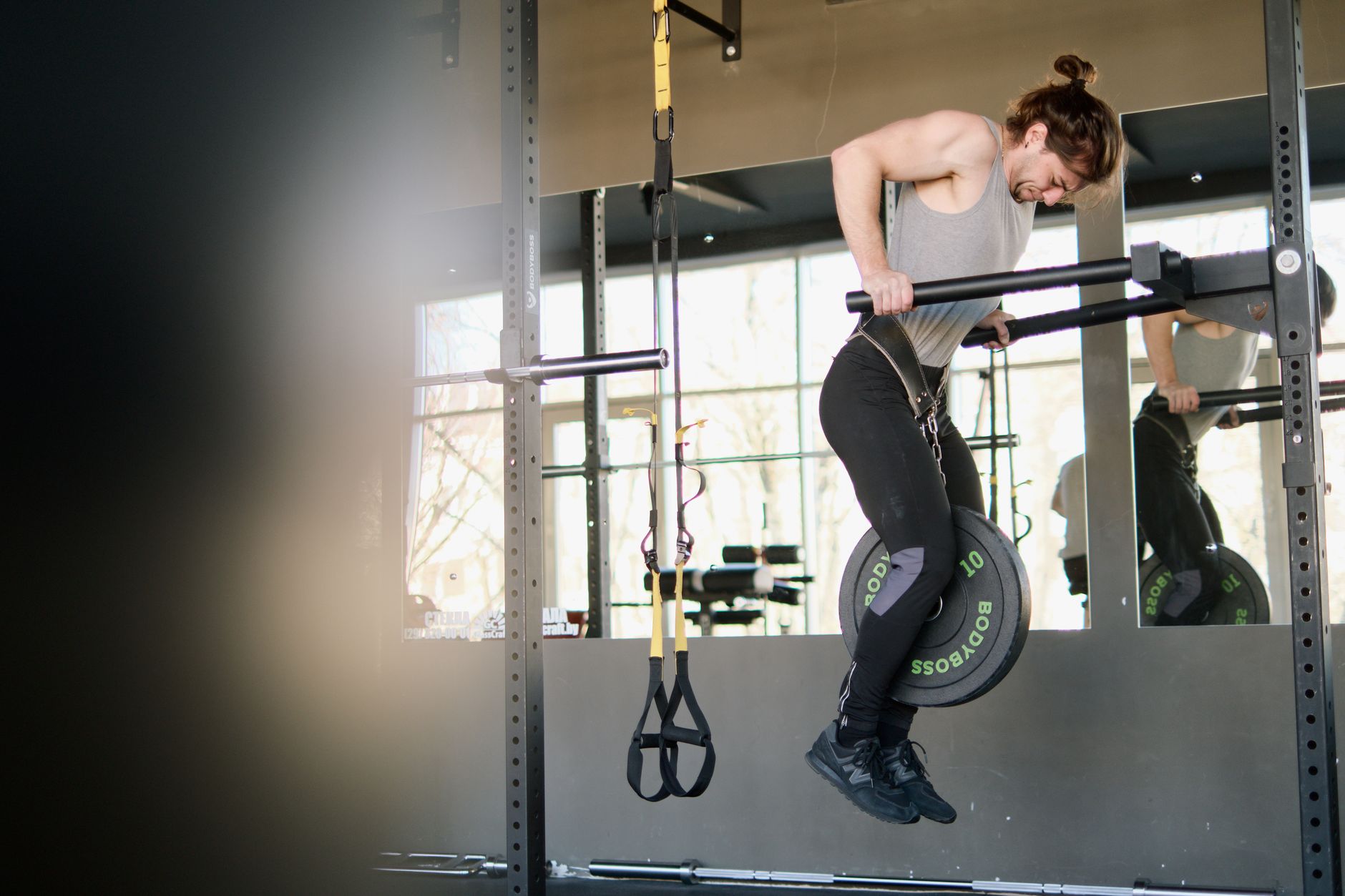
Bodyweight training has a ceiling. Push-ups, dips, and pull-ups all get easier as your strength improves, and past a certain point you stop making progress simply by adding reps — twenty clean pull-ups do less for strength than eight pull-ups carrying real load. A weighted pull up belt solves that without needing a cable machine, a weighted vest, or a barbell you can somehow strap to your ankles.
The belt itself is simple: a padded band that sits around your hips, a length of chain or webbing looped through it, and a carabiner or clip at the end. You thread the chain through the centre hole of a weight plate, clip it back onto itself, and the plate hangs below your hips. From there, any exercise where your bodyweight is the resistance — pull-ups, chin-ups, dips, belt squats, even a loaded farmer's walk — can be progressively overloaded the same way a barbell lift is: by adding weight in small increments over weeks and months.
Chain or Strap: Choosing the Right Attachment
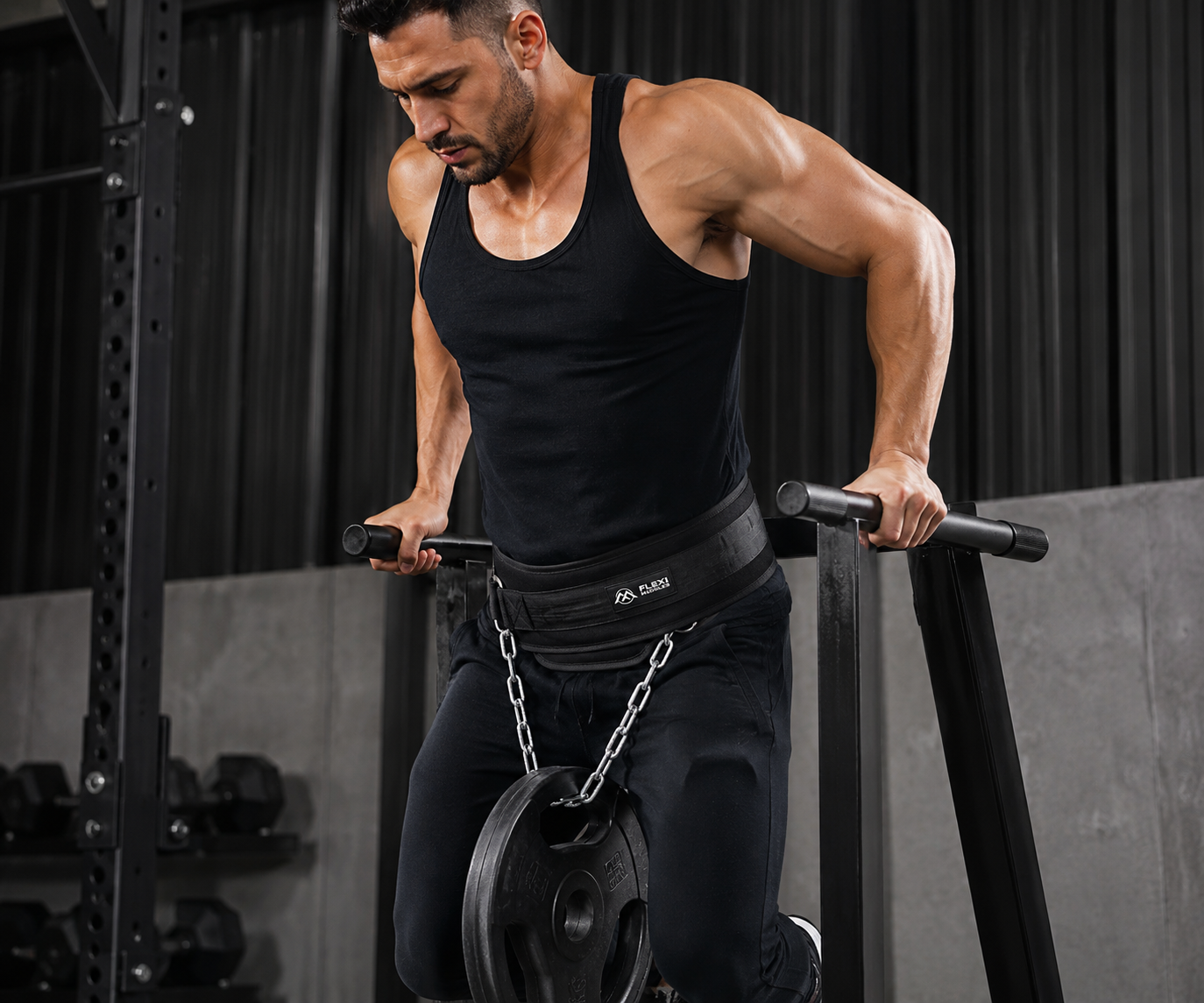
Every dip belt on the market uses one of two attachment styles, and the choice matters more than the belt's brand or colour.
Steel chain
A weight lifting belt with chain is the standard choice for a reason: chain does not stretch under load, so the plate sits at a fixed height rep after rep instead of slowly sinking lower as a strap gives. It also threads directly through the centre hole of a standard weight plate without any extra hardware — loop it through, clip the end link back to itself, and you are set. The trade-off is noise and a small amount of extra weight, neither of which matters once you are training rather than shopping.
Nylon or webbing strap
Lighter, quieter against your legs, and usually cheaper than a chain version. The downside shows up over time: webbing stretches slightly under repeated heavy loading, which means the hang height creeps down across months of use, and straps are more fiddly to loop through a plate with a small or oddly shaped centre hole. A strap is a reasonable starting point for lighter loads under 20kg. Past that, most lifters switch to a weight belt with chain within their first year of consistent use.
Padding and sizing
The belt itself should be padded across the hips, not just the sides — that padding is what stops a heavy plate from digging in during a long set. Sizing runs looser than a standard lifting belt because a dip belt sits lower, at the iliac crest rather than the natural waist; check the brand's size chart against your hip measurement, not your waist measurement, before buying.
How to Position and Use It Correctly
Fit and setup matter more with a dip belt than with almost any other piece of gym equipment, because getting it wrong does not just reduce the exercise's effectiveness — it puts a swinging weight plate somewhere it can hurt you.
1. Position it at your hips, not your waist
The belt sits low, resting on the iliac crest — the bony ridge you can feel at the top of each hip. Worn higher, up at the natural waist, the plate hangs against your abdomen and restricts breathing under load. Worn correctly at the hips, the chain drops cleanly between your legs.
2. Thread the plate and remove all slack
Loop the chain through the plate's centre hole, then clip the end link back onto the chain itself, choosing the link that leaves the plate hanging just below knee height with no slack in the chain above it. Slack is what causes a plate to swing and knock against your shins mid-set — pull it out before you start, not halfway through the first rep.
3. Centre the load between your legs
The plate should hang evenly, directly under your hips, not off to one side. An off-centre load pulls your torso out of alignment on every rep, which shows up first as a slight twist and, over enough reps, as shoulder strain that has nothing to do with the exercise itself.
4. Start light and build the habit before the load
Your first sessions with a belt should use a plate light enough that it barely changes how the rep feels — 2.5kg to 5kg is typical. The goal early on is learning how the hanging weight affects your balance and rhythm, not testing your ceiling. Add weight in small increments, generally 1.25kg to 2.5kg per side, once a given load stops being genuinely difficult for your working set.
Which Exercises It Actually Loads Well
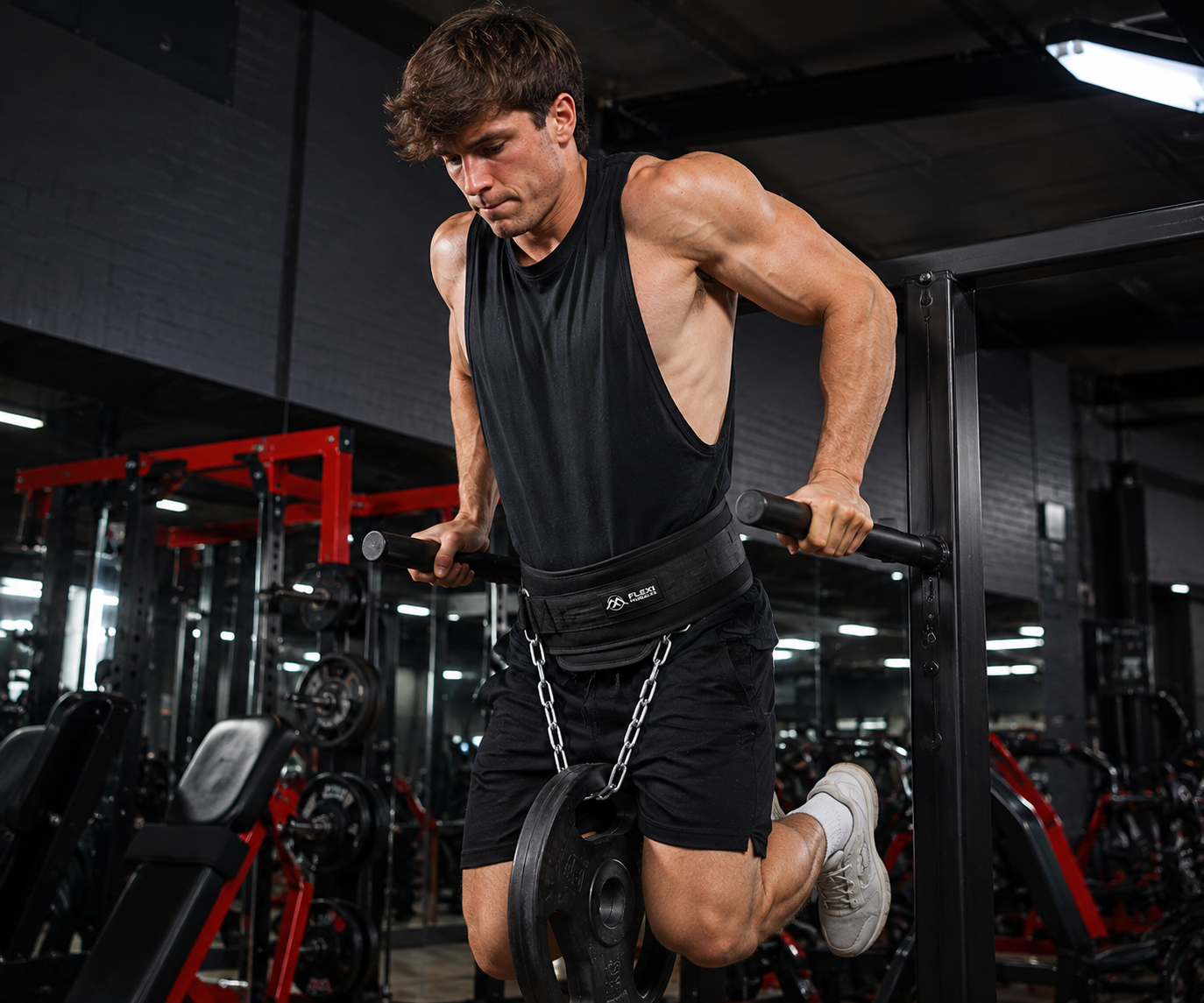
Not every bodyweight movement benefits equally from added load. Four exercises make up almost all the practical use of a gym dip and pull up bar setup with a belt attached.
Weighted pull-ups and chin-ups
The most common use, and the one the belt is named for. Set up on a pull-up bar exactly as you would unweighted, with the plate hanging clear of the bar's mounting hardware and your legs. Full range of motion matters more here than it does with any other loaded exercise — a belt that lets you cheat the top or bottom of the rep is training half a pull-up, not a full one.
Weighted dips
On parallel bars or a dip station, the same belt setup applies. Dips loaded this way build triceps and chest strength faster than bodyweight dips alone once your unweighted set climbs past 12 to 15 clean reps, at which point bodyweight volume stops being an efficient way to keep building strength.
Belt squats
A less common but genuinely useful application: standing on a raised platform or the edge of a step with the belt's load hanging between your legs, then squatting. Because the load hangs from your hips instead of sitting on your spine the way a barbell back squat does, belt squats let you train leg strength hard with far less lower-back stress — useful for anyone managing a back issue who still wants to load their legs directly.
Weighted carries
Clip a heavier plate to the belt and walk for time or distance. It is a blunt, simple way to build grip endurance and core stability, and it needs no bar, no rack, and barely any space — useful on a day when the rest of your equipment is in use.
Common Mistakes That Make It Dangerous or Useless
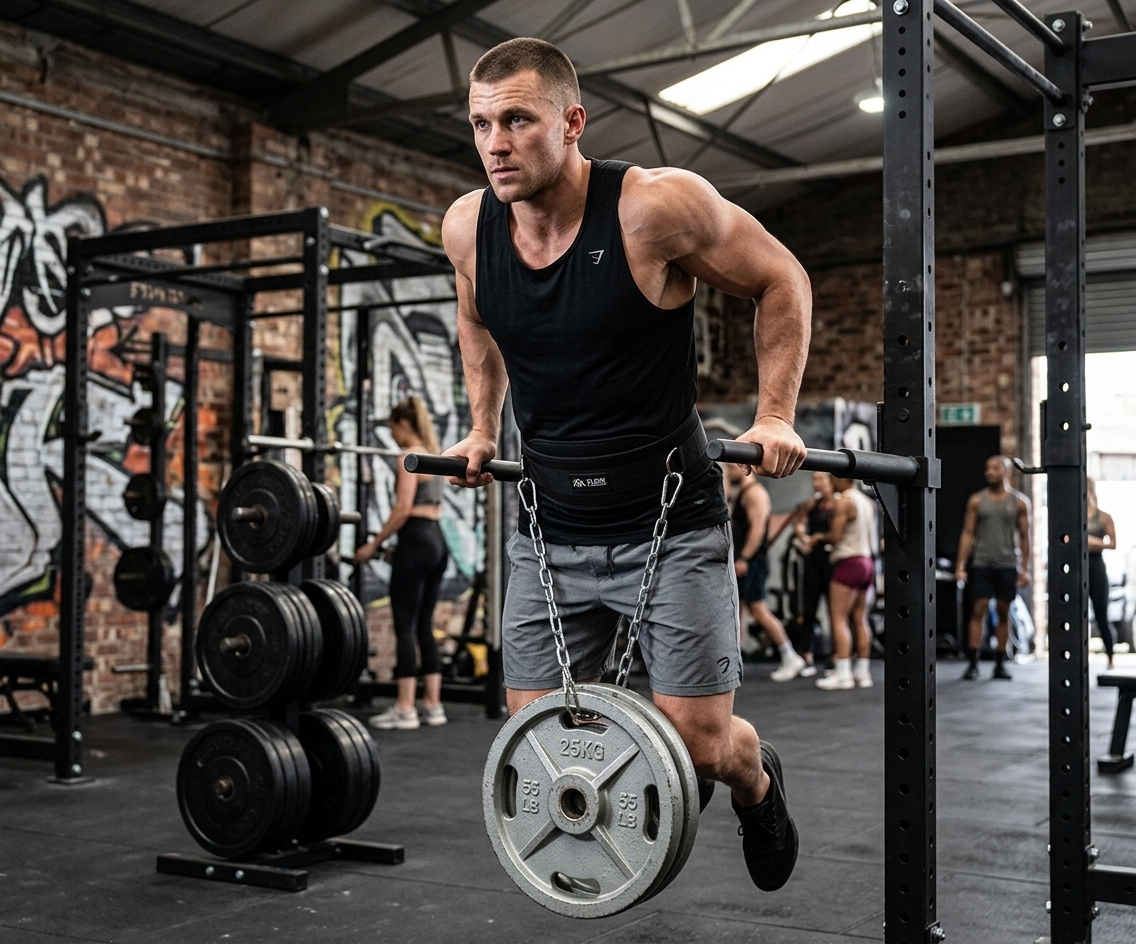
Most dip belt injuries and near-misses trace back to one of four setup errors, not to the exercise itself.
Wearing it too high. Up at the natural waist, the plate presses into your abdomen on every rep and the belt's padding is doing nothing useful. Drop it to the hips every time.
Leaving slack in the chain. A loose chain lets the plate swing, and a swinging plate at knee height mid-rep is how shins get bruised and rhythm gets broken. Pull the slack out before your first rep, not after you notice the swing.
Not fully clipping the carabiner or end link. Check it every single time you load a new plate — a half-clipped chain is the one failure mode that actually drops weight, and it takes two seconds to verify.
Loading weight before range of motion is solid. Added weight tends to shorten whatever range of motion was already inconsistent. If your unweighted dips or pull-ups do not reach full lockout and full stretch every rep, fix that first — a belt will not fix bad form, it will just make bad form heavier.
When You Are Not Ready for a Weighted Belt Yet
Straight up: a weighted pull-up belt is not the next logical purchase for everyone working toward their first pull-up, and buying one too early usually sets that goal back rather than speeding it up.
If you cannot yet do 8 strict, full-range pull-ups in one set, your time is better spent building that number with bodyweight reps, negatives, or assisted pull-up bands. No belt turns five shaky pull-ups into fifteen — it only makes the five you already have slower and harder to complete cleanly.
If your dips do not yet reach full lockout at the top and a full stretch at the bottom, adding load will train the shortened range you already have, not fix it. Get the movement pattern right unweighted first.
If you are training for general fitness rather than maximal strength, higher-rep bodyweight sets deliver most of the muscular and cardiovascular benefit most people are actually after, without the belt, the plates, or the setup time. A weighted belt earns its place once you are specifically chasing strength numbers past what bodyweight reps alone can build — not before.
For the bar itself and the progressions that come before a belt is worth buying, see our pull-up bar guide.
Frequently Asked Questions
What is a weighted pull-up belt used for?
A weighted pull-up belt, also called a dip belt, is a padded belt with a chain or strap hanging from it so you can attach a weight plate, kettlebell, or dumbbell at your hips. It lets you add resistance to bodyweight exercises — pull-ups, chin-ups, dips, and belt squats — once your own bodyweight stops being enough of a challenge.
Where should a dip belt sit on your body?
Low, at the iliac crest — the bony ridge of your pelvis — not up at your natural waist. Worn too high, the belt digs into your abdomen on every rep and the hanging weight swings against your thighs. Worn correctly at the hips, the load hangs cleanly between your legs and stays out of the way of your knee drive.
How much weight can a dip belt hold?
Most consumer dip belts are rated for 100kg to 150kg on the chain, which is far beyond what the belt itself needs to handle for pull-ups or dips — your own grip and shoulders will fail well before a properly rated chain does. The practical limit is almost always your pulling strength, not the belt's weight rating.
Can I use a regular weightlifting belt for weighted pull-ups instead?
Not comfortably. A powerlifting-style belt is built rigid and wide to brace your core under a bar, not to hang a load from your hips — the buckle sits at the front, exactly where a chain needs to hang, and the stiff leather digs in under tension. A dedicated dip belt has a low-profile buckle and a purpose-built attachment point that a lifting belt was never designed for.
How many strict pull-ups should I be able to do before adding weight?
Eight strict, full-range pull-ups in a single set is the usual benchmark before a belt earns its place in your bag. Below that number, added weight tends to shorten your range of motion and reinforce poor form rather than build real pulling strength — bodyweight volume is still the better investment.
Chain or strap — which dip belt attachment is better?
A steel chain is the better default: it does not stretch under load, it is simple to thread through a weight plate, and it holds up to years of use. A nylon strap is lighter and quieter against your legs but stretches slightly over time and is more fiddly to load with plates that have a small centre hole. Most serious lifters end up on a chain within their first year.
Related at Flexi Muscles
- Lifting Accessories — dip belts, straps, and grip aids for pull-ups, dips, and weighted calisthenics
- Pull-Up Bar Guide — choosing a bar and building the reps that come before a weighted belt
- Calisthenics Home Gym — what equipment to buy first for a full bodyweight training setup
- All Products — browse the full Flexi Muscles range
Sources
- ACE Fitness Exercise Library — technique reference for pull-up, dip, and squat variations
- NSCA — National Strength and Conditioning Association — evidence-based guidance on progressive overload and load progression
- Physiopedia — Pelvis and Iliac Crest Anatomy — anatomical reference for correct belt positioning at the hips