

Weighted Hula Hoop Weight: How Heavy Should Yours Be?

By Flexi Muscles — 27 August 2026 · 7 min read
A weighted hula hoop should weigh 1–2lb (0.45–0.9kg) if you're just starting, rising to 3–5lb (1.4–2.3kg) once you can keep it spinning for a full five minutes without dropping it, and topping out around 8lb (3.6kg) for experienced hoopers chasing extra resistance. Going heavier than that doesn't multiply the workout — it mostly multiplies the bruising. The weight that matters is the one you'll actually use every day, not the one with the biggest number on the box.
Shop the Weighted Hula Hoop at Flexi Muscles
How Much Should a Weighted Hula Hoop Weigh?

Weighted hula hoops on sale in South Africa are almost always listed in pounds first, since most of the manufacturing and marketing comes out of the US. If you're used to thinking in kilograms, that makes comparing models harder than it should be. Here's the same weight range converted, matched to experience level.
| Level | Weight (lb) | Weight (kg) |
|---|---|---|
| Beginner (first 2–4 weeks) | 1–2lb | 0.45–0.9kg |
| Intermediate | 3–5lb | 1.4–2.3kg |
| Experienced | 6–8lb | 2.7–3.6kg |
There's no fitness benefit to skipping straight to the experienced row. Every credible source on weighted hula hooping, including Healthline's breakdown of hoop weights and sizes, points beginners toward the 1–2lb range regardless of general fitness level, because the limiting factor early on is technique, not strength.
Which Weight Is Best for Weight Loss?
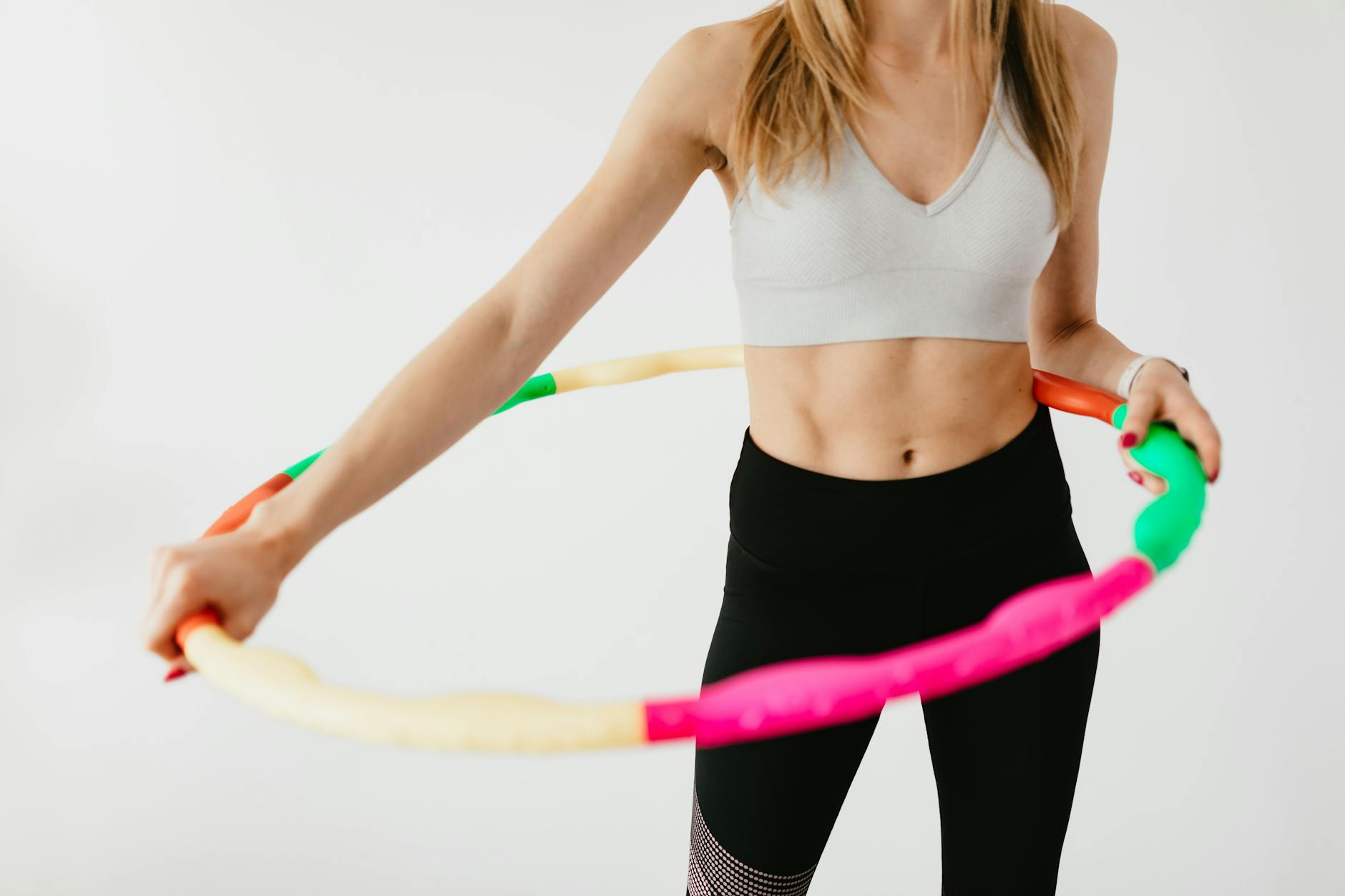
A moderate hoop, not the heaviest one you can buy, is the best weighted hula hoop for weight loss. A 2019 randomised controlled study published in Obesity Facts put 55 overweight subjects through six weeks of weighted hula hooping and recorded a 3.1cm average reduction in waist circumference — using an average session of just 12.8 minutes a day at a weight the subjects could sustain, not the maximum available.
That's the pattern that decides results: time spent moving the hoop consistently, not the number printed on the packaging. A 6lb hoop that drops every 40 seconds produces less continuous core engagement, and burns fewer calories over a session, than a 2lb hoop kept moving for ten minutes straight.
If weight loss is the goal, buy for consistency: a 1–3lb hoop you'll use most days, paired with the 20–30 minute sessions most research is based on, beats a heavier hoop bought on the assumption that heavier automatically means faster results.
Why a Heavier Hoop Isn't a Shortcut
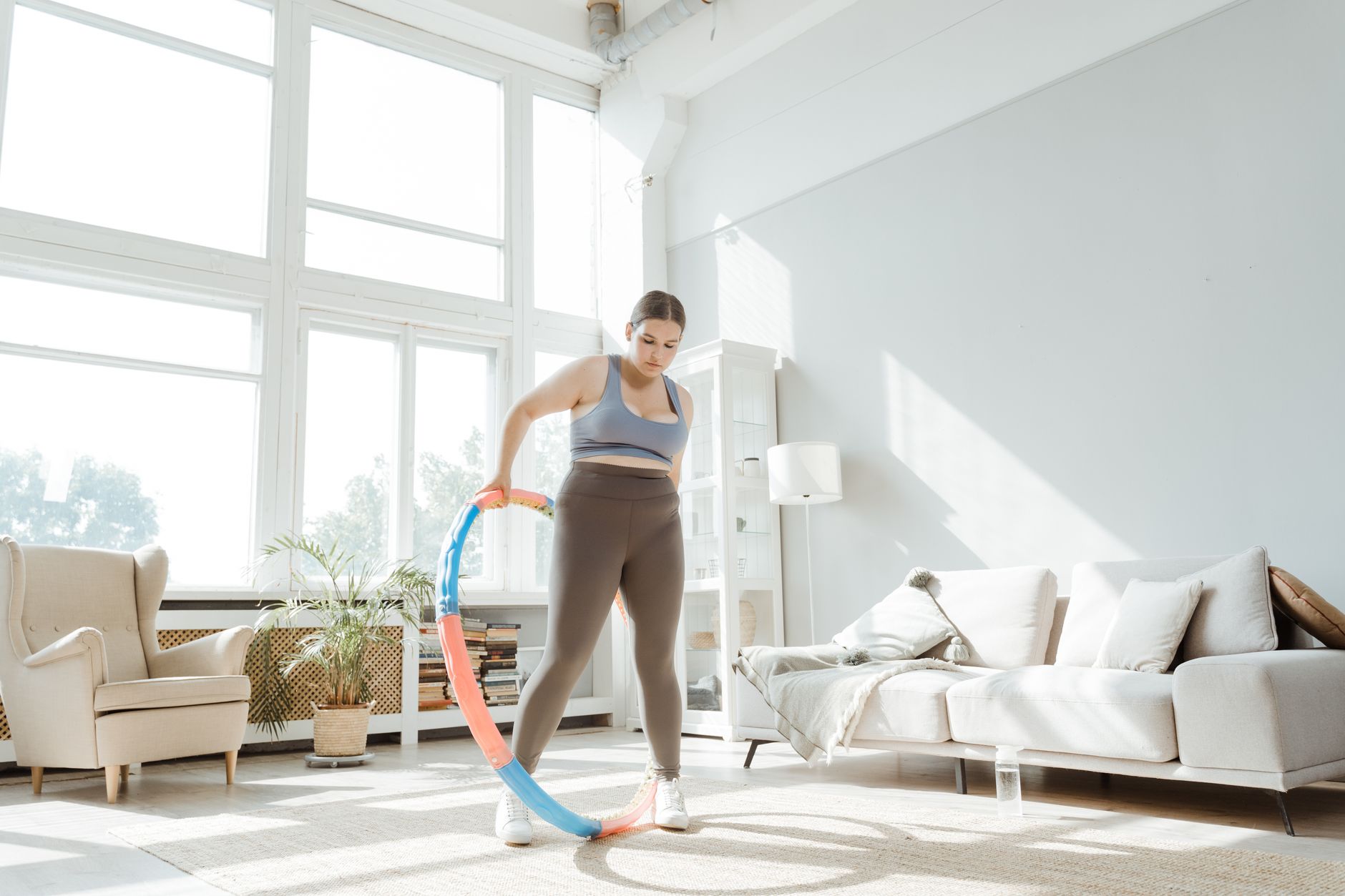
The calorie figure most commonly quoted for hula hooping — roughly 210 calories over 30 minutes, from research commissioned by the American Council on Exercise — came from 16 subjects who were already intermediate to advanced hoopers, aged 16 to 59, holding an average heart rate of 151 beats per minute throughout. That's not a beginner's first week with a new hoop.
My honest opinion: don't buy a heavy hoop, or pay extra for one, expecting to hit that calorie number in week one. A beginner using an 8lb hoop they can only keep moving for 30 seconds at a time burns closer to nothing over a session, while accumulating bruising the marketing photos never show. Buy light, build the minutes up first, and let the weight increase follow your ability rather than lead it.
Beyond the 8lb (3.6kg) mark, the added resistance stops paying off in results and starts paying off in soreness — bruising to the hips and abdomen, and in some cases strain through the lower back from over-correcting to keep a hoop that heavy from dropping.
Does a Hoop With a Counter Need to Be Heavier?

No. A weighted hula hoop with a counter, sometimes marketed as a smart weighted hula hoop, tracks rotations, minutes, or an estimated calorie count on a small digital display built into the hoop. None of that changes the physics — the counter measures your session, it doesn't add resistance to it.
Choose the counter model's weight the same way you'd choose any other: 1–2lb to start, moving up as your consistency improves. The only extra question worth asking is whether you'll actually look at the numbers. A counter is genuinely useful if tracking minutes keeps you motivated. It's an unnecessary extra cost if you're the type who'll check it twice and then ignore it, in which case a standard weighted hula hoop does the same job for less.
How to Increase the Weight as You Progress
Move up in weight based on what you can sustain, not on a fixed schedule. As a general guide, most people who hoop consistently follow a pattern close to this:
| Timeframe | Weight | Sign you're ready to move up |
|---|---|---|
| Weeks 1–2 | 1–2lb (0.45–0.9kg) | Hoop stays up for 5 minutes, both directions |
| Weeks 3–6 | 3–4lb (1.4–1.8kg) | Sessions feel easy by the last five minutes |
| Weeks 7–12 | 5–6lb (2.3–2.7kg) | You're hooping 20+ minutes without a break |
| 3+ months | Up to 8lb (3.6kg) | Only if extra resistance is a specific training goal |
Increase by 1–2lb at a time. Jumping straight from a 2lb beginner hoop to an 8lb model resets your technique back to week one, because the heavier hoop moves differently and drops more easily until your body adjusts. If two to three days of soreness turns into a week, or you can't complete two minutes with the new weight, drop back down.
Want the full beginner routine that goes with a 1–2lb hoop, including form cues and a 15-minute session plan? Read the weighted hula hoop workout guide.
Frequently Asked Questions
How much should a weighted hula hoop weigh?
1 to 2lb (0.45 to 0.9kg) if you're new to hooping, 3 to 5lb (1.4 to 2.3kg) once you can hold a rhythm for five minutes without dropping it, and up to 8lb (3.6kg) for experienced hoopers chasing extra resistance. Most people never need to go past 5lb.
Is a heavier weighted hula hoop better for weight loss?
No. Weight loss from hula hooping comes from time spent moving, not from the hoop's weight. A 2019 randomised controlled study in Obesity Facts recorded results from an average of 12.8 minutes a day, using a moderate hoop, not the heaviest one available. A heavy hoop you can't sustain for more than a minute burns fewer calories than a light one you use for ten.
Does a weighted hula hoop with a counter need to be heavier?
No. A counter tracks rotations, minutes, or estimated calories — it doesn't add resistance. The same 1 to 2lb starting weight applies whether the hoop has a digital counter or not. Choose the weight based on your experience level first, then decide if a counter is worth the extra cost for tracking.
How do I know when to increase my hula hoop's weight?
When you can keep the hoop spinning for a full five minutes in each direction without it dropping, and the session no longer feels physically challenging by the end. That typically takes two to four weeks of consistent use. Increase by 1 to 2lb at a time rather than jumping straight to the heaviest option.
Can a weighted hula hoop be too heavy?
Yes. Hoops heavier than 8lb (3.6kg) increase the risk of bruising to the abdomen and hips and can strain the lower back, without a proportional increase in results. If a hoop leaves you sore for more than two to three days or you can't complete two minutes of use, it's too heavy for your current level.