

Weight Training for Weight Loss: What Actually Works

By Flexi Muscles — 22 August 2026 · 8 min read
Weight training for weight loss works mainly by building muscle, which raises your resting metabolic rate so you burn more energy even when you are not training. It will not out-burn a hard cardio session calorie for calorie, but three weight training sessions a week, combined with a calorie deficit, is one of the most reliable ways to lose fat and keep it off. Below is how the mechanism actually works, how much and how heavy to train, and which equipment is worth your money.
Shop Strength Training Equipment at Flexi Muscles
How Weight Training for Weight Loss Actually Burns Fat
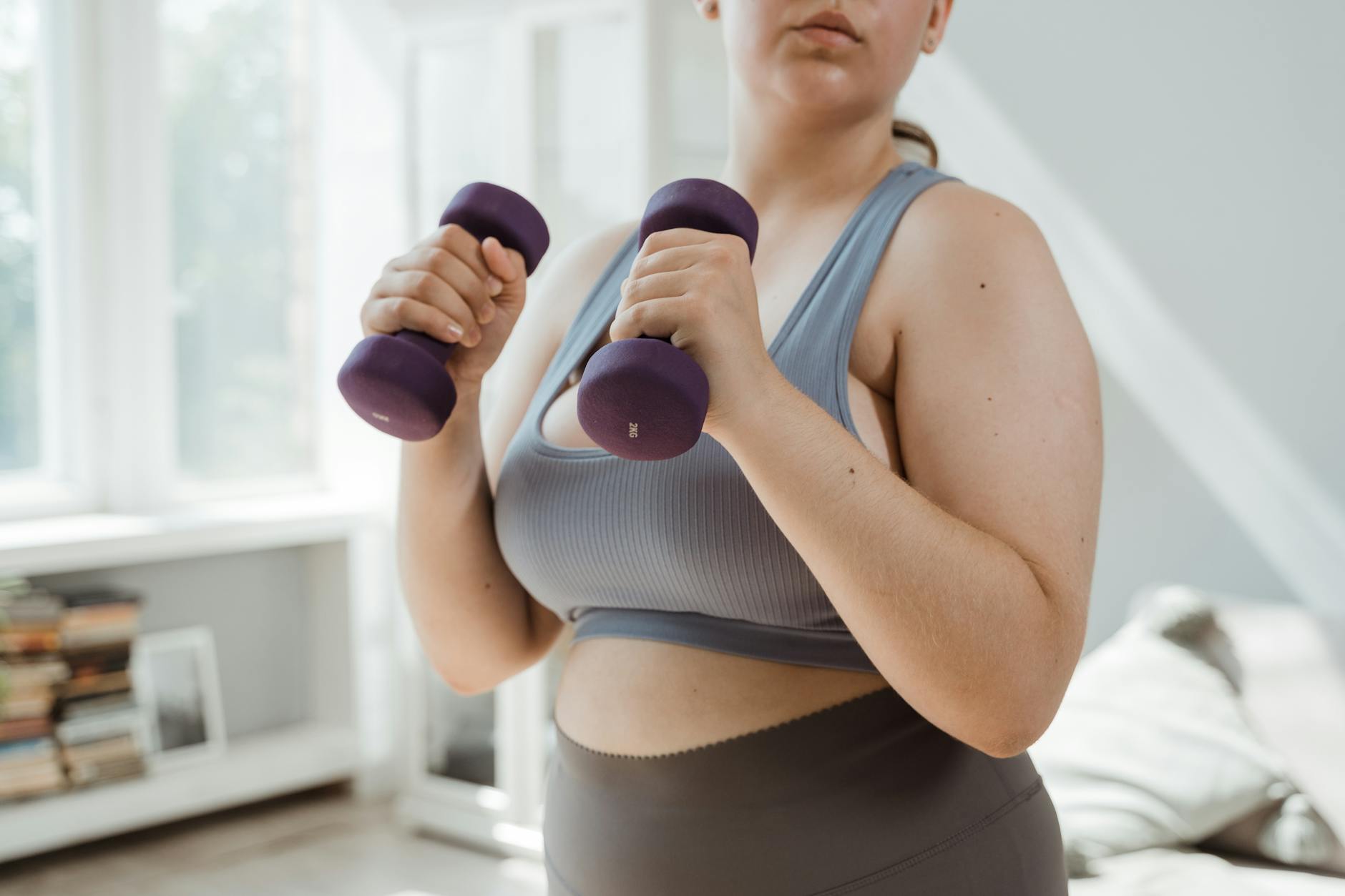
Muscle tissue is metabolically active. It burns energy just to maintain itself, even while you sit still or sleep. Fat tissue does not. Add a kilogram of muscle through consistent weight training and your baseline calorie burn goes up, day after day, without extra effort.
There is also an after-effect. A hard session leaves your body repairing muscle and restoring oxygen levels for hours afterward, keeping your metabolism slightly elevated well past the workout itself. Researchers call this excess post-exercise oxygen consumption — one reason a 45-minute lifting session can outperform its own calorie count on paper.
Straight up: none of this makes weight training a shortcut. The scale moves because of a sustained deficit, and diet does most of that work. What weight training changes is the quality of the weight lost — more fat, less muscle, the difference between looking smaller and looking leaner.
Will Lifting Weights Make You Bulky
No, and this question stops more people, particularly women, from starting than any other. Visible muscle size requires a calorie surplus sustained over months, plus training volume most casual gym-goers never come close to. Training for weight loss means training in a deficit — the opposite environment your body needs to add noticeable size.
Most women also do not produce testosterone at the levels the myth assumes. What actually happens in a deficit is muscle preservation, not growth — you keep the shape that fat loss alone strips away, because fat loss without resistance training burns muscle alongside fat.
How Often and How Heavy Should You Train
As a weight loss exercise, three full-body sessions a week, on non-consecutive days, is the most reliable starting point. That is enough frequency to build and maintain the muscle driving the metabolic benefit above, while giving each muscle group roughly 48 hours to recover before it is loaded again.
Lift heavy enough that the last two reps of a set are genuinely difficult with good form. A weight you could do 25 reps with is too light to matter; one that breaks your form by rep 4 is too heavy for a deficit, where recovery is already compromised by reduced calories. Somewhere in the 8 to 15 rep range, close to failure on the final set, is where most people land.
Total weekly volume matters more than any single session. Missing a workout occasionally will not undo progress; skipping weight training altogether in favour of cardio only will.
The Best Strength Training Exercises for Fat Loss

Compound movements, working several muscle groups in one rep, burn more energy per set than isolation exercises and build the muscle mass driving your resting metabolic rate. Build sessions around these first.
- Squat or goblet squat — loads the entire lower body and core in a single movement.
- Deadlift or Romanian deadlift — the single biggest muscle recruitment of any common lift.
- Push-up or dumbbell press — chest, shoulders and triceps together.
- Bent-over row or single-arm row — back and biceps, and a counterbalance to all the pressing.
- Overhead press — shoulders and core stability in one lift.
- Walking lunge — adds a balance and single-leg strength component squats miss.
Six exercises, twice a week per movement pattern, covers a full-body routine without a long list of isolation moves on top.
Dumbbells, Kettlebells or Resistance Bands: Which Is Right for You
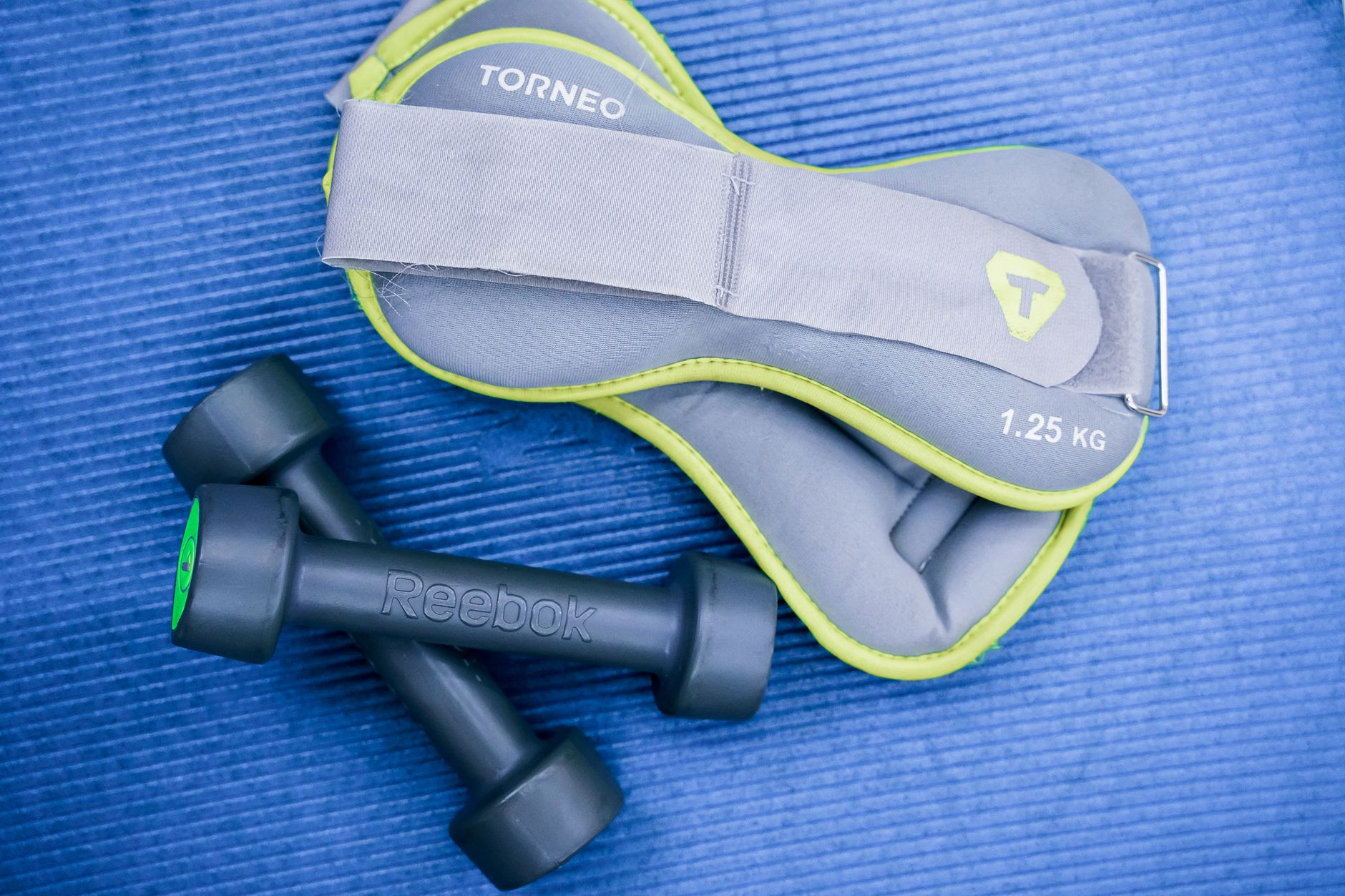
Few guides on this topic say which equipment to actually buy. Straight up: it matters far less than you would think — muscle responds to tension and progressive overload, not to the specific tool creating it.
Adjustable dumbbells for strength training are the most versatile option and cover every exercise in the list above from one small footprint. Kettlebells add swings and other momentum-based movements that raise your heart rate alongside the strength work, which suits anyone short on time. Resistance bands are the cheapest way to start, travel well, and are genuinely effective for the rep ranges used in fat-loss training, though they cannot progress in load as cleanly as free weights once you get stronger.
Browse the full strength training range at Flexi Muscles to compare options against the plan above before deciding.
A Simple Weekly Plan
| Day | Session |
|---|---|
| Monday | Full-body strength: squat, press, row, plank |
| Tuesday | Rest or light walking |
| Wednesday | Full-body strength: deadlift, overhead press, lunge |
| Thursday | Cardio of choice, 20 to 30 minutes |
| Friday | Full-body strength: squat variation, row, press |
| Weekend | Rest, or one cardio session |
Three sets of 8 to 12 reps per exercise, resting 60 to 90 seconds between sets, is enough structure for the first two to three months. Add reps before adding weight, and once a set feels easy for 12 to 15 reps, increase the load and drop back down.
Do You Still Need Cardio
Not strictly. Weight loss with strength training works on its own because of the metabolic effect above; cardio simply widens the deficit further without cutting food. It does not build or preserve muscle the way weight training does, so the two are complementary rather than interchangeable.
If you can only commit to one, weight training does more for fat loss over time because of the metabolic effect described above. If you have time for both, browse cardio equipment at Flexi Muscles and add one or two sessions on the days between lifting.
When Weight Training Alone Won't Get You There

Heads up: no amount of lifting cancels out a calorie surplus. You cannot out-train a bad diet, however good that donut looks in the photo above — weight loss is a deficit first, and weight training decides whether what you lose is fat or muscle, not whether you lose weight at all.
- Your diet is not in a deficit. No training plan overrides consistent overeating. Get the food side right before troubleshooting the training side.
- You need rapid results for a deadline. Weight training builds a slow, sustainable result. Combining it with a larger cardio volume and a tighter deficit moves the scale faster, at the cost of being harder to sustain.
- You have an underlying medical condition affecting weight. Thyroid issues, hormonal conditions and some medications change the equation. Speak to a doctor rather than adjusting training harder against a problem training cannot fix.
Frequently Asked Questions
Does lifting weights actually help you lose weight?
Yes, but not mainly through calories burned during the workout itself. Weight training builds muscle, and muscle raises your resting metabolic rate, so you burn more energy all day, including while you sleep. Cardio burns more per session; weight training changes how much you burn at rest.
Will strength training make me bulky?
No. Building visible muscle mass requires a calorie surplus, specific training volume, and takes months to years, plus most women do not produce enough testosterone to build muscle at the rate the myth implies. Training in a calorie deficit for weight loss produces a leaner, more defined look, not bulk.
How many days a week should I lift weights to lose weight?
Three full-body sessions a week is the most reliable starting point. That is enough to build and maintain the muscle that drives the metabolic benefit, while leaving recovery time between sessions and room for cardio or daily activity on the days in between.
Should I do cardio or weights first when the goal is fat loss?
Weights first, while you have the most energy for technical, heavy lifts. Cardio done afterwards, or on separate days, does not interfere with strength work the way doing it first does. If your session is time-limited, prioritise the weight training and treat cardio as the flexible part.
What is the best rep range for losing fat with weights?
There is no single best range — total training volume matters more than 8 reps versus 15. A mix of 8 to 12 on compound lifts and 12 to 15 on isolation work builds and maintains muscle while keeping sessions manageable in a deficit.
Can I lose weight training with just dumbbells at home?
Yes. A single adjustable pair covering roughly 2.5 kg to 24 kg per hand trains every major muscle group at home. Equipment matters far less than showing up three times a week and eating in a deficit — dumbbells, kettlebells and bands all work if you use them consistently.