

Weight Training Equipment: The Complete Buying Guide for Home Gyms

By Flexi Muscles — 11 August 2026 · 14 min read

Weight training equipment is any tool that lets you apply resistance you can progressively increase — dumbbells, barbells and plates, kettlebells, benches, racks, and the accessories that support them. A working home setup covers three jobs: something to lift, something to lift it on safely, and somewhere to keep it between sessions. Most people buy in the wrong order — a rack before a barbell, a bench before a single dumbbell — and end up with equipment sitting unused while the piece they actually need waits on a wishlist. This guide covers every category, how to choose within it, the order that avoids wasted spend, and where South African buyers run into problems the international guides don't mention.
Shop Weight Training Equipment at Flexi Muscles
The Six Categories of Weight Training Equipment
Everything sold as weight training equipment for home use falls into one of six groups, and knowing which group a product belongs to tells you most of what you need before reading a single spec sheet.
Free weights — dumbbells, barbells, weight plates, kettlebells. The core of almost every home setup, because they load in small increments and work for pressing, pulling, and squatting alike.
Benches — flat, adjustable, or specialised. Turn a floor exercise into a pressing or rowing station and extend what dumbbells alone can train.
Racks and stands — hold a loaded barbell at height and catch it on a missed lift. The category most often bought too early, before the barbell that makes one useful.
Machines — cable stacks, Smith machines, functional trainers. Guide the bar or handle along a fixed path, trading some freedom of movement for consistency and a lower injury learning curve.
Bodyweight and calisthenics equipment — pull-up bars, dip stations, gymnastic rings. Use body mass as the load instead of external weight, and scale by leverage rather than adding plates.
Accessories — lifting belts, straps, gloves, wrist wraps, chalk. Support the four categories above rather than training anything on their own.
A first home gym rarely needs all six. Most effective setups start with free weights and a bench, add accessories as grip or joint support becomes limiting, and only reach racks or machines once training load or variety demands them.
Free Weights: Dumbbells, Barbells, Plates and Kettlebells

Dumbbells
Dumbbells are the single highest-value item in weight training equipment for home use. A fixed pair trains one load; an adjustable pair covers a full strength range in the space a fixed set would need for five or six pairs. Adjustable dumbbells suit anyone without a dedicated training room. Fixed dumbbells suit anyone with rack space and a preference for changing weight with zero setup time between sets. Our dumbbells range covers both formats across a range of weight increments.
Coating matters more than most first-time buyers expect. Rubber-coated dumbbells protect flooring and stay quiet on a drop, which matters in a shared building or a room above a living space. Chrome dumbbells look and feel more like commercial gym equipment but transfer more noise and impact into a concrete floor. Neoprene-coated dumbbells are the softest option and the easiest to grip, though the coating wears faster under daily use than rubber or chrome. None is universally correct — match it to the floor and the neighbours, not a general preference.
Barbells and Plates
A barbell lets two hands move one load together, which recruits more total muscle mass per lift than a pair of dumbbells at equivalent resistance. Standard bars run about 2.2 m and 20 kg unloaded; shorter bars exist for tight spaces but sacrifice some loading capacity. Bar diameter and knurling depth affect grip more than most buyers check before ordering — a 28 mm to 29 mm diameter with moderate knurling suits general pressing and pulling work, while a thinner, more aggressively knurled bar is built specifically for deadlifting.
Plates come in cast iron, which is durable and inexpensive, or rubber-coated, which protects flooring and reduces noise on a drop. Cast iron suits a garage with a concrete floor; rubber-coated suits an apartment or a room above other living space. Check the hole diameter matches your bar's sleeve — standard 25 mm plates do not fit an olympic 50 mm sleeve, and mixing the two systems is a common and entirely avoidable purchasing mistake.
Kettlebells
A kettlebell's offset handle shifts the centre of mass away from the grip, which makes swinging, ballistic, and rotational movements more natural than the same exercises with a dumbbell. Kettlebells train differently rather than better — they're a complement to dumbbells and barbells for explosive and rotational work, not a replacement for either.
Buy free weights before anything else on this list. They are the only category that works without a bench, rack, or dedicated room, and they remain useful indefinitely as training experience grows.
Benches, Racks and Support Equipment
Weight Benches
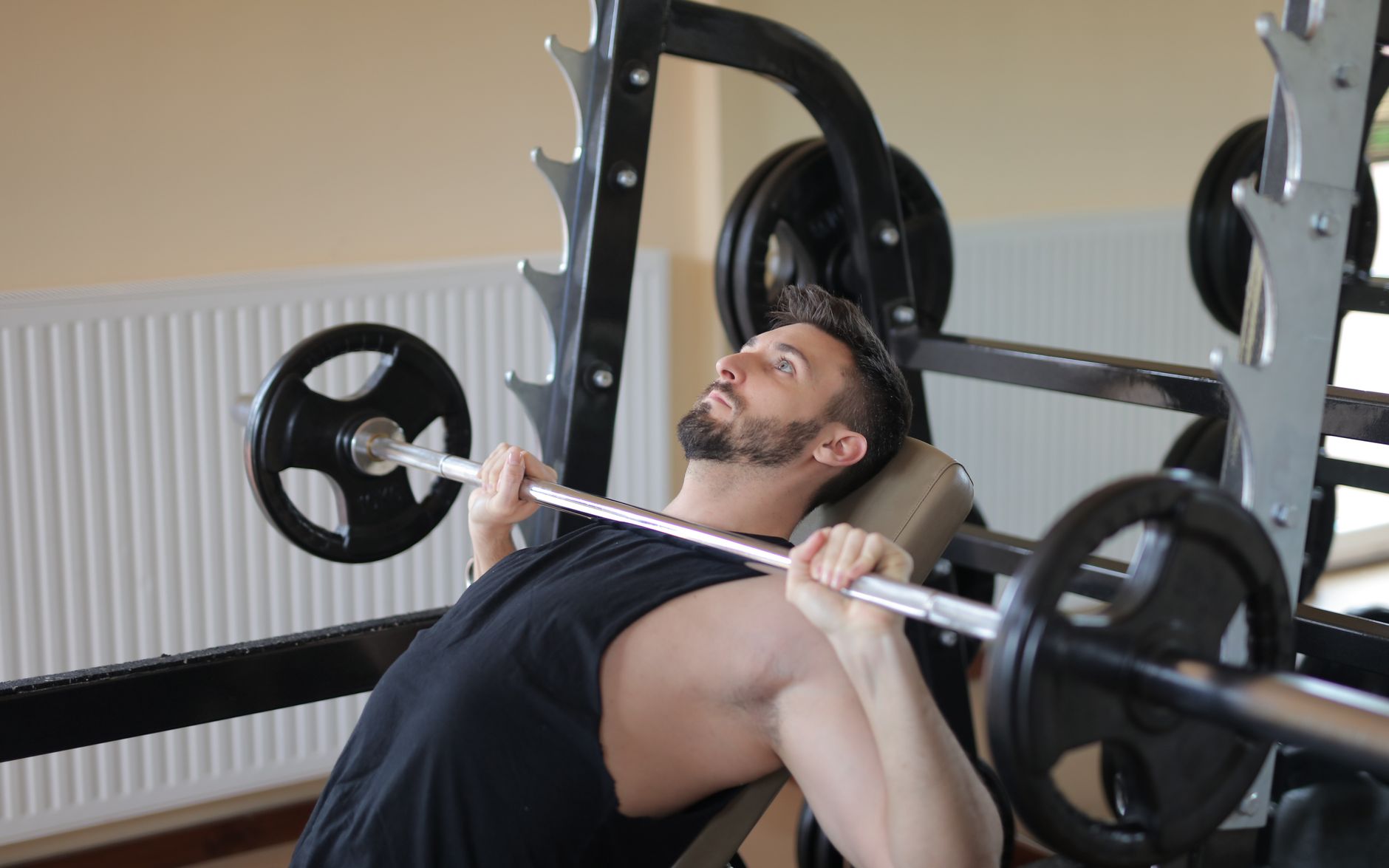
A flat bench trains pressing and rowing movements a floor exercise can't replicate properly. An adjustable bench adds incline and decline settings, extending into shoulder pressing and upper-chest work from the same piece of equipment. For most home setups, an adjustable bench earns its higher price over a flat-only model — the incline settings get used weekly, not occasionally.
Racks and Stands
A rack holds a loaded barbell at a set height and catches it safely on a missed lift. Full power racks give the most safety margin and take the most floor space; half racks trade some stability for a smaller footprint; free-standing squat stands are the most compact and least protective without add-on safety bars. None of the three are useful without a barbell already in the collection — buying a rack before a bar is the most common ordering mistake in this category.
Storage
Dumbbell racks, plate trees, and wall-mounted barbell holders aren't optional once a collection grows past two or three items. Loose plates and dumbbells left on the floor are a tripping hazard and wear out faster from concrete contact than they would on a rack. Budget for storage at the same time as the equipment it holds, not after the floor is already cluttered.
How to Choose Weight Training Equipment for Your Goal
Four questions narrow the six categories above down to what actually belongs in a specific home gym.
What's the training goal? General fitness and muscle maintenance need less equipment and lower loads than a dedicated strength or bodybuilding programme. Be honest about which one describes the next twelve months, not an aspirational version of training three years from now.
How much space is available? Measure before buying, not after delivery. A dumbbell and bench setup needs roughly 2 square metres; a full barbell and rack setup needs closer to 3.5 by 3.5 metres once loading space and bar clearance are included.
What's the safety requirement? Training alone at heavy barbell loads needs a rack with safety bars. Training with a partner, or training at moderate loads with dumbbells and kettlebells, does not carry the same requirement.
What's the realistic budget, spread over time? Buying everything on day one usually means buying the wrong things, because the gaps in a routine only become obvious after a few months of consistent training. Spreading purchases over that period, informed by what's actually getting used, produces a better final setup than a single large order.
Build Quality Signals Worth Checking
Steel gauge, weld quality, and coating consistency separate equipment that lasts a decade from equipment that needs replacing within two years. On racks and benches, thicker steel — a lower gauge number — flexes less under load and holds its shape through repeated use. On plates and dumbbells, an even coating without visible seams or bubbling indicates a properly cured finish rather than a rushed production run. None of this shows up in a product photo, so read the actual material specification before ordering rather than judging weight training equipment on appearance alone.
Best Setup by Space and Experience Level

Beginners: gym equipment for beginners at home means one pair of adjustable dumbbells and a flat bench. That combination covers pressing, rowing, squatting, and curling variations without a single additional purchase, and it's enough to run a structured programme for months before a gap appears.
Small apartments or flats: adjustable dumbbells alone, stored in a cupboard between sessions. No bench, no rack, no floor space held permanently by equipment — just a pair that goes back in a corner after training.
Garage or dedicated room setups: dumbbells, an adjustable bench, a barbell with plates, and — once loads justify it — a rack. This is the standard progression for anyone assembling strength training home gym equipment in a room that doesn't need to serve another purpose during the day.
Building muscle specifically: the best home gym equipment for building muscle is whatever lets you progressively add load across presses, rows, squats, and hinges — which in practice means dumbbells and a bench first, a barbell and plates second. Machines and cable stacks add exercise variety later, but they're not what drives the early gains that matter most in a first year of training.
Budget Order: What to Buy First, Next and Last
Order matters more than total spend. Buying in this sequence means every purchase is usable the day it arrives, rather than waiting on a piece bought earlier or later.
First: adjustable dumbbells. The highest number of exercises per item purchased, and the only piece of equipment on this list that trains a full body programme entirely on its own.
Second: an adjustable bench. Doubles what the dumbbells can do — pressing and rowing movements a floor routine can't replicate — for a fraction of the cost of anything in the rack category.
Third: accessories that match training gaps. A lifting belt once loads challenge lower-back stability, straps once grip becomes the limiting factor on pulls, gloves if bare-hand callusing is a problem rather than a badge. Buy these when the gap shows up, not before. Our lifting accessories range covers belts, straps, and gloves individually rather than bundled.
Fourth: a barbell and plates. Once dumbbell weight starts running out for squats, presses, or deadlift variations, a barbell extends the same movements well beyond what a heavy adjustable pair can load.
Fifth: a rack, if training goes there. Only once barbell loads reach a point where solo training without safety bars carries real risk. Many home lifters never reach this stage, and that's a legitimate place to stop, not an unfinished setup.
Buying Weight Training Equipment in South Africa
Most buying guides for weight training equipment are written for the US or UK market, and three things they don't cover matter specifically for South African buyers.
Import costs and lead time. Ordering heavy equipment — plates, benches, racks — from an overseas retailer adds shipping weight surcharges, import duty, and a delivery window measured in weeks rather than days. Locally stocked gym equipment South Africa buyers can order from, including our own range, ships within the country without that customs process.
Exchange rate exposure. Rand-denominated pricing on a local site is fixed at checkout. Pricing quoted in dollars or pounds on an overseas site moves with the exchange rate between the quote and the final payment, which can add a meaningful amount to a large equipment order placed weeks before delivery.
Load-bearing floors in older buildings. A number of South African homes and flats, particularly older builds, have suspended timber floors rather than concrete slabs throughout. A loaded rack or a heavy dumbbell drop on a suspended floor is a different structural question from the same equipment on a garage slab — check the floor structure before committing to anything in the rack or heavy free-weight category upstairs.
When Not to Buy More, and Common Mistakes
Don't buy a rack you don't need yet. If your heaviest barbell lift is still comfortably within what you'd trust without safety bars, a rack is space and spend better held for later. It's the single most common piece of weight training equipment bought too early.
Don't buy a full plate set before you know your working weights. Buying every increment from the start usually means half the plates sit unused for a year. Buy a mid-range set, then add heavier or lighter increments once your actual working weights are established.
Don't skip storage to save on the equipment budget. A rack or dumbbell tree feels like an optional extra until the floor is covered in loose plates. Budget for it from the first order.
Don't buy machines before free weights. Cable stacks and Smith machines add variety once a base is established, but they train a narrower range of stabiliser muscle than a free-weight equivalent. They're a second-year purchase for most home gyms, not a first one.
Skip new equipment altogether if your current setup already covers your training. The best weight training equipment purchase is sometimes none — if dumbbells and a bench are handling every exercise in your programme without limitation, there's no gap a rack or machine needs to fill yet.
Frequently Asked Questions
What is the most important piece of weight training equipment to buy first?
A pair of adjustable dumbbells. They cover more exercises per rand than any other single item, need no assembly space beyond a shelf, and work for pressing, rowing, squatting, and curling from day one.
Can I build muscle with just dumbbells?
Yes, for most of a training career. Muscle grows in response to progressive load, not the specific tool applying it. Dumbbells become limiting only once you're lifting more than a heavy adjustable pair can provide, which takes most lifters a year or more of consistent training to reach.
How much space do I need for a home weight training setup?
A dumbbell and bench setup fits in about 2 square metres. Add a barbell and plates and you need roughly 3 square metres for loading and movement. A full rack setup needs closer to 3.5 by 3.5 metres once bar clearance and loading space are included.
Is it worth buying a bench before a rack?
Almost always. A bench works with dumbbells alone and extends to barbell pressing later. A rack without a bench or a barbell to put in it is an oversized shelf. Buy the bench first, the barbell next, and the rack once your loads justify one.
What's the difference between weight training equipment and cardio equipment?
Weight training equipment adds resistance you progressively increase to build strength and muscle. Cardio equipment — treadmills, bikes, rebounders — raises heart rate for endurance and calorie expenditure. Most balanced training plans use both, but they solve different problems and rarely substitute for each other.
Do I need a rack if I'm not planning to squat heavy?
No. A rack exists to hold and catch a loaded barbell safely at heavy squat and press weights. If your training is dumbbell-based, bodyweight-based, or built around moderate barbell loads with a training partner, the space and cost of a rack are better spent elsewhere.
Where can I buy weight training equipment in South Africa?
Locally stocked equipment, like our range at Flexi Muscles, ships within South Africa without the customs delays, exchange rate exposure, or freight costs that come with importing gear directly from overseas retailers.
Related at Flexi Muscles
- Strength Training Equipment — barbells, plates, racks and benches for every stage of a home setup
- Dumbbells — fixed and adjustable sets across a range of weight increments
- Lifting Accessories — belts, straps and gloves to support heavier training
Sources
- CDC — Physical Activity Guidelines for Adults — recommended frequency for muscle-strengthening activity
- National Strength and Conditioning Association (NSCA) — resistance training standards and guidelines
- American Council on Exercise (ACE Fitness) — equipment and training guidance