

Weight Rack Guide: How to Pick the Right One for Your Home Gym

By Flexi Muscles — 21 June 2026 · 8 min read
A weight rack keeps dumbbells, plates, or kettlebells off the floor in fixed positions instead of scattered wherever they landed after the last set. Picking the right one comes down to three decisions: vertical or horizontal, how much capacity you actually need, and whether it has to store more than just dumbbells. Get those three right and the rack outlasts every set of weights you put on it.
Shop Strength Training Equipment at Flexi Muscles
What a Weight Rack Actually Does
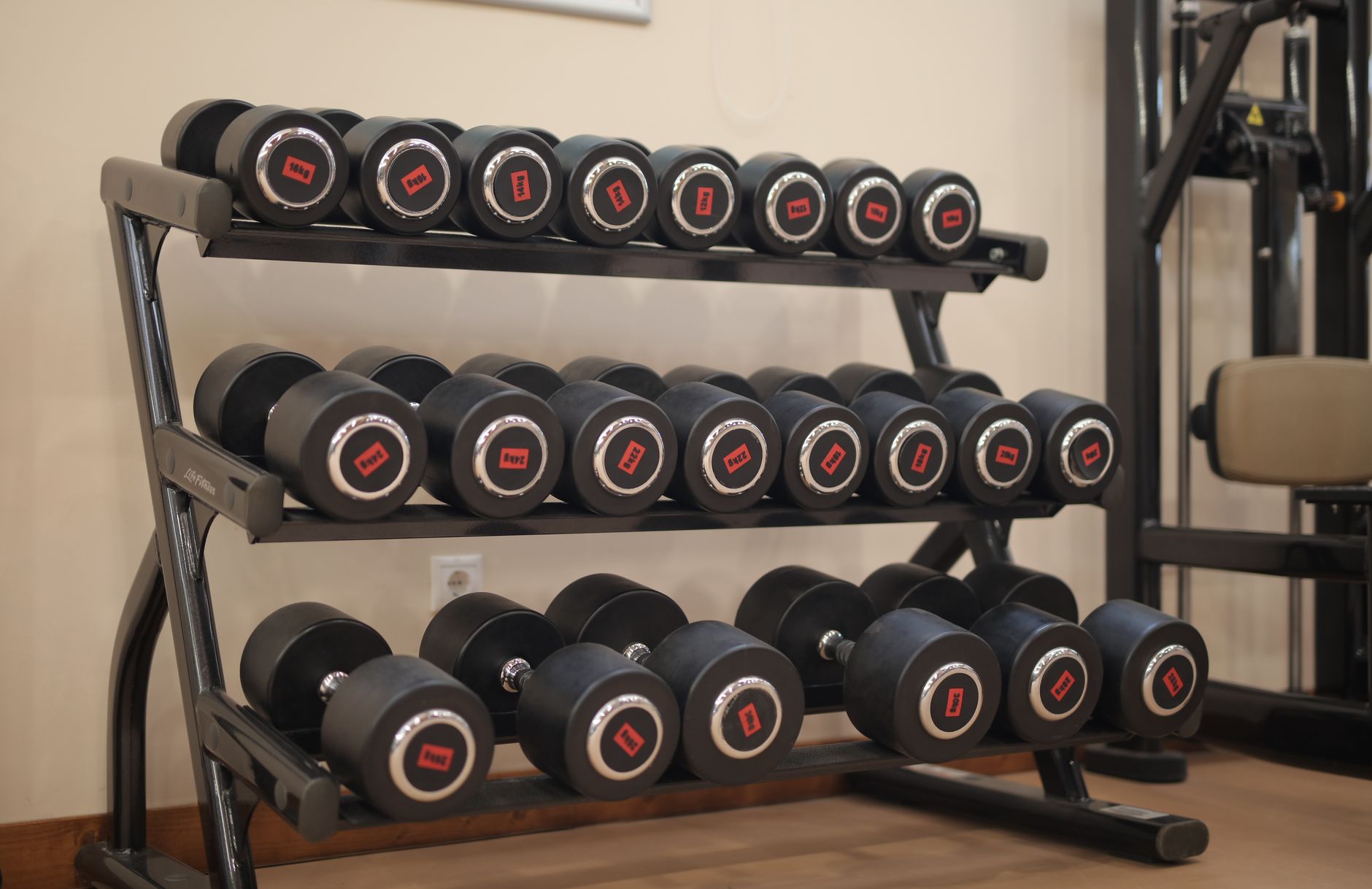
A weight rack is a fixed shelf, tray, or pegged stand that holds dumbbells, kettlebells, or plates in a set position instead of stacked on the floor or leaned against a wall. That's the entire job — nothing about a rack makes you stronger. It solves a storage and safety problem, not a training one.
Two things go wrong without one. Dumbbells left on the floor get tripped over mid-set, and weights piled on top of each other chip and wear through rubber or chrome coating over time. A rack with moulded cradles spaces each pair so they rest without touching, which matters more for coated weights than plain cast iron.
From here the decision is short: pick vertical or horizontal based on the floor space you have, size the rack to the capacity you'll actually own within a year, then decide whether it needs to hold kettlebells and plates as well as dumbbells.
Vertical vs Horizontal Weight Racks

Horizontal racks lay dumbbells in a row along angled trays, heaviest at the bottom and lightest on top. They hold more pairs for a given price and stay stable fully loaded, but they need a long stretch of wall or floor — most run 114-246cm long and 53-81cm deep, which is 0.6-2 square metres of floor space gone for good.
Vertical racks stand the dumbbells on end in a tower instead, and the trade-off flips: less floor space, less stability once you're past around eight pairs. A vertical rack stores eight to ten pairs in a footprint under half a square metre, which is the main reason to choose one over a horizontal rack at the same price.
My opinion, and most buying guides skip this part: don't buy a ten-tier, 450kg-rated rack if you own four pairs of dumbbells. That capacity is built for someone who already owns fifteen-plus pairs. A vertical rack storing eight to ten pairs in under half a square metre covers most home gyms, and buying for a collection you don't have yet just wastes floor space you could use for a bench instead.
How Much Capacity You Actually Need
A rack worth buying holds at least 450kg (1,000lb) across the whole frame — enough for a 2.5-32kg (5-70lb) dumbbell set in 2.5kg increments, the standard range for a serious home gym. Anything rated below that is built for two or three light pairs, not a growing collection.
Check the per-tray rating too, not just the total. A rack rated 450kg overall but only 45kg per tray won't take a single heavy pair safely on the top shelf. Manufacturers list both numbers; if a listing only shows the total, treat that as a gap in the spec rather than a feature.
Multi-Purpose Racks: Dumbbells, Kettlebells, and Plates Together

Some racks hold dumbbells only. Others add hooks, pegs, or wider trays for kettlebells, plates, resistance bands, or a barbell landmine attachment in the same footprint.
A multi-purpose rack costs more than a dumbbell-only rack of the same capacity, but it solves a problem that shows up within the first year of training. A rack that finally gets the dumbbells off the floor does nothing for the kettlebell still parked in the middle of the doorway — that needs a hook or tray built for it, not a second polite request. If your collection already includes more than dumbbells, or you know it will, buy the combined rack once rather than a second rack later.
What to Check Before You Buy
Three details separate a rack that lasts from one that doesn't:
- Steel gauge — thicker steel resists bending under load. Cheap racks use thin steel that bows once they're near full capacity.
- Cradle material — rubber or foam-lined cradles protect coated dumbbells; bare steel trays wear through rubber coating at the contact points over time.
- Base footprint vs height — a tall, narrow rack loaded with heavy pairs at the top is a tip risk on carpet or an uneven garage floor. Check the base width relative to the height before buying, not after it's loaded.
When One Rack Tier Stops Being Enough
Most people buy a rack sized for the dumbbells they own on day one, then keep adding pairs as strength improves. The rack that fit a four-pair collection runs out of trays within a year for anyone training three or four times a week.
Three ways to handle it once that happens:
- Add a second rack rather than overloading trays past their rated capacity — stacking extra pairs on top of a full tray is the single most common cause of a tipped rack.
- Move the lightest pairs to wall-mounted hooks, freeing floor-rack trays for the heavier sets that actually need the stability.
- Buy the next capacity tier up before you need it if you're training toward a specific strength goal — a rack swap mid-programme is a bigger interruption than buying slightly ahead of schedule.
None of this means the first rack was a bad purchase. It means storage needs grow at the same rate training does, and planning for that from the start saves a second purchase six months in.
Who Doesn't Need a Weight Rack Yet

A weight rack isn't the right purchase for everyone starting a home gym. Skip it, or wait, if any of these apply:
- You own one or two pairs of dumbbells — a corner of the room holds two pairs without a trip hazard. A rack earns its floor space once you're past three or four pairs.
- You train almost exclusively with a barbell — a rack solves a dumbbell and kettlebell storage problem; barbell plates need a plate tree or a rack built specifically for that, not a dumbbell tray.
- You're renting and moving within the year — a loaded multi-tier rack is awkward to move and reassemble. Rubber floor mats and careful stacking work as a temporary fix.
- Budget is tight and you're still building the weight collection itself — buy the dumbbells or plates first. A rack with nothing on it solves nothing; an unracked but complete set still lets you train.
If none of those apply, a rack is one of the cheaper upgrades that prevents real damage — to the weights, the floor, and the next person who walks through the room without looking down.
Ready to size up your home gym storage? Browse strength training equipment at Flexi Muscles.
Frequently Asked Questions
What is the difference between a vertical and horizontal weight rack?
Horizontal racks lay dumbbells along angled trays and need 114-246cm of floor or wall length but stay stable fully loaded. Vertical racks stand dumbbells in a tower and store eight to ten pairs in under half a square metre, trading some stability for floor space saved.
How much weight can a weight rack hold?
A rack worth buying holds at least 450kg (1,000lb) total, covering a 2.5-32kg (5-70lb) dumbbell set in 2.5kg increments. Check the per-tray rating separately from the total — a high total rating doesn't guarantee a single tray can hold a heavy pair safely.
Do I actually need a weight rack for a home gym?
Not until you own three or four pairs of dumbbells. Below that, a corner of the room works fine. Past that point, a rack prevents the floor pile that causes tripping and coating damage on rubber or chrome dumbbells.
Can a weight rack hold kettlebells and plates too?
Some can. Multi-purpose racks add hooks or wider trays for kettlebells, plates, and bands in the same footprint, and cost more than a dumbbell-only rack at the same capacity. Buy the combined version if your collection already includes more than dumbbells.
What size weight rack do I need for a home gym?
Most racks run 114-246cm long and 53-81cm deep, covering 0.6-2 square metres of floor space. A vertical rack needs under half a square metre but holds fewer pairs than a horizontal rack of the same price.