

Weight Lifting Straps: What They Do, How to Use Them, and When to Leave Them in the Bag

By Flexi Muscles — 7 July 2026 · 9 min read
Weight lifting straps wrap around your wrist and the bar to hold the weight in your hands once your grip starts to fail before your back, hips, or legs do. They don't make you stronger — they remove grip strength as the limiting factor on heavy pulling movements like deadlifts, rows, and shrugs, so the muscles you're actually training can keep working. If your grip is holding up fine on the weights you're using, you don't need them yet. Adding straps too early just means your hands never get the chance to catch up.
Shop Weight Lifting Straps & Accessories at Flexi Muscles
What Weight Lifting Straps Actually Do

A weight lifting strap is a loop of fabric — usually cotton, nylon, or leather — that wraps around your wrist and then around the bar. You still grip the bar with your hand underneath the strap. The strap just creates friction against the knurling and prevents the bar from rolling out of your fingers as your grip fatigues. It doesn't lift the weight for you and it doesn't touch your back, hips, or legs. It only changes one thing: how long your hands can hold on.
That distinction matters because grip strength and pulling strength don't always develop at the same rate. On a heavy set of deadlifts or barbell rows, most lifters find their forearms give out before their glutes, hamstrings, or lats are anywhere near failure. Straps remove that mismatch, letting the muscles doing the actual work keep training past the point your grip alone would allow.
Three things a weight lifting strap does:
- Extends time under tension for pulling muscles — on rows, shrugs, and deadlifts, your back and legs can keep working several reps past where an unstrapped grip would fail
- Increases friction against the bar — the strap grips the knurling more consistently than sweaty palms alone, especially late in a training session
- Reduces reliance on chalk and callus management — less bar slip means fewer torn calluses on high-volume pulling days
Heads up: a strap will not fix a lift that's failing for any reason other than grip. If your lower back rounds on a heavy deadlift, straps won't change that — the weight is simply too much for your current strength, and adding a strap just means you'll grip a heavier bar with the same technical breakdown underneath it.
Types of Weight Lifting Straps

Lasso straps
A single loop of fabric that you slip your hand through, then wrap the tail around the bar. They're the most common type and the cheapest to buy. The trade-off is setup time — wrapping and unwrapping a lasso strap between sets takes a few seconds longer than the other styles, which adds up on a high-volume session.
Figure-eight straps
Sewn into a permanent figure-eight shape that locks your hand to the bar. Once it's on, the bar cannot separate from your hand at all, which makes this the strongest hold of any strap type. That same rigidity is a drawback for anything other than maximal pulling work — you can't quickly let go, so figure-eight straps are a poor choice for exercises where you need to bail out or reposition your grip mid-set.
Closed-loop straps
A single stitched loop that slides over the wrist and bar without any wrapping. Fastest to put on and take off, which suits circuit training or Olympic-style lifts where speed between movements matters. The trade-off is a less secure hold than a wrapped lasso strap under very heavy loads.
Hook straps
A padded wrist strap with a rigid metal or plastic hook that you hang the bar from rather than grip. Fastest of all to attach — you hook in and go. Most hooks carry a weight limit around 300 to 400 kilograms, and because you're not gripping the bar at all, you lose the ability to bail out of a failed rep by simply opening your hand. For maximal deadlifts and heavy barbell rows, a wrapped strap remains the more versatile option.
Material
Cotton is the softest on the skin and the cheapest, but wears through fastest under regular heavy use. Nylon doesn't stretch under load and holds up for years of consistent training — the practical default for most lifters. Leather grips the bar with the least slip of any material and lasts the longest, at a higher price and a stiffer break-in period.
Browse weight lifting straps and lifting accessories at Flexi Muscles, including nylon lasso straps and padded wrist straps with hooks.
How to Use Weight Lifting Straps Correctly

Wrapping a lasso-style strap correctly takes four steps:
- Slide your hand through the loop palm down, so the strap crosses the back of your hand and the long tail hangs free below your palm
- Tighten the loop around your wrist — snug enough that it won't slide, not so tight it cuts off circulation
- Wrap the tail around the bar in the direction opposite your grip, away from your fingers, two to three times
- Roll your wrist forward to cinch the wrap tight against the bar before you take the weight
Wrapping in the wrong direction is the most common mistake — if the tail winds toward your fingers instead of away from them, the strap loosens under load instead of tightening. Practise the wrap with an empty bar before your first heavy set, since fumbling with straps mid-set wastes more time than it saves.
Do lifting straps weaken your grip?
Only if you wear them for everything. Strapping in on warm-up sets and lighter accessory work removes a training stimulus your forearms would otherwise get for free, and over months that adds up to weaker grip strength than you'd otherwise build. Reserve straps for your heaviest working sets — typically above 80 percent of your working max — and keep at least one grip-only movement, such as farmer's carries or dead hangs, in your weekly programme. Used selectively, straps let your back and hips train past a grip ceiling without the ceiling ever stopping you from doing dedicated grip work elsewhere.
When to Wear Weight Lifting Straps — and When to Leave Them Off
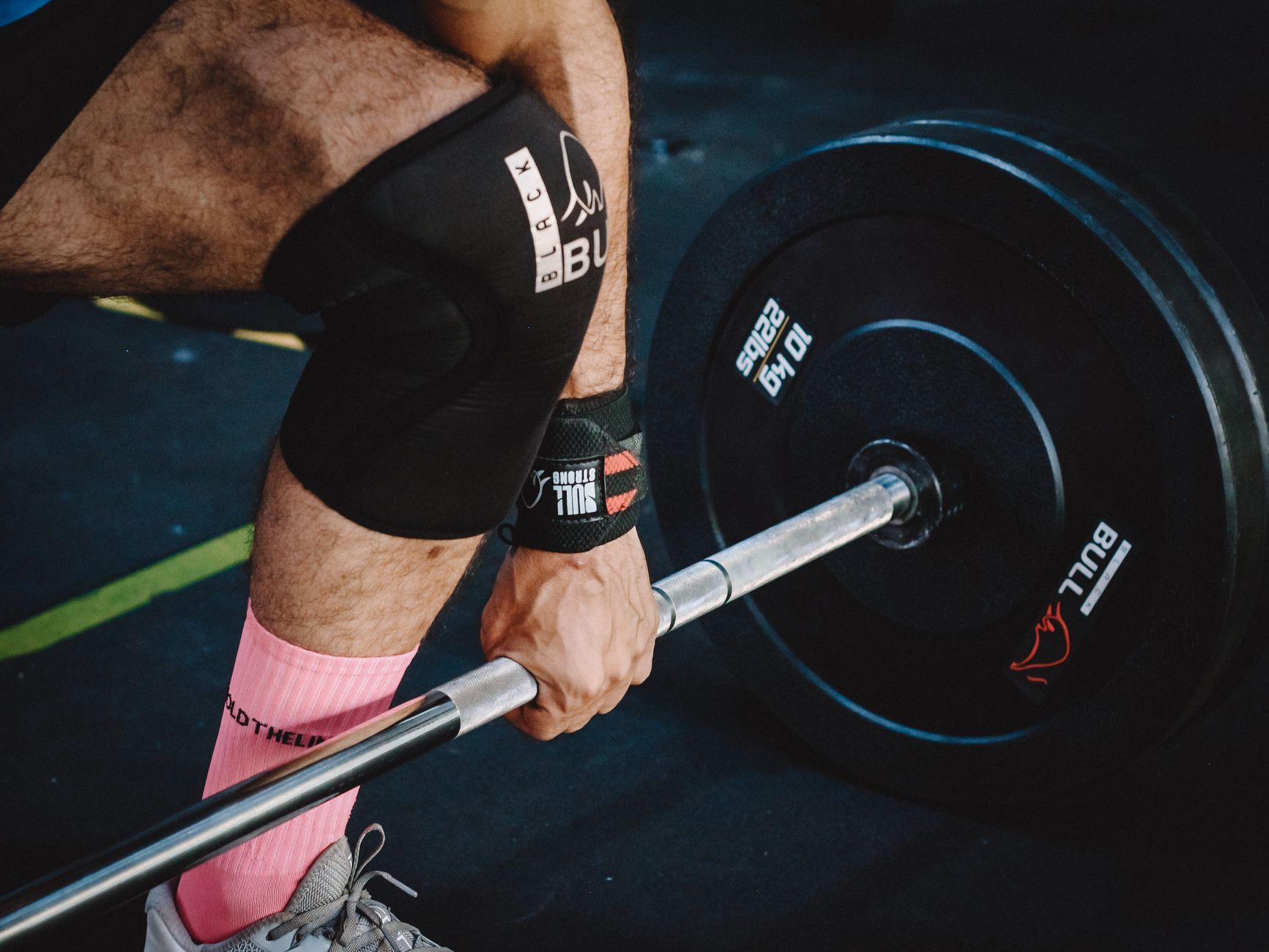
Wear weight lifting straps for:
- Heavy deadlifts and Romanian deadlifts above 80 percent of your working max — the load where grip typically fails before the posterior chain does
- Barbell and dumbbell rows on back-focused training days — letting your lats work through a full set instead of stopping when your forearms cramp
- Shrugs and heavy farmer-style carries for trap development — grip is almost always the limiting factor here well before the traps are fatigued
- High-volume pulling days — where cumulative grip fatigue across multiple sets would otherwise cap the working weight on later sets
Leave weight lifting straps off for:
- Your first six to twelve months of training — grip strength and pulling strength develop together at this stage, and skipping straps lets both catch up at the same pace
- Warm-up sets and lighter accessory work — these are the sets your grip should be handling unassisted; strapping in here is where grip strength actually stalls
- Olympic lifts — snatch and clean and jerk — these movements require you to release the bar instantly at the top of the pull, which a strap actively prevents
- Pull-ups and grip-specific training — the entire point of these movements is building the grip strength a strap would bypass
If your wrist is the joint that's uncomfortable under load — on bench press, overhead press, or the bottom of a heavy squat — that's a wrist stability problem, not a grip problem, and wrist wraps are the right tool rather than straps. The two solve different failures and buying the wrong one won't fix either.
For a complete overview of strength training equipment, browse the strength training range at Flexi Muscles.
Frequently Asked Questions
Do lifting straps weaken your grip strength?
Not on their own. Grip strength only stalls if you wear straps on every set of every pulling exercise, including the lighter ones your hands can already handle. Reserve straps for your heaviest working sets and keep at least one grip-only exercise, such as farmer's carries or dead hangs, in your programme each week. Used that way, straps let you overload your back and hips without your forearms becoming the limiting factor — they don't train your grip away, they just stop it from capping everything else.
When should you start using weight lifting straps?
Once your grip gives out before your target muscles do on heavy pulling sets — typically once deadlifts, rows, or shrugs climb above 80 percent of your working max. Beginners in their first six months of training rarely reach that point, since grip strength and pulling strength tend to develop at a similar rate early on. If your hands are the reason a set ends, not your back or legs, that's the signal to add straps.
How do you wrap weight lifting straps correctly?
Slide your hand through the loop palm down, so the strap sits across the back of your hand and the long tail hangs below your palm. Tighten the loop around your wrist, then wrap the tail around the bar in the opposite direction to your grip — away from your fingers, not toward them. Two to three wraps is usually enough. Roll your wrist forward to cinch the strap tight against the bar before you pull.
What is the difference between lifting straps and lifting hooks?
Straps are fabric loops you wrap around the bar — you still grip it, and the strap just stops it rolling out of your fingers. Hooks use a rigid metal or plastic hook that you hang from, so you're not really gripping the bar at all. Hooks go on faster between sets, but most have a load limit of roughly 300 to 400 kilograms and don't let you bail out of a failed rep the way straps do. For maximum weight and versatility, straps are the more reliable choice.
Are wrist wraps the same as weight lifting straps?
No, and mixing them up is a common buying mistake. Wrist wraps compress and stabilise the wrist joint for pressing movements — bench press, overhead press, heavy squats. Lifting straps are for pulling movements and work on your grip, not your joint. If your wrist bends backwards under a heavy front rack or press, you need wraps. If your hands open up mid-deadlift, you need straps. They solve different problems and neither substitutes for the other.
Should beginners use weight lifting straps?
Generally no. In the first six to twelve months of training, grip strength develops alongside pulling strength, and skipping straps forces both to catch up together. Reaching for straps before your hands have actually become the limiting factor just removes a training stimulus you'd otherwise get for free. Save them for the point where your grip is the one thing holding back a lift your back and legs could otherwise complete.
What material weight lifting strap is best — cotton, nylon, or leather?
Cotton is the cheapest and softest on the skin but wears out fastest under heavy, repeated use. Nylon holds up longer, doesn't stretch under load, and is the standard choice for most lifters training two to four times a week. Leather lasts the longest and grips the bar with the least slip, but it's stiffer to wrap and costs more. For general training, nylon is the practical middle ground; leather is worth the extra cost once you're pulling near-maximal loads regularly.