

Upper Body Gym Equipment: What You Actually Need at Home

By Flexi Muscles — 25 August 2026 · 10 min read
Four pieces of upper body gym equipment cover almost everything a home lifter needs: a pair of adjustable dumbbells, a resistance band set, a pull-up bar, and eventually an adjustable bench. Between them you can load every major push, pull and carry pattern for the chest, back, shoulders and arms without a cable stack or a multi-gym taking over a room. This guide covers what each piece does, the order to buy them in on a budget, what to skip, and a simple weekly split to run once you own them.
Shop Strength Training Equipment at Flexi Muscles
The Core Upper Body Gym Equipment List for Home Training

Most upper body gym equipment lists online default to commercial machines: cable stacks, Smith machines, lat pulldown towers. Fine for a commercial gym floor, wrong for a spare room. At home, four pieces do the job a wall of machines does in a gym, at a fraction of the footprint.
Adjustable dumbbells
The single most versatile piece of upper body gym equipment for men or women training at home. A pair of adjustable dumbbells covers presses, rows, curls, raises and carries, and scales load as you get stronger without needing a second pair. Look for a range that runs from roughly 2.5 kg up to at least 24 kg per hand if you're buying for long-term progression rather than the first few months.
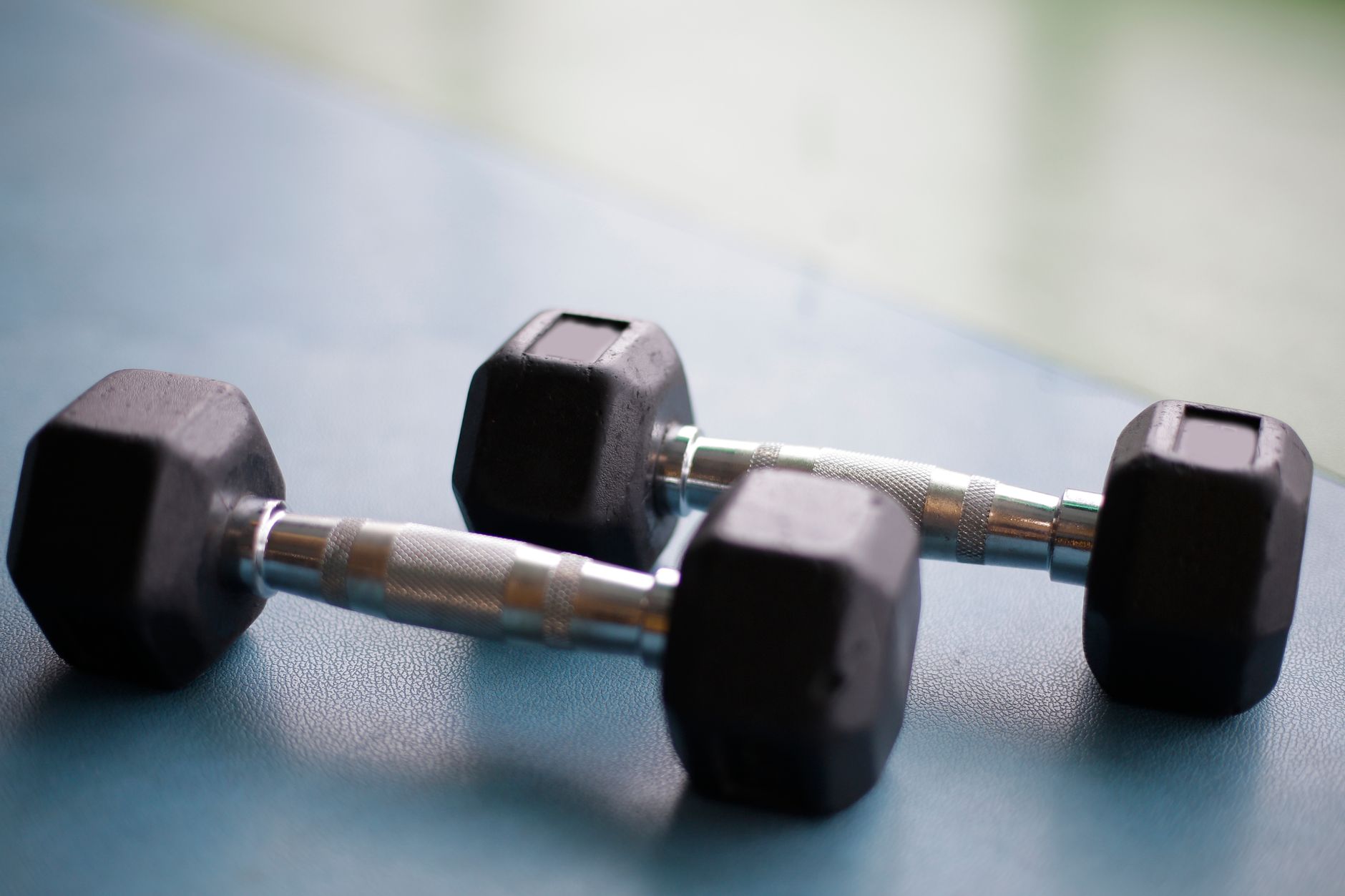
Resistance bands
A set of loop or handle bands fills the gap dumbbells can't: constant tension through a joint angle a fixed weight loses tension at, and a travel-friendly option when a full rack of dumbbells isn't practical. Bands are also the safer starting point for anyone rebuilding strength after a shoulder injury, since resistance builds gradually through the stretch instead of loading instantly at the bottom of the rep.

Pull-up bar
Nothing else in a home setup trains the back and biceps as directly through a full range of motion. A doorway or wall-mounted bar also doubles as an anchor point for band-assisted work on the days a full bodyweight pull-up isn't achievable yet.

Adjustable bench
The last piece, not the first. A flat-to-incline bench adds chest press dumbbells work at multiple angles and turns standing rows into supported single-arm rows, but it's a space-consuming purchase that only pays off once the first three pieces are limiting your progress rather than your consistency.
Why These Four Cover Every Upper Body Muscle Group
Upper body training breaks down into four movement patterns, and each piece of equipment above earns its place by covering one or more of them without duplicating what the others already do.
- Horizontal push — chest press dumbbells work, band chest press, floor press. Chest and front shoulders.
- Vertical push — dumbbell shoulder press, band overhead press. Shoulders and triceps.
- Horizontal pull — dumbbell row, band row. Mid-back and biceps.
- Vertical pull — pull-ups, band-assisted pull-ups, lat pulldown with a band anchored overhead. Lats and biceps.
A programme built entirely around upper body weight exercises that only push — bench presses and shoulder presses, no rows or pull-ups — is the single most common cause of the rounded-shoulder posture that shows up after a year of inconsistent training. Balancing push volume against pull volume matters more than any individual exercise choice.
What to Buy First If You're Starting From Zero
Buying tier-by-tier by price, the way most equipment guides suggest, ignores the fact that some cheap items deliver more usable training than some expensive ones. Buy in this order instead:
- Resistance band set — lowest cost, covers all four movement patterns at a beginner load, and travels.
- Adjustable dumbbells — once band tension stops feeling challenging at the top of a press or row, usually within 6-8 weeks of consistent training.
- Pull-up bar — add it once bodyweight or band-assisted pulling feels controlled rather than desperate.
- Adjustable bench — last, once flat-ground pressing and standing rows are genuinely limiting further progress.
My opinion, backed by the numbers above: skip fixed-weight dumbbell pairs entirely and buy one adjustable pair instead of five fixed pairs. A single set covering roughly 2.5-24 kg per hand replaces five or six individual pairs and a fraction of the floor space, and the only real cost is a few extra seconds changing the load between sets.
What to Skip
Most upper body gym equipment guides list everything favourably. Some of it isn't worth buying for a home setup, and saying so plainly is more useful than another feature comparison table.
- A cable machine or multi-gym — expensive, heavy, and mostly duplicates what a resistance band and a pull-up bar already do for a beginner or intermediate lifter. It earns its keep in a commercial gym with dozens of members sharing the cost, not in a spare room used by one or two people.
- Fixed-weight dumbbell pairs bought individually — see the buying order above. Every pair you add is floor space and money an adjustable set already covers, and eventually most of them sit unused while you reach for the two you actually need that day.
- A dedicated arm-curl or preacher curl machine — a single-joint machine for one exercise, when a dumbbell and a bit of wall to brace against does the same job. Buy accessories like wrist wraps from the lifting accessories range only once grip, not the muscle itself, is the limiting factor.
- Anything advertised primarily on how it looks in a home-gym photo — chrome finishes and branded plates don't move more weight than a plain steel version. If a product's main selling point is its Instagram presence, that's a fair warning sign to check what it's compensating for.
Features Worth Paying Extra For
Once you've picked the equipment type, these are the details that separate a purchase that lasts years from one that gets replaced within a season.
- Knurled or textured dumbbell handles — grip fails before muscles do on higher-rep pressing and rowing work, especially once hands sweat.
- A quick-lock adjustment mechanism on adjustable dumbbells — a dial or pin system that changes weight in under five seconds keeps supersets moving instead of turning into a fiddly pause between exercises.
- Multiple resistance levels in a band set — a single band forces every exercise to the same difficulty; a set of four or five levels lets horizontal pull and vertical push work at the loads each pattern actually needs.
- A door-frame pull-up bar rated for your bodyweight plus margin — check the stated weight limit against your own bodyweight with room to spare, not against it exactly.
- A bench rated for dumbbell-loaded pressing, not just bodyweight sitting — the weight rating on cheaper folding benches often assumes a seated user, not one pressing loaded dumbbells overhead.
A Simple Weekly Upper Body Split
Run this twice a week with the core four pieces of equipment, leaving at least 48 hours between sessions:
- Warm-up: 5 minutes light band work through all four movement patterns — press, row, overhead press, pull-down.
- Horizontal push: 3 sets of dumbbell chest press, 8-12 reps.
- Horizontal pull: 3 sets of dumbbell row, 8-12 reps per side.
- Vertical push: 3 sets of dumbbell shoulder press, 8-12 reps.
- Vertical pull: 3-4 sets of pull-ups or band-assisted pull-ups, to a hard but controlled finish.
- Accessory: 2 sets of band curls and band tricep extensions, 12-15 reps, to finish.
Increase dumbbell load once the top of your rep range feels controlled for two sessions in a row, rather than jumping weight the moment a single set feels easy. That single habit, patience over impatience with load, is what separates steady progress from stalling out every few months and blaming the equipment for it.
Common Mistakes When Building an Upper Body Setup
- Buying push equipment only — dumbbells and a bench cover pressing well but do nothing for pulling on their own. Add a band or bar from day one, not once posture problems show up.
- Under-buying dumbbell range — a set that tops out at 10 kg per hand gets outgrown within a couple of months for most beginners, forcing a second purchase that a wider adjustable range would have avoided.
- Skipping a warm-up because the equipment is "just dumbbells" — shoulder joints handling overhead pressing cold are one of the more common home-gym strains, band type or dumbbell brand aside.
- Mounting a pull-up bar without checking the frame or stud rating — a bar is only as strong as what it's attached to. Read the mounting instructions before the first hang, not after something gives way (your favourite gym meme aside, this is the one time "just wing it" genuinely isn't the move).
- Chasing machines before mastering the basics — a cable machine doesn't fix a dumbbell row done with poor form. Fix the movement pattern with the equipment you already have before adding more to the room.
If you're outfitting a spare room from scratch, that's the full home gym equipment for upper body list: adjustable dumbbells, a resistance band set, a pull-up bar, and a bench once you need it. See the full strength training equipment range at Flexi Muscles, or start with a resistance band set if budget is the limiting factor this month.
Frequently Asked Questions
What is the minimum gym equipment for an upper body workout at home?
One pair of adjustable dumbbells and a resistance band set. Together they cover pressing, pulling and rotational movement for chest, back, shoulders and arms. A pull-up bar and a bench add range and load ceiling, but they are the second purchase, not the first.
Can resistance bands replace dumbbells for upper body training?
For the first 8-12 weeks of training, largely yes, because bands provide enough resistance to build a beginner's strength base. Past that point, bands lose tension at the top of most presses and rows exactly where a muscle is strongest, so dumbbells become necessary to keep loading the full range.
Do I need a bench for upper body dumbbell exercises?
Not for the first few months. Standing presses, rows and curls cover most of a beginner programme without one. A bench becomes worth buying once flat and incline chest press dumbbells work is limiting your chest and shoulder development, which is usually after the first few months of consistent training.
What is the best gym equipment for men training upper body at home?
The same four pieces that work for any lifter: adjustable dumbbells, a resistance band set, a pull-up bar, and eventually a bench. Load and rep ranges differ by individual strength level, not by gender, so there is no separate equipment list specific to men.
How much space do I need for a home upper body setup?
About two square metres of floor space and a doorway or wall stud rated for a pull-up bar. Dumbbells and bands store in a corner or under a bed; a bench is the only piece that needs a permanent footprint.