

Resistance Bands With Handles: The Complete Buying and Workout Guide

By Flexi Muscles — 21 July 2026 · 9 min read
Resistance bands with handles are elastic bands with a moulded grip on each end, built for standing push and pull movements — rows, presses, curls, and pull-downs. The handles are what separate them from loop bands: a loop is a continuous strip of rubber with no grip, made for wrapping around the legs or feet. If you want a band that trains your upper body the way a cable machine does, you want the handled version.
Shop Resistance Bands at Flexi Muscles
What Resistance Bands With Handles Actually Are

A resistance band with handles is a length of latex or fabric-wrapped rubber tubing with a plastic or foam handle bonded to each end. The handle is the whole point: it lets you grip the band the same way you'd grip a cable machine attachment, which opens up the full range of pressing, pulling, and rotating movements you'd normally need a gym for.
Bands are rated by resistance, usually printed in kilograms or pounds on the tubing or packaging, and colour-coded so you can tell levels apart at a glance. A typical starter set stacks three to five bands from roughly 5 kg up to 25 kg or more, and stronger bands can be combined for heavier compound movements like squats or deadlift-pattern rows.
Straight up: the handles add cost over a plain loop band, but they're what makes a band usable for the exercises most people actually want to do at home — rows, curls, presses, and pull-downs that mimic gym cable stations.
Benefits of Training With Handled Bands
Four reasons handled bands earn a permanent spot in a home gym bag:
- Continuous, not sudden, resistance — a band's tension builds gradually as it stretches, rather than loading your joints all at once the way picking up a weight off the floor does. That makes handled bands genuinely joint-friendly, which is why they show up in physiotherapy clinics as much as home gyms.
- Full range of angles — a dumbbell only resists gravity, so it's hardest to move against straight up or down. A band resists in whatever direction you're pulling it from, so rotational and diagonal movements get real resistance a dumbbell can't provide.
- Portable — a full set of handled bands weighs under a kilogram and packs into a bag smaller than a shoe box, compared to a rack of dumbbells that needs a dedicated corner of a room.
- Effective, not just convenient — exercise bands can produce strength gains comparable to free weights and machines for the same muscle groups, according to research reviewed by the American Council on Exercise. That's a real training tool, not a compromise you make because you don't own dumbbells.
There's also an age-related case for keeping resistance training in the routine at all, regardless of the tool. Muscle mass declines by roughly 3 to 5 percent per decade after age 30, and consistent resistance work is one of the few interventions shown to slow or reverse that decline. A band that's actually used twice a week beats a dumbbell set gathering dust.
How to Choose a Resistance Level and Handle Type
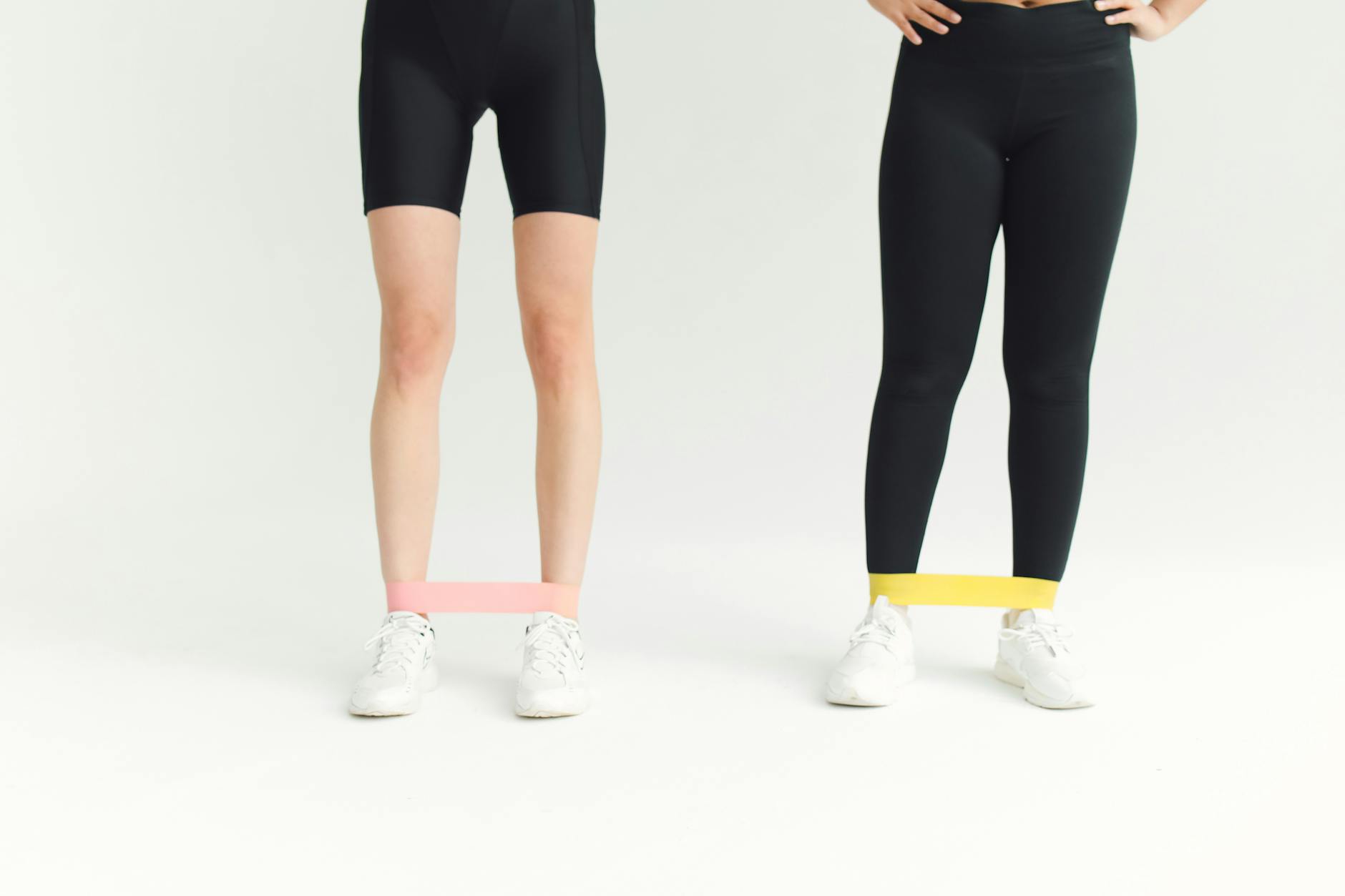
Resistance level
Buy a set with at least three levels rather than a single band. Start light — you should be able to complete 12 to 15 controlled reps on a press or row before the last few get genuinely hard. If you can do 20 reps without any strain, move up a level. Bands lose a small amount of tension as they age, so a set you outgrow after a year isn't a defect, it's the material relaxing with use.
Handle material
Foam handles are the most common and comfortable for longer sessions; they don't dig into the palm the way hard plastic can under load. Check that the handle is moulded or securely crimped onto the tubing rather than glued — a glued join is the most common failure point on cheap sets, and it fails without warning.
Tubing type
Latex tubing is the standard choice: stretchy, durable, and the most widely available. Fabric-wrapped bands cost more but don't snap the way bare latex occasionally does, and they're a safer option around the face for exercises like face pulls or band pull-aparts. If anyone in the household has a latex allergy, fabric-wrapped or TPE bands are the non-negotiable choice.
Browse the full resistance band range at Flexi Muscles to compare resistance levels and handle types side by side.
Handled Bands vs Loop Bands vs Tube Bands
All three are resistance bands, but they're built for different jobs, and buying the wrong one for your goal is the most common mistake first-time buyers make.
- Bands with handles — best for upper-body and full-body strength work: rows, presses, curls, pull-downs. The handle is what lets you grip and control the movement the way you would on a cable machine.
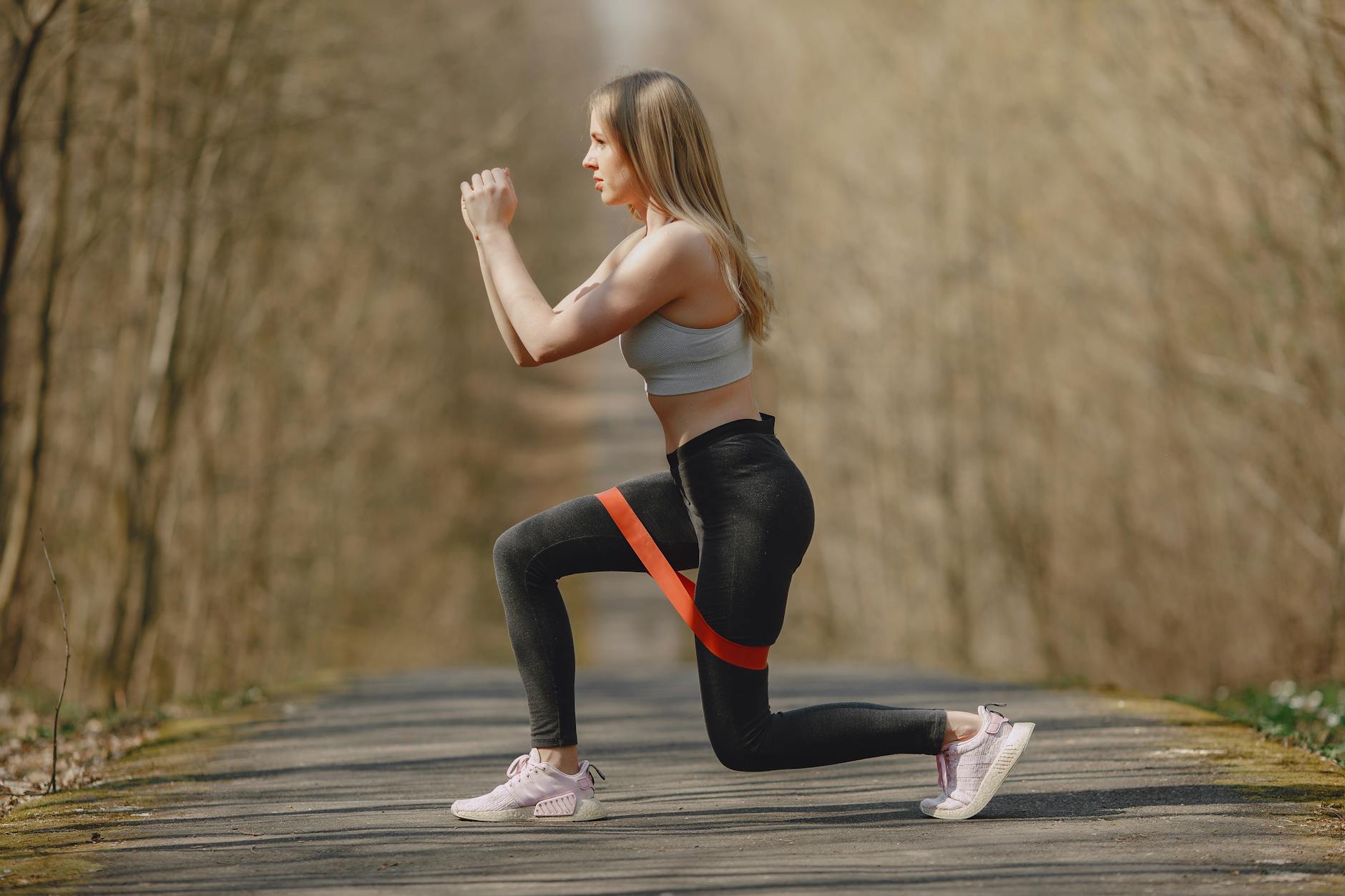
- Loop resistance bands — a continuous loop with no handle, usually shorter and flatter. Built for lower-body activation work: banded squats, glute bridges, lateral walks, and warm-ups where the band sits around the legs rather than in your hands.
- Tube bands without handles — the same tubing as a handled band but sold with clip ends instead, meant to be attached to ankle straps or a door anchor for a more customisable setup. A step up in versatility, but a step down in convenience for someone who just wants to grab a band and start a set.
If you're choosing one to start with and your priority is upper-body and full-body strength training, handled bands are the more useful buy. If glute and lower-body activation work is the goal, a loop band does that job better and costs less.
A Full-Body Workout to Try

A simple full-body session using nothing but a set of handled bands, done in two rounds of 12 to 15 reps per exercise:
Legs
Stand on the centre of the band with both feet, holding a handle in each hand, and squat. The band adds resistance through the entire movement, including the top, which a bodyweight squat doesn't provide.
Back
Anchor the band at chest height (see the door anchor section below) and perform a standing row, pulling the handles to your ribs and squeezing your shoulder blades together at the end of the movement.
Chest
Anchor the band behind you at chest height and press the handles forward, extending your arms fully. This mimics a cable chest press and hits the same muscles a bench press does.
Shoulders
Stand on the band and press the handles straight overhead. Keep your core braced so the movement stays in your shoulders rather than your lower back.
Arms
Stand on the band for bicep curls, and anchor it above head height for triceps extensions, pulling the handles down and straightening your arms fully at the bottom.
Core
Anchor the band at shoulder height to one side and perform a woodchop, pulling the handle diagonally across your body. This trains rotational core strength that most standard ab exercises miss entirely.
How to Anchor Bands to a Door Safely
Several of the exercises above need an anchor point, and a door is the most common one in a home setup. Do it properly, because this is where most band injuries actually happen.
- Use a dedicated door anchor — a padded strap with a loop on one end, designed to sit flat against the door frame with the door closed on top of it. Never loop a bare band directly around a handle or hinge; both have edges sharp enough to fray or snap the rubber under load.
- Close the door fully before you load any weight into the band, and check that the anchor strap is sitting flat with no twist before starting your set.
- Anchor height changes the exercise — high for triceps extensions and lat pull-downs, mid-height for chest presses and rows, low for woodchops and rotational work.
- Inspect the anchor strap regularly — it takes more repeated stress than any other part of the setup and is worth replacing at the first sign of fraying, well before the band itself shows wear.
Care, Safety, and When Not to Buy Them
Store bands away from direct sunlight and away from anything sharp in a gym bag — UV exposure is what actually breaks rubber down over time, not sweat. Check the tubing for small cracks or thinning before every session, especially near the handle join, and retire a band the moment you see damage rather than waiting for it to snap mid-set.
Now the part most product pages skip: resistance bands with handles are not the right buy for everyone. If your training goal is maximal strength on a squat, deadlift, or bench press, bands work against you — they get harder to pull the further you stretch them, which means the resistance is weakest exactly where a heavy compound lift needs it most, at the bottom of the movement. They're also a poor tool for precisely tracking progressive overload, since resistance is described as a range rather than an exact kilogram figure the way a labelled weight plate is.
If that's your goal, put the budget into a proper set of strength training equipment instead. Bands earn their place as a portable, joint-friendly complement to weight training, or as the main tool for rehab, travel, and at-home full-body sessions — not as a permanent replacement for a barbell.
Frequently Asked Questions
What's the difference between resistance bands with handles and loop resistance bands?
Handled bands have moulded grips on each end and are built for standing exercises where you push or pull — rows, presses, curls. Loop resistance bands are a continuous loop of flat rubber with no grip, mainly used around the legs or under the feet for glute and lower-body work. Handled bands suit upper-body and full-body training; loop bands suit lower-body activation and mobility work. Many home gyms use both rather than choosing one.
What resistance level should a beginner start with?
Start with a light-to-medium band, roughly 5 to 12 kilograms of resistance, and confirm you can complete 12 to 15 controlled repetitions before the last few reps become a genuine struggle. Going too heavy early breaks form on presses and rows, which trains the wrong movement pattern. Most sets of resistance bands with handles come in a stack of three to five levels, so you can move up as strength improves without buying new equipment.
Can you use resistance bands with handles for rehabilitation?
Yes, resistance bands are widely used in physiotherapy because the resistance is continuous rather than the sudden load spike you get lifting a weight off the ground. Light bands allow slow, controlled movement through a joint's range of motion, which is why they show up in shoulder, knee, and post-surgery rehab programmes. Always start at the lightest resistance level and follow a physiotherapist's guidance on movement rather than a general workout plan.
How do you anchor resistance bands to a door?
Use a dedicated door anchor — a strap with a padded stopper that sits on one side of the door while the loop passes through on the other, closed by the door itself. Never loop a band directly around a door handle or hinge; both have sharp edges that will fray or snap the band. Close the door fully before loading the band, and check the anchor strap for wear before each session since this is the point under the most repeated stress.
How long do resistance bands with handles last, and how do you look after them?
A well-made set typically lasts 12 to 18 months under regular use, sometimes longer with light training. Rubber degrades from UV exposure and stretching past its rated range, not from sweat, so store bands away from direct sunlight and avoid stretching them more than double their resting length. Inspect for small cracks or thinning before every session, particularly near the handle connection, since that's where the material takes the most repeated flex.
When should you skip resistance bands with handles and use free weights instead?
Skip bands if your main goal is maximal strength — bands get harder to pull the further you stretch them, so the load is lightest exactly where a heavy compound lift like a squat or deadlift needs it most. They're also a weak substitute for tracking progressive overload precisely, since resistance is described in a range rather than an exact kilogram figure. For raw strength and precise load tracking, dumbbells or a barbell are the better tool; for joint-friendly, portable, full-body training, bands are hard to beat.