

Olympic Weightlifting Belt Guide: Tapered Design, Sizing, and When You Actually Need One

By Flexi Muscles — 14 July 2026 · 10 min read
Straight up: an Olympic weightlifting belt is cut tapered rather than straight, wide across the back and narrowing toward the front and sides, so it braces your spine without blocking the hip flexion a clean, jerk or snatch demands. That single design choice is what separates it from a powerlifting belt, which is built for squats, bench and deadlift instead. Competition rules cap it at 12cm wide, and research on the actual mechanism — increased intra-abdominal pressure — goes back to the 1980s.
Shop Weightlifting Belts at Flexi Muscles
Olympic weightlifting belt vs powerlifting belt

The confusion between these two starts with the fact that both get called "weightlifting belt" in general conversation, when only one of them is actually built for weightlifting in the sporting sense — the clean and jerk, and the snatch. A powerlifting belt is cut straight, the same width from front to back, usually 10cm across the entire circumference. That uniform width is exactly what you want bracing against on a squat, bench press or deadlift, none of which ask your hips to fold past 90 degrees at speed.
An Olympic weightlifting belt is tapered instead: wide at the back for spinal support, narrowing at the sides and front so it doesn't jam into your hip crease the moment you drop under the bar in a full clean or snatch. Competition rules from the International Weightlifting Federation cap belt width at 12cm, and in practice most Olympic belts run narrower than that at the front specifically so the taper doesn't fight your bottom position.
If you only ever squat, bench and deadlift, a straight powerlifting belt is the right call. If cleans, jerks and snatches are part of your programme, the taper stops being a nice-to-have and starts being the difference between a belt that helps and one you take off after the first heavy set.
Tapered design and the four fastening systems
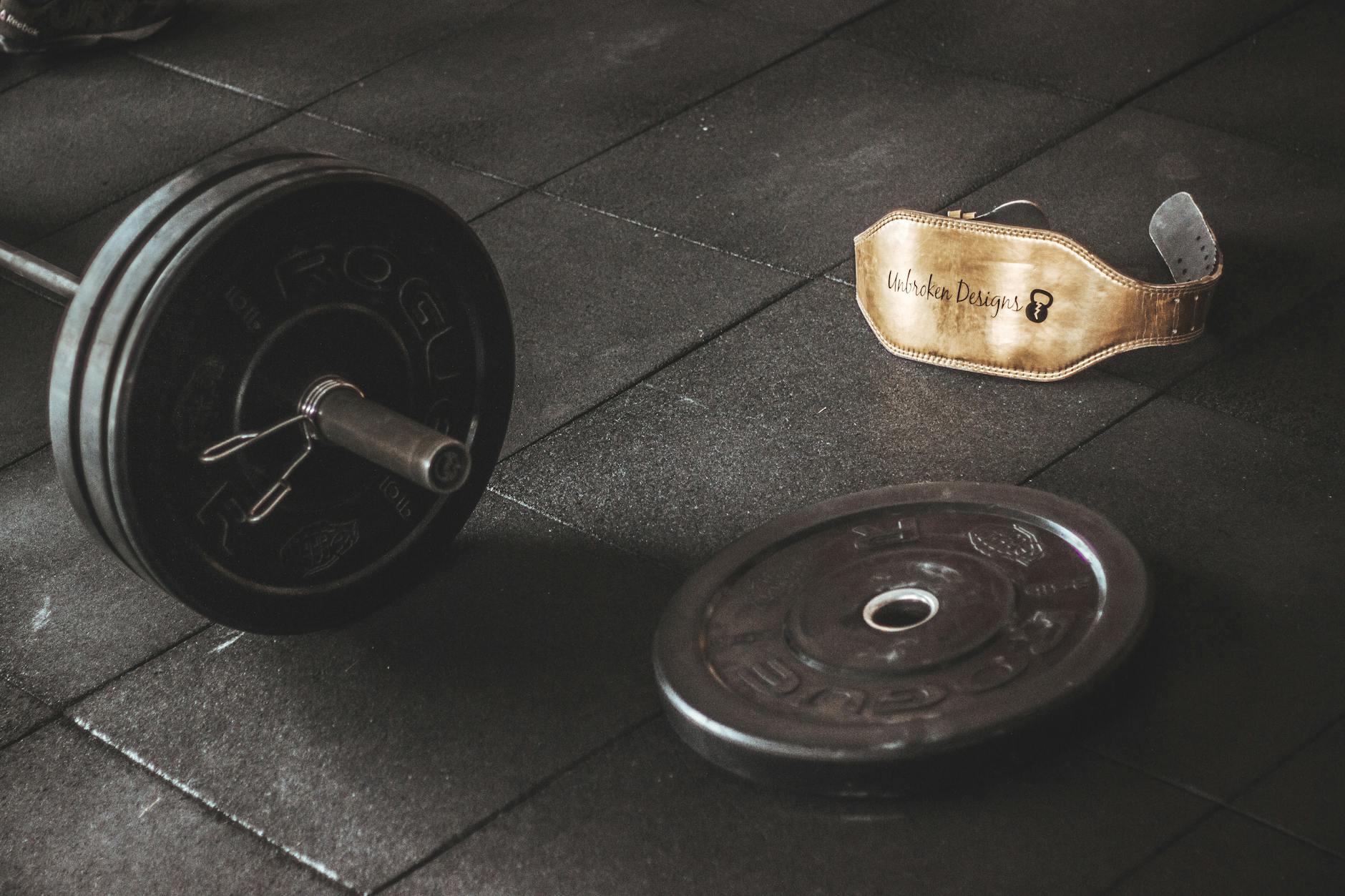
Beyond the taper, four fastening systems cover almost every belt on the market, and each changes how quickly you can get the belt on between attempts:
- Prong buckle. The traditional design, a single or double metal prong through pre-punched holes. Secure once fastened, but slow to adjust mid-session if you're layering clothing differently between warm-up and a heavy single.
- Lever belt. A metal lever clamps the belt shut at one fixed hole. Faster on and off than a prong once it's set to your size, and it locks down hard — the trade-off is you need a screwdriver to resize it, so it suits lifters whose waist size doesn't change.
- Self-locking or quick-lock. A ratchet-style clasp that snaps shut and releases with a lever, adjustable in small increments without tools. Good for lifters whose bracing width changes between light and heavy days, and fast enough for a session with several attempts back to back.
- Velcro. The lightest and cheapest option, fully adjustable, but the hook-and-loop closure compresses less firmly under maximal loads than a buckle or lever. Fine for training, less ideal once you're chasing a genuine one-rep max.
For Olympic lifting specifically, self-locking and lever designs tend to win out over prong belts, since a training session usually involves more sets and more fine adjustment than a powerlifting session built around three heavy singles.
Leather or nylon: which one to buy
Leather is thicker, holds its shape for years, and is what most competition powerlifting belts are made from — the stiffness that makes it excellent for a straight-cut belt works against it in a tapered one, since leather resists bending exactly where a weightlifting belt needs to flex. Nylon and other synthetic weaves are lighter, more pliable out of the box, and need no break-in period, which is why the majority of purpose-built Olympic weightlifting belts use them rather than leather.
That's not a blanket rule against leather for Olympic lifting — a well broken-in leather belt still works, it just takes longer to earn its flexibility. If you're buying one belt to do double duty across squats, cleans and deadlifts, a mid-thickness leather belt is the more versatile compromise. If you're buying specifically for weightlifting and want it to feel right from the first session, nylon is the more honest recommendation.
Getting the width, thickness and fit right
Measure around your navel, not your trouser waistband — the two numbers are rarely the same, and belt sizing runs off the former. Width tops out at 12cm under IWF competition rules, and most training belts sit at 10cm across the back. Thickness matters more than people expect: a 13mm leather powerlifting belt is stiffer and slower to break in than the 6-10mm range typical of tapered weightlifting belts, which prioritise flexibility over maximum rigidity.
A belt that's sized too large does nothing for bracing and just becomes an expensive accessory you forget you're wearing. Get it snug enough on the tightest hole that you've got one or two holes of adjustment room left in either direction — that range is what lets you tighten it further once you're actually bracing under load.
What the research says a belt actually does
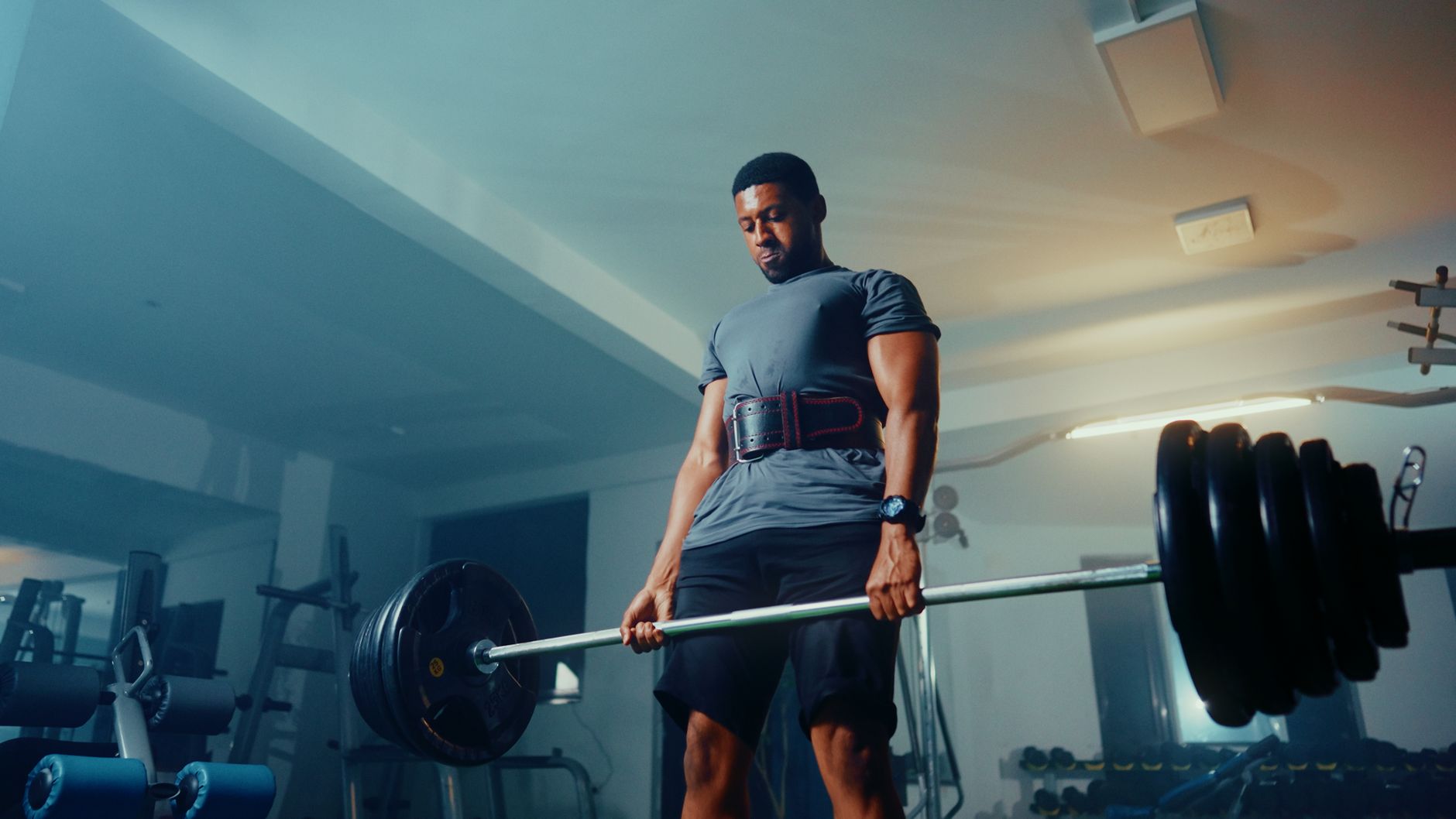
The mechanism behind every weightlifting belt is intra-abdominal pressure, not magic. A 1989 study measured nine lifters deadlifting at 90% of their one-rep max and recorded an average intra-abdominal pressure of 156 mmHg without a belt versus 175 mmHg wearing one. That pressure gives your spine something to brace against from the inside, on top of whatever your own core muscles are doing.
The performance numbers back this up in practice. Lifters completed the concentric phase of a heavy squat 15.5% faster at 90% of their one-rep max when belted, and reported rate of perceived exertion an average of two points lower on 80% deadlifts with a belt versus without. Neither number is dramatic on its own, but stacked across a training block, both add up.
When you don't need one yet
Here's the part most belt guides skip: a belt does not reliably reduce your risk of low back injury, and the research on workplace and lifting injury rates backs that up directly. It increases intra-abdominal pressure and can improve performance on genuinely heavy sets, but it is not a substitute for learning to brace your own core, and it will not protect a lifter with poor technique from getting hurt.
Don't buy one if you're still under 80% of your one-rep max on your working sets, if you haven't yet learned to brace without external support, or if your goal is general fitness rather than chasing a heavier single. Wearing a belt on every set from day one teaches your body to depend on it instead of building the trunk stability that actually protects your spine long-term. Save it for the sets where the extra few percent genuinely matters.
What to expect to pay in South Africa
At Flexi Muscles, a self-locking Quick-Lock Gym Belt for Power Lifting retails at R499, currently on sale for R359, and a Leather Weight Lifting Belt sits at R399. That covers the two ends of the fastening spectrum most lifters actually choose between — fast-adjust nylon or structured leather — without paying import premiums on an overseas competition brand that isn't built for South African body shapes or climate.
Neither belt requires a specialist fit consultation. Measure around your navel, check the width against the 12cm competition cap if you plan to lift in a federation event, and buy accordingly.
Breaking it in and caring for leather
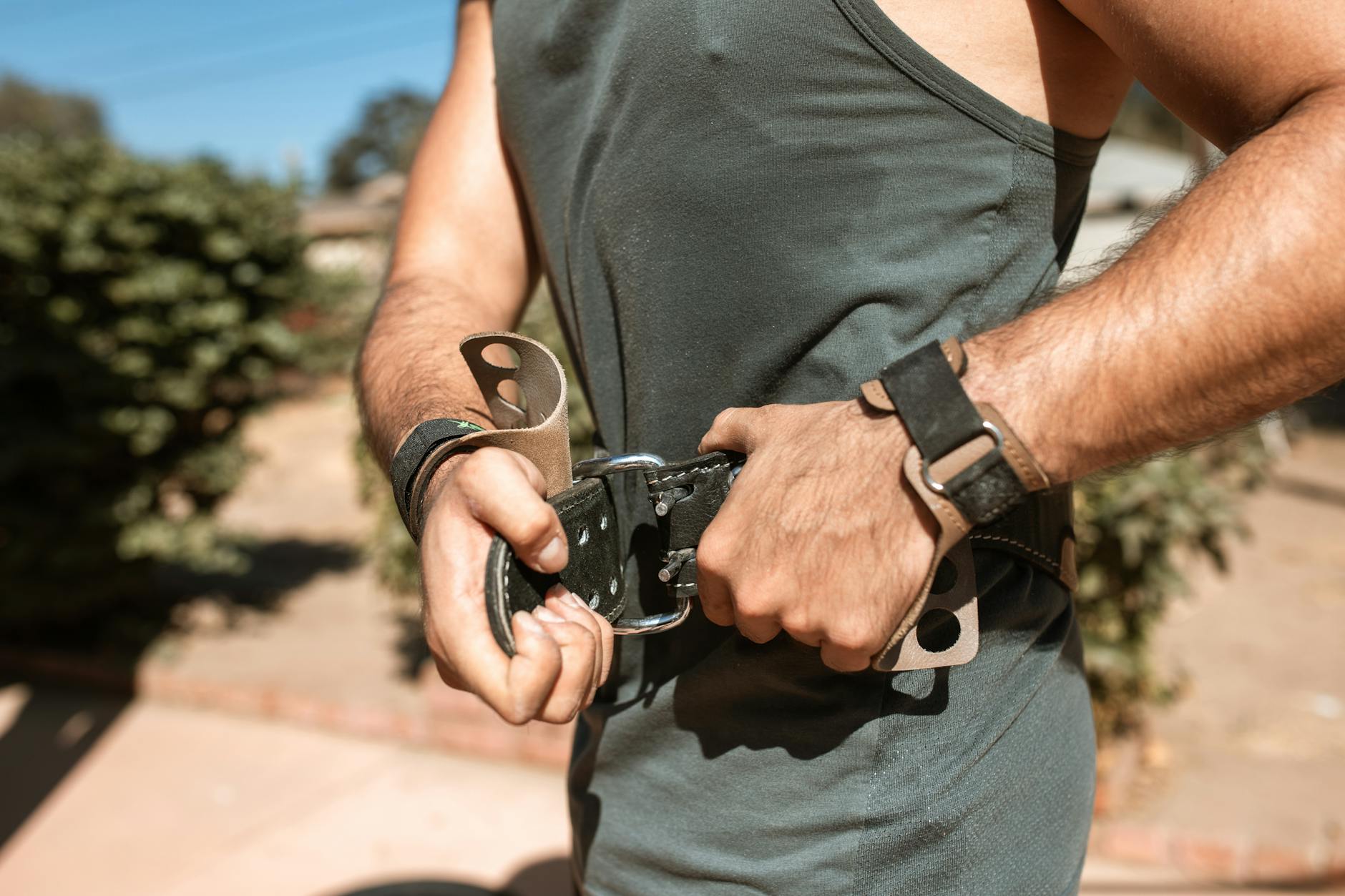
A new leather belt is stiff by design, and it needs several sessions at lighter loads before it flexes the way it will once broken in. Wearing it around the house for short stretches, or doing warm-up sets with it done up, softens the leather faster than jumping straight into a heavy single with a belt that hasn't moved yet.
South Africa's humidity, especially along the coast, is harder on untreated leather than most buying guides account for. Wipe sweat off after every session rather than letting it dry into the leather, store the belt flat rather than rolled to stop it cracking along a fold line, and keep it out of direct sun or a hot car boot, both of which dry leather out faster than normal wear does. A nylon or synthetic belt sidesteps most of this — one more point in its favour if you train somewhere humid and don't want the upkeep.
Frequently Asked Questions
Do I need an Olympic weightlifting belt if I'm not competing?
Only once you're loading a clean, jerk or snatch heavy enough that bracing becomes the limiting factor, usually somewhere north of 80% of your one-rep max. Below that, a belt adds little, and wearing one on every set trains you to rely on it instead of building your own trunk stability.
What's actually different between an Olympic weightlifting belt and a powerlifting belt?
Cut and flexibility. A weightlifting belt is tapered — wide at the back, narrowing toward the front and sides — so it doesn't dig into your hip crease when you drop under a clean or snatch. A powerlifting belt is straight-cut and uniformly wide, built for squats, bench and deadlift, movements that don't need the same hip flexion. Weightlifting belts are also usually thinner and made from more flexible material, since dynamic movement matters more than maximum stiffness.
Leather or self-locking nylon — which weightlifting belt lasts longer?
Leather lasts longer if you look after it, and holds its shape better under repeated heavy loading over years. Self-locking nylon belts, like a quick-lock or velcro design, wear out faster at the closure mechanism but need no break-in and cost less up front. In South Africa's humidity, especially near the coast, nylon also resists moisture damage better than untreated leather.
Is a weight belt for squats the same one I'd use for cleans?
It can be, but it's a compromise either way. A tapered weightlifting belt works for squats — it just won't brace quite as rigidly as a straight powerlifting belt at your absolute limit. A straight powerlifting belt works for squats but will restrict your hips if you also clean or snatch. If you do both disciplines seriously, most lifters end up owning one of each.
What's the best weightlifting belt for beginners?
A self-locking or velcro belt in the 400-500 rand range, not a leather competition belt. Beginners are still learning to brace, and a belt that's fast to put on and take off gets used consistently, which matters more at this stage than raw stiffness. Move to leather once your numbers justify it and you know your correct size.
How tight should I do up an Olympic weightlifting belt?
Tight enough that you can still take a full breath into your stomach against it before a lift, not tight enough that it's uncomfortable standing still. You should be able to fit roughly a flat hand's width of push against the belt when you brace. If you can't breathe into it, it's too tight to do its job.
Related at Flexi Muscles
Sources
- Harman EA, Rosenstein RM, Frykman PN, Nigro GA (1989) — Effects of a belt on intra-abdominal pressure during weight lifting, Medicine and Science in Sports and Exercise
- Barbell Medicine — The science of weight lifting belts, performance and injury-risk data
- International Weightlifting Federation — Technical and Competition Rules and Regulations (belt width specification)