

Machine Weight vs Free Weight: Why the Stack Number Doesn't Match a Dumbbell

By Flexi Muscles — 4 July 2026 · 9 min read
Machine weight and free weight are rarely the same number. The weight stack on a lat pulldown or cable machine runs through pulleys, cams, and cables before it reaches your hands, so a 40kg stack can feel like 20kg of dumbbell load, or occasionally more, depending on how the machine is built. Free weight has no such translation. What you load is what you lift, straight down, no shortcuts.
Shop Free Weights & Strength Equipment at Flexi Muscles
What Machine Weight Numbers Actually Mean
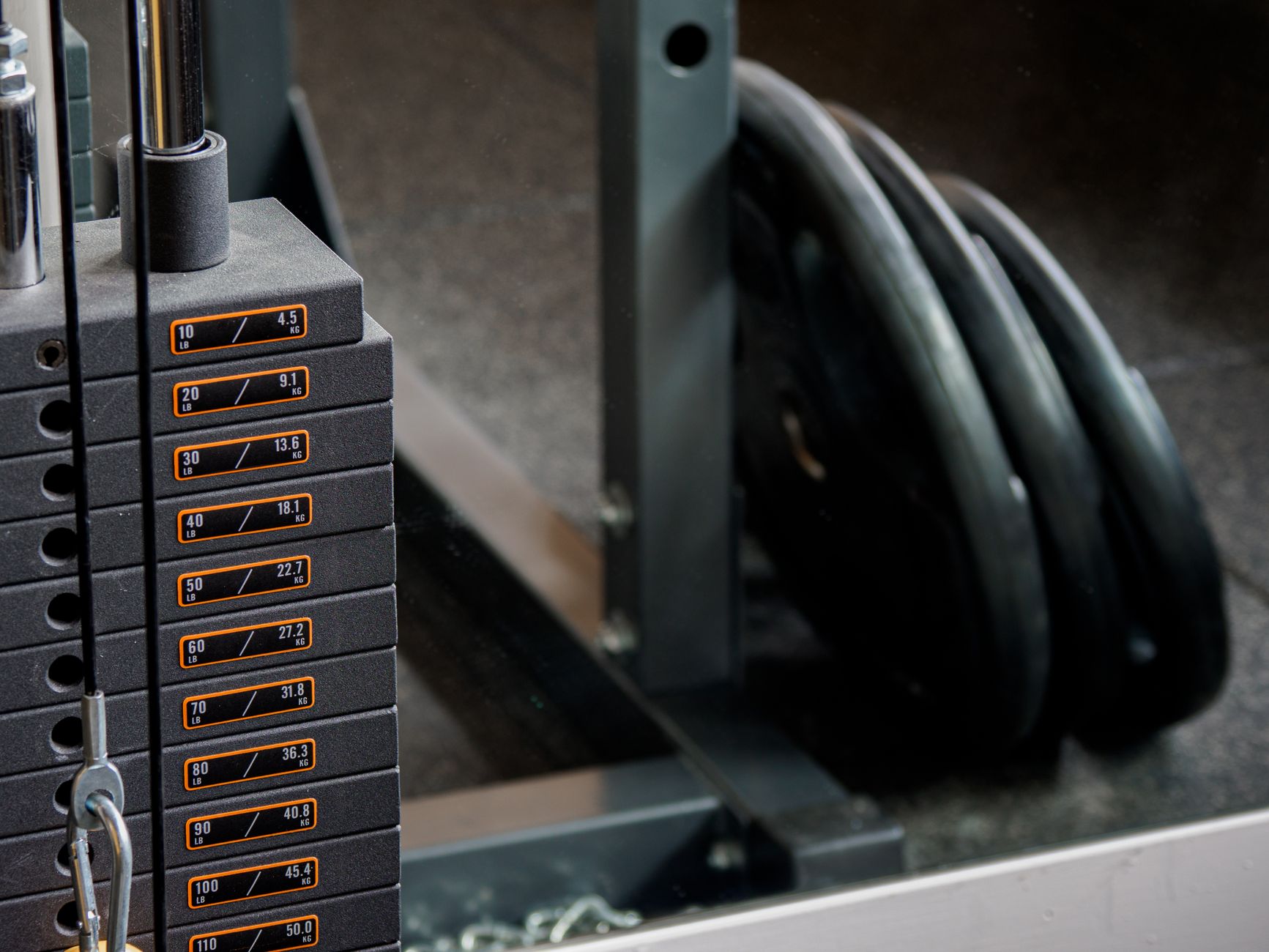
Every weight training machine moves its stack through a pulley system, and the ratio of that system decides what you actually feel at the handle. A 1:1 ratio, common on lat pulldowns and low rows, is close to a direct match between stack weight and resistance. A 2:1 ratio, standard on dual-stack functional trainers, routes the cable through two pulleys and roughly halves the felt resistance for the same number on the stack.
So a machine loaded to 40kg on a 2:1 system loads your muscles closer to 20kg. That is not a flaw. The longer cable travel it creates is deliberate, built for smooth, explosive cable moves like woodchoppers or crossovers without the stack slamming into the top of the guide rods.
Friction adds another layer. Cable routing, pulley bearings, and general wear all quietly eat into the number on the pin. Two machines set to the same weight, in two different gyms, can feel different for reasons that have nothing to do with your strength that day.
Do the maths before you compare notes
If a machine's ratio is stamped on the frame, the working sum is simple. Stack weight divided by the ratio gives you the approximate felt resistance. A 60kg stack on a 2:1 machine loads roughly 30kg. A 60kg stack on a 1:1 machine loads close to the full 60kg, minus whatever friction takes. Most home gym machines and budget cable towers do not print a ratio at all, which is exactly why the number alone tells you so little.
Why a Weight Machine Feels Different From a Free Weight
A machine fixes the bar path for you. Your shoulders, hips, and spine do not have to stabilise the load, because the frame does that job. Free weight gives you none of that help. A dumbbell or barbell wants to tip, drift, and rotate, and your stabiliser muscles fire constantly to keep it on a straight line.
That is the real reason a machine chest press often lets you load more weight than a barbell bench press at the same perceived effort. You are not stronger on the machine. You are simply not spending energy on balance.
This also explains why machine weight and free weight numbers do not transfer directly between each other. A lifter who presses 60kg on a chest press machine cannot assume they will bench 60kg with a barbell. The numbers describe two different skills wearing the same units.
Some machines add a cam, an egg-shaped pulley wheel that changes the effective resistance as you move through the rep. The idea is to match the load to your strength curve, so the exercise feels roughly the same effort at the top, middle, and bottom of the movement. A free weight cannot do this. A dumbbell curl gets noticeably harder at the mid-point and easier near the top, because gravity does not adjust itself to your leverage the way a cam does.
When a Weight Machine Is the Better Choice

A gym machine earns its place in three situations. First, early in training, when form is still unreliable and a fixed path keeps a shoulder or lower back out of a dangerous position. Second, at the end of a session, when a muscle is fatigued and free weight balance demands would raise injury risk for no extra benefit. Third, for isolating one muscle deliberately, such as a leg extension targeting the quads without the hips or calves taking over.
A weight lifting machine is also the more consistent tool for tracking pure strength progress in a single joint, since the resistance curve repeats identically every rep, set, and session.
Reach for a gym machine when:
- You are new to resistance training and still building basic movement control
- An old injury means a fixed bar path is safer than a free barbell
- You are isolating one muscle at the end of a session, past the point where balance matters
- You want a consistent number to track for progressive overload on a single joint
When Free Weights Win
Free weight wins wherever the goal is strength that carries into real life. Carrying shopping bags, catching your balance on a wet floor, or lifting a box off the ground all demand the stabiliser strength that a fixed machine path never trains. A dumbbell row, a goblet squat, or a barbell deadlift recruit the core and grip in a way no seated machine equivalent can match.
Free weight also scales better for long-term progress. A weights machine has a fixed stack, usually topping out well below what an experienced lifter can eventually squat or deadlift with plates and a barbell.
Heads up: if your only goal is raw one-rep max strength on a barbell lift, training exclusively on machines will not get you there. The numbers do not transfer, and neither does the skill.
Reach for free weight when:
- The goal is a lift that exists outside a gym, like carrying, lifting, or catching your balance
- You train compound movements such as squats, deadlifts, or presses that involve multiple joints at once
- Long-term progression matters more than a comfortable first few sessions
- Space and budget favour a rack and a set of plates over a multi-station frame
Common Mistakes People Make With Machine Weight
The most common mistake is comparing a machine number directly against a free weight number, then feeling either smug or discouraged for no reason. The units are the same, the resistance is not.
The second is staying on machines indefinitely out of comfort. A machine will never call you out for skipping a stabiliser muscle. Free weight, and eventually your own lower back, will.
The third is ignoring the pulley ratio printed on most commercial machines, then wondering why a "beginner" weight feels unexpectedly heavy or light between gyms. Reading that ratio, when it is labelled, tells you far more than the number on the pin.
The fourth is skipping a proper warm-up set on a heavy machine because it "isn't real weight." Joints under load do not know the difference between a pulley system and a barbell.
Building This Into a Home Setup
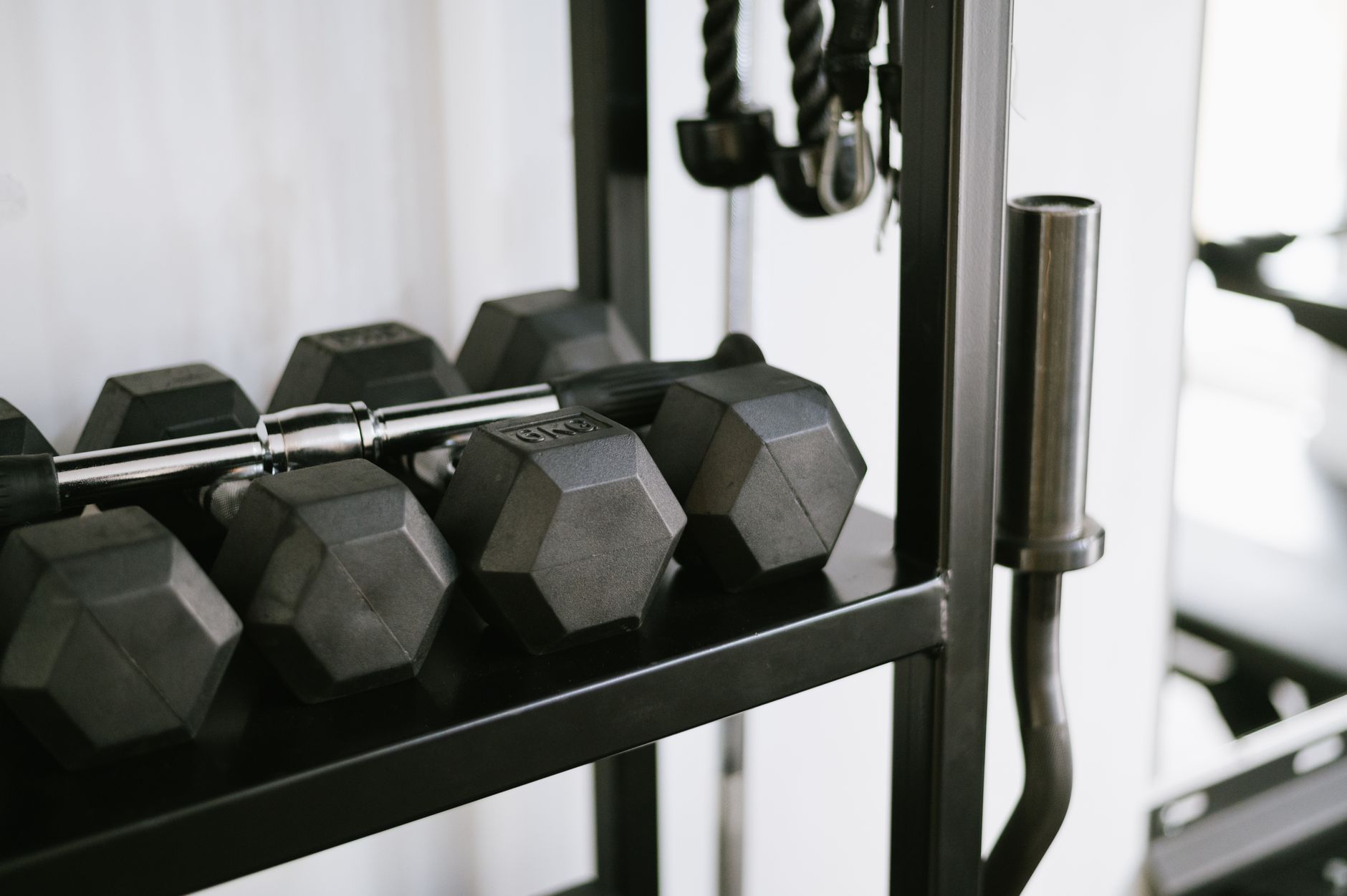
A full multi-station weight training machine takes up floor space that most home gyms do not have, and the price of a decent one buys a serious free weight collection instead. For a spare room or garage setup, a set of adjustable dumbbells, a bench, and a squat rack cover the same muscle groups a commercial machine circuit does, without the footprint.
A basic free weight home setup that replaces most single-station machines looks like this:
- An adjustable dumbbell set for presses, rows, and isolation work
- A flat or adjustable bench for chest, shoulder, and seated movements
- A squat rack for barbell squats, presses, and safe unassisted heavy lifting
- A set of weight plates and a barbell to load both the rack and the bench
None of it needs a wall socket, a service contract, or a cable that eventually needs replacing.
Heads up: if you are training at home specifically to prepare for machine-based rehab work prescribed by a physiotherapist, that is the one case worth buying a small home gym machine for. Everyone else training for general strength is better served putting that budget into free weights and a proper rack.
Frequently Asked Questions
Is machine weight the same as free weight?
No. Machine weight passes through pulleys, cams, and cables before it reaches your hands, so the number on the stack often does not equal the resistance you feel. A 1:1 machine is close to true. A 2:1 machine cuts the felt load roughly in half.
Why does a 20kg machine feel lighter than a 20kg dumbbell?
Most likely the machine runs a 2:1 or higher pulley ratio, which halves or reduces the resistance you feel compared with the number on the stack. Friction in the cable and guide rods also quietly reduces the load.
Should a beginner start with machines or free weights?
Machines suit a beginner's first few weeks because the fixed path removes the balance problem and lowers injury risk while form is still shaky. Free weights should be introduced within the first month or two, since long-term strength and coordination gains depend on them.
Do machines build the same muscle as free weights?
They build the target muscle similarly when the weight and reps are matched, but machines skip the stabiliser work that free weights force onto your core, shoulders, and grip. Over months, that gap shows up as a real difference in functional strength.
Is it fine to mix machines and free weights in one session?
Yes, and it is often the better plan. A common approach is to open with free weight compound lifts while you are fresh and coordinated, then finish with a machine to isolate a tired muscle safely.
Why doesn't my machine chest press match my free weight bench press?
The machine locks your shoulder blades and bar path in place, removing the stabiliser demand of a free barbell. Most lifters move noticeably more weight on a chest press machine than they can bench press with a barbell at the same effort level.