

Home Gym Equipment for Women: What Actually Works

By Flexi Muscles — 26 July 2026 · 12 min read
The best home gym equipment for women is one adjustable dumbbell set, a set of resistance bands, and a mat — the same starting kit that works for anyone, regardless of gender. What changes is the starting weight, not the equipment category. Past that basic three, a kettlebell and a stability ball round out a kit that covers strength, toning and mobility goals without a dedicated room or a five-figure budget.
Shop Dumbbells at Flexi Muscles
What's Actually Different About Equipment "For Women"

Almost nothing. A dumbbell, a resistance band, and a kettlebell work the same way regardless of who's holding them. The category of "gym equipment for women" exists mostly as a marketing label attached to smaller weight ranges, pastel colours, and a narrower set of exercises aimed at toning rather than building strength. Strip the packaging away and it's the same steel, the same rubber, and the same physics as any other piece of resistance equipment on the market.
The one genuine difference is starting load. Most women begin resistance training with less external weight than most men, which changes which end of an adjustable dumbbell range or kettlebell rack actually gets used first. It doesn't change what the equipment is or what it does.
That distinction matters for buying decisions. A dumbbell set marketed specifically at women usually tops out lower than a standard adjustable set, which means outgrowing it faster. Buying the standard version and starting at the lighter end of its range gets more use out of the same purchase.
The same logic applies to language on packaging. "Toning," "sculpting" and "lean muscle" describe the same physiological process as "building strength" — progressive overload against a muscle, repeated over weeks. A dumbbell doesn't know which word is printed on the box it came in, and the exercise that tones a shoulder is the exercise that strengthens it.
The Five Pieces That Cover Almost Everything
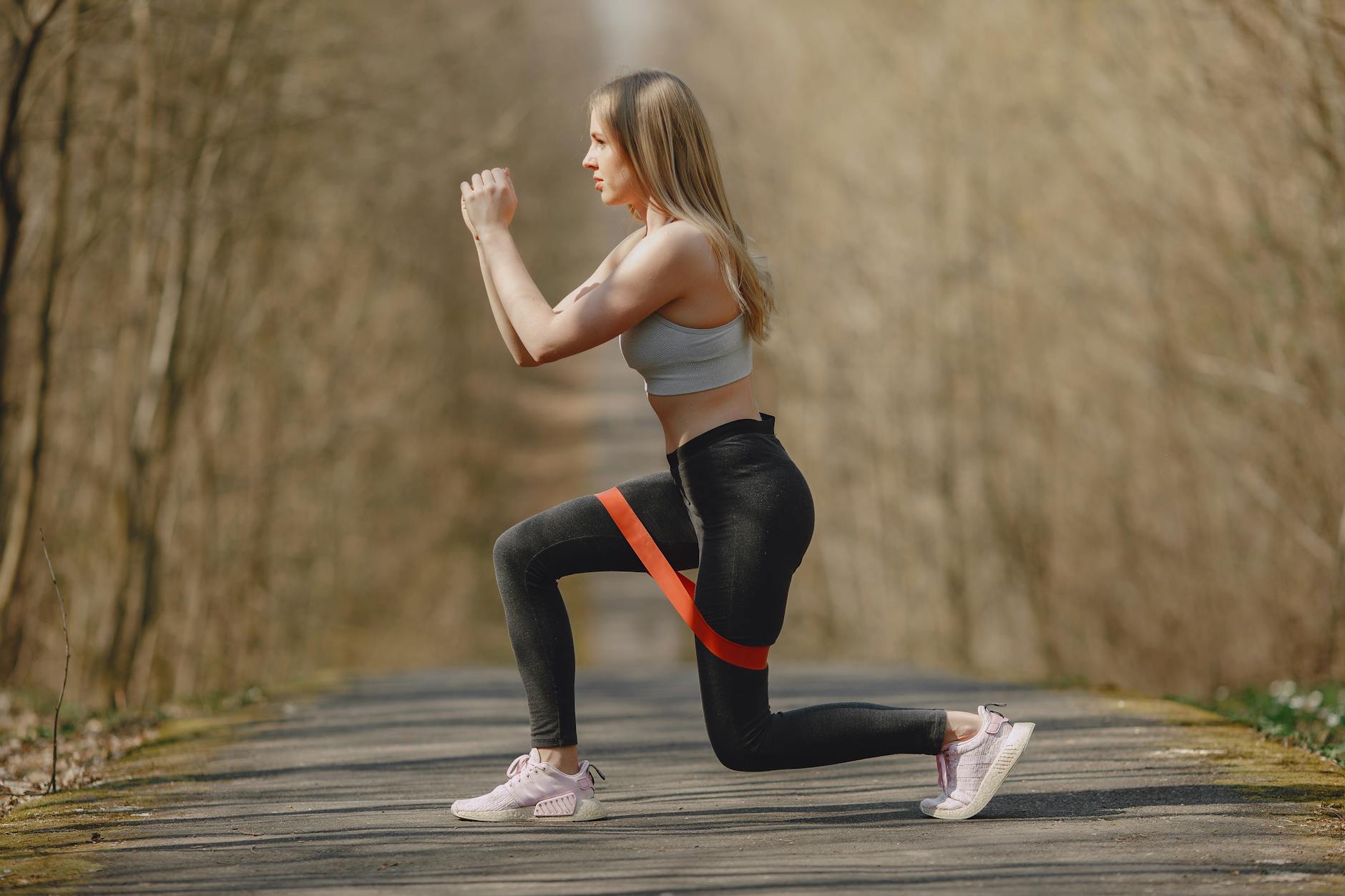
1. Adjustable dumbbells
One pair that changes weight covers presses, rows, squats, lunges and curls without a rack of fixed pairs taking over a corner of the room. Most beginners land somewhere around 2 to 5kg per hand for pressing movements and 6 to 10kg per hand for squats, lunges and rows — an adjustable set spans both ranges from one purchase instead of five.
2. Resistance bands
Bands load a movement differently to a dumbbell: resistance increases as the band stretches, which keeps tension on a muscle through the top of a rep that a light dumbbell lets coast. They're also the cheapest, smallest piece of kit on this list and the one that travels best.
3. A kettlebell
One kettlebell adds a swing, a goblet squat and a Turkish get-up to a programme that a dumbbell alone can't replicate as well. The swing in particular trains the hips and posterior chain through a hinge pattern that most dumbbell exercises don't reach. It's not essential alongside dumbbells, but it's usually the next purchase once the basic kit starts to feel too easy.
4. A stability ball
A stability ball trains core control in a way a flat mat can't, since the instability forces smaller stabiliser muscles to work through every rep. It also doubles as a bench substitute for chest presses and hip thrusts in a small space. It's the one piece on this list that most buying guides skip, despite costing less than a single dumbbell.
5. A mat
Protects the floor, cushions kneeling and lying movements, and gives dumbbells somewhere to land that isn't tile or carpet. It's the least exciting item here and the one every other piece of equipment on this list depends on.
Building a Kit Around Your Actual Goal
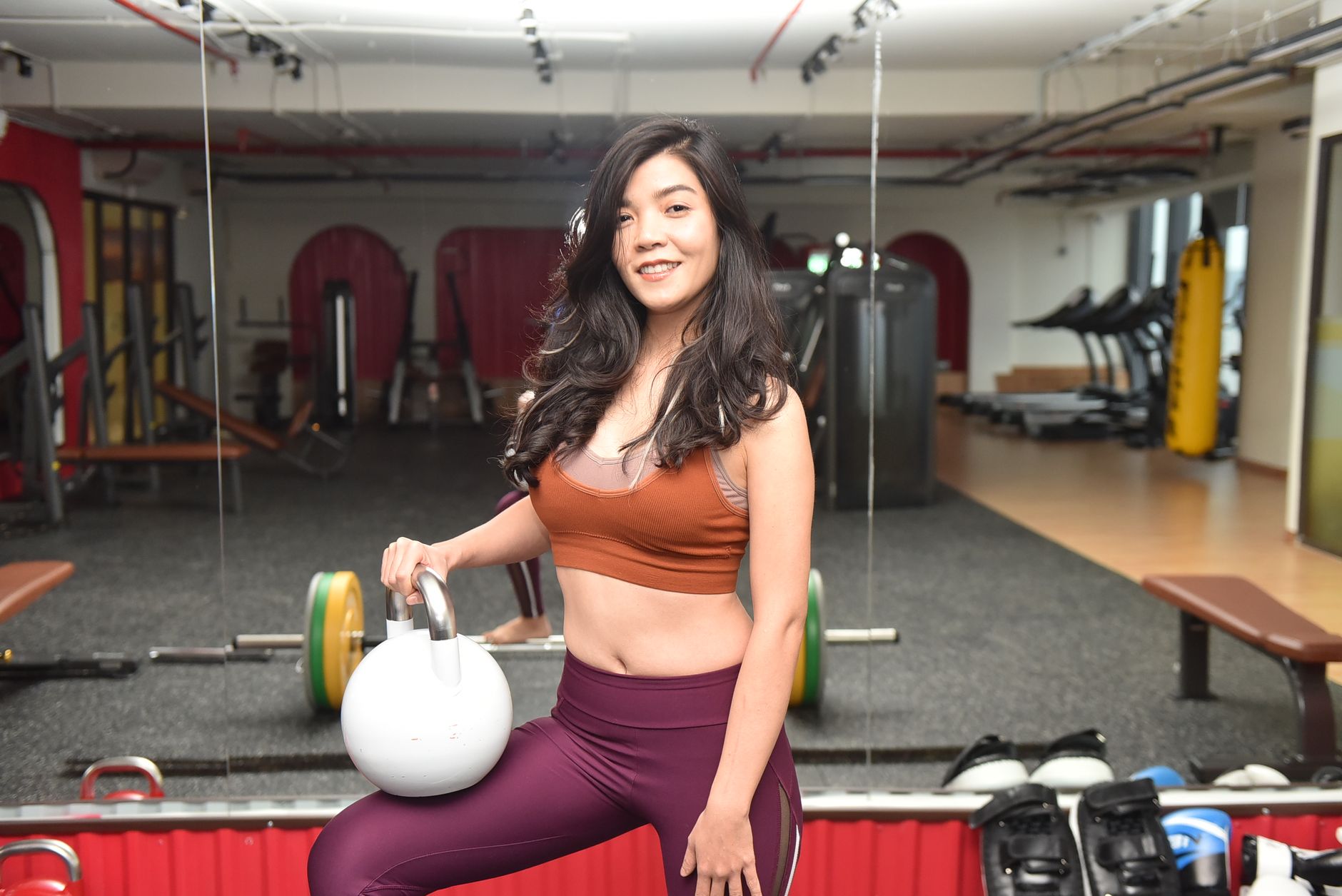
The five pieces above are the floor, not the ceiling. What gets added next depends entirely on what the training is actually for, and buying ahead of that answer is how equipment ends up unused.
Strength-focused: add a second, heavier kettlebell or a barbell and plates once dumbbells stop being enough resistance for squats and deadlifts. A weight bench comes next, since presses and rows improve sharply once the body isn't stabilising on the floor.
Toning and general fitness: the five-piece basic kit, used consistently three or four times a week, outperforms a specialised setup that only gets used for one type of session. Add a second dumbbell weight or a heavier band before adding a new equipment category.
Cardio-focused: a jump rope and bodyweight circuits cover the first few months. Past that, a mini stepper or a stationary bike adds sustained, low-impact volume that circuits alone can't deliver in a 30 to 45 minute session without a lot of floor space.
Shop strength training equipment at Flexi Muscles once a specific goal makes the case for the next piece, rather than buying it as a placeholder for a goal that hasn't been set yet.
Putting the Kit to Work: A Simple Starting Routine
Owning the five pieces doesn't train anything by itself, and most buying guides stop at the shopping list. A basic three-day split gets the whole kit working without needing a programme designed by anyone else first.
Day 1 — Lower body and core
Goblet squats with the kettlebell, dumbbell Romanian deadlifts, banded lateral walks, and a stability-ball plank. Three or four sets of each, resting until breathing settles between sets rather than watching a clock.
Day 2 — Upper body push and pull
Dumbbell shoulder press, banded rows anchored under a foot, dumbbell chest press on the stability ball, and band pull-aparts for the upper back. This is the day light dumbbells (2 to 5kg) get used most, since pressing movements are usually the weakest pattern at the start.
Day 3 — Full body and conditioning
Kettlebell swings, dumbbell lunges, a banded good morning, and a finisher of bodyweight or banded circuits for ten minutes. This is the session that doubles as cardio without adding a machine to the kit.
Two or three of these sessions a week, run consistently for six to eight weeks before changing anything, is what actually produces results — not the equipment list on its own.
The signal to add weight is simple: once the last two reps of a set stop feeling genuinely difficult, the load is too light. On an adjustable dumbbell set, that's a dial turn. On a fixed kettlebell, it's the reason a second, heavier one eventually joins the kit. Bands follow the same rule — move up a resistance level once the current one stops limiting the last few reps of a set.
Budget and Space in a South African Home
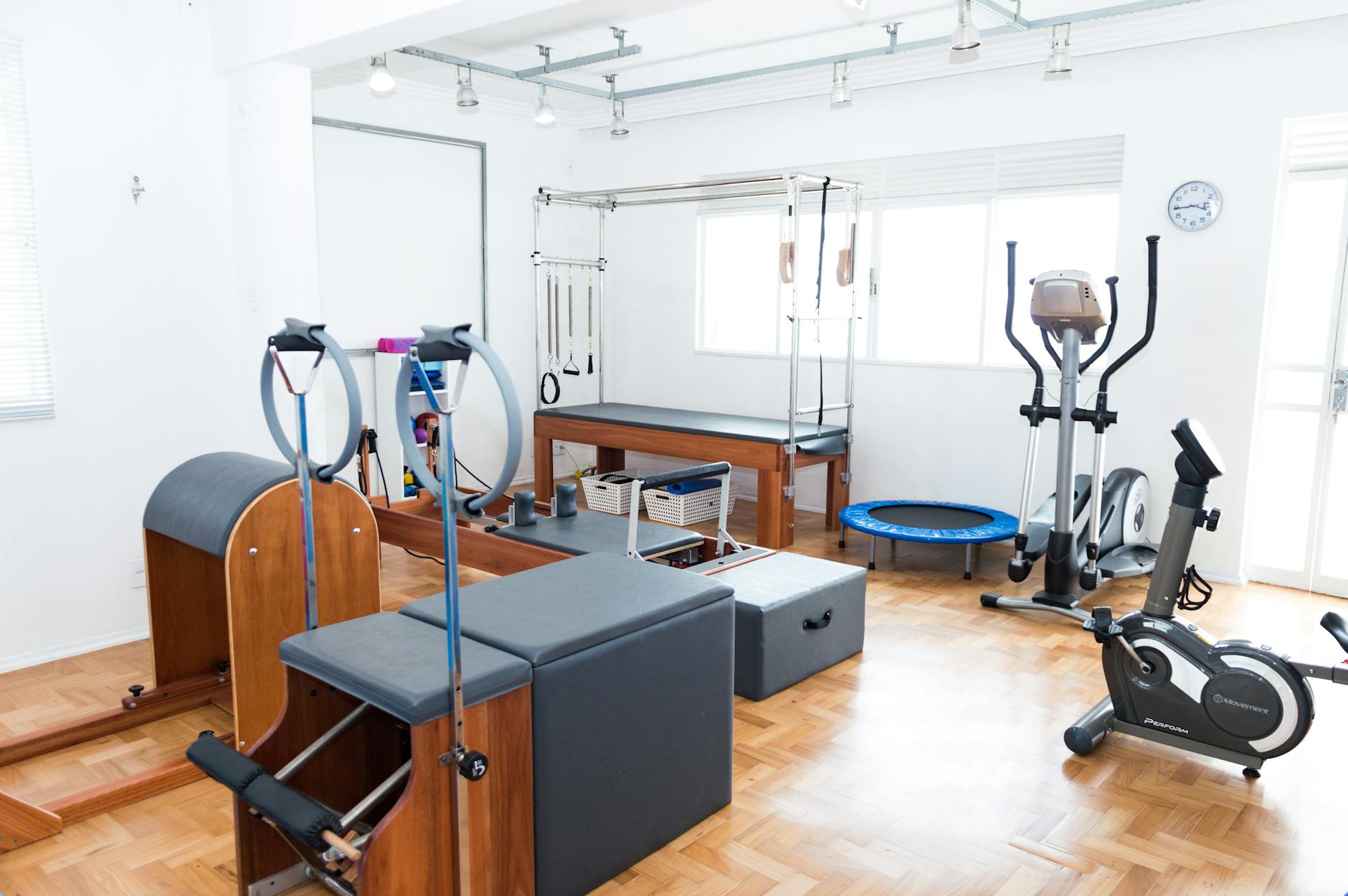
Most buying guides for this topic are written for houses with a spare room. That's not the average home gym in South Africa, where the setup usually competes for space with a lounge, a flat, or a room shared with someone else. The basic kit above is built around that constraint rather than around it.
A mat, a resistance band, and an adjustable dumbbell set fit into about two square metres of floor space and store in a cupboard, under a bed, or in a single bag between sessions. None of it needs to be bolted down, wired in, or left assembled, which matters in a rented flat as much as it does in a shared house.
Budget the same way: buy the adjustable dumbbell set first, since it's the piece that scales with progress for the longest. A band and a mat cost a fraction of that and can be added in the same order without waiting for a bigger purchase to justify them. A kettlebell and a stability ball are the next tier, added once the first three get used consistently, not before.
This also solves the moving problem that most fixed equipment creates. A squat rack or a weight bench is a project to relocate; a dumbbell set, a band and a mat pack into one bag and move with a rental deposit. For anyone renting or between long-term addresses, that's worth more than a bigger initial kit sitting unused because it's too much to pack.
What's Not Worth Buying First
Every buying guide recommends what to get. Almost none say what to skip, which is the bigger favour to a beginner's budget and floor space — and it's the part of "gym equipment for women" marketing that deserves the most scepticism.
- Vibration plates — marketed as a shortcut to fat loss and toning, but the evidence for that specific claim is thin. They're a recovery and circulation tool at best, not a substitute for resistance training.
- Ab-specific "toning" machines — a crunch machine trains one muscle group through one plane of movement. A loaded carry and a plank train the same muscles plus the stabilisers the machine ignores, using equipment already on this list.
- Pink or "women's" branded dumbbell sets — usually the same casting as a standard set at a lower maximum weight, sold at a premium for the colour. A standard adjustable set covers a wider range for less.
- A second cardio machine — a bike and a stepper cover the same energy system. Buying both before either gets used three times a week is buying redundancy, not progress.
My opinion, and most equipment guides marketed at women won't say it this directly: a beginner with the five basic pieces and a consistent three-day programme will out-train a beginner with fifteen pieces of "toning" equipment and a programme that changes every two weeks. The kit was never the limiting factor. If you already own a working set of dumbbells and a band, you don't need this list — you need a programme.
Common Mistakes When Buying Home Gym Equipment
- Starting with a fixed weight that's too light within a month — a single pair of 2kg dumbbells gets outgrown fast once form improves. Adjustable sets avoid the repeat purchase.
- Buying equipment marketed by gender instead of by function — a "women's" kettlebell is the same tool at a lower weight. Buy the standard version and start where it's comfortable.
- Skipping the mat — dropped dumbbells and bare flooring don't mix, and the repair bill costs more than the mat would have.
- Ignoring noise — dropped weights and kettlebell landings carry through floors in flats and shared houses. A rubber mat solves this before it becomes a conversation with a neighbour.
- No plan for storage — equipment left out permanently turns a lounge into a gym whether that was the plan or not. A shelf or a bag keeps the room doing both jobs.
- Never increasing the load — the most common reason women plateau on a home kit isn't the equipment, it's staying on the same dumbbell weight for months after it stopped being challenging.
Ready to build the basic kit? Shop dumbbells at Flexi Muscles, or browse resistance bands if you're starting smaller.
Frequently Asked Questions
What home gym equipment does a woman actually need to start?
One adjustable dumbbell set, a set of resistance bands, and a mat. That combination trains every major muscle group and covers mobility work, and it's the same starting kit that works for anyone, not a smaller or lighter version aimed specifically at women.
Is home gym equipment different for women than for men?
No. The equipment is identical. The only real difference is the starting weight on dumbbells and kettlebells, since most women begin with less external load than most men. The bar, the band, and the kettlebell itself don't change.
What dumbbell weight should a woman start with?
For lower-body and pulling movements, most beginners start around 6 to 10kg per hand. For pressing and arm work, 2 to 5kg per hand is more realistic at first. An adjustable set covers both ranges without buying five pairs to find the right one.
Can resistance bands replace dumbbells for a woman's home workouts?
For the first few months, largely yes. Bands keep tension on a muscle through the full range of a movement in a way light dumbbells don't. Once a lift stops feeling challenging with the heaviest band on hand, dumbbells or a kettlebell take over as the main tool.
How much space does a basic home gym for women actually need?
About two square metres of floor space is enough for the core kit: a mat, a dumbbell set, and a band. None of it needs to be bolted down or left assembled, so a corner of a bedroom or lounge works as well as a dedicated room.
What home gym equipment for women isn't worth buying first?
Vibration plates, ab-specific machines, and any "toning" equipment marketed as a shortcut to a particular body shape. None of it trains harder than a loaded dumbbell movement, and most of it ends up folded against a wall within a season.
Does a home gym kit replace a gym membership?
For strength and toning goals, mostly yes. What a home kit can't replace is a squat rack for heavy barbell work or a wide range of cardio machines. Someone chasing a specific powerlifting total still needs a rack; someone training for general strength and conditioning usually doesn't.
Related at Flexi Muscles
- Dumbbells for Sale — adjustable and fixed sets for every starting weight
- Resistance Bands — loop and fabric bands for strength and mobility
- Strength Training Equipment — kettlebells, benches and general home gym gear
- Lifting Accessories — gloves, straps and mats to support your training
- All Products — browse the full Flexi Muscles range