

Good Exercise Equipment for Home: What's Actually Worth Buying

By Flexi Muscles — 16 July 2026 · 19 min read
Good exercise equipment for home comes down to three categories: something for resistance, something for load, and something for your heart rate. Resistance bands, a set of adjustable dumbbells, and one cardio option cover almost every workout a beginner needs. Everything else — benches, racks, rollers, rings — earns its place only once those three get used weekly, not once a month.
Shop Home Gym Equipment at Flexi Muscles
Good exercise equipment for home: the three things worth buying first
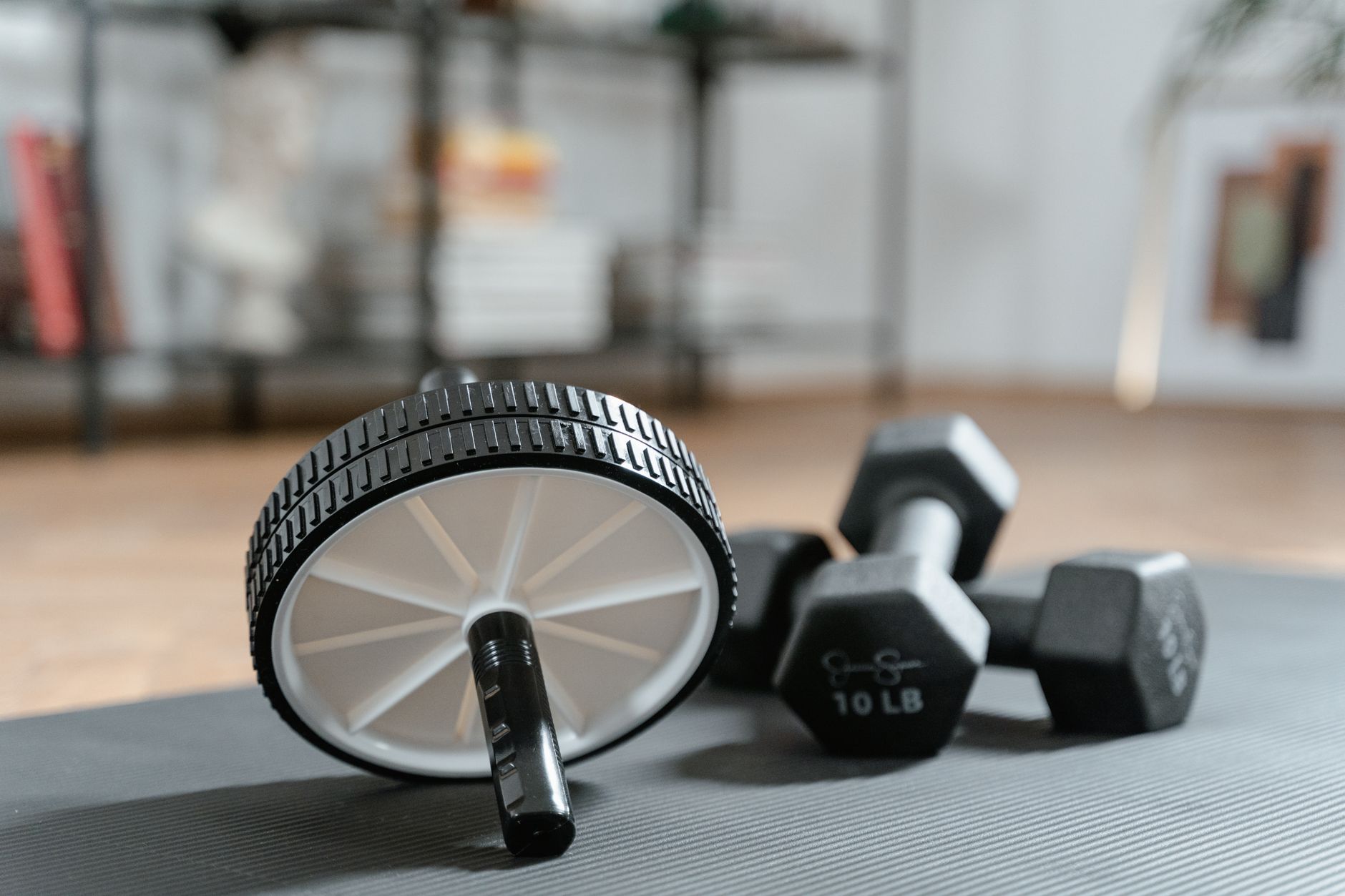
Most people overbuy in the first month and underuse in the second. The fix is to treat the first purchase as a test of habit, not a full setup: buy the minimum that lets you train consistently for a month, then let actual use decide what comes next, rather than a wish list written before a single session happens. Four categories of best home gym equipment for beginners cover almost every workout worth doing at home, and none of them require a dedicated room.
Resistance bands

A set of fabric or loop resistance bands handles squats, rows, presses, and glute work in a bag small enough to fit under a bed. Bands load a muscle differently to free weights — tension increases as the band stretches, so the hardest part of the movement lands at the top of the range instead of the middle. That makes them genuinely useful for building control, not just a cheaper substitute for dumbbells.
Buy a set with at least three resistance levels. A single band gets outgrown within a few weeks of consistent training, and replacing one band at a time costs more than buying a graduated set upfront. Fabric bands hold their shape better than latex loops and don't roll up the leg mid-set, which matters more than it sounds on glute bridges and lateral walks.
A realistic beginner session with bands alone: three rounds of banded squats, rows, and glute bridges, twelve to fifteen reps each. That's a complete full-body session before a single dumbbell gets picked up.
Adjustable dumbbells
One pair of adjustable dumbbells replaces a rack of fixed weights and takes up a fraction of the floor space. For a beginner, the ability to increase load in small increments matters more than the top weight the dumbbells go up to — most people stall on form long before they stall on weight.
Look for a mechanism that changes weight in under ten seconds. Slower selector systems get skipped mid-workout, which quietly turns an adjustable set into an expensive fixed-weight pair. Dial or pin-loaded systems tend to hold up better under daily use than clip-based ones, which loosen over time.
Adjustable dumbbells also solve a storage problem fixed sets don't: a full rack of iron dumbbells from five to thirty kilograms takes up an entire wall. One adjustable pair covers the same range in a shoebox-sized footprint.
Kettlebells
A kettlebell earns its place for one reason: it lets you train hinge movements — swings, cleans, deadlifts — that dumbbells and bands don't replicate well. The offset handle also changes how a load sits relative to your body, which builds a different kind of core control than a symmetrical dumbbell does.
One kettlebell at a moderate weight is enough to start. Beginners rarely need more than one until they've been swinging it consistently for a couple of months, at which point a second, heavier bell extends the range rather than replacing the first. The most common beginner mistake with a kettlebell swing is squatting the movement instead of hinging at the hips — the power should come from the glutes and hamstrings snapping the hips forward, not the knees bending and straightening. A few sessions in front of a mirror, or filming yourself, fixes this faster than reading about it.
Exercise mats
A mat is the least exciting item on this list and the one most people skip, which is a mistake. Floor work, kettlebell swings, and dumbbell rows all go better on a surface that grips back and protects both the floor and your joints. A mat thick enough to cushion kneeling work but firm enough not to wobble under a loaded dumbbell is worth the small extra cost over the cheapest option available.
None of these four categories replace each other. Bands build control through a full range of motion, dumbbells add precise, trackable load, kettlebells train movement patterns the other two can't reach, and a mat makes all three safer and more comfortable to do on a hard floor. Together they cover strength, conditioning, and mobility without a single fixed installation in the house.
| Equipment | Best for | Limitation |
|---|---|---|
| Resistance bands | Full-body strength, joint-friendly loading, travel | Harder to track progress precisely than fixed weight |
| Adjustable dumbbells | Precise progressive overload, isolation work | Slower selector systems break workout rhythm |
| Kettlebell | Hinge movements, conditioning, grip strength | Needs coaching or video guidance to learn safely |
Cardio equipment that doesn't need a spare room
Cardio is the category people either skip entirely or over-invest in with a treadmill that ends up folded against a wall. The best home fitness equipment for cardio at home fits in a cupboard and gets used because it's already out, not because it's impressive. None of the four options below need a dedicated room, and most can be set up and packed away in under a minute, which matters more to actual weekly use than any spec sheet does.
Rebounder trampolines
A rebounder is the most underrated piece of cardio equipment for a small space. The bounce absorbs most of the impact that running sends through knees and ankles, which makes it a realistic option for anyone who's given up on running because of joint pain. It also folds flat, which a treadmill or exercise bike never will.
It won't replace strength training, and ten minutes on a rebounder is not the same stimulus as a run. Treat it as a low-impact cardio option, not a full substitute for structured training. Twenty minutes of steady bouncing, three sessions a week, is a realistic starting target rather than a daily hour-long commitment that quietly stops happening after week two.
Jump rope
A skipping rope costs less than almost anything else on this list and delivers a genuinely hard cardio session in under fifteen minutes. The learning curve is real — most beginners trip constantly for the first week — but it's the cheapest way to test whether cardio training is something you'll actually stick with before spending on anything bigger.
Exercise bikes
An exercise bike is the better choice over a treadmill for anyone with knee or lower-back issues, since the seated position takes weight off joints that running or stepping loads directly. It's also quieter, which matters in a flat or a shared house where impact noise travels through floors. The trade-off is floor space — a stationary bike doesn't fold away the way a rebounder or a rope does, so it needs a spot it can live in permanently.
Stair steppers
A compact stair stepper delivers a harder cardio session than its size suggests, working the glutes and hamstrings more directly than a bike does. It's a reasonable middle ground between a rebounder's low impact and a treadmill's higher impact, and most models are small enough to store under a bed between sessions.
Choosing between these four comes down to joints, noise, and space, in that order. Bad knees point toward a rebounder or bike over a stepper. A shared wall or downstairs neighbour points toward anything other than a rebounder, which does produce some floor vibration even with a good mat underneath. A single cupboard's worth of storage points toward a jump rope over a bike, which needs a permanent spot. There's no universally correct answer, only the one that matches the constraints already in the room.
Strength extras once the basics are covered

Once bands, dumbbells, and a cardio habit are actually in weekly rotation — not just bought — a second wave of equipment starts to make sense. The test isn't how long you've owned the basics, it's whether they're still getting used without having to talk yourself into it. Equipment bought before that point tends to sit in a corner regardless of how good it is.
Pull-up bars
A doorframe pull-up bar adds an entire category of pulling movements that bands and dumbbells cover poorly. It mounts and unmounts in under a minute and stores flat against a wall or in a cupboard. For anyone who can't yet do a full pull-up, resistance bands loop through the bar to assist the movement, which makes this one of the few pieces of equipment that scales with you from day one to advanced training.
Check the door frame before buying. A doorframe bar relies on tension against the frame, and older or narrower frames don't always hold a heavier bodyweight safely — a wall-mounted bar is the safer option if there's any doubt.
Weight bench and squat rack
A bench adds bench press, incline work, and seated dumbbell movements that are awkward or impossible standing up. An adjustable bench costs more than a flat one but covers considerably more exercises, which is usually worth the difference.
A squat rack is the biggest single investment on this list, both in cost and floor space, and belongs later in the buying order. It's worth buying once you're squatting or pressing a barbell loaded past what's comfortable to lift on and off the floor unassisted — before that point, dumbbells and a bench cover the same movement patterns at a fraction of the cost. When you do reach that stage, measure the ceiling height and the floor space around the rack before buying, not just the rack's footprint in the listing photo — safety bars and a barbell need clearance on both sides to load and unload safely.
The small stuff that makes the big stuff usable
Accessories don't move the needle on their own, but they determine whether the equipment above gets used comfortably or gets abandoned because of sore hands or a slipping grip. They're also the cheapest items on this entire list, which makes them easy to over-buy on impulse before you actually know which problem you're solving.
- Gym gloves protect against callusing during kettlebell and dumbbell work, particularly for anyone lifting several times a week.
- Wrist straps extend how long you can hold a bar or handle before grip fails first, which matters most on rows and deadlift-pattern movements.
- Ankle weights add resistance to bodyweight leg work without needing a machine, and pack away small enough to travel with.
- A lifting belt supports the lower back on heavier loaded squats and deadlifts, but only becomes relevant once someone is lifting close to their bodyweight.
- A stability ball is genuinely useful for core work and hamstring curls, and doubles as an office chair for anyone who sits at a desk most of the day.
- A foam roller handles the recovery side that most beginner setups skip entirely. Ten minutes rolling out the legs and back after a heavier session reduces next-day stiffness enough to keep the following workout from getting skipped.
None of these need buying on day one. Add them as a specific problem shows up — sore palms, a grip that fails before the muscle does, a lower back that feels unsupported under load — rather than as a starter pack.
Budget and small-space setups
Small home gym equipment isn't a compromise category, it's a design constraint that forces better buying decisions. A resistance band set, one pair of adjustable dumbbells, and a rebounder together fit into a corner of a bedroom and cover strength, cardio, and mobility without a single fixed installation.
Budget follows the same order as the buying priority above: bands first, dumbbells second, cardio third. Skipping straight to a bench or rack before the first three are in weekly use is the most common way home gym spending goes to waste. Research on beginner training habits backs this up — most people starting out own fewer than three pieces of equipment, and that's closer to correct than most fitness content admits.
If space is genuinely tight, prioritise equipment that folds or stacks: a rebounder that collapses, resistance bands that roll into a bag, and dumbbells with a compact adjustable base over a full rack of fixed weights.
A buying plan that survives contact with real life
Spreading purchases over a few months, gated by actual use rather than a calendar, keeps spending matched to habit instead of ahead of it.
- Weeks 1–4: Resistance bands, one pair of adjustable dumbbells, a mat. Enough for four to five sessions a week without spending on anything else.
- Month 2–3: Add one cardio option — a rebounder, jump rope, or bike, chosen by what you'll actually use, not what looks best in a corner.
- Month 4 onward, if training three or more times a week consistently: A bench and a pull-up bar, in either order depending on which movements are missing most.
- Month 6 onward, only once you're limited by load, not motivation: A squat rack, barbell, and plates.
Most people never need to reach the last stage, and that's not a failure. A consistent bands-and-dumbbells routine beats an inconsistent full rig every time.
Matching the setup to the space, not the other way round
A small home gym equipment setup works best when it's chosen for the room, not squeezed into whatever's left after a bigger plan doesn't fit. A studio apartment or a shared bedroom corner suits bands, one pair of dumbbells, and a rebounder that folds away completely between sessions — nothing that needs a permanent footprint. A garage or a spare room can support the full progression, including a bench and eventually a rack, because the equipment doesn't need to disappear when it's not in use.
The mistake worth avoiding either way is buying for the room you'll have eventually rather than the one you have now. Equipment that doesn't fit the current space gets used less than equipment that does, regardless of how good it is on paper.
Buying home gym equipment in South Africa

Home gym equipment South Africa buyers should weigh a factor that most international buying guides skip entirely: import lead time. Equipment bought from overseas retailers can sit in customs for weeks, which matters if the goal is to start training this month, not next quarter. Buying from a local supplier with stock already in the country removes that delay completely, and it means the item in the listing photo is the item that arrives, rather than a substitute picked once the original goes out of stock partway through a long shipping window.
Local stock also solves the return problem. Adjustable dumbbells and rebounders are heavy and awkward to ship back overseas if a mechanism doesn't suit you. A local exchange is a courier booking, not an international freight claim.
Cast iron and steel equipment stored outdoors or in an unventilated garage will rust faster in coastal humidity than inland. Wipe plates and bars down after sweaty sessions and store them somewhere dry if you're anywhere near the coast.
Load shedding is also worth factoring into equipment choice, which no US or UK buying guide will ever mention. Resistance bands, dumbbells, kettlebells, and a rebounder all work without power. Anything electronic — a smart bike with a screen, a treadmill with a powered belt — is dead weight during an outage, at exactly the time a workout at home is most useful.
Check warranty terms before buying, particularly on anything with moving parts like an adjustable dumbbell mechanism or a bike's resistance system. A supplier with local after-sales support is worth more than a marginally lower price from a seller who disappears after the sale.
Pricing should already include VAT on any South African retailer's site, so the number on the product page is the number charged at checkout, with nothing added at the last step. Imported listings priced in another currency don't always make that as clear, and exchange rate movement between browsing and paying can shift the final cost more than people expect.
What's not worth buying for a home gym
The biggest waste of home gym budget isn't buying cheap equipment, it's buying equipment for a training level you haven't reached yet.
- A squat rack before you can squat your own bodyweight for reps. The safety bars that justify the cost and floor space aren't doing anything until the load gets heavy enough to need spotting. Dumbbells and a bench cover the same movement patterns until then, at a fraction of the cost and without needing a permanent spot bolted to the floor.
- A treadmill, if you already know you hate running. It becomes an expensive clothes rack faster than almost any other piece of equipment, and it's one of the hardest items to resell once the guilt sets in. A rebounder or jump rope tests the same cardio habit for a fraction of the cost and space before committing to anything permanent.
- Novelty single-use gadgets — ab-specific machines, vibration platforms, anything that claims to target one muscle in isolation. These are usually the first thing bought and the first thing abandoned. A resistance band and bodyweight work cover the same movements without a dedicated machine taking up a corner.
- A full multi-gym cable tower on day one. It's the most expensive item on any equipment list and the least forgiving to buy wrong, since the cable and pulley layout locks you into a fixed set of movements. Wait until you know which movements you actually do consistently, not which ones look good assembled in a showroom photo.
A squat rack is not a coat rack, no matter how often that's what it ends up being used for in month three.
Looking after equipment so it lasts
Equipment that's uncomfortable, grubby, or visibly wearing out gets used less, which quietly undoes all the planning above. A few minutes of upkeep a week keeps that from happening, and it's a smaller time cost than replacing something that failed early because it was never wiped down or checked.
- Resistance bands degrade faster in direct sunlight and heat, which matters in a garage or a room that gets full afternoon sun. Store them out of direct light and check for small tears before each session — a band that snaps mid-set at full stretch is unpleasant at best.
- Dumbbells and kettlebells with a rubber or urethane coating need a wipe-down after use to stop sweat corroding the metal underneath the coating over time. Cast iron without a coating should be dried immediately after use, particularly in humid coastal areas.
- Rebounders rely on bungee cords or springs that stretch and weaken with use. Check them every few months for uneven tension, and replace them before they fail rather than after — a cord that snaps under load is a genuine safety issue, not just an inconvenience.
- Adjustable dumbbell mechanisms benefit from an occasional check that the locking pin or dial seats fully before lifting. A plate that isn't fully locked is the single most common cause of adjustable dumbbell injuries.
None of this takes long once it's a habit attached to putting equipment away, rather than a separate task on its own. The five minutes it costs is far cheaper than replacing a set of dumbbells or a rebounder that failed early from being left out in the sun or the rain.
Frequently Asked Questions
What's the minimum equipment needed to start a home gym?
A resistance band set and one pair of adjustable dumbbells cover most beginner strength work. Add one cardio option, such as a jump rope or a rebounder trampoline, and that is a complete starting kit before anything else gets added.
Are resistance bands as effective as dumbbells for building strength?
For beginners, yes, for the first several months. Bands provide resistance that increases through the range of motion, which suits bodyweight-adjacent training. Once someone can complete high-rep sets easily, dumbbells or a heavier band become necessary to keep progressing.
How much space does a home gym actually need?
A resistance band and dumbbell setup fits into a two by two metre corner. Anything with a bench, rack, or rebounder needs closer to three by three metres to move around safely.
What order should I buy home gym equipment in?
Resistance bands and dumbbells first, a cardio option second, a bench and pull-up bar third, and a squat rack or barbell last, once the earlier equipment is already being used at least three times a week.
Is a rebounder trampoline worth it for a home gym?
For low-impact cardio, yes. It is easier on the knees and ankles than running and takes up less floor space than a bike or treadmill, though it will not replace strength training on its own.
Do I need a squat rack for home strength training?
Not at the beginner stage. A squat rack earns its place once someone is loading a barbell past what they can lift safely without spotter-free safety bars, which usually takes months of consistent training first.
Is bodyweight training enough, or do I need equipment at all?
Bodyweight training builds real strength for months, especially for beginners, but it plateaus faster than loaded training because increasing resistance is harder without added weight. Resistance bands are the natural next step precisely because they add load without needing a full set of weights.
The short version, if none of the above gets read past this point: buy bands and dumbbells, use them consistently for a month, then add exactly one more thing based on what that month showed you was missing. Everything else on this list is worth revisiting once that habit is genuinely in place, and not a day before.
Related at Flexi Muscles
- Shop adjustable dumbbells
- Shop resistance bands
- Shop rebounder trampolines
- Shop gym gloves, straps & accessories
- Shop kettlebells, benches & strength equipment