

Flat Bench Press Bench: How to press on It and How to choose one
By Flexi Muscles — 28 September 2026 · 9 min read
A flat bench press bench is a fixed, horizontal pad that you lie on to press a barbell or dumbbells from your chest. For bench pressing, the three specs that matter are pad height (42 to 45 cm), pad width (29 to 32 cm) and a solid frame that does not rock under load. Get those right and the bench will serve you for years. Get them wrong and every rep feels unstable, no matter how strong you are.
Shop Weight Benches at Flexi Muscles
What the flat bench press trains

When someone says "bench press" without a qualifier, they mean the flat version. It is the default, the one powerlifters compete in, and the lift behind the question everyone asks at a braai the moment they hear you train.
The flat bench press works three muscle groups:
- Chest (pectoralis major) — both parts work, but the flat angle puts most of the load on the lower, sternal part of the muscle.
- Front deltoids — the front of the shoulder helps drive the bar up from the chest.
- Triceps — they finish the rep and lock the elbows out at the top.
Your upper back, lats and legs also work hard, even though they do not move the bar. They hold you in a stable position on the bench, and that stability is where most of your pressing strength comes from.
How to bench press on a flat bench

Good pressing starts before the bar moves. Follow these steps in order on every set, including warm-ups.
- Set the bar height. The bar should sit where you can unrack it with a slight bend in your elbows. Too high and you lose your shoulder position reaching for it. Too low and you half-press it out of the hooks.
- Lie down with your eyes under the bar. This puts the bar close enough to the uprights to rack safely, but far enough away that you do not hit the hooks on the way up.
- Grip just outside shoulder width. Wrap your thumbs around the bar. The bar sits low in your palm, over your wrist, not up near your fingers.
- Pull your shoulder blades back and down. Squeeze them together and tuck them into your back pockets. This creates a stable shelf for your upper back.
- Plant your feet. Feet flat on the floor, slightly behind your knees if you can. Your head, upper back and backside stay on the pad for the whole set. A small arch in the mid-back is normal.
- Unrack and pause. Move the bar out until it sits over your shoulders, arms straight. Take a breath and hold it.
- Lower to the lower chest. Control the bar down to around nipple height. Keep your elbows at roughly 45 to 70 degrees from your body, not flared straight out.
- Press up and slightly back. Drive through your feet and push the bar back toward your face in a slight arc until your arms lock out. Breathe out at the top.
The most common mistake is letting the shoulder blades drift apart during the set. Once they come loose, the shoulders roll forward and take over from the chest. If that happens, rack the bar and reset rather than grinding through.
Grip width, barbell or dumbbells
Wide, medium or close grip
Grip width changes which muscle does most of the work. A wider grip shortens the distance the bar travels and puts more load on the chest. A closer grip, with hands about shoulder width, shifts the work onto the triceps. Competition rules cap grip width at 81 cm between the forefingers, which is why most barbells have knurling marks at that distance.
For most people, a medium grip with forearms vertical at the bottom of the rep is the right starting point. Add close-grip work later if your lockout is the weak spot.
Barbell vs dumbbells
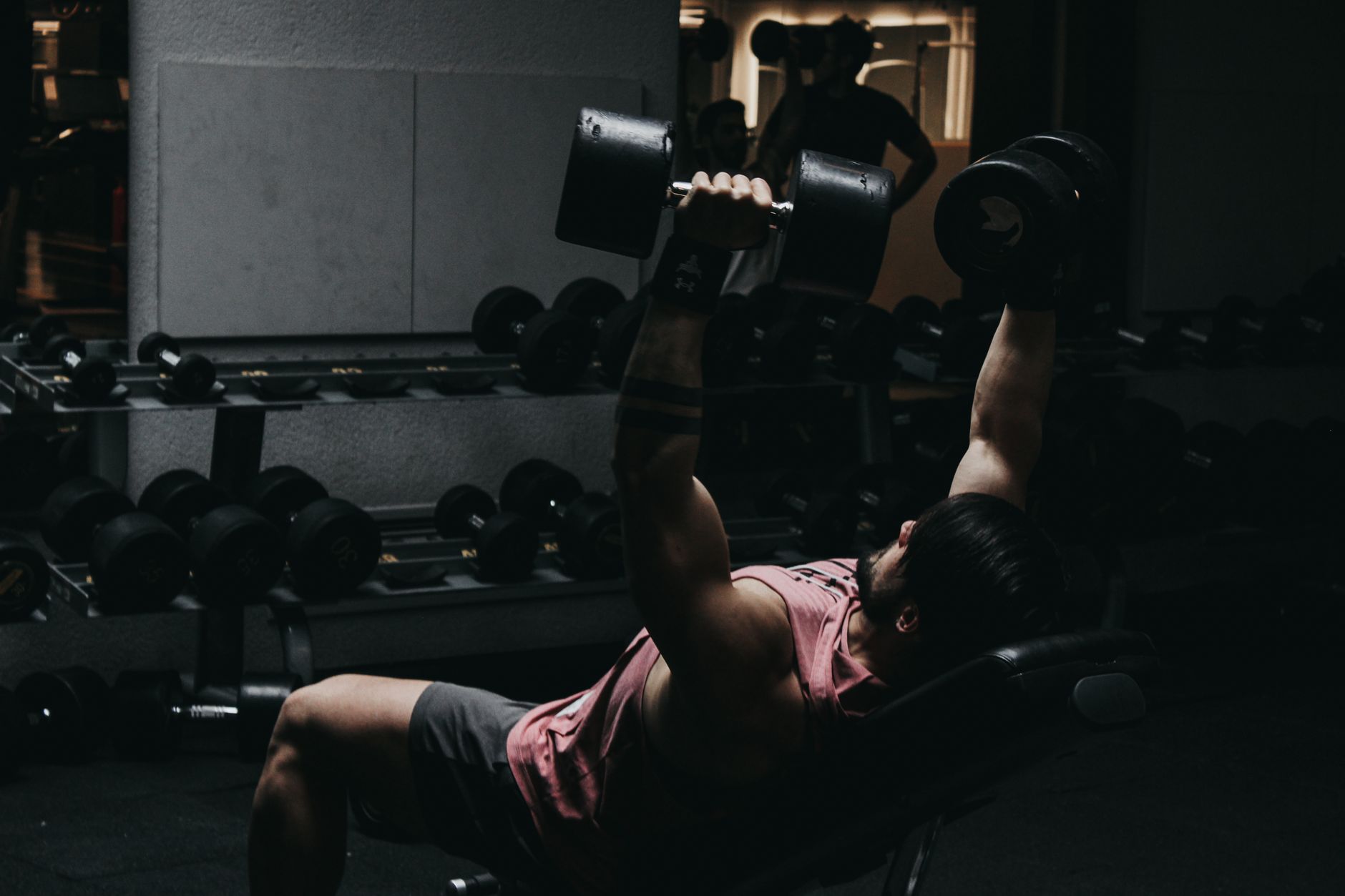
Both work on a bench flat. The barbell lets you lift the most weight and add load in small steps. Dumbbells let each arm move on its own, which exposes a weaker side, and give you a deeper stretch at the bottom. They also demand more stabilising effort, so expect to press less total weight with a pair of dumbbells than with a barbell.
If you train alone at home, dumbbells have one clear advantage: when a rep fails, you lower them to the floor. You cannot do that with a barbell pinned across your chest. A good pair of dumbbells from Flexi Muscles turns any flat bench into a complete pressing station.
Bench press flat bench vs incline, decline and floor press
The flat bench press is the base lift. The variations change the angle, and with it the part of the chest that works hardest.
| Variation | Bench angle | Main emphasis | Needs |
|---|---|---|---|
| Flat bench press | 0° | Lower and mid chest, front delts, triceps | Flat bench |
| Incline press | 30–45° | Upper chest, more front delt | Adjustable bench |
| Decline press | −15–−30° | Lower chest, shorter range of motion | Decline or FID bench |
| Floor press | No bench | Triceps and lockout strength | Floor and a rack or dumbbells |
Most home lifters get everything they need from the flat press alone, with push-ups and dips as accessory work. Push-ups train the same muscles with no equipment, and dips load the triceps and lower chest harder than any bench variation. Add incline pressing once your flat bench has stalled for a few weeks, not before.
Choosing a flat bench press bench: the specs that matter

None of the popular bench press guides tell you what bench to press on. That is odd, because a poorly sized lifting bench undoes good technique before you touch the bar. The International Powerlifting Federation publishes exact specs for competition benches, and they make a sensible benchmark for any home setup.
Pad height: 42 to 45 cm
Measured from the floor to the top of the pad, uncompressed. In this range, most lifters can plant their feet flat and drive through the floor. A taller bench lifts your heels. A lower one pushes your knees above your hips and kills leg drive. If you are on the short side and the bench sits at 45 cm, stand your feet on a pair of weight plates.
Pad width: 29 to 32 cm
Wide enough to support both shoulder blades, narrow enough that your arms clear the edges. Cheap folding benches often run around 24 cm, which leaves your shoulder blades hanging off the sides. You can press on them, but you will never feel locked in.
Length: at least 1.22 m
Long enough for your head and hips to sit on the pad at the same time. Shorter benches push your head off the end or your hips off the back.
Frame and weight capacity
Look for thick steel tubing and wide, flat feet with rubber caps so the bench does not slide on tiles or rubber mats. For capacity, add your body weight to the heaviest bar you plan to press, then double it. A bench press weight bench rated to around 300 kg covers most home lifters with room to spare.
Standalone bench or combo
A workout bench with bench press uprights built in is cheaper than a rack and bench bought separately, and it takes up less floor space. The trade-off is that most combos have no safety arms, and the uprights cannot be used for squats. A standalone flat bench inside a rack with safeties is the better setup if you have the room.
Pad height matters more than weight capacity for most home lifters. Very few people will ever load a 300 kg-rated bench anywhere near its limit, but every single rep is affected when the pad sits outside 42 to 45 cm. Check the height on the listing before you check anything else.
Pressing safely without a spotter
Most bench press injuries involve the shoulder or the pec tendon, and most happen under heavy loads, pressed with poor shoulder position. At home, the bigger risk is a failed rep with nobody there to help. These habits cover both.
- Use safety arms. Press inside a rack and set the safeties just below your chest at the bottom of the rep. If you fail, lower the bar onto them.
- Leave the collars off when alone. If you get stuck without safeties, you can tip the plates off one side at a time.
- Stop one or two reps short of failure. On barbell sets without a spotter, finish while you still have a rep left.
- Warm up with the empty bar. Two or three light sets before your working weight prepare the shoulders and let you check your setup.
- Keep the elbows tucked. Elbows flared to 90 degrees load the front of the shoulder hardest. A 45 to 70 degree angle is kinder on the joint.
Wrist wraps help if your wrists bend back under the bar. You will find them with our lifting accessories.
When NOT to buy a flat bench
A flat bench is simple and cheap, which makes it easy to buy before you need it. Hold off in these cases.
You want incline and seated work too
If your programme includes incline presses, seated shoulder presses or incline curls, buy an adjustable bench instead. It does everything a flat bench does, plus those positions. Buying both takes up floor space you probably do not have.
You have no weights yet
A bench with nothing to press is a place to sit. Buy dumbbells or a barbell and plates first. Push-ups and floor presses cover chest training until the bench arrives.
You want barbell work but have no safeties
A flat bench alone, without a rack or combo uprights, limits you to dumbbells. That is fine, but if heavy barbell pressing is the goal, budget for a rack with safety arms at the same time. Pressing heavy on an open bench without a spotter is not worth the risk.
Your training is mostly cardio
If most of your sessions are on a rebounder, a bike or a run, a flat bench adds little. Resistance bands give you pressing work in a drawer’s worth of space.
Frequently Asked Questions
What height should a flat bench press bench be?
Look for a pad height between 42 and 45 cm, measured from the floor to the top of the uncompressed pad. That is the range the International Powerlifting Federation sets for competition benches, and it lets most lifters plant their feet flat for leg drive. Shorter lifters can put weight plates under their feet if a bench sits at the top of that range.
How wide should a bench be for bench press?
A pad between 29 and 32 cm wide supports both shoulder blades without getting in the way of your arms. Narrower pads, common on cheap folding benches, leave your shoulder blades hanging off the edges, which makes it harder to stay tight and stable under a loaded bar.
What muscles does the flat bench press work?
The flat bench press trains the chest, mainly the lower (sternal) part of the pectoralis major, along with the front deltoids and the triceps. A wider grip puts more of the work on the chest, and a narrower grip shifts more onto the triceps.
Is a flat bench better than an adjustable bench for bench press?
For barbell bench press specifically, yes. A flat bench has no gap between seat and back pad, no adjustment mechanism to wobble, and usually a lower price for the same steel. An adjustable bench is the better buy only if you plan to do regular incline pressing or seated shoulder work.
Can I bench press safely at home without a spotter?
Yes, if you press inside a rack with safety arms set just below your chest at the bottom of the rep, or use dumbbells, which you can drop to the side. Leave the collars off when training alone so you can tip plates off one side if you get stuck. Do not take a barbell to failure on an open bench with no safeties.
What weight capacity do I need on a flat bench?
Add your body weight to the heaviest bar you expect to press, then look for a rated capacity at least double that figure. For most home lifters, a bench rated to around 300 kg gives plenty of headroom. Capacity ratings include your body weight, not only the barbell.
Related at Flexi Muscles
- Strength Training Equipment — benches, barbells, plates and racks for your home gym
- Dumbbells — fixed and adjustable dumbbells to press on your flat bench
- Lifting Accessories — wrist wraps, gloves and belts for heavier pressing
- Resistance Bands — for pressing work when a bench does not fit