

Fitness Bands: The Complete Comparison and Buying Guide

By Flexi Muscles — 10 August 2026 · 13 min read
Fitness bands are elasticated loops or tubes of rubber or fabric that add resistance to an exercise using tension instead of gravity. They're not the wrist-worn activity trackers sold under the same name — those measure steps and heart rate; these build strength. The category covers six distinct products — loop bands, mini bands, tube bands, fabric bands, therapy bands, and figure-8 bands — and picking the wrong one for the job is the most common reason a fitness band ends up in a drawer within a month.
Shop Fitness Bands at Flexi Muscles
What Are Fitness Bands?

A band works on climbing resistance — pull it further and the pull-back gets stronger, the opposite curve to a dumbbell, which weighs exactly the same at the top of a rep as the bottom. That climbing tension is why band training feels light at the start of a movement and hard at the end, and it's also why a single set of bands can replace a surprising range of gym machines for home training, travel, and rehab work.
Materials vary more than most buyers expect. Most fitness bands are natural latex rubber, prized for elasticity and price. A growing minority are woven fabric over an elastic core, which grips the skin instead of sliding and costs more per band. Neither material is universally better — it depends on the exercise, which the types below cover.
Who actually buys them, and why, varies by product rather than by fitness level. Beginners buy loop sets because they're the cheapest way into structured training. Established lifters buy power bands to assist pull-ups or add accommodating resistance to a barbell. Physios and their patients buy therapy bands for controlled rehab work. Travellers buy figure-8 or tube bands because a barbell doesn't fit in luggage. Almost nobody buys all six types — most home setups settle on two or three that match how they actually train.
Types of Fitness Bands Compared

Six products get sold under the fitness bands umbrella, and they solve different problems. Here's how they compare, including the heavy-duty loop bands most people mean when they say gym bands or power bands.
Loop bands (power bands)
Loop bands are a continuous circle of latex, sold in flat mini sizes for the legs and glutes, and in wider, heavier versions called power bands for pull-up assistance and powerlifting warm-ups. Best for: squats, glute bridges, lateral walks, and pull-up progression. Watch out for: buying a single loop when most exercise lists need at least three resistance levels stacked together.
Mini bands
Mini bands are the smallest loop bands — short, narrow, and sold specifically for glute activation and lower-body warm-ups rather than the heavier lifting work power bands handle. Best for: warming up the hips before squats or a run, banded walks, clamshells. Watch out for: expecting mini band tension to challenge an already-strong lifter — it's an activation tool, not a strength-building one on its own.
Tube bands with handles
Tube bands come with moulded handles on each end, built for standing presses, rows, and curls — anything normally done holding a dumbbell. Best for: upper-body pressing and pulling when there's no dumbbell rack nearby. Watch out for: handle grip quality — cheap moulded plastic cracks at the seam faster than the tube itself wears out.
Fabric bands
Fabric bands wrap a woven cotton or nylon sleeve around an elastic core, which stops the mid-rep slide latex bands are known for and sits more comfortably against skin. Best for: glute and hip work where the band needs to stay put through a full set. Watch out for: price — fabric construction typically costs more per band than an equivalent latex loop.
Therapy bands (flat bands)
Therapy bands are flat, wide strips sold in a long roll rather than a fixed loop — the type most physiotherapists hand out for rehab. No handles, no loop, just a length of resistance wrapped around a limb or anchor point. Best for: controlled, low-load rehab and mobility work. Watch out for: durability under heavy lifting — they're built for gentle load, not squats or rows.
Figure-8 bands
A short band with a handle moulded into each end, shaped like the number eight, built for seated exercises and travel kits where a full-length band takes up more room than the bag allows. Best for: hotel rooms, small flats, seated upper-body work. Watch out for: range of motion — the short length limits how far an exercise can stretch compared with a full loop or tube.
How to Choose the Right Fitness Band
Four things decide whether a fitness band earns its place in a gym bag or ends up back in the box.
Material. Latex is cheaper and stretches further before it feels heavy; fabric grips better and lasts longer under repeated glute work. Neither is wrong — match it to the exercise, not a general preference.
Resistance level. Buy a stacked set, not a single band. One band handles one or two exercises well and leaves everything else undertrained — a set of three to five levels covers presses, rows, and squats at their correct, separate intensities.
Durability and construction. Check the manufacturing seam on tube and figure-8 bands specifically — that's where cheap bands fail first, not in the elastic body. A band that snaps at the seam within weeks is a manufacturing fault, not normal wear.
Price relative to what you'll actually use. A full stack of loop bands, at a fraction of the price of a set of dumbbells, covers a genuinely wide range of exercises. A single premium fabric band bought for one exercise rarely gets that use out of it.
Our resistance bands range covers loop, tube, and fabric sets across these levels, built to avoid the seam failures cheaper imports are known for.
The Best Fitness Band for Your Goal
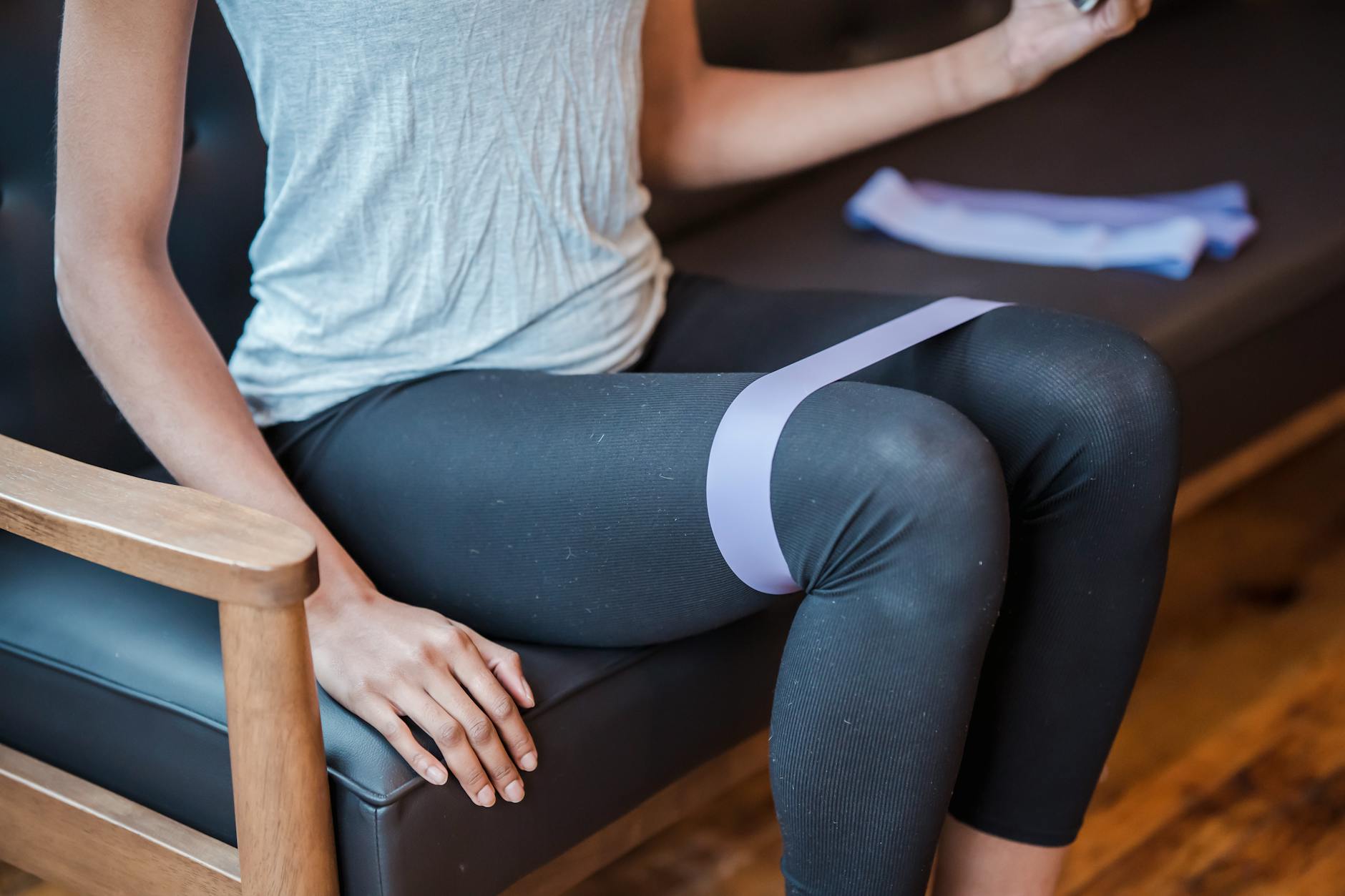
Beginners: a stacked set of loop bands, three to five levels, light to heavy. Covers the widest range of exercises for the lowest cost, and the mistake most beginners make — buying a single medium band — gets solved by the set itself.
Glute and lower-body training: fabric bands or mini loop bands. The grip that stops fabric sliding mid-set matters more here than anywhere else in the category.
Strength and power training: heavy loop bands, sold as power bands or sometimes labelled weight bands, used for accommodating resistance on squats and bench work, or pull-up assistance while building toward an unassisted rep.
Rehab and mobility: therapy bands, flat and gentle, exactly what a physiotherapist would hand over for controlled range-of-motion work.
Travel and small spaces: figure-8 bands or a single mid-weight tube band with handles — enough for a full upper-body session that fits in hand luggage.
Most people fit into two of these categories, not one — a beginner who also travels for work, or a strength lifter who also needs rehab work after an old injury. Buying for the primary goal first and adding a second band type later, once the gaps in a routine become obvious, works out cheaper than trying to cover every category from day one.
Using Bands for Strength Training vs Free Weights
Bands build real strength. Muscle responds to tension under load, not to the specific object producing that tension, and a systematic review of elastic resistance training found consistent strength gains across age groups, including frail older adults where free weights aren't always appropriate. That's the case for using bands for strength training seriously rather than treating them as a warm-up tool.
The honest limit is resistance ceiling. Even the heaviest power band produces less peak tension than a loaded barbell, and serious strength athletes reach that ceiling within months of consistent training. For general strength, muscle growth, and home training, bands are enough on their own. For a lifter chasing a bigger squat number specifically, they become a warm-up tool rather than the main event — and one old gym line goes that Friday night is a party at the gym with your friends dumbbell and barbell. Bands don't get an invite to that one, but they're the ones who show up when the venue doesn't have a squat rack.
Stretching Bands Exercises for Mobility and Recovery
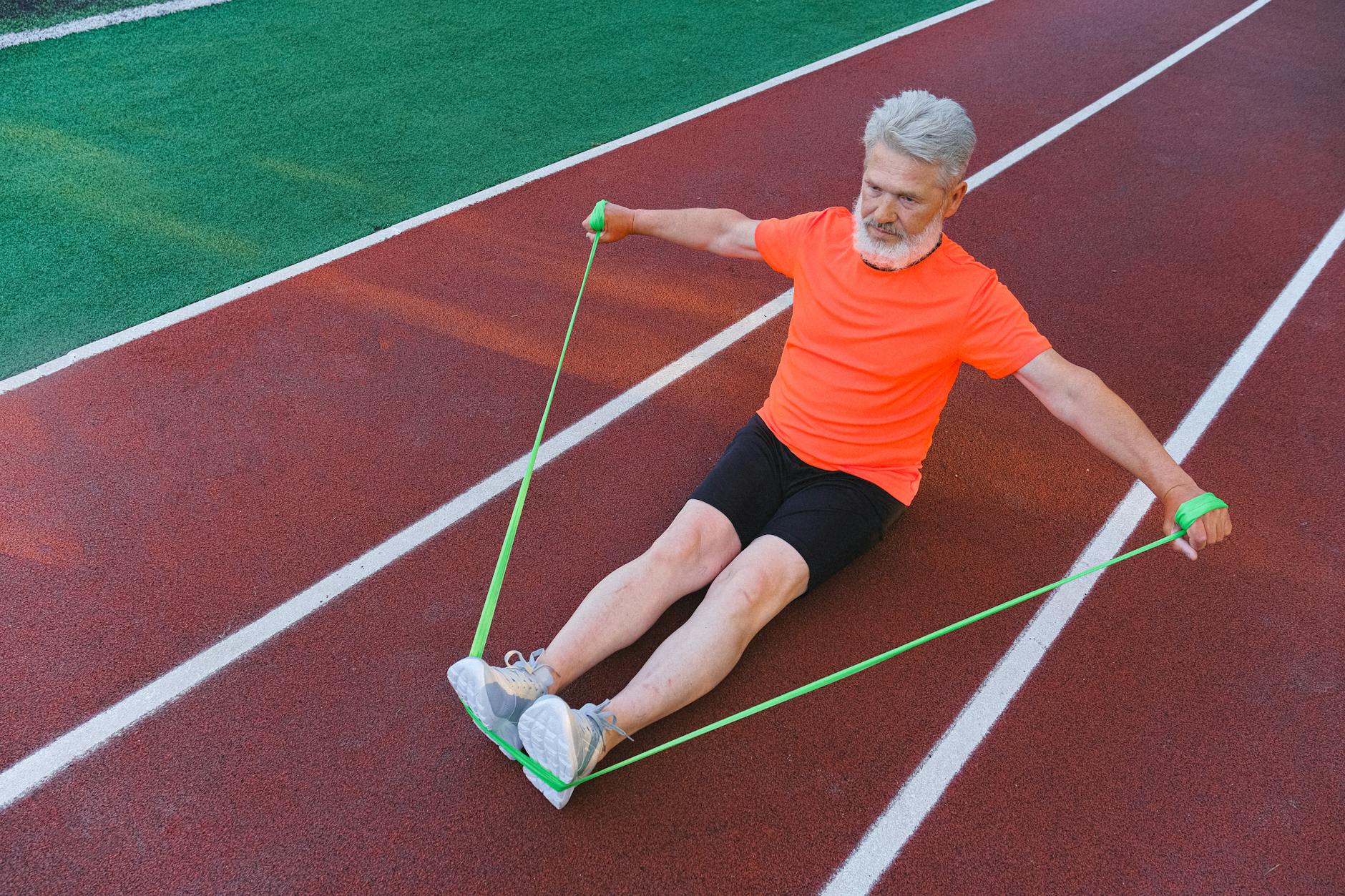
Stretching bands exercises use the same flat or loop bands as strength work, applied at a lighter resistance and slower tempo. Where band training for strength challenges a muscle at the top of a rep, stretching work challenges it through a longer, controlled range — useful for tight hips, shoulders, and hamstrings that don't respond well to static stretching alone.
A simple routine: banded hamstring stretch (loop around one foot, extend the leg while holding the band), banded shoulder pass-through (hold a light band wide, pass it overhead and behind without bending the elbows), and banded hip flexor stretch (anchor low, step forward with the band looped around the back leg). Ten to fifteen slow reps each, done after training rather than before, when the muscle is already warm.
Older adults get particular value here — a stretching band lets someone with reduced grip strength or balance concerns work through a full range of motion safely, seated or standing, without the coordination a resistance band exercise for power demands.
Latex Allergies: Checking Before You Buy
Most fitness bands are natural rubber latex, and a genuine latex allergy is not rare enough to ignore before buying. Reactions range from a mild rash where the band touches skin to, in rare cases, a more serious response — the same allergen family as latex gloves and balloons, and one that can show up unpredictably in people who've handled latex products for years without a problem.
If you've had a reaction to latex gloves, balloons, or medical equipment before, buy fabric-wrapped or TPE (thermoplastic elastomer) bands instead of standard latex. They cost more, but the alternative is discovering the allergy mid-set. If you've never had a reaction and have no reason to suspect one, standard latex bands are fine — this is a check-before-you-buy issue for a specific minority, not a reason for everyone to pay more.
When Fitness Bands Are Not the Right Tool
Skip fitness bands if the goal is maximum strength with precise, trackable load. A dumbbell says 10kg on the side; a band's resistance varies through the stretch and between brands, which makes exact progressive overload difficult to log. Fine for general fitness, frustrating for a structured strength programme.
Skip them too if you've already outgrown what a heavy power band provides — which happens within months for anyone training seriously, not years — and the honest fix is a barbell and plates, not a heavier band.
And don't buy a single band expecting it to cover a full workout. That's the single biggest reason fitness bands end up unused: one band handles one or two exercises well, and everything else in a routine needs a resistance level that band doesn't have. Buy the stacked set from the start, or don't buy bands at all.
For any of these situations, our strength training range is the better starting point.
Common Buying Mistakes
Buying one band instead of a set. Covered above, worth repeating because it's the most common reason a fitness band purchase gets returned or abandoned.
Trusting the name over the resistance range. Some brands sell heavy loop bands as weight bands, others as power bands — same product, different label — so check the actual resistance range printed on the packaging rather than the name.
Ignoring the anchor point. A tube band anchored to a door handle rather than a proper door anchor slips or lets the door swing open mid-rep. Our lifting accessories range includes door anchors built for this.
Skipping the wear check. Small cracks or a sticky texture in the rubber mean it's due for replacement. Bands fail suddenly at the weakest point in the material, not gradually, so a five-second check before each session is worth the interruption.
Storing bands folded and knotted. A band left tightly folded or knotted between sessions develops permanent stress points at the fold, which is where it eventually tears. Loose coiling in a bag or drawer keeps the rubber even across its length.
Frequently Asked Questions
What's the difference between fitness bands and resistance bands?
None functionally. "Fitness bands" and "resistance bands" describe the same category of elastic training equipment. The wrist-worn activity trackers sometimes sold under "fitness band" branding are a separate, unrelated product.
What are power bands used for?
Power bands are the heaviest loop bands in the category, used for pull-up assistance, accommodating resistance on squats and bench presses, and powerlifting warm-ups. They're not the band to start with as a beginner.
Do fitness bands actually build muscle?
Yes. Muscle responds to tension under load regardless of what's producing it, and research on elastic resistance training shows consistent strength gains across age groups. The limit is peak resistance, not whether bands work at all.
How many fitness bands should I own?
A stacked set of three to five resistance levels, rather than a single band. That range covers presses, rows, squats, and stretching work at their correct individual intensities.
Are fitness bands safe for people with latex allergies?
Not in latex form. Anyone with a known or suspected latex allergy should buy fabric-wrapped or TPE (thermoplastic elastomer) bands instead, which use non-latex materials throughout.
Can fitness bands replace a gym membership?
For general strength, mobility, and home training, yes. For maximum strength with precise, trackable load progression, no — that's where a barbell and plates take over.
How long do fitness bands last before they need replacing?
Most last one to two years of regular use before showing cracks or a sticky texture. Heat and UV exposure — a hot car, a sunny garage — shorten that considerably.
Related at Flexi Muscles
- Resistance bands — loop, tube, and fabric sets across light to heavy resistance levels
- Lifting accessories — door anchors to pair with a fitness band set
- Strength training equipment — barbells and plates for when a band hits its ceiling
Sources
- PubMed — systematic review and meta-analysis — elastic resistance training and muscle strength gains across age groups
- Cleveland Clinic — latex allergy causes, symptoms, and diagnosis
- American Council on Exercise (ACE Fitness) — equipment and training guidance