

Exercise Band Leg Workout: 8 Moves That Build Real Leg Strength

By Flexi Muscles — 22 June 2026 · 9 min read
An exercise band leg workout uses elastic tension instead of free weights to load squats, bridges, walks and kicks, and it works because a band gets harder exactly where most leg exercises get easiest — the top of the rep. Eight moves cover quads, hamstrings, glutes and calves with a single set of bands, no rack or bench needed. The routine below runs in about 20 minutes.
Shop Resistance Bands at Flexi Muscles
Why a Band Loads Legs Differently to Free Weights
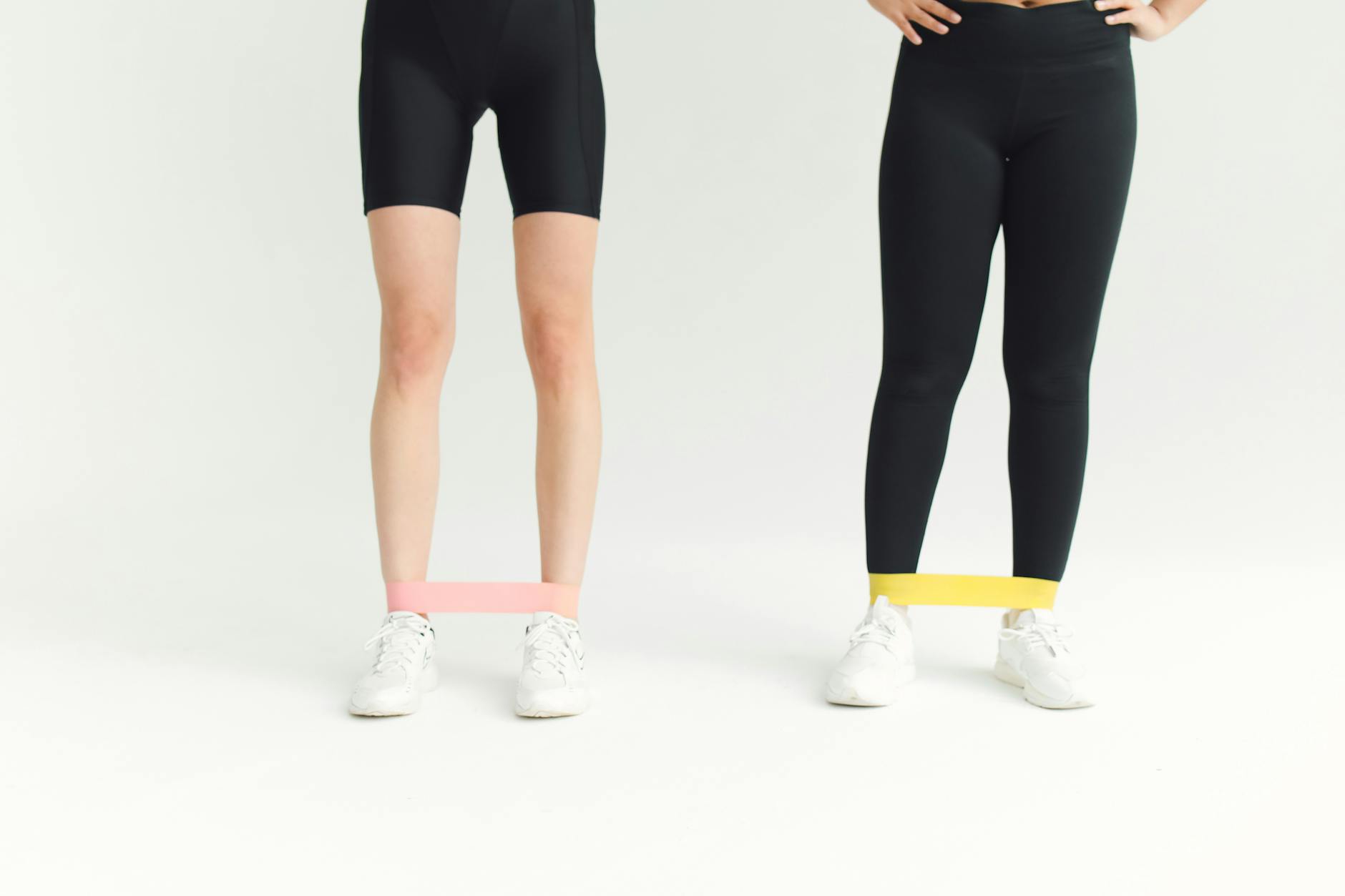
A dumbbell squat is hardest at the bottom and almost weightless at lockout. A band flips that: resistance builds as you extend, which keeps the glutes and quads working through the last few centimetres of the rep instead of coasting to the top. That's the entire case for resistance band leg workouts — not that bands beat barbells, but that they load a different part of the movement.
The same curve makes bands useful for muscles barbells tend to skip. A standing barbell squat drives the quads and glutes but does almost nothing for the glute medius on the side of the hip, the muscle that stops your knee caving in mid-squat. Lateral band walks and abduction work target exactly that muscle, which is why physiotherapists use bands for knee and hip rehab as often as gyms use them for leg day.
None of this means bands replace weighted training for raw strength. It means leg exercises using bands solve a specific gap — constant tension and hip stability work — that a rack of dumbbells doesn't cover on its own.
There's also a plateau-breaking use case worth knowing about. Lifters who stall on a barbell squat sometimes add a band across the bar itself, a technique called accommodating resistance, specifically because it forces the muscles to keep producing force through the lockout instead of relying on momentum. The same principle scaled down is why finishing a leg session with banded work, after the heavy lifting is done, tends to expose weak points a straight weights session misses.
Choosing the Right Band for Leg Work
Two band types cover this entire workout. A fabric mini loop, usually worn above the knees or around the ankles, handles squats, walks, bridges and kicks. A longer tube band with handles, anchored under your foot, handles deadlifts and standing kickbacks that need more travel than a loop allows.
Material matters more than most buying guides admit. Latex loop bands are cheaper but roll up the thigh mid-set as sweat builds, and the rubber cracks at the fold lines within a few months of regular use. Fabric resistance bands grip skin instead of sliding, stay flat through a full set, and outlast latex by a wide margin — the trade-off is a higher price and a stiffer initial stretch.
Bands are sold in tension tiers — usually light, medium, heavy and extra-heavy, each noticeably harder to stretch than the one before it. My opinion: a three-band set covers every exercise in this guide. Light works for abduction and donkey kicks, medium for walks and bridges, heavy for squats and deadlifts. A fifth or sixth band in the set only earns its place once you're loading banded squats above bodyweight resistance, which is further along than most people training at home ever need to go.
8 Exercise Band Leg Exercises
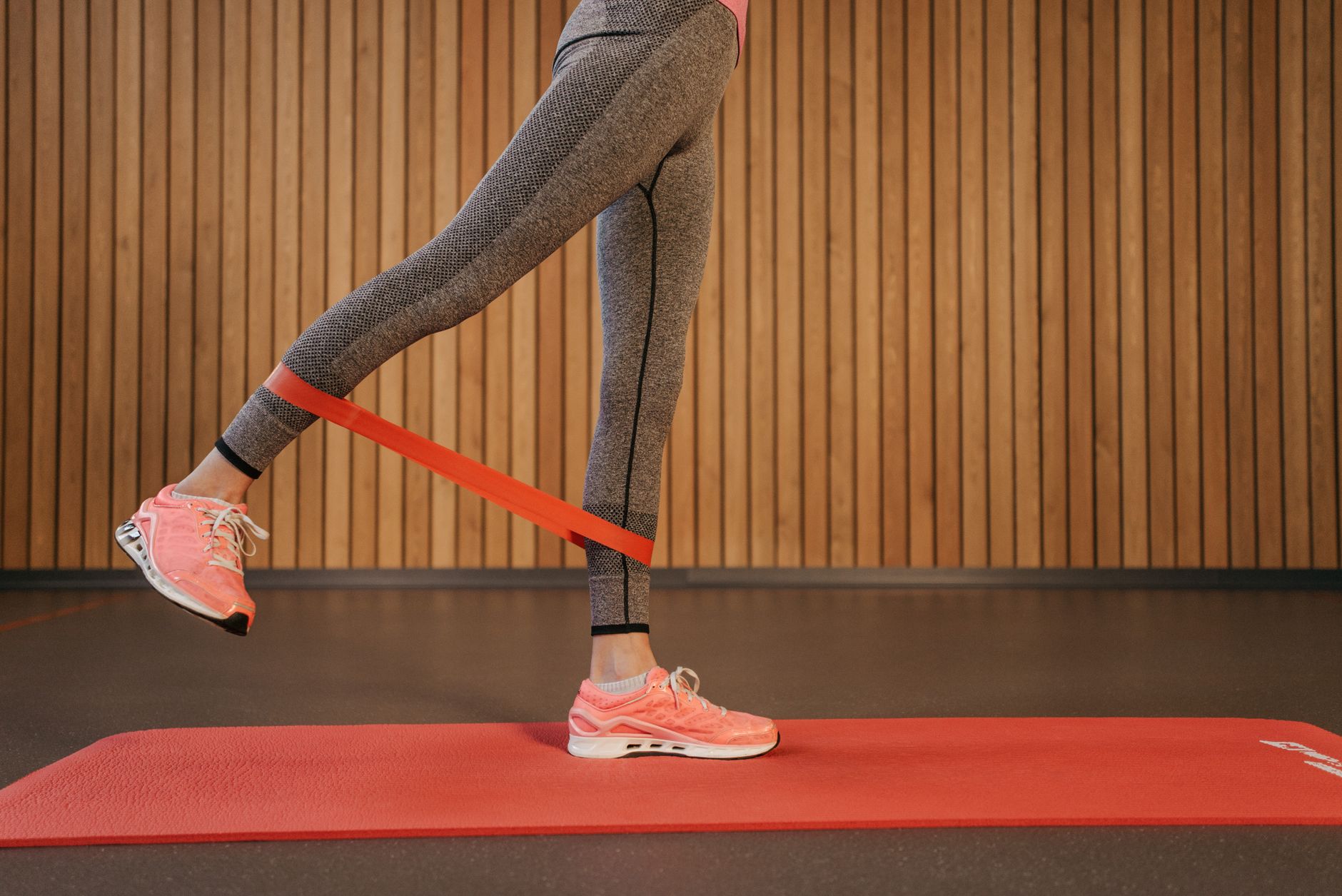
1. Banded squat
Loop a band just above the knees, feet shoulder-width apart. Push the knees out against the band as you sit back into a squat, keeping tension on the band the entire way down and up. The band punishes knees that cave inward, which makes this the single best form check in the list.
2. Lateral band walk
Band above the knees, quarter-squat stance. Step sideways in a straight line for 10-12 steps, then reverse direction. This is the move most responsible for working the glute medius that squats and lunges mostly miss.
3. Banded glute bridge
Band above the knees, lie on your back with feet flat and hip-width apart. Drive through the heels to lift the hips, pressing the knees out against the band at the top and holding for a second before lowering. The pause is what separates a glute bridge that builds muscle from one that just goes through the motion.
4. Donkey kick and fire hydrant
Band above the knees, on hands and knees. Kick one leg straight back and squeeze (donkey kick), then bring it back to the start and lift it out to the side (fire hydrant) before switching legs. These two glute resistance bands moves pair well because they hit the same muscle from two angles in one set.
5. Banded walking lunge
Band above the knees, step forward into a lunge, drive through the front heel to bring the back foot through into the next lunge. Keep the band taut throughout — a loose band here turns a hard exercise into a walk.
6. Standing leg abduction
Band around the ankles, hold onto a wall or chair for balance, lift one leg straight out to the side without leaning the torso. Light tension only — this is a small muscle and heavy bands just recruit the hip flexor instead.
7. Banded Romanian deadlift
Stand on the centre of a tube band, hold a handle in each hand, hinge at the hips with a soft knee bend until you feel a stretch in the hamstrings, then drive back up. This is the one exercise here that needs the longer tube band rather than a mini loop.
8. Banded calf raise
Most resistance band leg workouts stop at the hip and skip calves entirely. Loop a light band around the balls of both feet, hold the ends in your hands at hip height, and press up onto the toes against the band's resistance. It isn't a heavy-load exercise, but it's the only one in this list that trains the calves at all.
A Complete Leg Workout You Can Do With One Band

Run the eight exercises above as a circuit: 12-15 reps per side where the move is one-sided, 30 seconds rest between exercises, three full rounds. That's roughly 20 minutes including rest, and it hits quads, hamstrings, glutes and calves in a single session without changing equipment.
- Round structure: squat → lateral walk → glute bridge → donkey kick/fire hydrant → walking lunge → abduction → Romanian deadlift → calf raise
- Reps: 12-15 per exercise (15-20 on lateral walks and donkey kicks, which rarely hit failure)
- Rest: 30 seconds between exercises, 60-90 seconds between rounds
- Frequency: 2-3 times a week, with at least one rest day between sessions for the same muscle group
Increase difficulty by moving up a band tension before adding more rounds. A fourth round on a band that's too light trains endurance, not strength; the same exercise on a heavier band for three rounds builds more muscle in less time.
Common Mistakes That Waste a Band Leg Workout
Four mistakes show up in almost every leg exercises using bands routine that isn't working:
- Slack at the start of the rep — if the band isn't taut in the resting position, the first third of every rep is free of resistance and trains nothing.
- Letting the knees cave inward — the band should be fighting you outward on every squat and lunge. If it isn't, the band is too light or the form has broken down.
- Using one tension for every move — a band heavy enough for squats is usually too heavy for clean abduction or fire hydrant form, which forces compensation from bigger muscles.
- Rushing reps with momentum — a band that snaps back fast lets you cheat the eccentric. Control the return as carefully as the push.
- Anchoring a tube band badly — for the Romanian deadlift, standing on the centre of the band only works if both feet are pinning it flat. A band that shifts under one foot mid-set changes the resistance angle without warning, which is how ankles get rolled.
Who Shouldn't Rely on Bands Alone
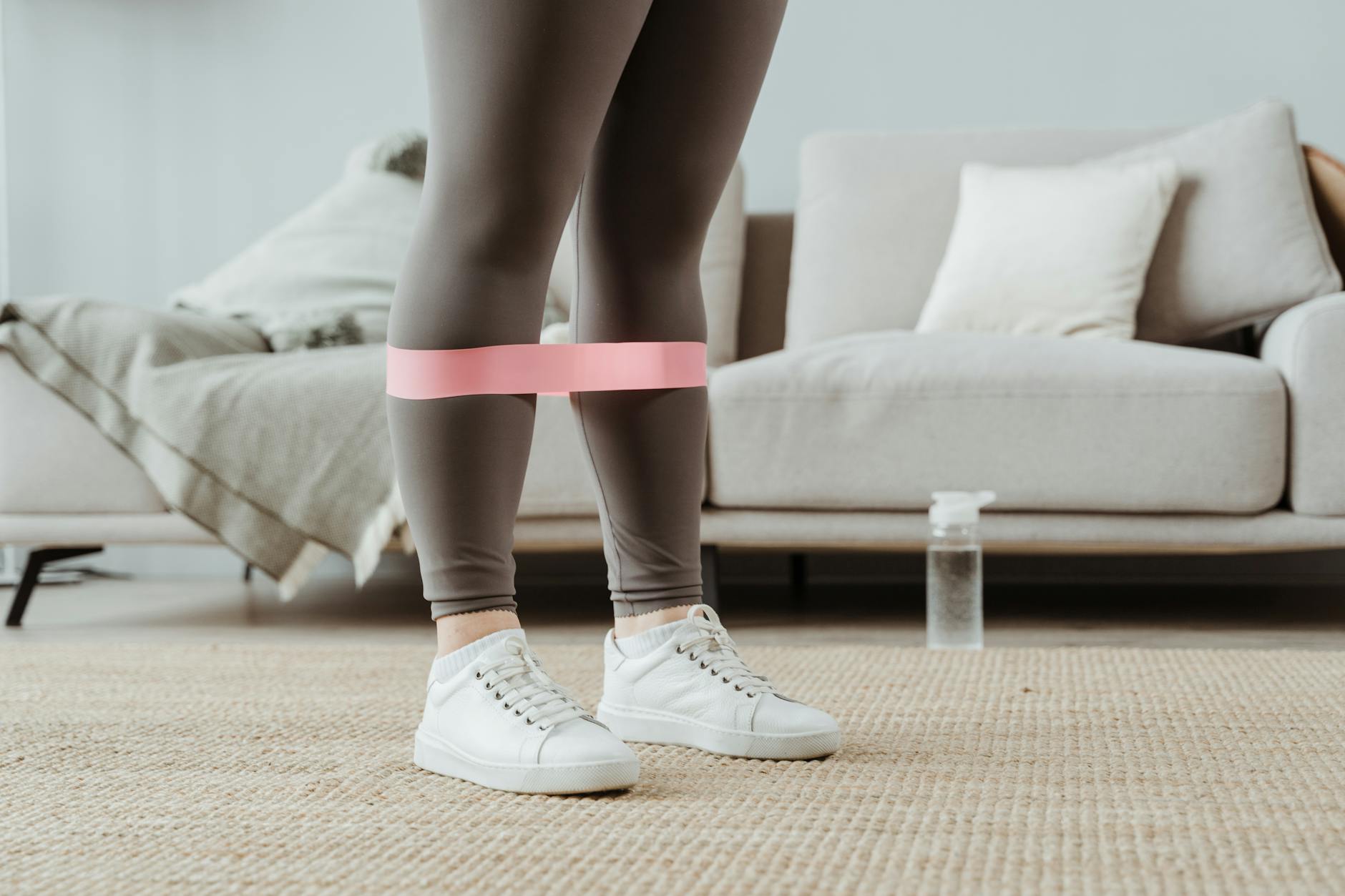
A band leg workout is not the right tool for everyone. Skip it, or use it as a supplement only, if any of these apply:
- You're already squatting or deadlifting with a barbell — bands can't progressively overload the way adding plates does. Use them as a warm-up activator or finisher, not a replacement for the working sets.
- You're rehabbing a current knee or hip injury — a physiotherapist can prescribe specific band exercises for your case. A generic leg-day routine isn't a substitute for that assessment.
- You're training for cardio or conditioning — bands build strength under tension, not an elevated heart rate. Pair this routine with separate cardio work rather than expecting it to double as both.
- You can't keep tension consistent — if a band is worn out, stretched permanently, or visibly thinner at the fold points, replace it before your next session. A degraded band changes the resistance curve mid-set without you noticing.
If none of those apply, this is one of the cheapest ways to add real leg work to a small space — no rack, no bench, and a full session packed into a bag the size of a water bottle.
Ready to build your own resistance band leg workout? Shop resistance bands at Flexi Muscles. If you're already past the point bands can progress you, see our strength training equipment range instead.
Frequently Asked Questions
What is the best resistance band for leg workouts?
A fabric mini loop band for squats, walks and bridges, plus one long tube band with handles for deadlifts and kickbacks. Fabric grips skin and stays in place during sweaty sets; latex loop bands are cheaper but roll up the thigh and wear out faster.
How many reps should I do with resistance bands for legs?
12 to 15 reps per exercise for 3 rounds covers most leg-band routines. Go higher, 15 to 20 reps, on isolation moves like lateral walks and donkey kicks, since the band rarely fails the muscle the way a barbell does.
Can resistance bands replace squats with weights?
Not for raw strength. Bands get harder at the top of a movement and easier at the bottom, the opposite loading curve to a barbell squat. They're better used alongside free weights, or as the only equipment when weights aren't available.
Do resistance bands tone or build muscle in legs?
They build muscle if the band creates real resistance through the full rep, the same mechanism as any other strength training. A band that goes slack at the top of a glute bridge isn't building anything past that point.
How tight should a resistance band be for leg exercises?
Tight enough that you feel tension at the start of the rep, not just at full stretch. A band with slack in the resting position means the first third of every rep is wasted, which is the most common reason these workouts underdeliver.