

Elbow Straps Guide: What They Do, How to Use Them, and When to Skip Them

By Flexi Muscles Team — 21 August 2026 · 13 min read
Elbow straps are adjustable fabric wraps, typically 90 to 100cm long, that you wind around the elbow joint by hand to compress the tendons crossing it. That compression reduces the strain your biceps and triceps tendons absorb during heavy pressing and pulling, and gives you proprioceptive feedback that helps keep the joint stable under load. They do not fix a technique fault or heal an already-inflamed tendon — they support a joint that is handling heavy, repeated load well and needs a bit less strain to keep doing so.
Shop Elbow Straps & Lifting Accessories at Flexi Muscles
What Elbow Straps Actually Do
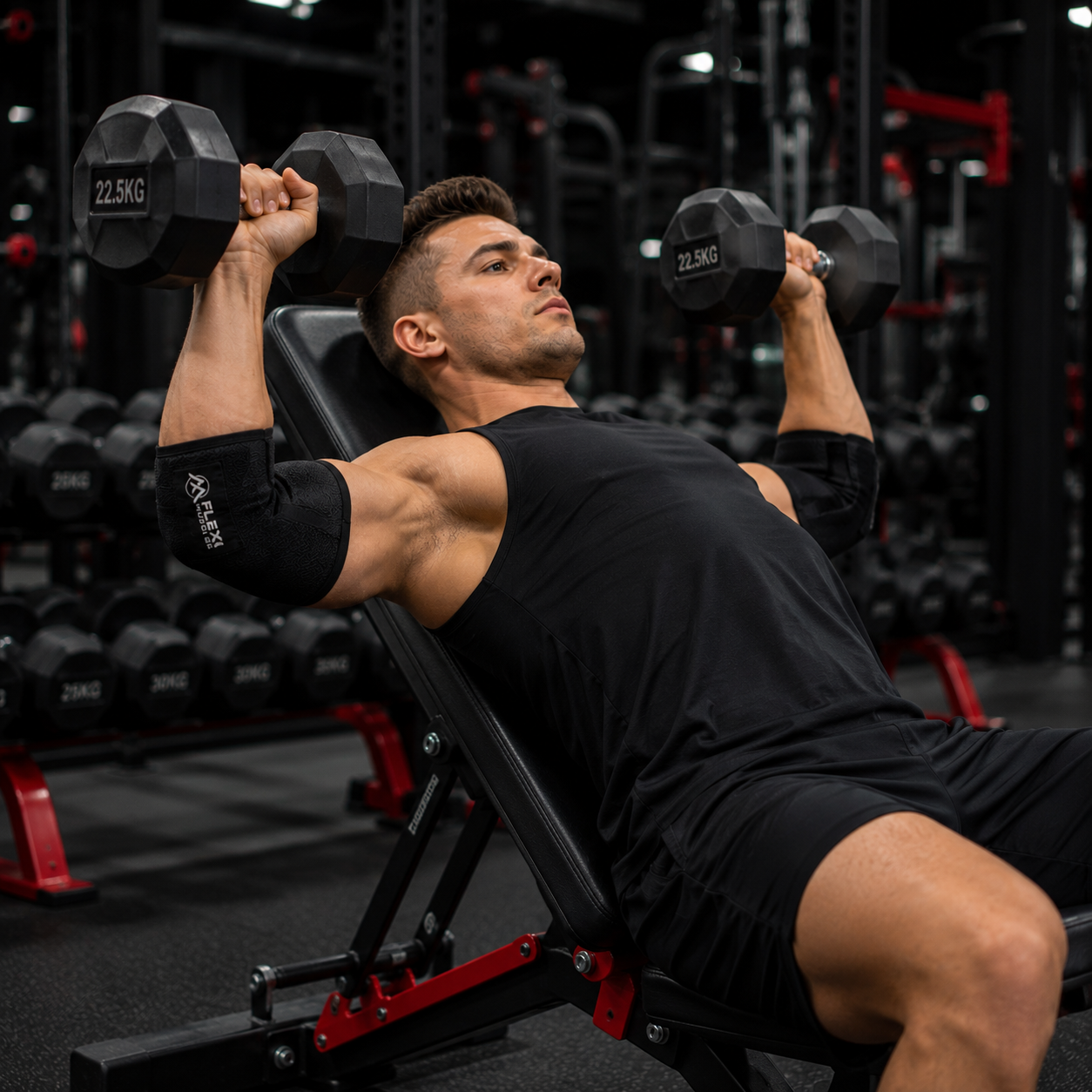
Every heavy press or pull routes force through the elbow joint and the tendons that cross it — mainly the distal biceps tendon on the pulling side and the triceps tendon on the pressing side. Under a heavy enough load, repeated often enough, those tendons are the weak link long before the muscle gives out. An elbow strap wraps around the joint and compresses that tendon tissue, which spreads the load across a wider area of the joint instead of concentrating it at a single point.
Three things a properly wrapped elbow strap does:
- Compresses the joint and surrounding tendons — reducing the concentrated strain on the biceps and triceps tendon at the top of a heavy press or the bottom of a heavy row
- Provides proprioceptive feedback — you can feel the wrap against your skin, which cues you to keep the joint stable and resist the elbow flare that tends to creep in once fatigue sets in late in a set
- Retains warmth around the joint — keeping tendons and connective tissue more pliable across a long session, particularly in a cold gym or during a slow warm-up
Straight up: an elbow strap will not fix golfer's elbow or tennis elbow that is already inflamed. Wrapping a joint that is already breaking down under load just masks the pain signal that is telling you to back off. If discomfort does not settle with a few days of rest, that is a physiotherapist's job, not a fabric strap's.
The same logic applies on the pulling side. Heavy barbell rows, weighted chin-ups, and especially close-grip curls at near-maximal loads put real tension through the distal biceps tendon at the elbow — the same tendon that, in rare but serious cases, can tear under a sudden heavy pull. A strap will not prevent a tendon rupture on a lift that is fundamentally too heavy or too fast for your current strength. What it does is reduce the baseline strain on a tendon that is already coping well, so it stays coping well for longer.
Elbow Straps vs Elbow Sleeves vs Elbow Braces
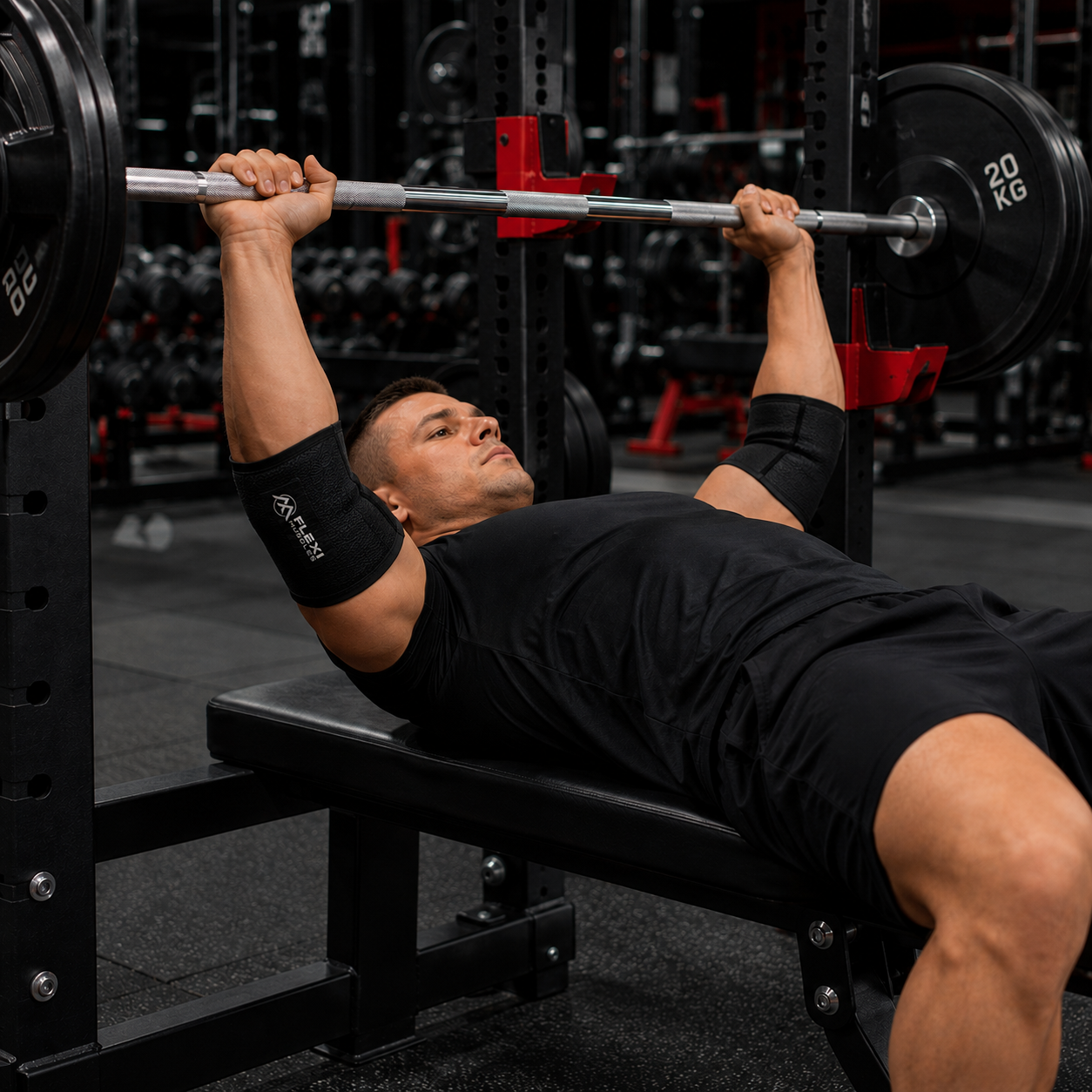
These three get used interchangeably online, but they are built for different jobs.
Elbow straps (wraps)
A long fabric strip, usually cotton and elastic blended, that you wind around the joint by hand and secure with a hook-and-loop end tab. You control the exact tightness and the angle of every wrap, which makes straps the choice for heavy compound pressing and pulling where maximum, precisely dialled-in compression matters most.
Elbow sleeves
A pre-shaped neoprene tube you pull on in a few seconds. Compression is consistent but fixed — you cannot tighten it further once it is on. Sleeves are the practical choice for general training sessions that move between exercises quickly, where warmth and light support matter more than the maximum compression a hand-wound strap gives you.
Elbow braces
Built for rehabilitation rather than performance, often with a hinge or a strap positioned over a specific tendon to limit range of motion or offload one attachment point. A brace is the right tool for recovering from an existing injury under a physiotherapist's guidance — not for a normal training session.
Which one should you use?
Reaching for maximum tendon support on a heavy bench or overhead press day: straps. Moving through a mixed session of presses, pulls, and accessory work where speed between exercises matters: sleeves. Managing an existing injury: neither is a substitute for a brace fitted under a physiotherapist's guidance.
For heavy pressing and pulling work, straps give you the most support. For general sessions where speed and warmth matter more than maximum compression, sleeves are the simpler option. Browse both in the lifting accessories range at Flexi Muscles.
How to Choose the Right Elbow Straps
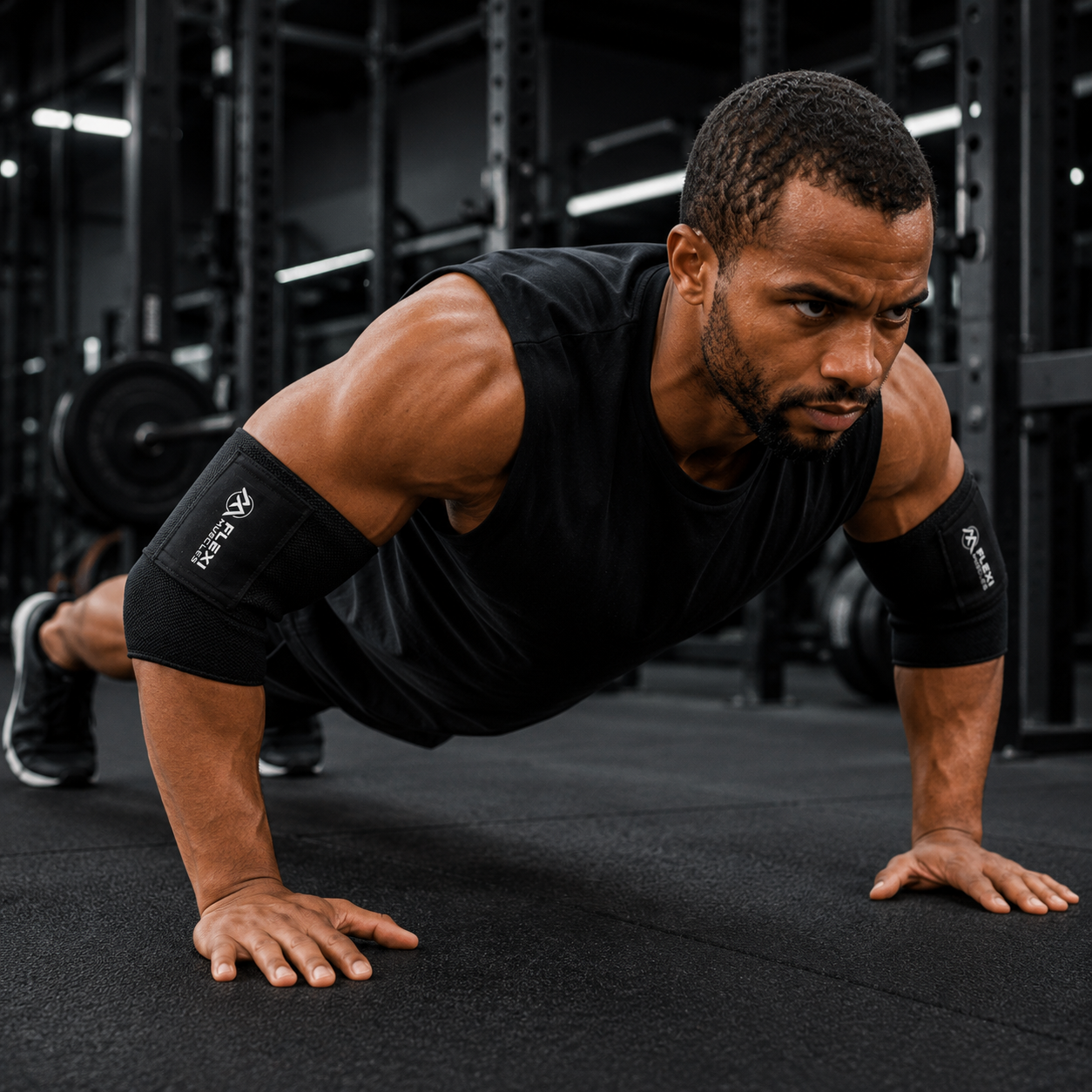
Length
Standard elbow straps run 90 to 100cm. Shorter than that and you run out of material before you have wound enough layers around the joint to build meaningful compression, particularly if your arms are on the larger side. Longer straps let you build more layers, which gives you finer control over exactly how tight the wrap ends up.
Material and thickness
Most straps are a cotton and elastic blend, somewhere between 3 and 5mm thick. Thicker material in that range gives more rigid support and holds compression better across a long, heavy set. Thinner material is more comfortable for lighter sessions where you want some warmth and stability without wrapping as tightly.
Closure
A hook-and-loop end tab is standard, and it matters more than it sounds like it should. A weak or worn closure lets the wrap loosen mid-set, right when you need the compression most. Check that the tab has enough surface area to hold under sweat and repeated use.
Caring for your elbow straps
Rinse or hand-wash straps after sweaty sessions and let them air dry fully before winding them back up for storage. Packing away a damp strap breaks down the elastic faster and lets odour set into the fabric. Check the hook-and-loop tab every few months — once it stops gripping cleanly, replace the strap rather than continuing to wrap over a closure that can slip loose mid-set.
See the full range of elbow straps and lifting accessories at Flexi Muscles, alongside wrist wraps and lifting belts for the rest of your setup.
How to Wrap and Use Elbow Straps Correctly
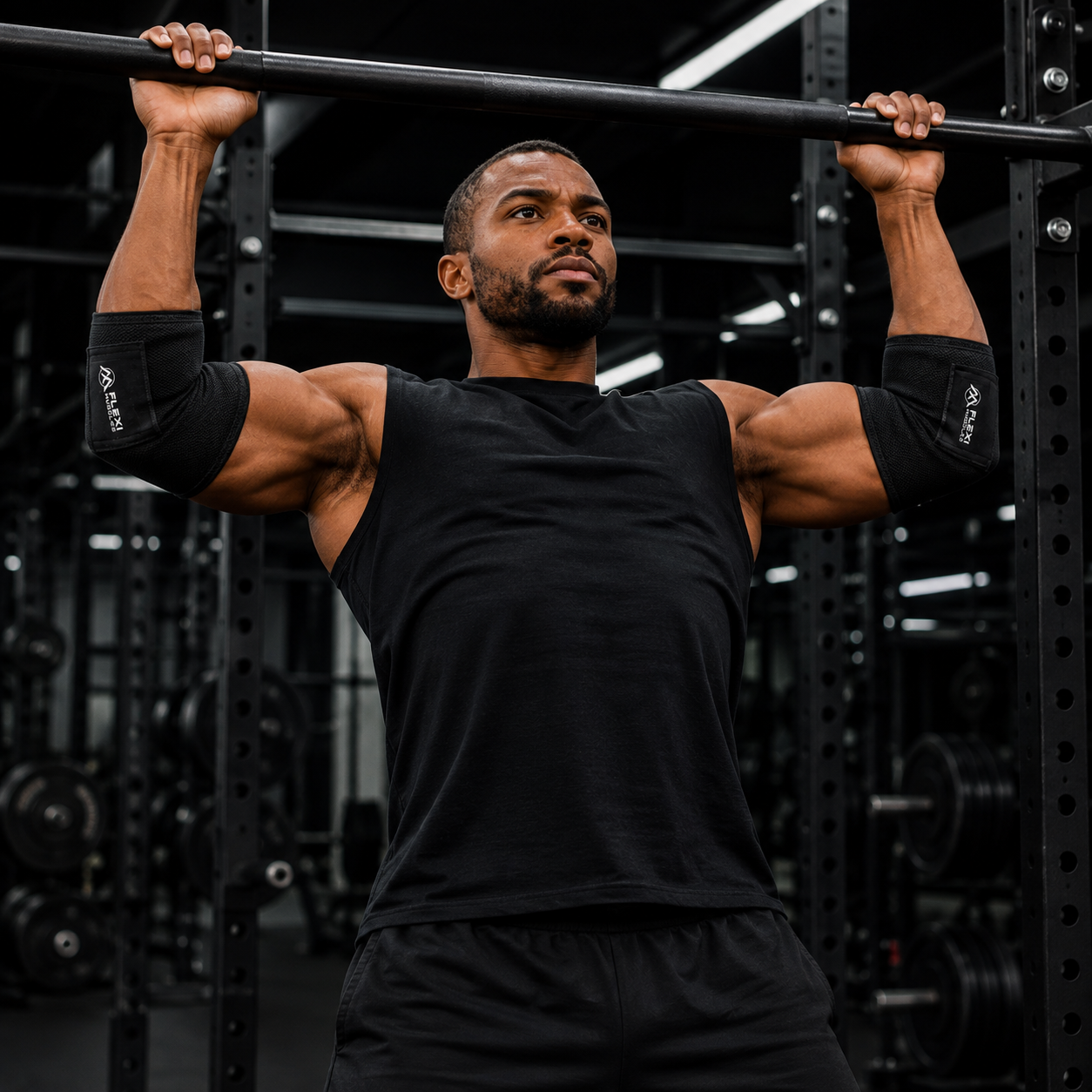
Wrap in this order:
- Start just below the elbow, on the forearm, and anchor the first loop with light tension.
- Wind upward at a slight angle, crossing directly over the joint, so each layer overlaps the last by roughly half its width.
- Continue past the elbow onto the lower bicep for two to three full wraps, tightening slightly with each pass.
- Secure the end with the hook-and-loop tab, pressed flat so it will not catch or loosen during the set.
Once wrapped, make a fist. You should be able to close it fully without resistance. If your fingers tingle, go numb, or turn pale within a minute, the wrap is too tight and is restricting blood flow rather than supporting the joint — unwrap it and redo it with less tension.
Put straps on just before your working sets, not for the whole session. Wearing a tight wrap for extended periods between sets restricts circulation for no benefit, since the joint only needs the support while it is actually under load.
Loaded wraps in equipped powerlifting
Equipped lifters — competing in a supportive bench shirt, under federations that permit it — often wind a thicker, stiffer wrap under deliberately higher tension than a raw lifter would ever use for training. The goal there is different: building enough stored tension in the material itself to assist the lockout, similar in principle to how a tightly wound knee wrap assists a squat. That is a specialised, competition-specific technique built around thicker material than a standard training strap, and it is not how elbow straps are used for everyday raw training. If you are not lifting equipped, wrap for compression and stability, not for stored elastic tension.
When to Wear Elbow Straps — and When to Skip Them
Wear elbow straps for:
- Heavy bench press and overhead press sets — at high percentages of your working max, where tendon strain at lockout is the real limiting factor
- Close-grip pressing and skull crushers — movements that load the triceps tendon directly and tend to flag elbow discomfort first
- Strongman-style pressing, such as log or axle press — where the load is heavy and the joint angle is less controlled than a barbell path
- Equipped competition, where your federation allows them — check the current rulebook, since elbow wraps are legal in some divisions and banned outright in others
Skip elbow straps for:
- Warm-up sets — you are reinforcing the movement pattern at submaximal load; a strap here just delays the joint conditioning your working sets rely on
- Isolation work, such as bicep curls or tricep pushdowns at light to moderate loads — there is no meaningful joint strain here for a wrap to offload
- Any session where the elbow already hurts, not just feels worked — pain is a signal to reduce load and address the cause, not to compress the joint and keep training through it
- Your first months of training — you are not yet handling loads heavy enough for tendon strain to be the limiting factor, and wrapping early hides useful early warning signs from poor bar path or excess volume
If your grip, rather than your elbows, is what gives out first on heavy pulling movements, lifting straps are the more targeted fix for that specific problem.
For the rest of your strength training setup, browse the strength training range at Flexi Muscles.
Elbow Straps for Tennis Elbow and General Elbow Pain
Tennis elbow, or lateral epicondylitis, is inflammation where the forearm's extensor tendons attach to the bony point on the outside of the elbow. It shows up from repetitive wrist and forearm motion — not just tennis, but also weightlifting, manual trades, and anything involving repeated gripping under load. A lifting elbow strap, wound across the joint itself, is not built for this. The compression sits in the wrong place to offload the specific tendon attachment that is inflamed.
A counterforce strap — narrower, positioned a few centimetres lower on the forearm, below the joint — is the more targeted product for tennis elbow. It reduces the peak tension at the exact attachment point rather than compressing the joint as a whole. If you are shopping for elbow support and the goal is managing tennis elbow rather than supporting heavy pressing, that is the product to look for, not a standard lifting wrap.
Golfer's elbow — medial epicondylitis — is the same problem on the opposite side of the joint, affecting the tendons that attach on the inside of the elbow rather than the outside. It shows up from heavy gripping and pulling work, including deadlifts and rows, more often than pressing. The same principle applies: a counterforce strap positioned over the correct forearm attachment point helps more than a general lifting wrap positioned over the joint itself.
Either way, a strap is a management tool, not a treatment. Rest, a reduction in the volume of the aggravating movement, and time are what resolve tennis elbow. If pain persists beyond a couple of weeks or worsens with normal daily use, see a physiotherapist rather than relying on a wrap to get you through it.
Frequently Asked Questions
Do elbow straps actually help you lift more?
Marginally, and indirectly. Elbow straps compress the joint and surrounding tendons, which reduces the strain transmitted through the biceps and triceps tendon on heavy presses and pulls. That lets you train closer to your actual strength limit instead of backing off because the joint feels unstable. They do not add raw strength the way a tightly wound knee wrap gives a squat a rebound out of the hole — the effect is stability and tendon protection, not stored elastic energy.
What is the difference between elbow straps and elbow sleeves?
An elbow strap is a long fabric wrap, usually 90 to 100cm, that you wind around the joint by hand and secure with a hook-and-loop tab. You control the exact tightness and angle of every wrap. An elbow sleeve is a pre-shaped neoprene tube you pull on, giving consistent compression in seconds but no way to adjust tightness once it is on. Straps suit heavy compound pressing where you want maximum, exact compression. Sleeves suit general training sessions where speed and warmth matter more than a precise fit.
How tight should elbow straps be?
Tight enough to feel firm compression around the joint without any tingling, numbness, or colour change in your hand. Make a fist after wrapping — you should be able to close it fully. If your fingers go pale, cold, or numb within a minute of wrapping, the strap is too tight and is restricting blood flow rather than supporting the joint. Unwrap immediately and redo it with less tension.
Are elbow wraps allowed in powerlifting competitions?
It depends on the federation and division. Under IPF rules, elbow sleeves and wraps are not permitted in Classic (raw) competition, but wraps are part of standard Equipped lifting alongside a supportive bench shirt. Other federations, such as Revolution Powerlifting, allow elbow sleeves in both their Classic and Modern divisions. Check your specific federation's current rulebook before you compete in one — the rules are not consistent across organisations.
Can elbow straps help with tennis elbow?
A lifting elbow strap can offer temporary relief through compression and warmth, but it is not the right tool for tennis elbow specifically. Tennis elbow, or lateral epicondylitis, is inflammation where the forearm extensor tendons attach outside the elbow — a counterforce strap positioned lower on the forearm, below the joint, targets that attachment point directly. A wrap across the elbow itself is built for joint stability under load, not for offloading a specific inflamed tendon. If pain persists beyond a couple of weeks of rest, see a physiotherapist rather than relying on a wrap.
Should beginners use elbow straps?
Not for most training. Elbow straps earn their place when you are pressing or pulling at high percentages of your working max, which beginners are not doing in their first months of training. Using straps before you need them hides early warning signs — like elbow discomfort from poor bar path or excessive volume — that are worth feeling and correcting while the loads are still light. Introduce them once your working weights are heavy enough that joint stability under load becomes a real limiting factor.