

Core Sliders: Exercises, Which Side to Use, and How to Choose a Set

By Flexi Muscles — 6 September 2026 · 8 min read
Core sliders are small discs that sit under your hands or feet and reduce friction against the floor, turning bodyweight exercises like mountain climbers, lunges, and push-ups into unstable versions of themselves. The instability forces your core and hip stabilisers to work through the entire movement, not just at the start and end of each rep. A dual sided pair adds one more variable worth getting right: which side faces down changes whether they glide at all.
Shop Fitness Accessories at Flexi Muscles
Which side to use on which floor
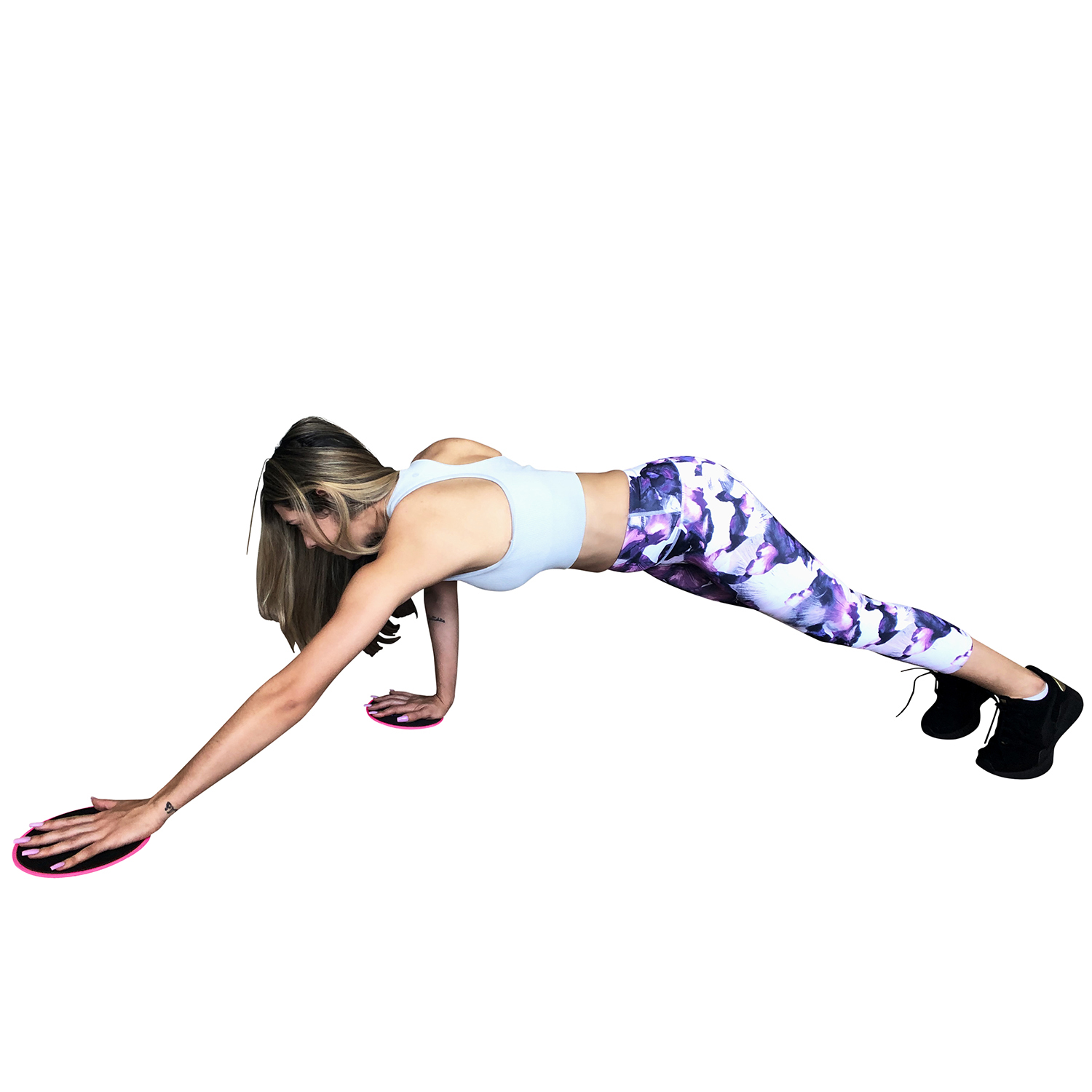
Dual sided core sliders have a hard plastic face on one side and a soft fabric or foam face on the other, and matching the side to the floor is the single most common point of confusion for first-time users.
- Carpet or rug — use the hard plastic side down. Fabric on fabric creates too much friction to glide.
- Hardwood, tile, or laminate — use the fabric side down. Plastic on a hard, smooth floor glides too easily and reduces control.
If a slider feels like it is sticking and not moving, or moving with no resistance at all and sliding out from under you, the fix in both cases is usually to flip it over rather than assume the product is faulty.
Why core sliders work
Removing friction from a bodyweight exercise does not make it easier — it makes it unstable, and your body responds to instability by recruiting more stabiliser muscles to control the movement. A standard lunge trains the legs. A slider reverse lunge trains the legs and forces the core and hips to control a sliding foot that wants to keep moving past where a normal lunge would stop.
Exercise gliding discs also increase range of motion on several movements, since the sliding limb can travel further than it would against a fixed floor, which adds a mobility benefit on top of the strength and stability work. They are lightweight, take up almost no storage space, and work as well in a hotel room as they do at home, which makes this piece of core exercise equipment genuinely portable in a way most other training tools are not.
Ab sliders is the more common name in fitness circles, though "core" is the more accurate description — the muscles doing the most work during a slider session are the deep core and hip stabilisers, not the superficial abs alone.
Eleven core slider exercises
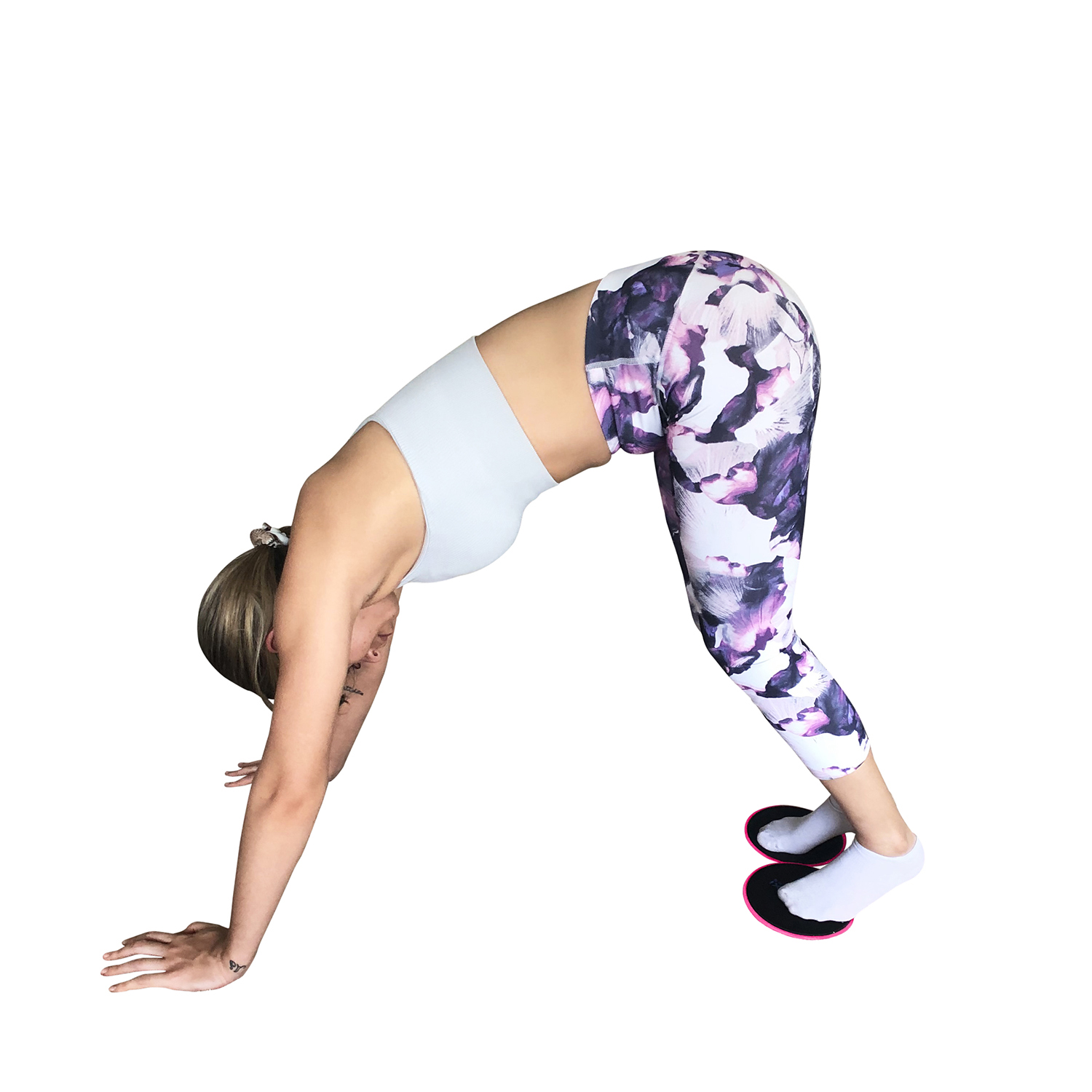
Core and abs
- Mountain climber — from a plank with both feet on sliders, drive knees toward the chest alternately.
- Knee tuck — from a plank, draw both feet in toward the chest together, then slide back out.
- Plank jack — from a plank, slide both feet out wide and back in together, like a lying jumping jack.
- Pike — from a plank, slide both feet in while lifting the hips toward the ceiling, forming an inverted V.
- Body saw — from a forearm plank, slide the whole body forward and back a small distance while staying rigid.
Glutes and legs
- Reverse lunge — standing, slide one foot back into a lunge, then slide it forward to return.
- Hamstring curl — lying on your back with feet on sliders, bridge the hips up, then slide the feet in toward the glutes and back out.
- Skater — slide one foot out to the side in a lateral lunge, then slide it back to bring the feet together.
- Squat with slide-out — from standing, slide one foot out to the side as you lower into a single-leg-emphasis squat.
Arms and upper body
- Push-up slide — hands on sliders in a push-up position, slide the hands out wider as you lower, then pull them back in as you press up.
- Arm slide-out — kneeling, hands on sliders, slide both arms forward until the chest nears the floor, then pull back to start.
Rotate three or four workout sliders exercises from different categories each session rather than attempting all eleven — that keeps a session inside fifteen to twenty minutes without unnecessary repetition of similar movement patterns.
Sample core slider workout
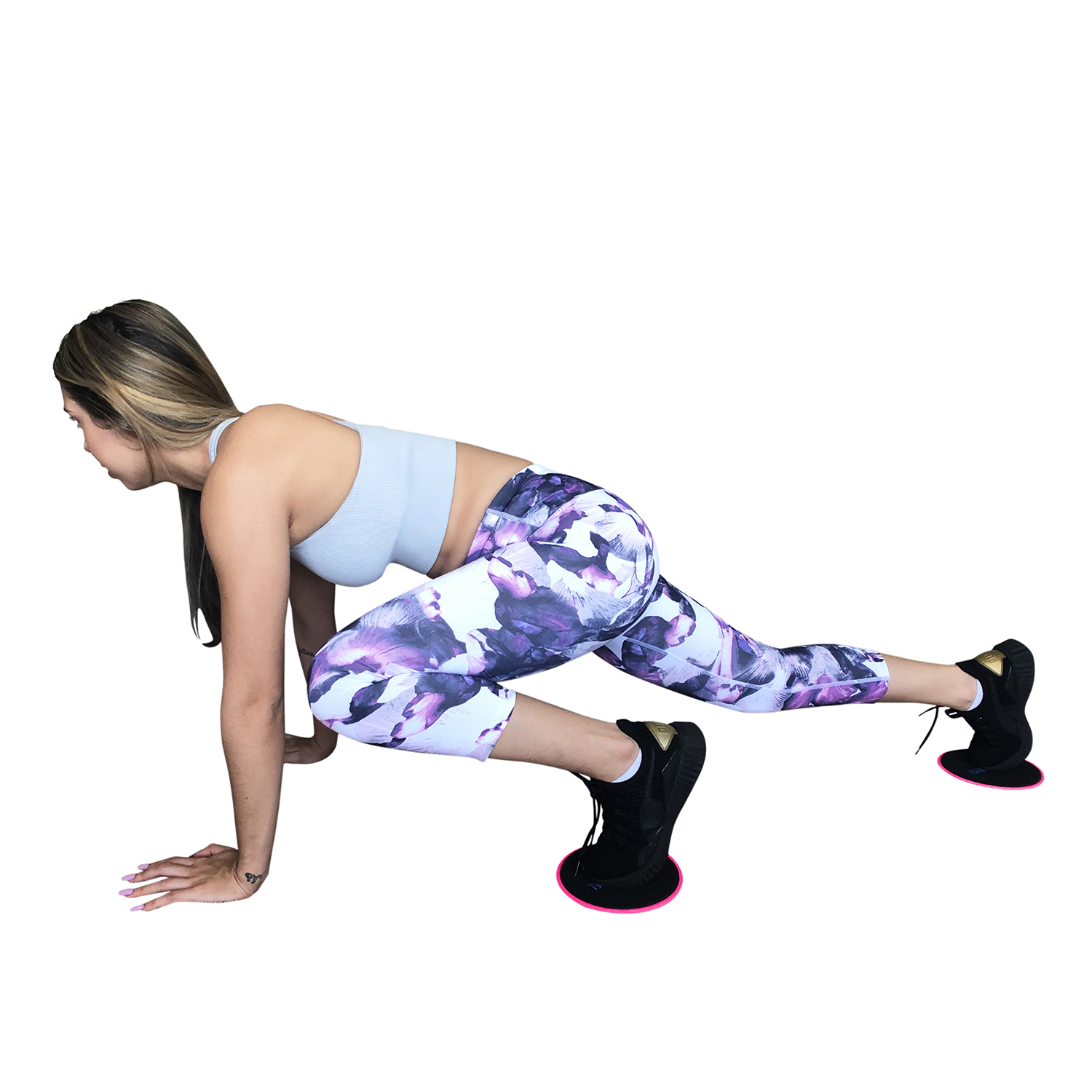
Work for 40 seconds, rest 20 seconds, and complete two to three rounds of this six-move circuit.
- Mountain climber — 40 seconds
- Reverse lunge — 40 seconds
- Push-up slide — 40 seconds
- Hamstring curl — 40 seconds
- Plank jack — 40 seconds
- Skater — 40 seconds
Two rounds runs close to fifteen minutes including rest. Add a third round once the first two feel controlled rather than rushed.
How to choose core sliders
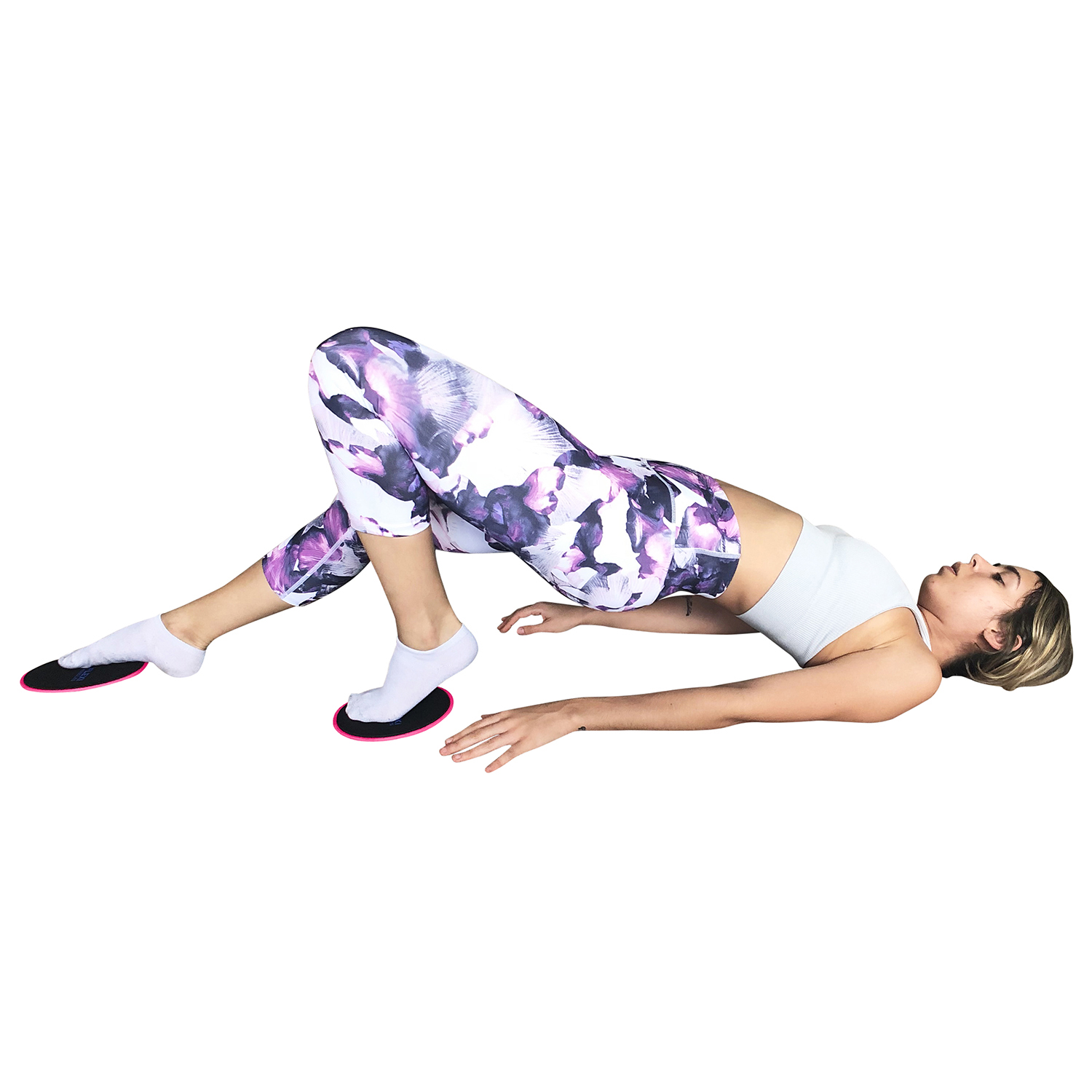
Dual sided vs single sided
A dual sided pair works across carpet, hardwood, tile, and laminate, which matters if you train in more than one room or travel with them. A single-sided slider only performs well on one floor type, which limits where you can actually use it.
Size and shape
Round discs around 18 to 20 cm in diameter suit most hands and feet comfortably. Oval or foot-shaped sliders exist too, but round discs are the more versatile shape across the full range of exercises in this guide.
Durability of the fabric side
The fabric or foam face wears faster than the plastic face with heavy use. Stitched, doubled fabric holds up better over time than a thin glued layer, which tends to peel after a few months of regular training.
Common mistakes
Straight up: most slider frustration comes down to a few avoidable habits.
- Using the wrong side for the floor — covered above, and still the most common issue reported with dual sided sets.
- Letting the hips sag in plank-based moves — a dropping midsection means the core has stopped doing its job, regardless of how the legs are moving.
- Moving too fast — sliders reward slow, controlled tempo. Rushing the movement reduces the stability demand that makes the exercise worthwhile.
- Training on an unsuitable surface — very thick shag carpet or heavily textured tile can resist gliding no matter which side faces down.
When NOT to use core sliders
You have a wrist, shoulder, or knee injury
Push-up and plank-based slider exercises load the wrists and shoulders under unstable conditions, and lunge variations do the same for the knees. Get clearance from a physiotherapist before adding sliders to a rehabilitation plan.
Your current goal is maximal strength
Sliders train control and stability, not the ability to move heavy load. If your programme is centred on building strength with a barbell or heavy dumbbells, sliders are a supplementary tool at best, not a replacement for progressive loading.
Your floor genuinely will not let them glide
If neither side of a dual sided slider moves smoothly on your specific flooring, forcing the exercise defeats the purpose. A furniture-moving pad or a different training surface, such as a smooth section of tile, solves this more reliably than persisting on the wrong floor.
Frequently Asked Questions
What are core sliders used for?
Core sliders reduce friction between your hands or feet and the floor, turning ordinary bodyweight exercises into unstable ones. Movements like mountain climbers, lunges, and push-ups all demand more core and stabiliser engagement once part of your body is gliding rather than planted.
Do core sliders work on carpet and hardwood floors?
A dual sided pair does. One side is typically a smooth, hard surface for carpet, and the other a soft fabric or foam surface for hardwood, tile, or laminate. Using the wrong side on the wrong floor is the most common reason people think their sliders do not work.
Are core sliders good for beginners?
Yes, with easier variations. A beginner can start with slow, controlled arm slide-outs or seated leg slides before progressing to full mountain climbers or plank-based movements, which demand considerably more core and shoulder stability.
What muscles do core sliders work?
Primarily the core and hip stabilisers, since almost every slider exercise requires bracing the midsection to control the sliding limb. Depending on the exercise, they also load the glutes and hamstrings, shoulders and chest, or the whole body in movements like the mountain climber.
How do I clean core sliders?
Wipe the plastic side with a damp cloth after use. The fabric side can usually be spot-cleaned or wiped down as well, though check the specific product for machine-washable covers if it has one.
When should I not use core sliders?
Skip them if you have an existing wrist, shoulder, or knee injury, since several slider exercises load those joints under unstable conditions. Also skip them if your goal right now is building raw strength with added load, since sliders train stability and control rather than maximal force production.
Related at Flexi Muscles
- Fitness Accessories — core sliders and other compact training tools
- Resistance Bands — another portable, low-impact way to add resistance
- Strength Training Equipment — for progressing beyond bodyweight and slider training
- All Products — the full Flexi Muscles range