

Cable Machine Attachments: Types, Uses, and How to Train Without a Cable Machine

By Flexi Muscles — 6 September 2026 · 10 min read
Cable machine attachments are the bars, handles, and ropes that clip onto a cable or resistance band to change how you grip and pull. Six attachments cover almost everything most people need: a tricep rope, a lat pulldown bar, a straight bar, a pair of D-handles, wrist cuffs, and ankle straps. Most guides assume you already have a cable machine to clip them onto. If you do not, the attachment still works — you just anchor it to a resistance band instead of a cable stack.
Shop Resistance Bands at Flexi Muscles
What are cable machine attachments

A cable machine attachment clips onto the end of a cable or band using a carabiner, and it is what your hands actually hold during the exercise. The pulley or band supplies the resistance; the attachment decides the grip, the hand position, and therefore the muscles that end up doing most of the work.
This is why a single anchor point — a cable stack, a door anchor, or a pull-up bar — can produce rows, pushdowns, curls, pulldowns, and face pulls. Swap the attachment and the exercise changes without moving the anchor at all.
That versatility is the entire appeal. A handful of attachments, stored in a small bag, can replace a rack of fixed-purpose machines that would otherwise take up an entire room. For a home gym cable attachment collection specifically, that space saving is often the deciding factor over a full cable tower.
Types of cable attachments

Tricep rope
Two rubber-ended ropes joined at a central clip. Used for tricep pushdowns, face pulls, and single-arm rows. The rope lets each hand move independently, which adds a rotational component that a fixed bar does not allow — on a pushdown, that means you can flare the ends apart at the bottom of the movement for extra tricep contraction, something a rigid bar cannot replicate. It is the single most versatile attachment on this list because of that independent hand movement.
Lat pulldown bar
A wide bar, straight or slightly angled, built for vertical pulling movements like lat pulldowns and wide-grip rows. Width is the defining feature — a lat bar is meant to be gripped well outside shoulder width, which changes the angle of pull on the lats compared to a narrower grip. Angled or cambered versions reduce wrist strain compared to a perfectly straight bar, which matters over higher rep ranges.
Straight bar
A short, straight bar used closer to the body than a lat bar. Often sold as a triceps pushdown bar specifically, since that is its most common use, though the same bar also handles upright rows and standing curls where a narrower grip suits the movement better. Some straight bars have a slight EZ-curl bend built in specifically to reduce wrist strain during curls, which is worth checking for if bicep work is a regular part of your routine.
D-handle (single handle)
A single grip attached to one clip, used one hand at a time. D-handles are close behind the rope in versatility, since almost any two-handed cable exercise has a single-arm version that works with a D-handle instead — single-arm rows, single-arm presses, and single-arm curls all rely on this attachment. Training one side at a time also exposes strength imbalances that a bar hides.
Wrist cuffs
A padded cuff that straps around the wrist rather than being gripped by hand, useful for lat pulldowns, tricep extensions, and any exercise where grip fatigue would otherwise limit the set before the target muscle does. This matters most for anyone with reduced grip strength or a hand injury, since the cuff transfers load through the wrist rather than relying on the fingers to hold on.
Ankle straps
The lower-body equivalent of a wrist cuff, strapped above the ankle for cable kickbacks, hip abductions, and other glute and hip isolation work. A padded, wide strap holds position better through a full set than a thin, unpadded one, particularly on kickbacks where the strap pulls against the same spot on every rep.
How to use them without a cable machine

This is the part most cable attachment guides skip, since they assume a cable machine is already sitting in the room. Most home gyms do not have one, and most attachments do not need one either.
Every attachment on this list clips on with a standard carabiner, and a resistance band clips onto that same carabiner just as easily as a cable does. Anchor the other end of the band to a door anchor at floor level for pulldowns and pushdowns, at chest height for rows and face pulls, or loop it over a pull-up bar or squat rack crossbar for high-anchor movements. The attachment still determines the grip and the exercise — only the source of resistance changes.
This is the setup Flexi Muscles' own cable attachment range is built around: a home gym cable attachment paired with a resistance band and a door anchor replicates the exercise selection of a cable machine at a fraction of the cost and the floor space.
| Cable machine | Attachment + band + anchor | |
|---|---|---|
| Cost | High | Low |
| Floor space | Large, permanent | Minimal, packs away |
| Resistance consistency | Constant through the range | Increases as the band stretches |
| Maximum load | Higher, plate-limited | Lower, band-limited |
The band setup will not match a commercial cable stack on maximum load or perfectly consistent resistance, but for most accessory and isolation work — exactly what these attachments are built for — the difference is not large enough to justify the cost and space of a full machine.
Best attachments by exercise
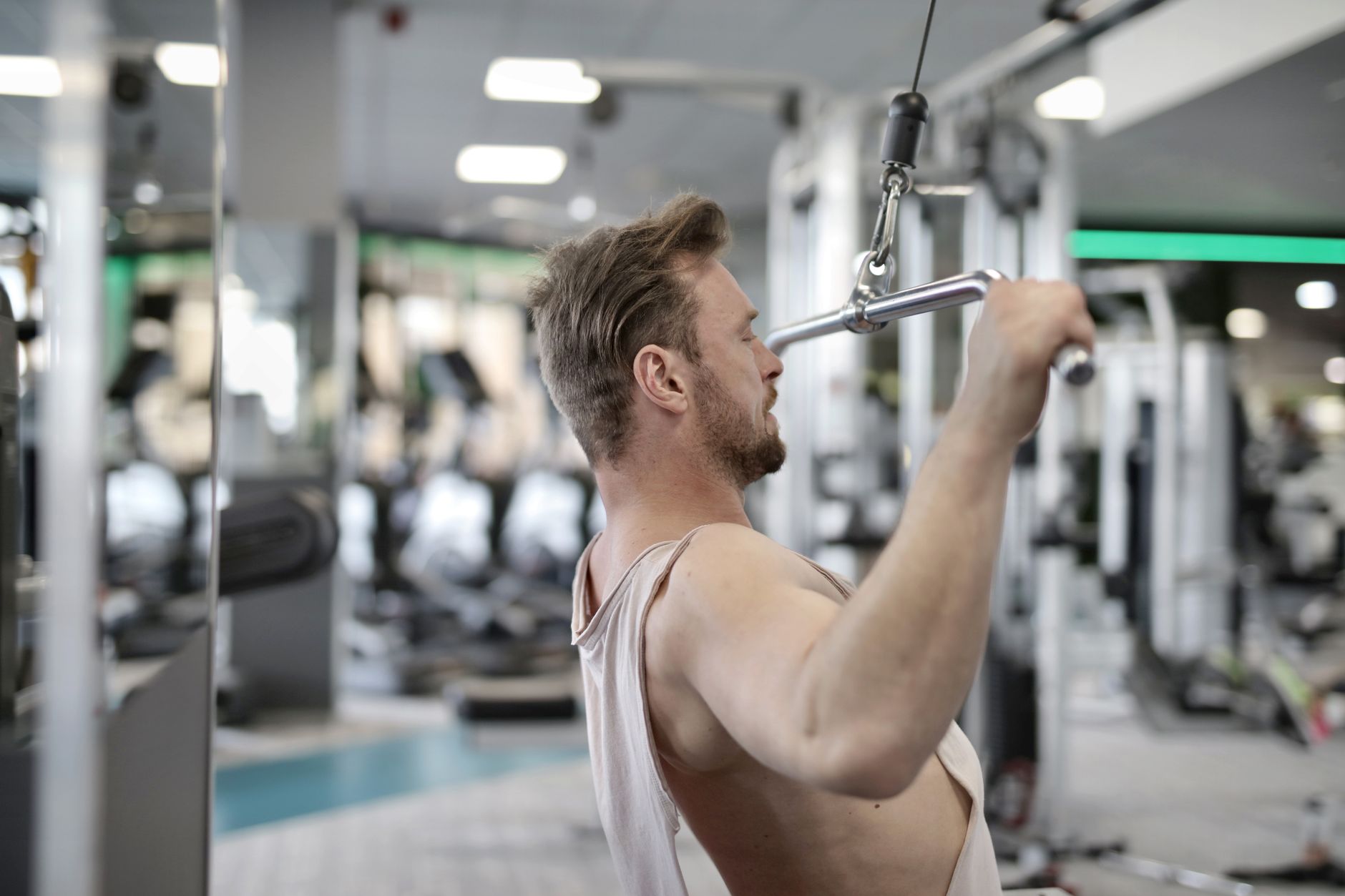
- Lat pulldown — lat pulldown bar, anchored high. Pull the bar down to chest height, leading with the elbows rather than the hands.
- Tricep pushdown — tricep rope or straight bar, anchored high. Keep the elbows pinned to your sides throughout so the shoulders do not take over the movement.
- Face pull — tricep rope, anchored roughly at face height. Pull the rope ends apart toward your face, focusing on squeezing the rear shoulders together.
- Single-arm row — D-handle, anchored at chest height. Keep the torso still and avoid rotating toward the working arm as it pulls.
- Standing curl — straight bar or D-handles, anchored low. Keep the elbows fixed at your sides rather than swinging them forward to assist the lift.
- Cable kickback — ankle strap, anchored low. Keep the standing leg slightly bent and avoid arching the lower back as the working leg extends.
- Lat pulldown without grip fatigue — wrist cuffs, anchored high. Useful once grip strength, not the lats, becomes the limiting factor on heavier sets.
How to choose cable attachments
Clip and carabiner compatibility
Check the carabiner size against whatever you plan to anchor it to — a cable machine's pulley, a resistance band's loop, or a door anchor's D-ring. A mismatched clip size is the most common reason a new attachment does not work with an existing home setup. A swivel clip is worth paying slightly more for, since it stops the band or cable twisting during rotational movements like face pulls.
Weight rating
A gym cable attachment's weight rating applies to the attachment and clip, not the band or cable it is paired with. Check both figures separately rather than assuming the lower-rated component is the band.
Material and grip
Rubber-coated handles and bars resist sweat better than bare metal or plain foam. Stitched rope ends outlast glued ones, particularly on a tricep rope used for high-rep pushdown work.
How many to start with
A rope and a pair of D-handles cover the majority of the exercise list above. Add a lat pulldown bar once vertical pulling becomes a regular part of your routine, and treat wrist cuffs and ankle straps as later additions rather than a starting purchase.
One opinion worth stating: a lat pulldown bar is the most overrated first purchase in this category. Of the seven exercises listed earlier, only one strictly needs it, while a rope or a pair of D-handles already covers the other six. Buy the bar once lat pulldowns specifically earn a place in your programme, not because it looks like the obvious starting attachment.
When NOT to buy cable attachments
Straight up: attachments are not always the next useful purchase.
You have nothing to anchor them to
An attachment without a cable machine, resistance band, door anchor, or pull-up bar to pair it with is dead weight in a drawer. Buy the anchor point first if you do not already have one.
You are buying more than you need to start
A full set of six attachments is not necessary on day one. A rope and a pair of D-handles cover most beginner and intermediate training needs; the rest can wait until a specific exercise in your routine calls for them.
Your resistance band is already too light for the exercise
An attachment does not add resistance on its own — it changes grip and angle. If your band is maxed out for lat pulldowns, a new attachment will not fix that; a heavier band or an actual cable stack will. Buying attachment after attachment while the underlying resistance stays too light is a common way to spend money without actually getting stronger.
Frequently Asked Questions
What are cable machine attachments used for?
Cable machine attachments are the bars, handles, and ropes that clip onto a cable or resistance band to change how you grip and pull the resistance. The same pulling motion becomes a different exercise depending on which attachment is fitted, which is what makes a small set of attachments cover a large range of movements.
Can I use cable attachments without owning a cable machine?
Yes. Clip the attachment to a resistance band instead of a cable, anchor the other end of the band to a door anchor, pull-up bar, or squat rack, and you can replicate most cable machine exercises without the machine itself. The attachment determines the grip and movement pattern; the resistance source is interchangeable.
Which cable attachment should I buy first?
A tricep rope or a pair of D-handles covers the widest range of exercises for the lowest cost, from pushdowns and face pulls to rows and curls. Add a lat pulldown bar next once vertical pulling movements become a regular part of your routine.
Do cable attachments fit any cable machine?
Most attachments use a standard carabiner clip that fits the vast majority of cable machines and resistance band setups, but always check the clip size and the attachment's rated weight capacity against your machine or band system before buying.
What is the difference between a lat bar and a straight bar?
A lat bar is wider, usually with angled or cambered grips, and is built for wide-grip pulling movements like lat pulldowns. A straight bar is shorter and used closer to the body for exercises like tricep pushdowns and upright rows, where a wide grip is not the goal.
When should I not buy cable attachments?
Skip them if you have no way to anchor a band or cable at all, since the attachment is useless without something to pull against. Also skip buying more than two or three attachments early on, since a rope and a set of handles already cover most of what a beginner routine needs.
Related at Flexi Muscles
- Resistance Bands — the resistance source that pairs with any cable attachment at home
- Fitness Accessories — attachments, cuffs, and straps for cable-style training
- Strength Training Equipment — pull-up bars and racks that double as anchor points
- All Products — the full Flexi Muscles range