

Booty Bands for Glutes: How to Use Them and What to Buy

By Flexi Muscles — 8 September 2026 · 9 min read
Booty bands for glutes are short loop resistance bands worn above or below the knee that add tension to bridges, walks, kickbacks and clamshells. A 2025 EMG review found banded lateral walks push the stance-leg gluteus medius to 30-50% MVIC, activation on par with far heavier single-leg lifts. They're cheap, pack flat, and train the hip stabilisers a squat mostly ignores — but they max out well below what a barbell delivers, so treat them as activation work, not your entire glute programme.
Shop Resistance Bands at Flexi Muscles
What Are Booty Bands?

A booty band is a closed loop of fabric or latex, usually 5 to 8cm wide, worn around the thighs or ankles to add resistance to hip and glute movements. Marketing calls them booty bands; a physio calls them hip abduction loops. Same rubber, better Instagram caption.
The point of the loop shape is constant tension. A dumbbell only loads a movement against gravity, so a glute bridge with a weight on your hips gets easier at the top of the rep. A band keeps pulling the whole time, which is why bodyweight glute work with a band feels harder than the same reps without one, even though nothing heavy is involved.
Loop bands vs bands with handles
Loop bands are the ones actually called booty bands, and they're built for lower-body work where your legs do the pulling. Bands with handles suit upper-body rows and presses instead — if a listing shows handles, it's not the product this guide is about, whatever the title says.
Fabric vs Latex: Which Booty Band to Buy
Both materials do the same job. The difference shows up in how the band behaves once you're sweating through rep fifteen.
Fabric loop bands
Woven fabric with a rubber grip lining stays put on skin or leggings and doesn't roll up the thigh mid-set, which is the single biggest complaint about cheaper bands. It's also the quieter option and won't snap the way latex can after months of stretching. The trade-off is price — fabric bands cost more than an equivalent latex set.
Latex loop bands
Latex bands are lighter, cheaper, and give a smoother, more elastic stretch that some people prefer for faster tempo work. They roll and slip more than fabric on bare skin, and they wear out faster with regular use, so budget on replacing them sooner. Anyone with a latex allergy should skip this material entirely.
Resistance colour coding
Most sets use colour to mark resistance level, though the exact colour-to-tension mapping varies by brand, so treat colour as a relative guide within one set rather than a fixed standard across brands. Buy a set of three rather than a single band — light for warm-ups and high-rep work, medium for most exercises, heavy for advanced lateral walks and banded hip thrusts.
How to Use Booty Bands Correctly
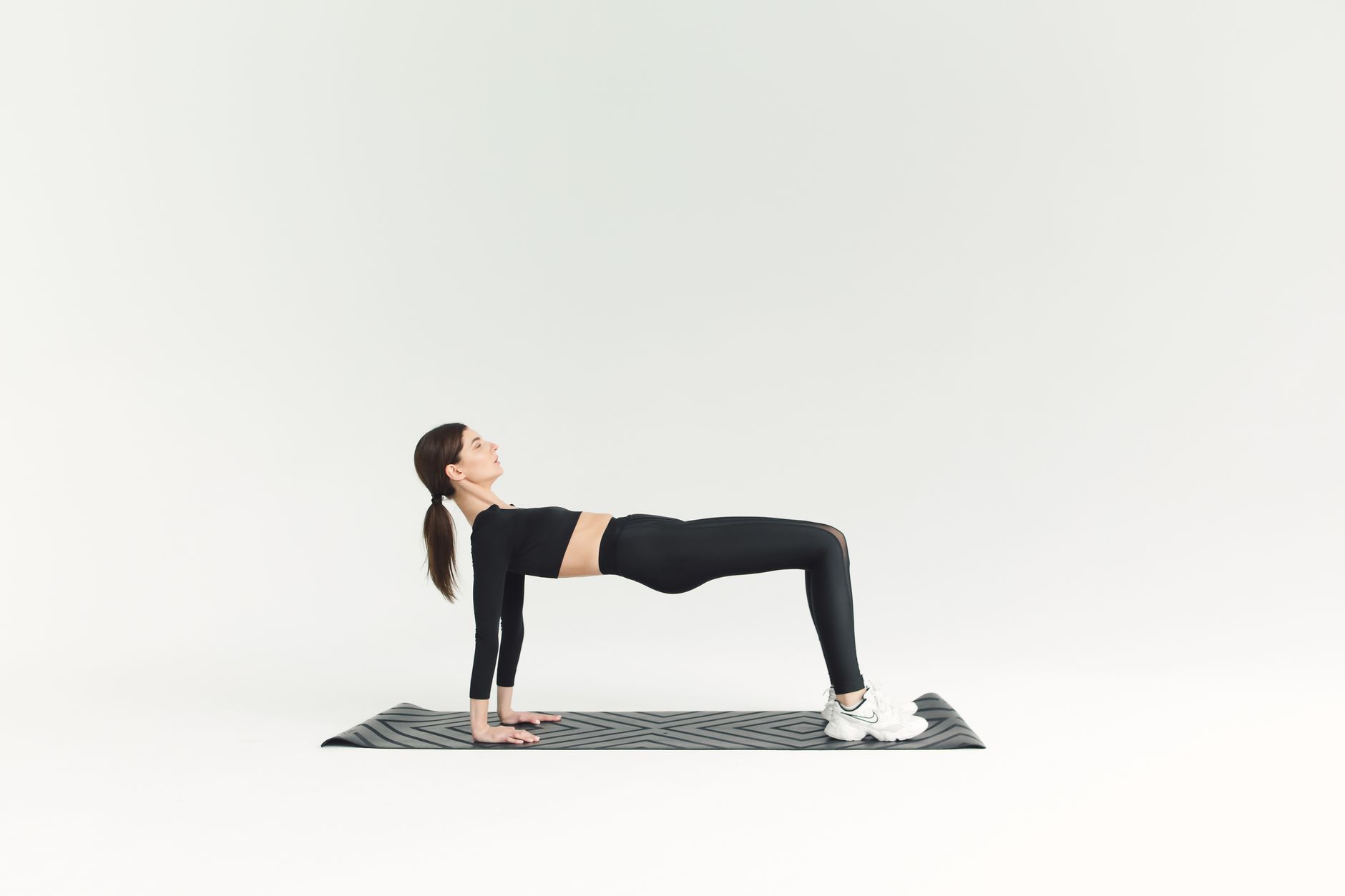
Placement and tension matter more than which exercise you pick.
- Position the band above the knee for hip-dominant moves like bridges and clamshells, or below the knee for a longer lever arm and more resistance from the same band
- Keep constant tension on the band throughout the rep — if it goes slack at any point, you've moved outside the range where it's actually working
- Push your knees outward against the band rather than letting them collapse inward, especially on squats and walks
- Move slowly on both the working and returning phase of each rep; band resistance rewards control, not speed
- Roll fabric bands into place rather than pulling them straight up, which stretches the grip lining unevenly over time
The band should make the exercise noticeably harder by rep ten, not immediately unbearable by rep three. If you're fighting to complete the set, drop to a lighter band rather than grinding through with poor form.
Best Booty Band Exercises for Glutes
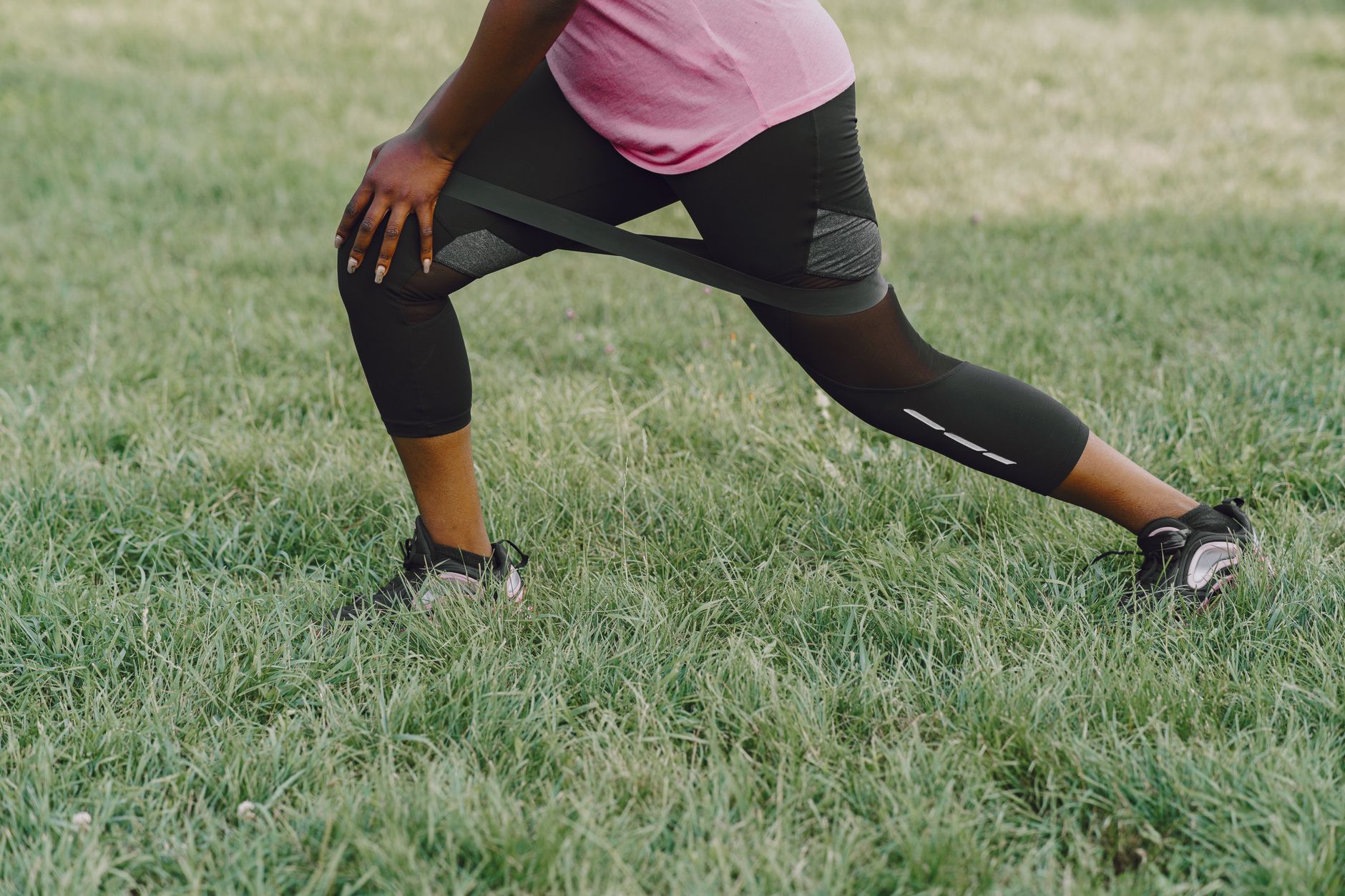
Lateral band walk
Band above the knee, feet hip-width apart, knees slightly bent. Step sideways in a controlled line for 10-15 steps, then reverse direction. This is the exercise behind the 30-50% MVIC gluteus medius figure cited earlier — arguably the best return per band you own.
Glute bridge
Band above the knee, lie on your back with knees bent and feet flat. Drive your hips up while pushing your knees outward against the band, squeeze at the top for a second, then lower under control. Aim for 15-20 reps.
Banded hip thrust
Shoulders on a bench, band above the knee, feet planted. Drive through your heels to full hip extension, pushing your knees out against the band the whole way. This variation loads the glutes harder than a bridge because of the added range of motion through the hips.
Clamshell
Band above the knee, lie on your side with hips and knees bent. Keeping your feet together, open your top knee against the band without rolling your hips backward. Rotating the knee diagonally upward rather than straight up increases gluteus medius activation noticeably.
Donkey kick
Band above the knee, on hands and knees. Drive one heel back and up against the band, keeping your hips square to the floor rather than twisting to gain height. 12-15 reps per side. ACE Fitness-commissioned EMG research ranked this quadruped hip extension pattern above the traditional squat for gluteus maximus recruitment, band or no band.
Fire hydrant
Same starting position as the donkey kick. Lift one knee out to the side against the band, stopping before your hips rotate. This targets the outer hip and gluteus medius rather than the maximus the donkey kick emphasises.
Building a Weekly Glute Band Workout
Two to three sessions a week is the sweet spot. These exercises are low-load, so they recover fast, but the muscle soreness from unfamiliar hip work catches most beginners off guard in week one — start conservative.
| Day | Session | Duration |
|---|---|---|
| Monday | Full circuit: bridge, clamshell, donkey kick, fire hydrant — 3 rounds | 15 min |
| Wednesday | Lateral band walks and banded hip thrusts — 4 sets each | 15 min |
| Friday or Saturday | Full circuit, increase reps or move to a heavier band | 20 min |
Progress by adding reps first, then moving to a heavier band once 20 clean reps feels manageable across the circuit. Doing this daily instead of three times a week doesn't speed up results — it just makes the same ache show up every morning until you quit.
Who Should Be Careful With Booty Bands

Booty bands are low-risk as gym equipment goes, but they're not the right buy for everyone.
- You have a latex allergy — buy fabric bands only, or check the listing carefully, since many budget sets are latex by default
- You're expecting muscle growth or serious strength — the resistance tops out far below a loaded barbell or a heavy hip thrust, so bands build endurance and activation, not size
- You have a hip or knee injury — the outward pressure against the band can aggravate an existing issue; get clearance before adding banded work to rehabilitation
- You already train glutes with heavy compound lifts — a booty band adds little on top of squats and hip thrusts done properly, beyond a short activation warm-up
If none of that applies, a set of three bands is one of the cheapest additions you can make to a home gym for the hip work a squat rack alone won't cover.
Building out a full lower-body setup? Browse lifting accessories to round out your home gym.
Frequently Asked Questions
What are booty bands used for?
Booty bands are short loop resistance bands worn above or below the knee to add tension to hip and glute movements — bridges, walks, kickbacks and clamshells. The band forces your glutes and hip stabilisers to work against constant resistance through the full range of the movement, which a bodyweight version of the same exercise doesn't provide.
Do booty bands actually work for glutes?
Yes, for activation and endurance rather than maximum strength. A 2025 review in the Journal of Functional Morphology and Kinesiology found banded lateral walks push the stance-leg gluteus medius to 30-50% MVIC and gluteus maximus to 20-30% MVIC, activation levels associated with real muscular endurance gains, not just a warm-up tingle.
Where should you wear a booty band, above or below the knee?
Above the knee, closer to mid-thigh, isolates the hips and glutes with less rotation through the knee joint. Below the knee, near the ankles, increases the lever arm and makes the same band feel noticeably harder, which suits people who've outgrown the resistance level they own rather than buying a heavier band.
How often should you do a booty band workout?
Two to three sessions a week of 15-20 minutes is enough to build noticeable glute endurance, since the exercises are low-load and recover quickly. Doing them daily doesn't speed up results and tends to be the reason people quit within a month — soreness in the same spot every day gets old fast.
Can booty bands replace squats or hip thrusts?
No. Booty bands max out at a fraction of the load a barbell or loaded hip thrust applies, so they can't drive the same strength or size gains. They're best used as an activation warm-up before heavier lifts, or as a finisher, not as the main event of a glute programme.