

Body Weight Training Exercises: The Complete No-Equipment Guide

By Flexi Muscles — 20 June 2026 · 10 min read
Body weight training exercises like push-ups, pull-ups, squats, and planks build real strength using nothing but gravity and your own mass as resistance. Every useful programme comes down to four movement patterns — push, pull, squat, and hinge. Cover all four and you've built a complete bodyweight strength training routine without touching a dumbbell. The exercises aren't the limiting factor. How long you can keep making them harder is.
Shop Strength Training Equipment at Flexi Muscles
What Counts as a Bodyweight Exercise

A bodyweight exercise uses your own mass as resistance instead of a bar, plate, or band. That's the whole definition — no equipment, no gym membership, no specific location. What separates a good bodyweight training programme from a random set of moves is whether it covers all four basic movement patterns:
- Push — push-ups, dips, pike push-ups (chest, shoulders, triceps)
- Pull — pull-ups, inverted rows, doorframe rows (back, biceps)
- Squat — squats, lunges, step-ups (quads, glutes)
- Hinge — glute bridges, single-leg deadlifts (hamstrings, lower back, glutes)
Most beginner routines lean almost entirely on push and squat patterns because they're the easiest to do without a bar — push-ups and squats need nothing but floor space. Pull exercises get skipped, which is exactly why so many bodyweight-only lifters end up with strong chests and underdeveloped backs. A doorframe row or a low table fixes this without any purchase needed.
Best Body Weight Exercises by Muscle Group
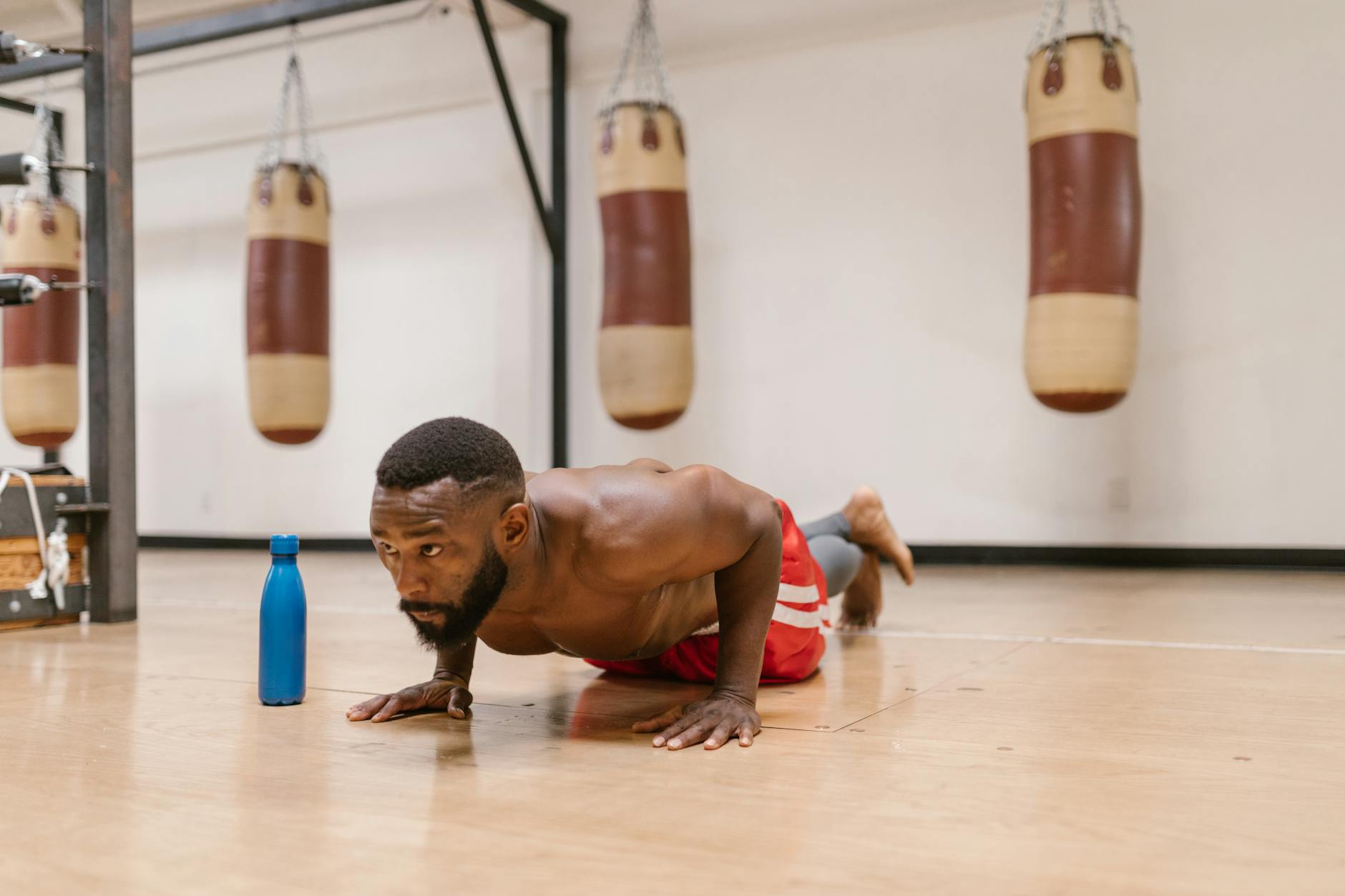
Push (chest, shoulders, triceps)
Standard push-ups first. Once 15-20 clean reps feel easy, move to decline push-ups (feet raised) or pike push-ups, which shift more load onto the shoulders and start to resemble a handstand push-up regression.
Pull (back, biceps, rear shoulders)
Doorframe rows or table rows for beginners — lie under a sturdy table or use a towel looped through a doorframe handle and pull your chest toward it. Pull-ups are the long-term goal here, but most people need months of rowing work before a strict pull-up is realistic. Gymnastic rings or a suspension trainer solve the row problem properly — anchor them to a door or pull-up bar and you can walk your feet forward or back to dial the angle from near-vertical (easy) to near-horizontal (hard) as you get stronger, which a fixed towel-and-doorframe setup can't do.
Squat (quads, glutes, hamstrings)
Bodyweight squats, walking lunges, and step-ups (using a stair or sturdy chair) cover this pattern well. Bulgarian split squats — rear foot elevated on a chair — add single-leg demand that makes a basic squat feel easy by comparison.
Core and hinge
Planks, dead bugs, and hollow holds build the core stability that every other pattern depends on. Glute bridges and single-leg deadlifts cover the hinge pattern and are the exercises most beginner routines skip entirely, despite hamstrings and glutes being central to almost every other movement.
| Pattern | Beginner exercise | Progression |
|---|---|---|
| Push | Knee push-up | Standard, then decline push-up |
| Pull | Doorframe row | Inverted row, then pull-up |
| Squat | Bodyweight squat | Lunge, then Bulgarian split squat |
| Hinge | Glute bridge | Single-leg bridge, then single-leg deadlift |
How to Build Muscle With Just Your Bodyweight
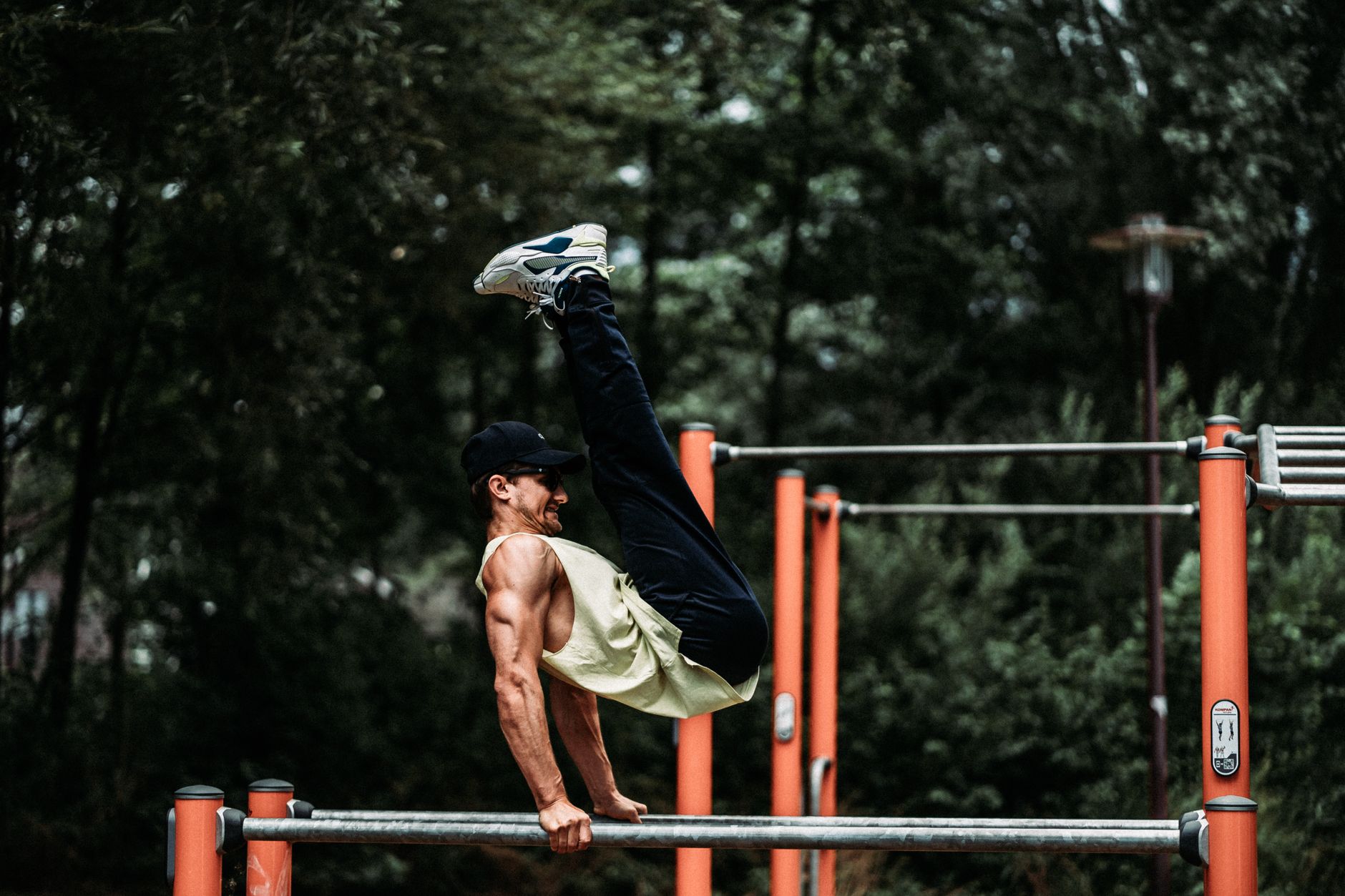
Muscle grows in response to progressive overload — consistently making a movement more demanding than your body has already adapted to. With a barbell, that means adding plates. With bodyweight workout exercises, you have four other levers:
- More reps — the simplest lever, but it has diminishing returns past about 20-25 reps for strength purposes
- Slower tempo — a 4-second lowering phase on a push-up creates more time under tension than the same rep done fast
- Reduced rest — cutting rest between sets increases the conditioning demand without changing the exercise
- Harder leverage — decline push-ups, single-leg squats, and archer pull-ups all increase the load on the working muscle without adding external weight
A study comparing progressive bodyweight squat training to barbell back squat training in sedentary young women found comparable improvements in strength, hypertrophy, and body fat when training volume and difficulty were matched between groups. The mechanism doesn't care where the resistance comes from — it cares whether the muscle is forced to adapt.
My opinion, and it's one most beginner guides avoid saying outright: leverage progressions run out faster than people expect. You can turn a push-up into a one-arm push-up over a year or two of dedicated work, but turning a pull-up into a true strength-building exercise for someone who can already do 12-15 clean reps requires added resistance — there's no leverage trick that replaces a weighted vest or a dip belt once bodyweight pulling gets too easy.
A Beginner Bodyweight Workout You Can Start Today
Three full-body sessions a week, with at least one rest day between each, is enough to see visible strength gains within six to eight weeks for someone new to training.
| Exercise | Sets x Reps | Rest |
|---|---|---|
| Knee or standard push-up | 3 x 8-12 | 60 sec |
| Doorframe row | 3 x 10-12 | 60 sec |
| Bodyweight squat | 3 x 12-15 | 60 sec |
| Glute bridge | 3 x 12-15 | 45 sec |
| Plank | 3 x 30-45 sec | 45 sec |
Add a rep or five seconds of plank hold each week once every set feels controlled. When you hit the top of a rep range with good form across all three sets, move to the harder variation in the progression table above rather than keep adding reps indefinitely.
When Bodyweight Training Stops Being Enough
Most beginner guides stop at "do these exercises" and skip what happens after. Here's what happens: somewhere around month four to six, push-ups, squats, and rows start feeling easy at 20+ reps, and rep count alone stops building strength. This is the plateau point, and it's where bodyweight-only training quietly stalls for most people.
Four ways to keep progressing past it:
- Gymnastic rings or a suspension trainer — the most versatile single purchase for someone who has outgrown push-ups and doorframe rows. Shifting your body angle changes the difficulty of rows, dips, push-ups, and eventually pull-ups, and the instability of the rings adds a stabiliser demand that a fixed bar doesn't. Browse gymnastic rings or the suspension trainer.
- Resistance bands — loop one under your feet for squats or around your back for push-ups, and you've added external resistance without a single plate. Browse resistance bands for the cheapest way to extend a stalled bodyweight programme.
- A pull-up bar — the anchor point that rings, a suspension trainer, and a dip station all need. Rows can only take a back so far without one.
- Added load — a weighted vest, a loaded backpack, or a dip belt turns an easy bodyweight movement back into a genuine strength stimulus. Browse lifting accessories if you're at this stage.
None of this means bodyweight training "doesn't work." It means it has a ceiling, the same way any fixed-resistance tool does, and recognising that ceiling early saves months of plateaued effort.
Who Should Not Rely on Bodyweight Training Alone
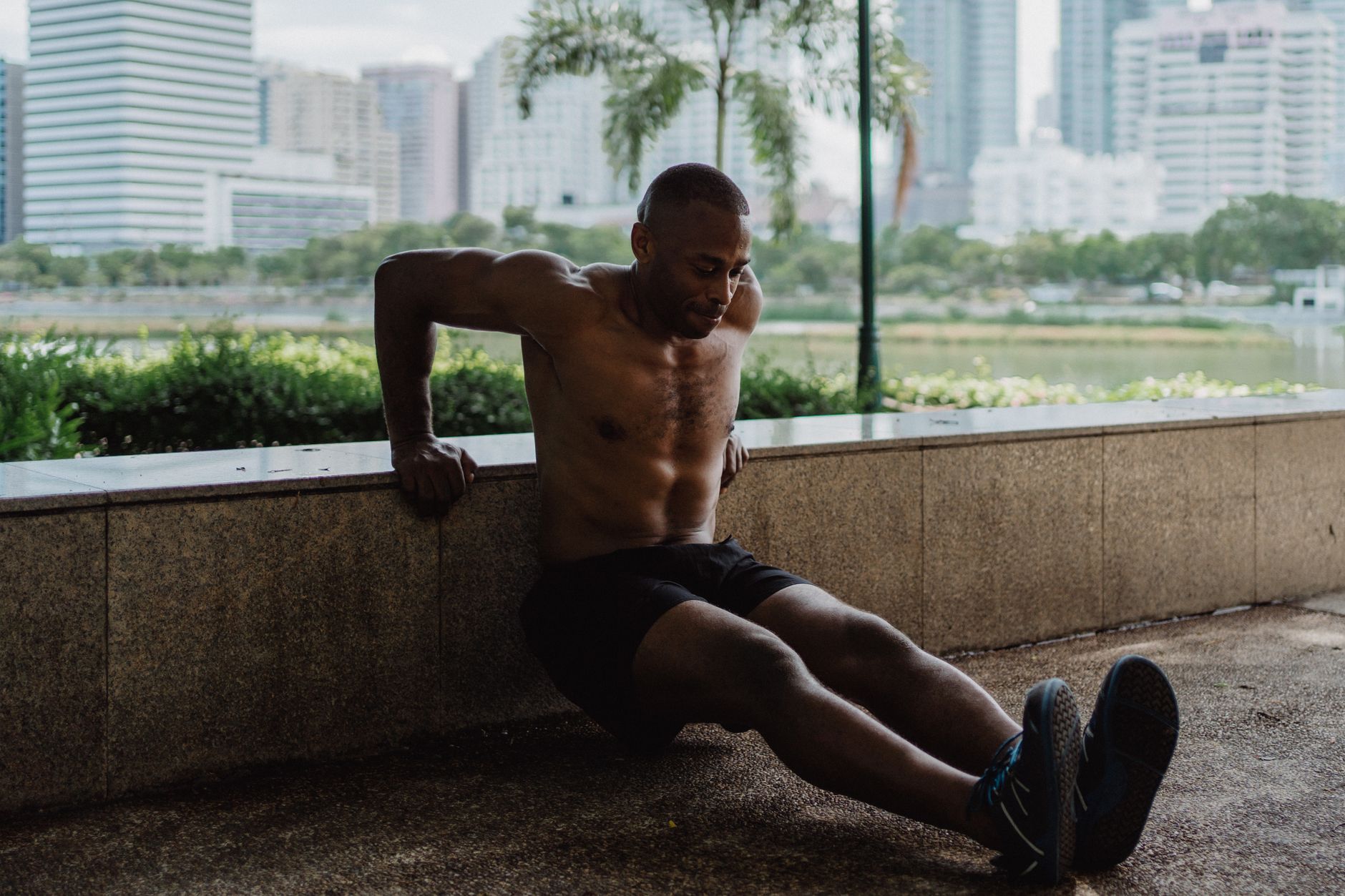
Bodyweight training isn't the right fit for everyone. Reconsider it, or pair it with equipment from day one, if any of these apply:
- You're training specifically for a strength goal — a target squat or deadlift number, for instance. Bodyweight squats won't get you there; you need a bar and plates from the start.
- Wrist or shoulder issues — push-ups and planks load the wrists in extension, which some shoulder or wrist conditions don't tolerate well. Dumbbells or a bench let you change the angle in ways bodyweight can't.
- You're underweight and trying to gain muscle — less mass to move means less resistance from the start, so the plateau in the section above arrives faster and added load matters sooner.
- You want measurable, trackable progress — "I added 2.5kg to my squat" is easier to track over months than "my push-ups felt slightly less hard today." If precise progress tracking motivates you, weights will keep you more honest.
If none of those apply, bodyweight training is one of the lowest-barrier ways to start training consistently — no membership, no equipment, no excuse left standing once the floor space is cleared.
Ready to add equipment once you hit the plateau? Browse strength training equipment at Flexi Muscles — free shipping on orders over R700.
Frequently Asked Questions
Can body weight training exercises build muscle?
Yes. Research comparing progressive bodyweight training to barbell back squat training found comparable gains in strength and hypertrophy when volume and difficulty are matched. The mechanism is the same as lifting weights — progressive overload — you just create it through reps, tempo, leverage, or single-limb variations instead of added plates.
How many days a week should you do bodyweight training?
Three to four sessions a week, with at least one rest day between sessions that hit the same muscle group. Two full-body sessions a week is enough to maintain strength; three to four is where most beginners see visible progress within six to eight weeks.
Are bodyweight training exercises enough for beginners?
Yes, for the first three to six months. Beginners are new to the movement patterns, so bodyweight resistance alone is enough stimulus to drive strength gains. The point where bodyweight alone stops being enough comes later, once basic variations get easy.
What is the hardest part of bodyweight training to progress?
Pulling movements. Push-ups and squats have dozens of harder variations using leverage and tempo. Pulling exercises like rows and pull-ups need either a bar, a low anchor point, or added resistance once bodyweight pull-ups become easy — there's no leverage trick that replaces a pulling surface.
Do you need equipment for body weight training exercises?
Not at the start. Push-ups, squats, lunges, and planks need nothing but floor space. A pull-up bar becomes useful within the first few months, since rows and pull-ups are hard to load any other way at home, and resistance bands extend nearly every exercise once bodyweight alone plateaus.