

Best Knee Wraps for Squats: How to Choose Them, Wrap Them, and When to Skip Them

By Flexi Muscles — 6 August 2026 · 9 min read
The best knee wraps for squats are the ones long enough and stiff enough to store real elastic tension — roughly 2 to 2.5 metres of a cotton-elastic or polyester-elastane blend with a secure hook-and-loop closure. Wrapped correctly, they can add up to around 32 kilograms to a heavy squat and speed up the ascent out of the bottom by roughly 20 percent. They're built for equipped and near-maximal lifting, not everyday training sets, and most beginners are better off in knee sleeves instead. If that's you, keep reading before you buy.
Shop Knee Wraps & Lifting Accessories at Flexi Muscles
What Knee Wraps Actually Do

A knee wrap is a long strip of elastic material you wind tightly around the knee before a heavy squat. As you descend, the wrap stretches and stores energy, the same way a spring loads when you compress it. On the way back up, that stored energy releases and helps drive you out of the bottom position. It's a mechanical effect, not a strength effect — the wrap doesn't make your quads or glutes stronger, it changes how much load your knees can handle on that one lift.
Done properly, the numbers are significant. Research and coaching data on wrapped squats put the added bar speed out of the hole at roughly 20 percent, and an experienced lifter using correctly wrapped wraps can add up to around 32 kilograms to a maximal squat. That's a meaningful jump, and it's the reason knee wraps show up almost exclusively in equipped powerlifting, where the goal is the heaviest possible single lift rather than sustainable training volume.
Straight up: this is not a beginner tool, and it's not meant to be worn for every squat session. Wraps are for a handful of maximal attempts, wrapped fresh each time, not for your Tuesday working sets. If you're chasing a bigger squat purely through better technique and more volume, a wrap won't get you there — it just changes the ceiling on a lift you've already built.
Knee Wraps vs Knee Sleeves

These two get confused constantly, and buying the wrong one means either wasting money or wasting a lift. The core difference is material and how tight they're meant to be worn.
Knee sleeves
Neoprene tubes that slide on and stay snug through a full range of motion. They generate warmth, give moderate compression, and add somewhere between roughly 4.5 and 23 kilograms to a squat — useful, but nowhere near the ceiling a wrap offers. You can wear sleeves for an entire training session, warm-ups included, without them getting in the way of normal knee bend.
Knee wraps
Elastic strips wound tight enough that bending the knee without load underneath it is genuinely difficult. That tightness is the entire point — it's what stores the elastic energy described above. Wraps are stiffer, take longer to put on correctly, and are built for single heavy attempts rather than sets of five or eight.
If you train for general strength and squat two or three times a week, sleeves are almost always the right purchase. If you compete in an equipped federation or you're specifically chasing a one-rep max with a coach who already understands wrapping technique, wraps earn their place.
Browse knee wraps, knee sleeves, and lifting accessories at Flexi Muscles to compare both before you buy.
How to Wrap Your Knees for Squats
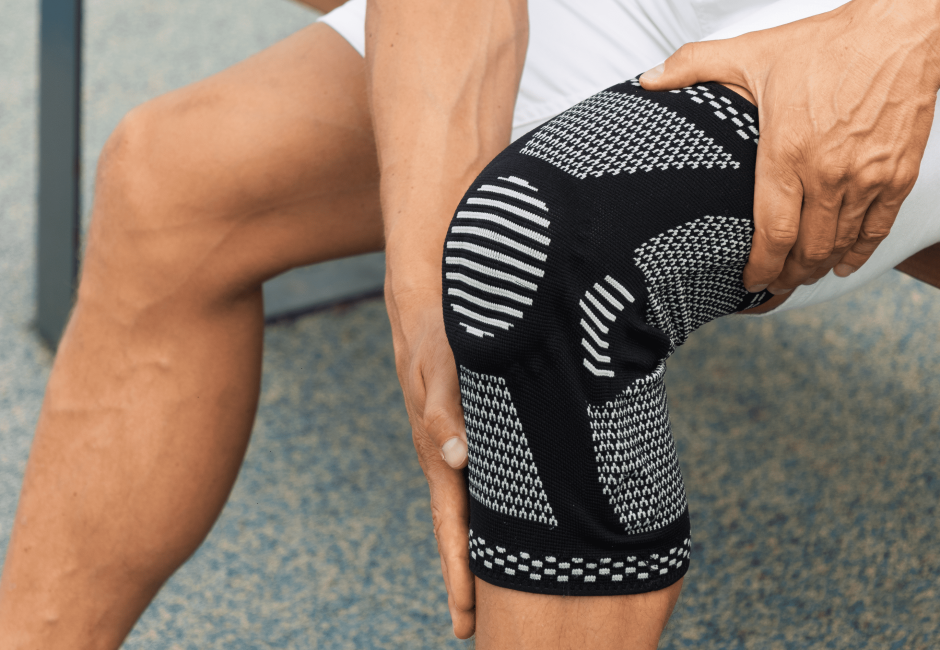
Wrapping technique makes or breaks how well a knee wrap performs. The basic pattern:
- Start just below the kneecap, angled slightly, and make one full wrap around the leg to anchor the material before you start building tension
- Cross diagonally over the kneecap, then continue in overlapping spirals up and down across the joint, pulling firm, even tension on every pass rather than one hard yank at the start
- Keep each wrap overlapping the previous one by roughly half its width — gaps between wraps create weak points where the knee can shift during the lift
- Finish with the tail secured flat against the leg using the hook-and-loop closure, with no loose material that could catch or unravel under load
Heads up: an unevenly wrapped knee is worse than no wrap at all, because it can pull the joint out of alignment under a heavy bar instead of supporting it. Practise the wrap on an empty bar or with a training partner before you use it on a real attempt, and treat the first few tries as genuinely clumsy — nobody wraps a clean, even spiral on attempt one, and pretending otherwise is how knees get hurt.
What to Look For When Buying Knee Wraps
Length
Most quality wraps run 2 to 2.5 metres long. Anything shorter runs out of material before you've built enough tension around the joint, which caps how much support the wrap can actually provide, regardless of how tightly you pull it.
Material
Cotton-elastic blends are softer, cheaper, and a reasonable starting point for learning technique. Polyester-elastane blends hold their stretch longer, store more energy per wrap, and are the standard among competitive lifters — at a higher price and a steeper learning curve to wrap consistently.
Width and closure
Around 7.5 to 8 centimetres wide is standard and gives enough surface area to overlap cleanly without bunching. A secure hook-and-loop closure at the tail matters more than it sounds — a closure that slips mid-set undoes the entire wrap under the heaviest load you'll put through it.
For a complete overview of squat and strength training equipment, browse the strength training range at Flexi Muscles.
When to Use Knee Wraps — and When to Skip Them

Use knee wraps for:
- Equipped powerlifting — wraps are permitted alongside supportive squat suits in the equipped division, where they're a standard part of the kit
- Near-maximal single attempts — a one-rep or two-rep max where the extra elastic return genuinely changes what you can lift that day
- Lifters with established, reliable squat technique — wraps amplify a movement pattern that already works; they don't fix one that doesn't
Skip knee wraps for:
- Raw powerlifting — the IPF and most raw federations allow knee sleeves but not wraps in raw competition, so wraps are simply the wrong tool if that's your division
- Regular training sessions and higher-rep sets — wraps are built for single heavy attempts, not sets of five or eight, and wearing them for everyday volume adds fatigue to your wrapping routine without a training benefit to match
- Beginners still building squat depth and bar path — adding load to a movement pattern that isn't consistent yet is how bad habits get reinforced under heavier weight
- Anyone squatting through existing knee pain — a wrap can mask discomfort that's telling you something useful; get the joint assessed before you load it further, not after
If most of that second list sounds like you, buy knee sleeves instead — you'll get the warmth and moderate support you actually need without the wrapping learning curve or the competition-rule mismatch.
Frequently Asked Questions
What do knee wraps actually do for a squat?
Knee wraps store elastic energy as they stretch through the bottom of a squat, then release that energy back into the ascent, similar to a spring being compressed and let go. Wrapped correctly, they can add up to roughly 32 kilograms to a squat and increase bar speed out of the hole by around 20 percent. They don't strengthen your quads or glutes — they change how much load your knees can handle on a single heavy lift.
Should I buy knee wraps or knee sleeves?
Sleeves for most lifters, wraps for competitive or near-maximal equipped squatting. Sleeves are neoprene, give moderate compression, keep the joint warm, and let you move freely through a full training session. Wraps are pulled tight enough that bending the knee without load is genuinely difficult, and they're built for single heavy attempts, not sets of eight. If you squat three times a week for general strength, sleeves are the tool you actually need.
How tight should knee wraps be for squats?
Tight enough that straightening your leg fully without a bar on your back feels awkward. That's not a wrapping mistake — it's the point. The tension is what stores and returns energy through the squat. If you can bend and straighten your knee comfortably with the wrap on, it's too loose to do anything useful on a heavy lift.
Are knee wraps allowed in raw powerlifting?
No. The IPF and most raw federations permit knee sleeves but not knee wraps in raw competition — wraps are reserved for the equipped division alongside supportive squat suits. If you compete raw, train and compete in sleeves. Buying wraps for a raw meet is a wasted purchase, however good the wrap.
Should beginners use knee wraps?
No. Wraps are built for lifters who already own solid squat technique and are chasing single heavy attempts, typically in an equipped or push-pull context. A beginner still building depth, bar path, and knee tracking gets nothing from a tool designed to add weight to a movement pattern that isn't reliable yet. Knee sleeves, or no support at all, are the better starting point.
What length and material should I look for in knee wraps?
Most quality wraps run 2 to 2.5 metres long and 7.5 to 8 centimetres wide, woven from a cotton-elastic or polyester-elastane blend with a hook-and-loop closure at the end. Shorter wraps run out of length before you've built enough tension; anything under 2 metres is worth avoiding for serious use. Stiffer, higher-elastane blends store more energy but take longer to learn to wrap consistently.