

Best Indoor Workout Equipment: What to Buy First for a Home Gym

By Flexi Muscles — 23 June 2026 · 9 min read
The best indoor workout equipment for most people is one adjustable dumbbell set, a set of resistance bands, and a mat — that combination covers strength and mobility training for the full body without a dedicated room. Cardio machines, multi-gyms, and specialty tools earn their place later, once a specific goal or a maxed-out basic kit makes the case for them. Buying everything at once is the single most common mistake in this category.
Shop Strength Training Equipment at Flexi Muscles
What "Indoor Workout Equipment" Actually Covers

The term covers three different categories that buying guides usually blend together: strength tools (dumbbells, kettlebells, bands), cardio tools (jump ropes, rowing machines, bikes), and mobility or recovery tools (mats, foam rollers). Most lists recommend one of each without asking which one you actually need.
That's the gap worth closing first. A person training for strength and a person training for cardio endurance need almost no overlapping gear past a mat. Treating "indoor workout equipment" as a single shopping list is how people end up with a rowing machine gathering dust next to dumbbells they never upgraded.
The next section covers the five pieces that show up in almost every functioning home gym, regardless of goal. After that, the kit splits by what you're actually training for.
The Five Pieces Most Home Gyms Actually Use

1. Adjustable dumbbells
One pair that changes weight covers presses, rows, squats, lunges, and curls without a rack of fixed pairs taking over the room. This is the single highest-value purchase in indoor training because it scales with you for years instead of months.
2. Resistance bands
Bands load a movement differently to a dumbbell — resistance increases as the band stretches, which keeps tension on a muscle through the top of a rep that free weights let coast. They also travel, which dumbbells don't.
3. A kettlebell
One kettlebell adds a swing, a clean, and a Turkish get-up to a programme that a dumbbell can't replicate as well. It's not essential alongside dumbbells, but it's the next purchase most people make once the basic kit feels complete.
4. A jump rope
The cheapest, smallest piece of cardio equipment that exists, and the one most home gyms skip in favour of something bulkier. Ten minutes of rope work raises heart rate as effectively as most cardio machines, for a fraction of the floor space.
5. A mat
Protects the floor, cushions kneeling and lying movements, and gives dumbbells somewhere to land that isn't tile or carpet. It's the least exciting item on this list and the one every other piece of equipment depends on.
Building a Kit Around Your Training Goal

The five pieces above are the floor, not the ceiling. Past that point, the next purchase depends entirely on what you're training for.
Strength-focused: add a second, heavier kettlebell or a barbell and plates once dumbbells stop being enough resistance. A bench comes next, since presses and rows improve sharply once the body isn't stabilising on the floor.
Cardio-focused: a jump rope and bodyweight circuits cover the first few months. Past that, a rowing machine or exercise bike adds sustained, low-impact volume that a rope alone can't deliver in a 30-45 minute session.
General fitness: the five-piece basic kit, used consistently, outperforms a specialised setup that only gets used for one type of session. Add a second dumbbell weight or a second band tension before adding a new category of equipment.
Shop cardio equipment at Flexi Muscles once a programme actually calls for it, rather than buying it as a placeholder for a goal that hasn't been set yet.
Equipment That's Not Worth Buying First
Every buying guide recommends what to get. Almost none say what to skip, which is the bigger favour to a beginner's budget and floor space.
- Vibration plates — marketed as a shortcut to fat loss, but the evidence for that claim is thin. They're a recovery and circulation tool at best, not a substitute for resistance training.
- Ab-specific machines — a crunch machine trains one muscle group through one plane of movement. A plank and a loaded carry train the same muscles plus the stabilisers the machine ignores, for free.
- All-in-one multi-gyms for beginners — these solve a problem you don't have yet. A new lifter gets more out of a dumbbell set and a year of consistent training than a cable tower with twelve attachments and one user who knows how to set it up.
- A second cardio machine — a bike and a rower cover the same energy system. Buying both before either gets used three times a week is buying redundancy, not progress.
My opinion, and most equipment guides won't say it this directly: a beginner with five pieces of equipment and a consistent four-day programme will out-train a beginner with fifteen pieces of equipment and a programme that changes every two weeks. The kit was never the limiting factor.
Fitting Equipment Into a Small Space
Resistance bands, a jump rope, and a folding mat store in a drawer and weigh under two kilograms combined — that's most of a functional kit gone the moment a session ends. Adjustable dumbbells are the next most compact option, replacing what would otherwise be a full rack of fixed pairs with one set that changes weight via a dial or pin.
Where space is genuinely tight, train in the order that needs the least equipment out at once: bodyweight or band work first, dumbbells second, anything that needs to stay assembled (a bench, a rack) last and only once the room can spare it permanently.
Common Mistakes When Buying Indoor Workout Equipment
- Buying a fixed weight that's too light within a month — a single pair of 5kg dumbbells gets outgrown fast. Adjustable sets avoid the repeat purchase.
- Skipping the mat — dropped weights and bare flooring don't mix, and the repair bill costs more than the mat would have.
- Buying for the workout you wish you did — a rowing machine bought for a cardio habit that hasn't started yet usually becomes a clothes rail within a season.
- Ignoring noise — dropped dumbbells and jump rope landings carry through floors in apartments. Rubber matting solves this before it becomes a conversation with a downstairs neighbour.
- No plan for storage — equipment left out permanently turns a lounge into a gym whether that was the plan or not. A simple bag or shelf keeps the room doing both jobs.
Who Should Hold Off on a Full Set
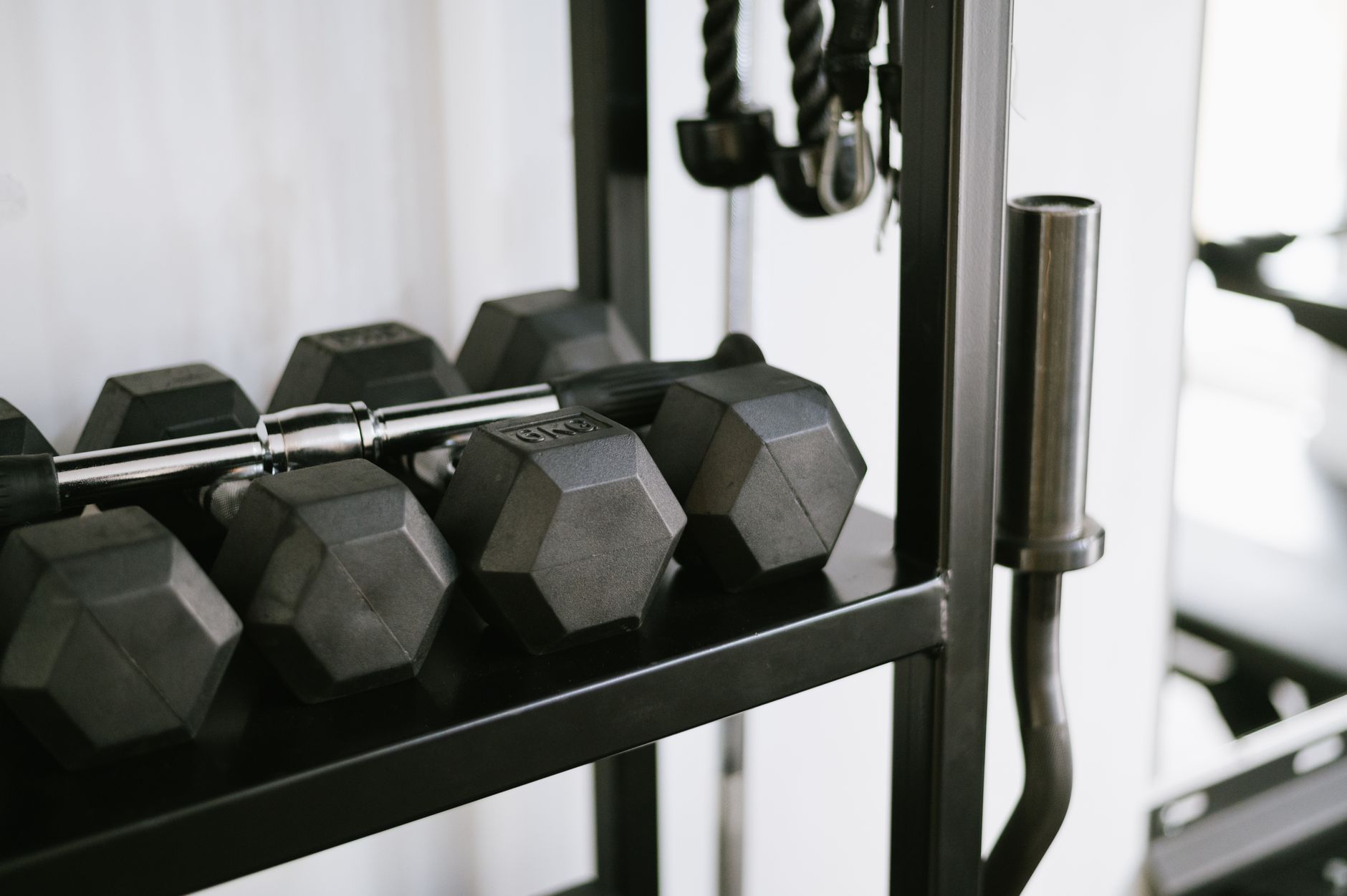
A full indoor setup isn't the right first purchase for everyone. Hold off, or start smaller, if any of these apply:
- You haven't trained consistently for at least a month — a resistance band and bodyweight circuit prove the habit before the budget goes toward dumbbells and machines.
- You already belong to a gym you actually use — a band or a single kettlebell covers the gap-filling sessions at home. Duplicating a full gym indoors solves a problem you don't have.
- You're renting somewhere temporary — bands, a rope, and one adjustable dumbbell set move in a single bag. A bench, a rack, and a multi-gym don't.
- You haven't picked a training goal yet — strength and cardio kits diverge fast past the basic five pieces. Buying ahead of a goal usually means buying the wrong half of the kit.
If none of those apply, the basic kit is worth building properly the first time rather than piecing it together with whatever's on sale.
Ready to start with the basics? Shop strength training equipment at Flexi Muscles, or browse resistance bands if you're starting smaller.
Frequently Asked Questions
What equipment do I actually need to start working out at home?
One adjustable dumbbell set or pair of kettlebells, a set of resistance bands, and a mat. That covers strength and mobility for almost any beginner programme. Cardio equipment is the next purchase, not the first one, unless cardio is the actual goal.
What is the minimum equipment for a full-body workout at home?
A single adjustable dumbbell set covers presses, rows, squats, and curls for every major muscle group. Add a resistance band for the angles dumbbells can't reach, like banded lateral walks and pull-aparts, and the minimum kit is complete.
Can resistance bands replace dumbbells for strength training?
For beginners, mostly yes. Bands build real strength through a full range of motion and travel better than weights. Past an intermediate strength level, bands stop adding resistance fast enough and dumbbells or a barbell take over as the main tool.
What indoor workout equipment takes up the least space?
Resistance bands, a jump rope, and a folding mat store in a drawer and weigh under two kilograms combined. Adjustable dumbbells are the next most compact option, replacing a full rack of fixed pairs with one pair that changes weight.
Do I need cardio equipment if I already have weights at home?
No. A jump rope or bodyweight circuit between strength sets raises heart rate without a separate machine. Dedicated cardio equipment earns its floor space once the goal shifts to sustained conditioning a rope or circuit can't replicate indoors.