

Best Fabric Resistance Bands: What Actually Makes One Worth Buying

By Flexi Muscles — 30 June 2026 · 10 min read
The best fabric resistance bands have a tight weave, stitched (not glued) seams, and a non-slip lining that holds its place against bare skin through a full set. Width matters almost as much as tension: a band 5 to 7.5cm wide spreads pressure across more of the leg, so it grips without pinching or rolling the way a thin latex loop does. A set with three tension levels covers nearly every booty and leg exercise you'll actually do.
Shop Fabric Resistance Bands at Flexi Muscles
What Makes a Band "Fabric" Instead of Latex
A latex loop band is one continuous strip of rubber. A fabric resistance band is a sleeve woven from cotton or polyester, with one or more latex strips stitched inside it for the actual stretch. The fabric shell is doing the job that bare latex used to do on its own: gripping skin, spreading load, and stopping the band from rolling into a thin cord mid-set.
That construction is why fabric bands feel stiffer out of the packet than latex loops. You're not stretching rubber directly, you're stretching rubber wrapped in woven fabric, which adds resistance to the resistance. Most people read that stiffness as quality on first use, and they're not wrong — it's the seams and the weave doing exactly what they're built for.
The stitching is the part worth inspecting before anything else. A band sewn through with a locked seam holds its shape for years. A band held together with glue or a single row of loose stitching splits at the seam within months of regular squats, usually right where the band sits across the widest part of the thigh.
Why Fabric Wins for Glutes and Legs
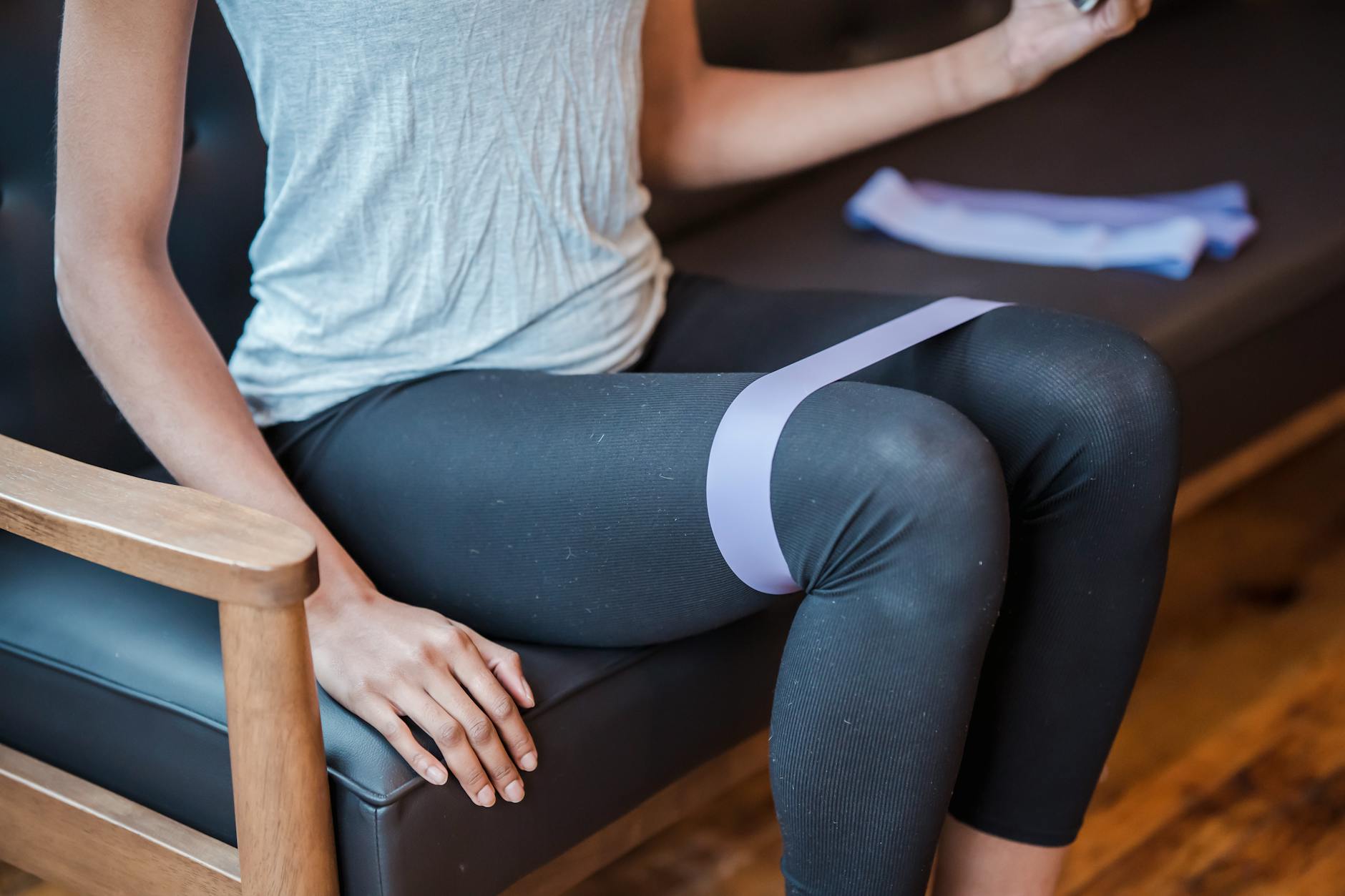
Lower-body exercises are where the fabric-versus-latex gap shows up fastest. A lateral band walk or a banded glute bridge keeps a band under constant tension against skin for the length of a whole set, which is exactly the situation a thin latex loop handles worst.
Three things change once the band is fabric instead of latex:
- It stays where you put it. The textured lining grips skin or leggings, so the band doesn't creep up the thigh after the third rep the way a smooth latex loop does.
- The pressure spreads out. A wider band distributes load across more skin, which is the difference between mild resistance and a band that leaves a visible welt after a heavy set.
- It survives sweat. Latex bands degrade faster when damp; fabric shells handle a sweaty session and a wash without the cracking that shortens a latex band's life.
None of that makes fabric bands stronger, gram for gram, than latex. A thin latex loop can still hit a higher resistance number than a wide fabric band of the same size. Fabric wins on staying in position and lasting longer, not on raw tension per centimetre of rubber.
What to Check Before You Buy
Most "best fabric resistance bands" comparisons focus on brand names. What actually determines whether a set is worth the money is four things you can check on any band, regardless of who makes it:
- Width: 5 to 7.5cm spreads load well for squats, bridges and walks. Anything narrower than 4cm starts to dig in under heavier tension.
- Seam construction: a locked, double-stitched seam outlasts a glued or single-stitched one by a wide margin.
- Tension spread: a three-band set — light, medium, heavy — covers small isolation moves and heavier compound lifts without needing a fourth or fifth band most people never touch.
- Lining grip: a textured or rubberised interior stops slipping. A smooth fabric interior looks identical on a product photo but slides almost as much as bare latex.
Price tends to track these features fairly closely, since wider bands with locked seams and grip linings simply use more material and labour to make. A set that's dramatically cheaper than the rest of the market has usually cut one of the four corners above.
Fabric vs Latex: The Real Trade-Offs
Neither material is the better band outright. They're suited to different parts of a workout:
- Fabric bands — best for lower-body work where the band sits directly against skin for an entire set: squats, bridges, lateral walks, donkey kicks, clamshells.
- Latex loop or tube bands — best for upper-body work, assisted pull-ups, and anywhere the band moves quickly or needs to thread through a handle, since the thinner profile flexes more easily.
- Latex tube bands with handles — still the right call for Romanian deadlifts and rows, where a fabric loop's width gets in the way of a clean grip.
A practical set covers both: two or three fabric bands for legs and glutes, plus one tube band with handles for upper-body and hinge movements. Buying only fabric bands leaves rows and presses without a tool; buying only latex leaves every lower-body exercise fighting a band that won't stay put.
How to Use Fabric Resistance Bands

A fabric band earns its keep across a small set of moves rather than one signature exercise. Run these five as a circuit, 12 to 15 reps each, three rounds:
1. Banded squat
Band above the knees, feet shoulder-width apart. Push the knees outward against the band on the way down and the way up. This is the move that exposes a band that's too narrow or too smooth fastest, since it slides exactly where you need it to hold.
2. Lateral band walk
Band above the knees, quarter-squat stance, step sideways for 10 to 12 steps each direction. This targets the glute medius, the muscle on the side of the hip that squats and lunges barely touch on their own.
3. Banded glute bridge
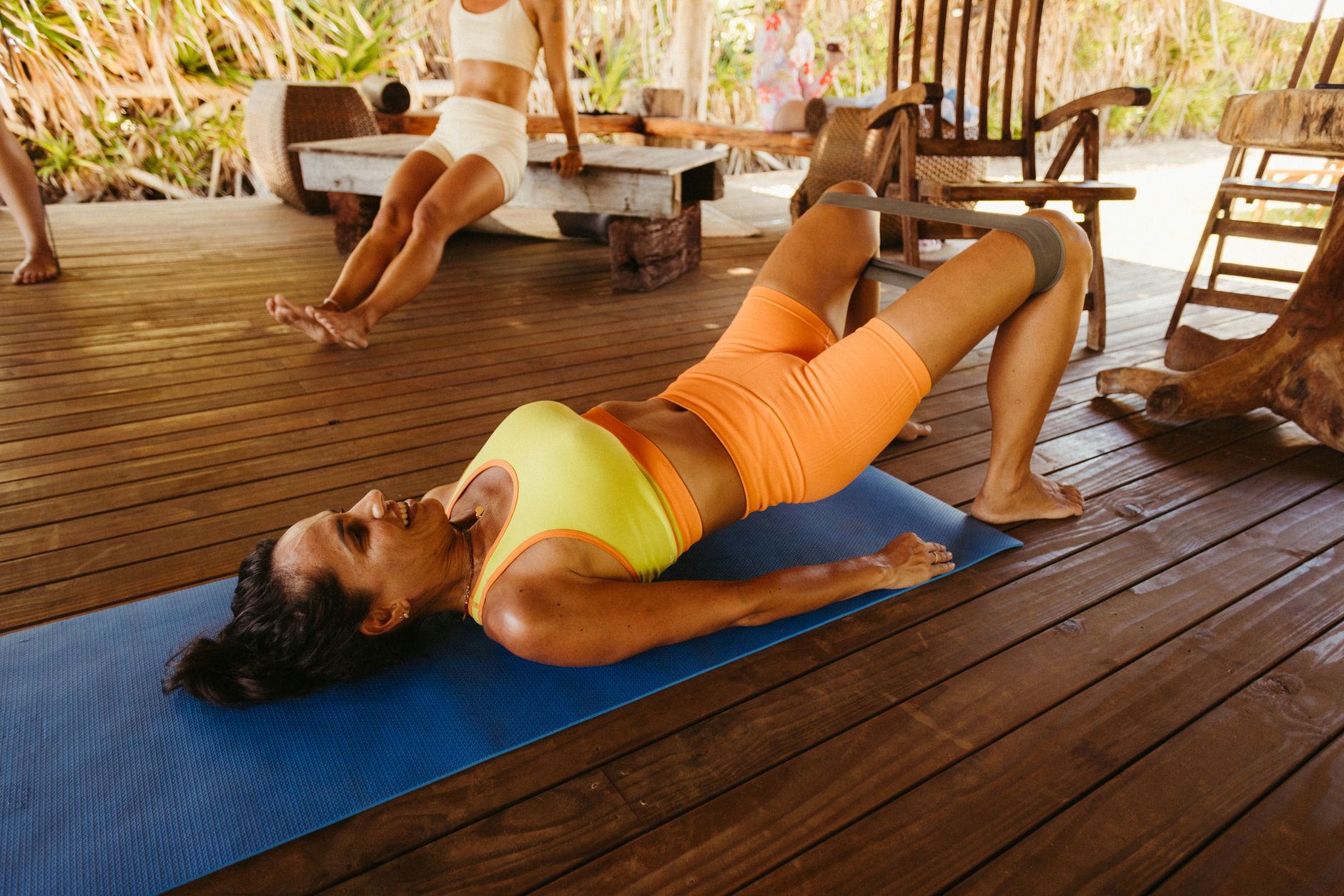
Band above the knees, lie on your back, feet flat and hip-width apart. Drive through the heels, press the knees outward against the band at the top, and hold for a second before lowering.
4. Donkey kick and fire hydrant
Band above the knees, on hands and knees. Kick one leg straight back, return, then lift it out to the side before switching legs. Both moves hit the glutes from different angles in one set.
5. Clamshell
Band above the knees, lie on your side with knees bent and stacked. Keeping feet together, open the top knee against the band like a clamshell opening, then close slowly. Light tension only; this is a small muscle and a heavy band just recruits the hip flexor instead.
Run that circuit two to three times a week with at least one rest day between sessions for the same muscle group. Increase difficulty by moving up a tension tier before adding a fourth round — an extra round on a band that's too light trains endurance, not strength.
Caring for Your Bands
Fabric and latex bands need different care, and treating them the same shortens whichever one you get wrong. A fabric band can go on a gentle, cold machine cycle inside a wash bag and air dry flat afterwards. A bare latex band should never be soaked or machine washed; wipe it down with a damp cloth instead, since trapped moisture speeds up the cracking that ends a latex band's life.
Skip the tumble dryer for either material. Heat is what breaks down the latex core stitched inside a fabric band's shell, even though the fabric itself would survive the dryer fine. Store bands flat or loosely rolled rather than knotted, since a permanent crease is where the next tear starts.
Buying in South Africa: What Actually Matters Here

Most fabric resistance band guides are written for a cooler climate and skip a detail that matters here: heat and sweat both accelerate latex breakdown, and most South African training happens in conditions that produce plenty of both, whether that's a back-room gym without aircon or an outdoor session in summer. A fabric shell isn't just about grip in these conditions — it's protecting the latex core from exactly the environment it degrades fastest in.
The other local consideration is replacement. Imported "best of" lists assume you can reorder a single band from the same range when one wears out. Buying a set from a local seller who stocks ongoing means a worn band gets replaced without waiting on international shipping, which matters more for a R200 accessory than it does for equipment you'd only buy once.
Who Shouldn't Buy Fabric Resistance Bands
Fabric bands aren't the right purchase for everyone. Skip them, or treat them as a small addition rather than the main event, if any of these apply:
- You're training upper body more than legs. Fabric bands are built for skin contact under tension. For pull-up assistance, rows or presses, a latex tube band with handles does the job better and costs less.
- You're already squatting or deadlifting with a barbell. Bands can't progressively overload the way adding plates does. Use them as a warm-up activator or finisher, not a replacement for working sets.
- You're rehabbing a current knee or hip injury. A physiotherapist can prescribe specific band exercises and placements for your case. A generic buying guide isn't a substitute for that assessment.
- You want one band that does everything. No single fabric band covers both heavy squats and light clamshells well. Buying a tiered set costs more upfront but avoids the false economy of one band that's wrong for half your exercises.
If none of those apply, a fabric band set is one of the cheapest, most space-efficient ways to add real glute and leg work to a small home gym — no rack, no bench, and the whole set fits in a drawer.
Ready to build your own set? Shop fabric resistance bands at Flexi Muscles. If you're past the point bands can progress you on squats and deadlifts, see our strength training equipment range instead.
Frequently Asked Questions
Are fabric resistance bands better than rubber bands?
For glute and leg work, yes. Fabric bands grip skin instead of sliding, spread pressure across a wider surface so they don't pinch, and resist the fold-line cracking that ends a latex band's life. Rubber bands stay the better choice for upper-body and travel use, where their thinner profile and lower price matter more than grip.
Do fabric resistance bands lose tension over time?
Every band loses some tension with use, but a woven fabric band holds its resistance far longer than latex because it isn't relying on a single layer of rubber to snap back into shape. Visible thinning, fraying at the stitched seam, or a band that no longer feels taut at rest are the signs to replace it.
What resistance level should I start with?
Start light enough to hit 12 to 15 clean reps with the band staying taut through the whole movement. Most beginners undershoot and pick a band so light it does nothing past the first few reps, then assume bands don't work rather than sizing up.
Can you machine wash fabric resistance bands?
Most fabric bands can go on a gentle, cold cycle inside a wash bag, then air dry flat. Skip the tumble dryer, since heat breaks down the latex core stitched inside the fabric shell faster than normal use does.
Are fabric resistance bands good for beginners?
Yes, more so than latex loop bands for anyone new to banded training. They stay in place during squats and walks without constant readjusting, which means a beginner spends a session learning the movement instead of fighting the equipment.