

Bench Press Workout: Proper Form, Variations and a Beginner Routine
By Flexi Muscles — 10 September 2026 · 11 min read
A bench press workout trains your chest, shoulders and triceps in a single compound lift, done lying on a flat bench and pressing a loaded barbell or dumbbells from chest height to lock-out. Strength Level's dataset of 9.9 million logged male lifts puts a beginner 1-rep max at 49kg, moving to 96kg once you're intermediate. Form matters more than load here — most of the mistakes below come from chasing a heavier number before the bar path and shoulder position are locked in.
Shop Weight Benches and Barbells at Flexi Muscles
Muscles a Bench Press Workout Trains

The prime mover is the pectoralis major, the fan-shaped muscle across your chest, doing most of the pressing work through the middle of the range. Your triceps take over hardest at lock-out, and your anterior deltoids assist throughout, especially off the chest.
Your upper back and lats stay switched on the whole set, too — they're what you're pressing against, not what's pressing the bar, which is why a loose upper back turns a stable lift into a wobbly one.
Your forearms and wrists do quieter work as stabilisers, keeping the bar level over your joints rather than letting it tip forward into your fingers. A wrist that bends backward under load is usually a grip or wrist-wrap problem, not a strength problem, and it shows up long before the weight gets heavy enough to explain it.
How to Bench Press With Proper Form

- Lie back with your eyes roughly under the bar, feet flat on the floor, shoulder blades pulled together and down into the bench
- Grip the bar slightly wider than shoulder width — too narrow shifts load onto the triceps and shoulders, too wide shortens the range but strains the shoulder joint
- Unrack the bar over your shoulders, not your face, then lower it to your sternum in a straight line rather than toward your collarbone
- Keep your elbows at roughly a 45-degree angle to your torso, not flared out to 90 degrees, which loads the front of the shoulder more than the chest
- Drive your feet into the floor as you press, and exhale through the sticking point instead of holding your breath all the way to lock-out
The bar should touch roughly at nipple height, not higher up near the collarbone — where exactly depends on your proportions, but the touch point stays consistent rep to rep once you find it. If the bar drifts toward your face as the set gets harder, that's fatigue changing your bar path, not a deliberate choice, and it's the point to end the set rather than push on.
How Much Should You Lift? Real Benchmark Numbers
Strength Level's numbers come from 48.7 million lifts logged by its users between 2014 and 2026, filtered down to 9.9 million qualifying male results and just over 1 million qualifying female results. Here's where that puts a 1-rep max, by level:
| Level | Men (1RM, kg) | Women (1RM, kg) |
|---|---|---|
| Beginner | 49 | 19 |
| Novice | 70 | 33 |
| Intermediate | 96 | 51 |
| Advanced | 127 | 72 |
| Elite | 160 | 97 |
My honest opinion: the jump from beginner to novice — 49kg to 70kg for men — is smaller than most lifters assume, and it closes faster through cleaner technique than through months of chasing extra plates. Treat this table as a benchmark to check your training against, not a target to hit inside your first few sessions.
Strength Level's community-wide table isn't adjusted for your own bodyweight, and a 90kg lifter and a 60kg lifter both showing a 96kg bench aren't equally strong relative to their frame. If you want a number that means more to you specifically, the site's own bodyweight and age breakdown is worth a look before you compare yourself to the headline figures above.
Bench Press Variations to Add to Your Workout
- Incline bench press (30–45 degrees) shifts more load onto the upper chest and front delts — worth rotating in if your upper chest lags behind the rest of your pressing
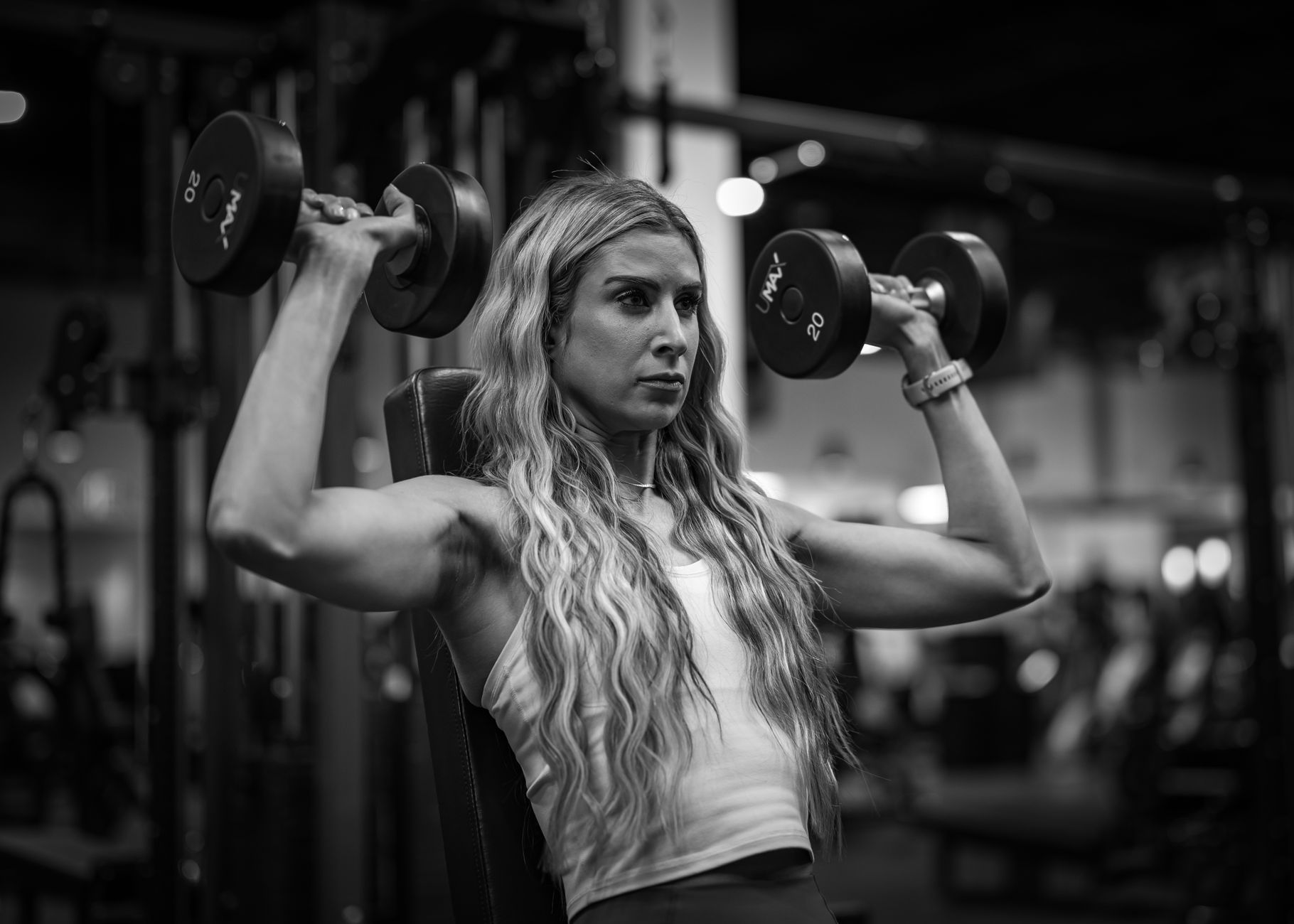
- Bench press dumbbell variation removes the fixed bar path, forcing each arm to stabilise independently, which is useful for catching a strength imbalance a barbell can hide
- Close-grip bench press, hands just inside shoulder width, shifts emphasis onto the triceps and suits days you're training arms rather than chest
- Floor press, lying on the ground instead of a bench, shortens the range of motion and removes leg drive, which makes it a safer option for pressing heavy without a spotter
- Paused bench press, holding the bar still on your chest for one to two seconds before pressing, strips out the bounce and forces you to build force from a dead stop — useful if your sticking point is right off the chest
Rotate one variation into your routine at a time rather than swapping the whole session around each week. Two or three weeks on close-grip work, for example, gives you enough exposure to feel whether your triceps were actually the weak link before you move on.
A Beginner Bench Press Workout You Can Run at Home
This bench press program runs on two sessions a week, at least 48 hours apart, so your chest and triceps recover between sets.
- Weeks 1–2: 3 sets of 8 reps at a weight you could lift for 12, leaving room in reserve while the movement pattern beds in
- Weeks 3–4: 4 sets of 6–8 reps, adding 2.5kg once every rep of every set is completed with good form
- Weeks 5–6: 3 sets of 5 reps at a heavier load, with a lighter dumbbell bench press or push-up finisher for extra volume
Warm up with two light sets on the empty bar or a pair of light dumbbells before loading up — cold shoulders are where most bench press niggles start.
Rest 90 seconds to two minutes between sets in weeks 1–2, stretching that to two to three minutes once the load climbs in weeks 3–6 — a rushed rest period is the fastest way to turn a strength set into a fatigue set. If week 5 or 6 leaves you missing reps you hit cleanly the week before, drop back to the weight from two weeks ago for a session rather than pushing through on worse form.
Training Without a Spotter

Most home gyms don't have a spotter standing by, so build your own safety margin in instead of relying on someone catching a failed rep.
- Set the safety pins on your rack just below chest height, so a failed lift lands on the pins, not your ribs
- Stay a rep or two short of failure on heavy sets — a bench press workout done alone isn't the place to grind out a shaky last rep
- Favour dumbbells or a floor press when training solo and pushing close to your limit, since both let you bail out sideways or drop the weight instead of being pinned
- Learn the roll-of-shame technique — tipping a stuck barbell down onto your torso and rolling it to your hips to sit up — as a genuine last-resort escape, not a joke
Your dog watching from the doorway is moral support, not a spotter, however much the tail wagging helps.
Training without a rack? Browse strength training equipment at Flexi Muscles for benches and safety attachments that make solo sessions safer.
Common Bench Press Mistakes
- Bouncing the bar off your chest to generate momentum, which strips tension from the chest and adds unnecessary strain to the sternum
- Flaring your elbows to 90 degrees, which loads the front of the shoulder more than the chest and is a common source of shoulder pain
- Lifting your hips off the bench to grind out a rep, which shortens the range and can flag as a no-lift in competition settings
- Skipping leg drive entirely, treating your feet as decoration instead of using them to stabilise the lift
- Chasing 1kg jumps every session instead of banking a few clean sessions at one weight first
Who Should Skip the Bench Press
The bench press isn't the right lift for everyone, and swapping it out isn't a compromise.
- You have an existing shoulder impingement or rotator cuff issue — the bottom position loads the front of the shoulder capsule more than most pressing movements, and a floor press or push-up progression is the safer starting point
- You're training completely alone with a fixed barbell and no rack or safety pins — a heavy failed rep with nowhere for the bar to go is a genuine way to get hurt, not a hypothetical one
- You're chasing a bigger number for its own sake — a stronger press means little if your shoulders are the trade-off, and dumbbell or machine pressing builds most of the same muscle with less joint stress
If none of that applies, it's one of the most efficient upper-body lifts you can add to a home gym.
Frequently Asked Questions
How much should a beginner be able to bench press?
Strength Level's data, drawn from 9.9 million qualifying male lifts and just over 1 million qualifying female lifts logged between 2014 and 2026, puts a beginner 1-rep max at 49kg for men and 19kg for women. Treat that as a benchmark to check your training against over the first few months, not a number to chase in your first session.
Is it safe to bench press without a spotter?
It's safe if you build your own safety margin in. Set the safety pins on your rack just below chest height so a failed rep lands on the pins rather than your ribs, stay a rep or two short of failure on heavy sets, and favour dumbbells or a floor press when you're pushing close to your limit alone, since both let you bail out without being pinned under the bar.
How often should you train bench press each week?
Twice a week, at least 48 hours apart, suits most beginners and lets the chest, shoulders and triceps recover between sessions. Training it more often tends to add fatigue faster than it adds strength unless the extra sessions are kept deliberately light.
What's the difference between barbell and dumbbell bench press?
A barbell fixes both hands to the same bar path, which lets you move more total weight but can mask a strength imbalance between your left and right side. Dumbbells force each arm to press and stabilise independently, which corrects that imbalance and increases the range of motion slightly, at the cost of a lower weight ceiling and a steeper stabilisation demand.
Is a bench press workout enough on its own for a full chest workout?
On its own it trains the middle and lower chest well but leaves the upper chest and shoulder stability comparatively undertrained. Pairing it with an incline press variation and a pulling movement for the upper back gives a more complete session than bench pressing alone.