

Battle Rope Workout Guide: Exercises, Benefits, and How to Choose

By Flexi Muscles — 29 June 2026 · 8 min read
A battle rope is a thick, heavy rope — typically 1.5 to 2 inches in diameter and 30 to 50 feet long — anchored at a fixed point. You hold one end in each hand and drive waves, slams, or lateral movements through the rope. Your shoulders, arms, core, and legs work simultaneously, with heart rate climbing to cardio levels within the first 30 seconds. It is one of the few pieces of equipment where a single movement delivers a full-body conditioning session in under 15 minutes.
Shop Gym & Conditioning Equipment at Flexi Muscles
What a Battle Rope Is and Why It Works
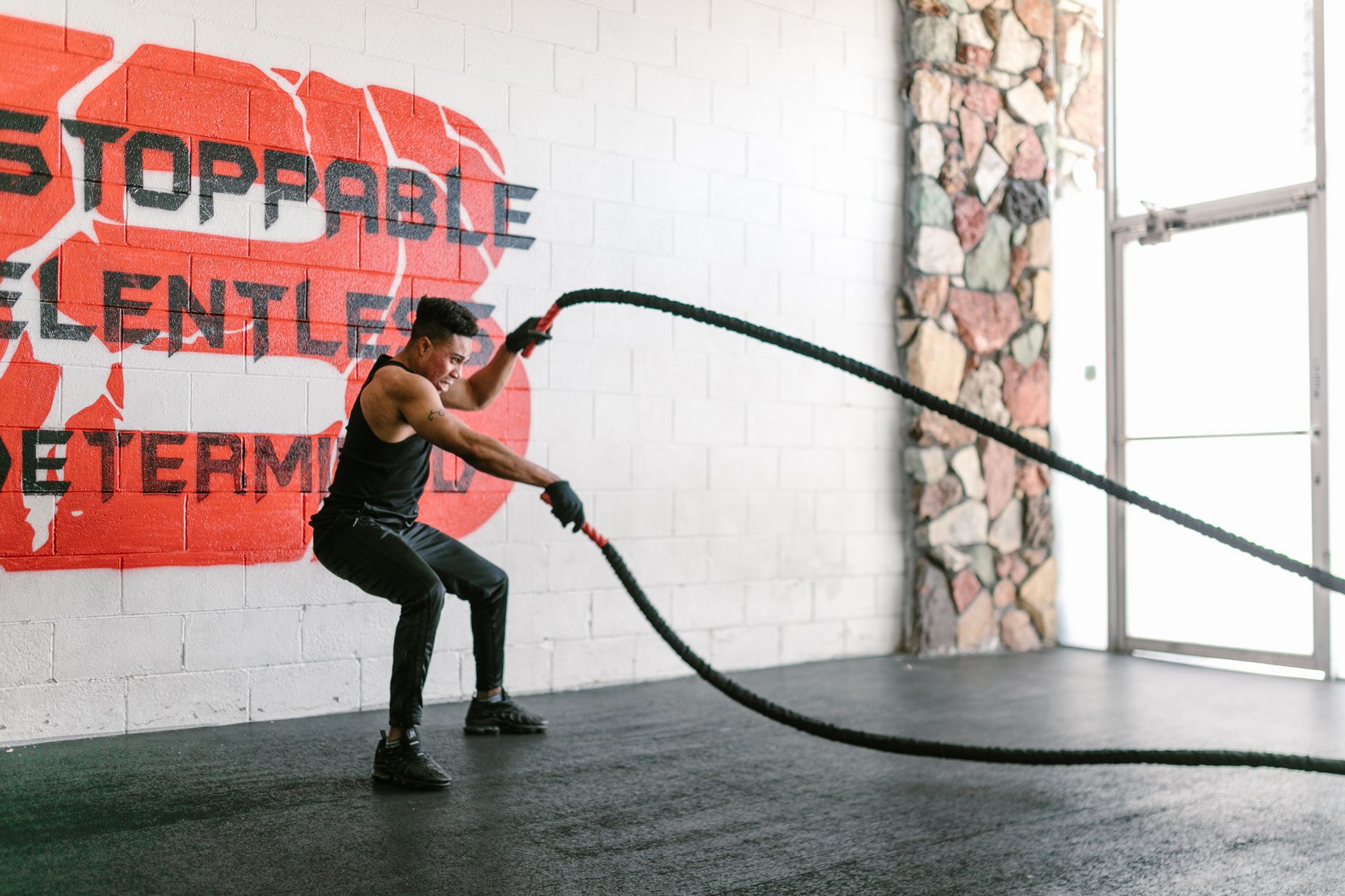
The mechanics are straightforward. When you move a rope that is anchored at the far end, the energy you put in travels as a wave through the rope. Your muscles work continuously — not in the on/off pattern you get from most free weight movements — because the rope never settles between repetitions.
That continuous tension is what makes battle rope training efficient. Research published in the Journal of Strength and Conditioning Research recorded average heart rates of 82 to 89% of maximum during a standard battle rope interval session. That is comparable to moderate-to-high intensity treadmill running, but with a significantly lower impact load on the knees and hips. For anyone who wants cardio-level effort without the repetitive joint stress of running, that is a meaningful distinction.
The other advantage is recruitment breadth. A barbell movement loads a specific chain heavily. A battle rope session loads shoulders, biceps, triceps, core rotators, and stabilisers simultaneously. It does not build strength in the progressive overload sense, but as a conditioning tool it is exceptionally space-efficient — the rope itself stores in a coil on the floor.
The rope does not particularly care how fit you think you are. It will inform you otherwise within about 30 seconds of your first set.
How to Choose a Battle Rope
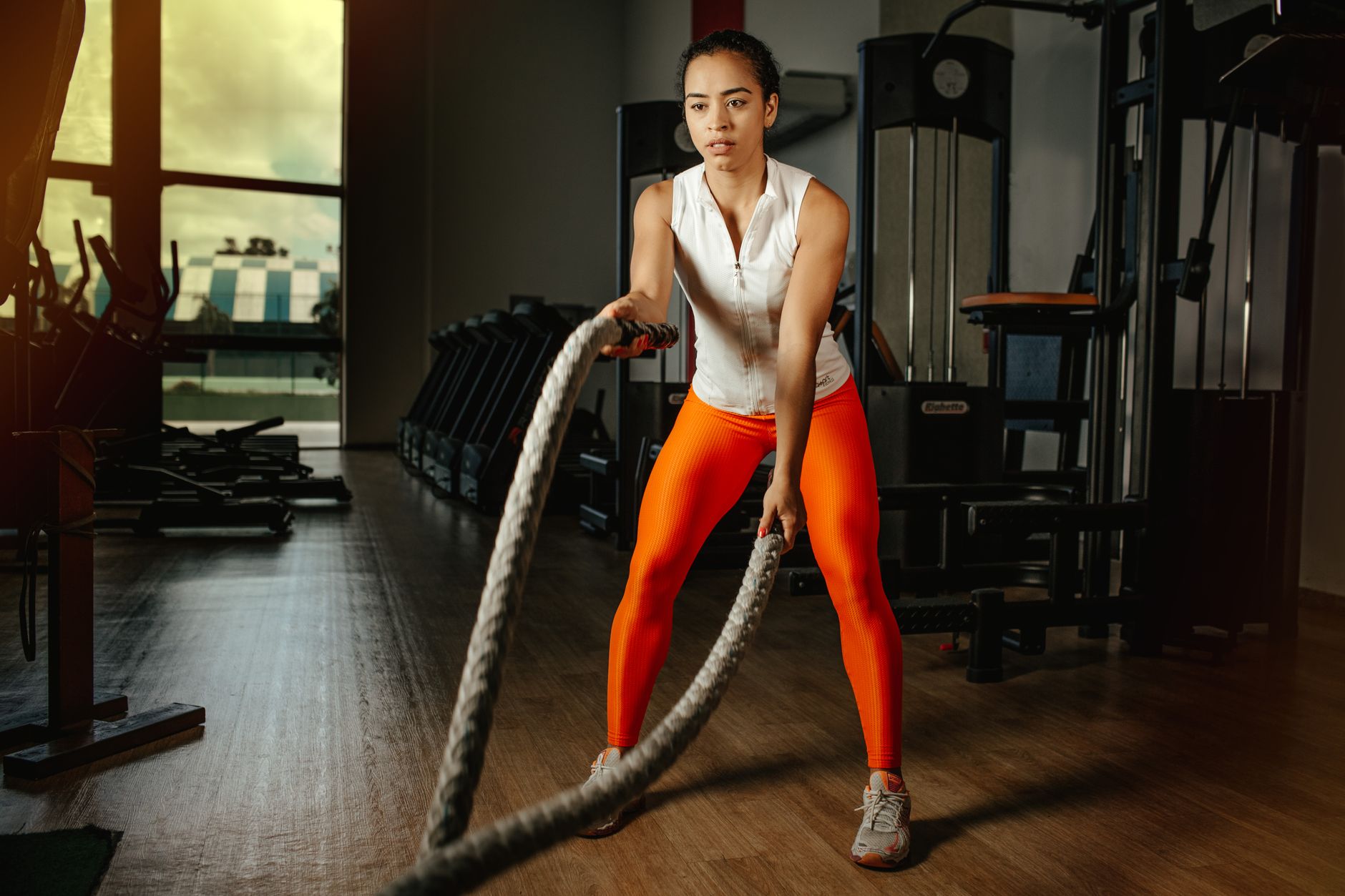
Three specs matter: diameter, length, and material. Get these right first, then compare prices.
Diameter
Start at 1.5 inches (38mm). This is the standard beginner diameter and what you will find in most commercial gyms. A 2-inch rope carries significantly more weight and demands more grip strength. It is the right progression after 6 to 8 weeks of consistent use with a 1.5-inch model, not the right starting point. The 2.5-inch ropes exist for competitive athletes with specific programming requirements. Most home gym users have no need for them.
Length
You need at least half the rope length in usable floor space from the anchor point. A 50-foot rope requires 25 feet of clearance; a 40-foot rope needs 20 feet; a 30-foot rope works in 15 feet. The practical guide:
- 30 feet (9m) — minimum option for small garages, covered patios, or living rooms with furniture moved aside
- 40 feet (12m) — the most versatile home choice; long enough for fluid waves, short enough for compact setups
- 50 feet (15m) — best for large garages, driveways, or outdoor use; produces the smoothest, most fluid wave motion
If you are unsure, measure the longest straight line in your usable training space, halve it, and that is the maximum rope length that fits.
Material
Poly dacron (a blend of polypropylene and dacron fibres) is the right choice for indoor training. It does not shed fibres onto your floor, handles moisture from sweat without degrading, and lasts longer under daily use than natural alternatives. Manila hemp ropes are heavier and look more traditional, but they shed fibres on hard floors and absorb moisture — fine outdoors, less so inside a garage or home gym.
Anchor options for home use
You do not need a wall mount to start. Loop the midpoint of the rope around a loaded power rack upright, a heavy kettlebell pressed against a wall, or a thick outdoor fence post. The anchor only has to resist horizontal pulling force, so any sufficiently heavy, stable object works for most exercises. A proper wall-mounted anchor strap with a D-ring (budget R200–R400) gives you more movement options and is worth fitting if you plan to train daily.
5 Essential Battle Rope Exercises

My honest opinion: most people buy a battle rope and use alternating waves for a month, then wonder why their progress stalls. Varying your exercises is how you keep pushing your conditioning. The movements below cover the full range of what a rope can do — start with alternating waves, add one new exercise per week.
| Exercise | Primary muscles | Key cue |
|---|---|---|
| Alternating waves | Shoulders, biceps, core | Drive from the shoulder, not the wrist. Hips slightly hinged. |
| Double waves | Shoulders, triceps, core | Both ropes move together. Demands more upper body power than alternating. |
| Rope slams | Shoulders, lats, core, glutes | Raise both ropes overhead, slam down hard. Hinge at the hips on the way down. |
| Lateral snakes | Core rotators, shoulders, forearms | Move ropes side to side in unison to create a snake pattern on the floor. |
| Hip-hinge pull | Posterior chain, core, arms | Stand further back, maintain a loaded hip hinge, and pull the rope in short bursts. |
Alternating waves are the right starting point. Add rope slams in week two — they push your heart rate into a higher range and train hip extension you do not get from wave patterns alone. The lateral snakes are the exercise most beginners find unexpectedly hard, because core rotation under fatigue is genuinely taxing.
Beginner Battle Rope Workout: 10 Minutes
Interval structure works best for battle rope training, especially at the start. The goal is to maintain quality of movement for the full work period, not to go as fast as possible until your form collapses. Start with a 1:2 work-to-rest ratio and tighten it as your conditioning improves.
| Round | Exercise | Work | Rest |
|---|---|---|---|
| 1 | Alternating waves | 20 sec | 40 sec |
| 2 | Alternating waves | 20 sec | 40 sec |
| 3 | Rope slams | 20 sec | 40 sec |
| 4 | Rope slams | 20 sec | 40 sec |
| 5 | Alternating waves | 20 sec | 40 sec |
| 6 | Double waves (or active rest) | 20 sec | 40 sec |
Total time: 10 minutes. Run this three times a week for the first two weeks. In weeks three and four, extend the work intervals to 30 seconds and cut rest to 30 seconds. From week five, introduce lateral snakes and the hip-hinge pull as substitutes for one wave round each. Your grip will fatigue before your cardiovascular system does for the first few sessions — that is normal, and grip strength adapts relatively quickly.
Browse conditioning equipment at Flexi Muscles — including battle ropes, gym accessories, and strength training kit.
Who Should Not Buy a Battle Rope

A battle rope is not the right buy for everyone. Skip it, or get specific advice first, if any of these apply:
- You have fewer than 15 feet of usable floor space — a 30-foot rope needs 15 feet of clear space from the anchor. If you cannot get that, the rope will bunch up and the wave pattern breaks down, which removes most of the benefit.
- You have an active shoulder or rotator cuff injury — overhead slamming movements load the shoulder through a full range of motion under fatigue. Low-level alternating waves may be manageable, but get clearance from a physiotherapist before starting. Do not assume low impact means low shoulder load, because it does not.
- Your primary goal is building muscle mass — battle ropes build muscular endurance and conditioning. There is no mechanism for progressive overload in the conventional sense, so hypertrophy gains are limited. Use resistance training as your foundation and add battle ropes for conditioning on top of it, not instead of it.
- You have nowhere to anchor it and will not improvise — a rope with no fixed point at the midpoint is not a training tool. If a wall mount is not possible and you are not willing to loop it around a power rack or heavy plate stack, the rope will not function as intended.
- You want a single piece of all-in-one cardio equipment — battle ropes are excellent for short, intense conditioning work but poor for steady-state cardio. If you want 40 minutes of low-intensity cardio, a stationary bike or rowing machine is a better match.
If none of those apply, a battle rope is one of the most space-efficient conditioning tools available. It stores in a 30cm coil on the floor and delivers a full-body session most people find genuinely hard to replicate with other equipment.
Looking for complementary training equipment? Check out resistance bands for mobility and accessory work, or the full cardio equipment range if steady-state conditioning is a bigger part of your programme.
Frequently Asked Questions
What is a battle rope good for?
Battle ropes are primarily a conditioning tool. They build cardiovascular fitness, muscular endurance in the shoulders and arms, and core stability — simultaneously, in a single movement. They are not a substitute for progressive resistance training if your goal is building muscle mass, but for improving work capacity and burning calories in a short session, they are highly effective.
How long should a beginner use a battle rope?
Start with 10 minutes using 20 seconds of work followed by 40 seconds of rest. This gives you six working sets with enough recovery to maintain form throughout. Build to 30-second work intervals after two to three weeks, then progress to 40-second intervals. Most conditioning benefit comes from sessions of 10 to 20 minutes, not longer ones with degraded technique.
What size battle rope should I get for home use?
A 1.5-inch diameter, 40-foot rope is the most practical choice for a home gym. The 1.5-inch thickness suits most hand sizes and strength levels. At 40 feet, you need at least 20 feet of clearance from the anchor point, which most garages, patios, and open living spaces can accommodate. A 30-foot rope works in tighter spaces but produces a shorter, less fluid wave pattern.
Do battle ropes build muscle or just cardio?
Both, to a degree. Battle rope training builds muscular endurance in the shoulders, arms, and core, and develops power through explosive movements like slams. It does not produce the same hypertrophy response as progressive resistance training because there is no mechanism for adding load incrementally. Use it for conditioning and as a complement to weight training, not as a replacement for it.
Can you use a battle rope without an anchor?
Yes, with improvisation. Loop the midpoint of the rope around a loaded power rack upright, a heavy kettlebell pressed against a wall, or a thick outdoor post. The anchor only needs to resist horizontal pulling force, so any stable, heavy object works for most exercises. A wall-mounted anchor strap with a D-ring gives you more movement options and is worth fitting if you plan to train daily.
Are battle ropes good for weight loss?
They can support weight loss as part of a calorie-controlled approach. Research records average heart rates of 82 to 89% of maximum during battle rope interval sessions — a range that burns calories efficiently. A 20-minute session can burn 250 to 400 calories depending on body weight and effort. The more relevant factor is consistency: most people stick with battle rope sessions because they are short, and short sessions you actually do outperform long sessions you skip.