

Ab Crunch Machine: How to Use One and What to Buy

article id="top">
By Flexi Muscles — 9 September 2026 · 5 min read
An ab crunch machine is a seated resistance machine that locks your hips and legs in place so your abs do the work of a crunch against a weight stack, rather than momentum carrying the movement. Fitbod's benchmark data, drawn from over 4.5 billion logged sets, puts a beginner working set at roughly 60lbs for 8 reps. It isolates the rectus abdominis better than a floor crunch, but it won't replace the balance and stability demands of an ab wheel or hanging leg raise.
Shop Strength Training Equipment at Flexi Muscles
What Is an Ab Crunch Machine?

You sit with your back against a padded support, elbows braced on the arm pads, and curl forward against a weight stack set by a pin. The seat and pivot point are usually adjustable so the arc lines up with your hips rather than your ribs.
A floor crunch relies on bodyweight and momentum, so form drifts as you fatigue. A machine keeps resistance and range of motion fixed, which is why gyms treat it as the entry point into loaded ab training, and why some abs cruncher units add a twist function for the obliques.
How to Use an Ab Crunch Machine
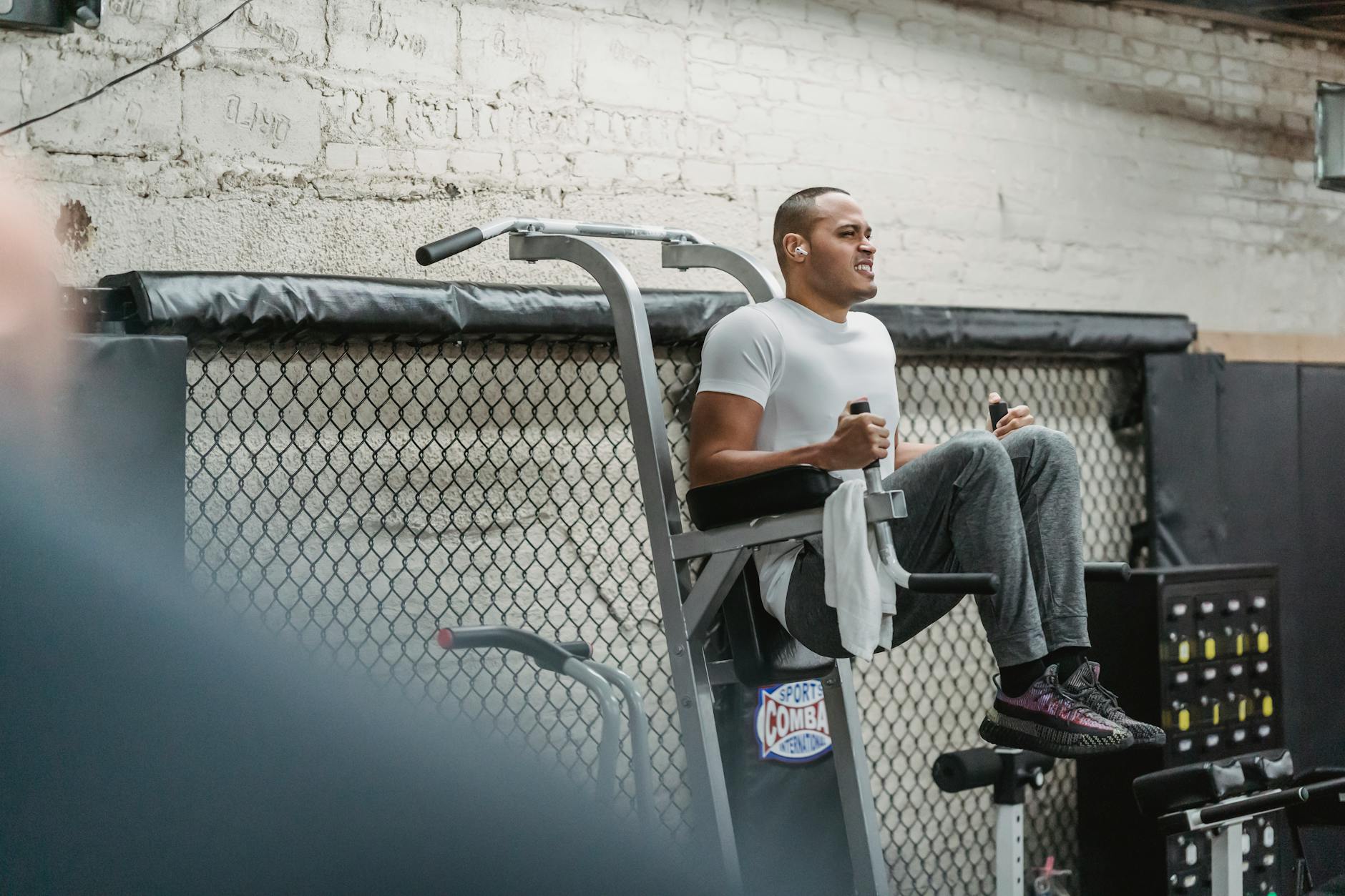
- Set the seat so the pivot lines up with your hips, not your lower back
- Rest your triceps on the pads rather than gripping the handles — pulling with your arms is the most common way people cheat the movement
- Exhale and curl your ribs toward your pelvis, leading with your abs, not your shoulders
- Pause at full contraction, then return under control instead of letting the stack drop
- Pick a weight that fails your form by rep 10-12, not one you can only manage for 3
Benefits and Real Benchmark Weights
Because the machine fixes your hips and legs, almost all the load lands on the rectus abdominis instead of leaking into the hip flexors, the main complaint about unsupported floor crunches done at volume. The backrest also supports your lower spine, which tends to reduce the strain some people feel on weighted floor work.
Fitbod's benchmark table, built from more than 4.5 billion logged sets across 1.1 million users, puts a beginner working set at 60lbs for 8 reps, an intermediate set at 75lbs, and an advanced set at 85lbs. My honest opinion: most people load the stack past what that data justifies, chasing a heavier plate instead of a cleaner rep — on a single-joint machine, the number on the stack matters less than most gym-goers think.
What to Look For When Buying One
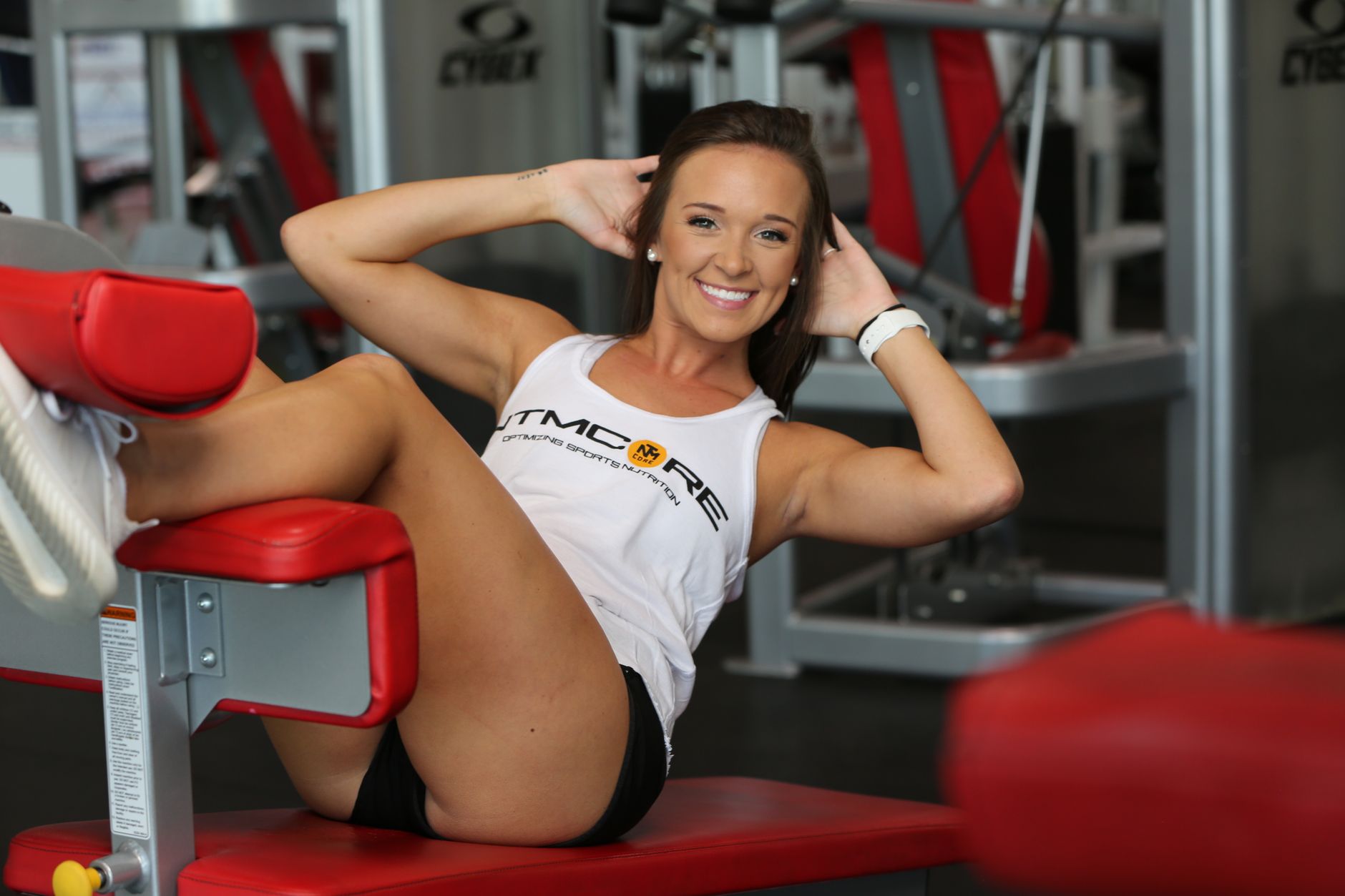
- Adjustable pivot and seat height — if the arc doesn't match your hips, the resistance curve feels wrong regardless of load
- Weight stack range — enough plates to run past 85-100lbs so you're not shopping again in six months
- Pad quality — dense, well-shaped padding matters here since your torso braces against it every rep
- Footprint — check the depth with the seat fully extended before assuming it fits a spare corner
Ab Crunch Machine vs Ab Wheel
An ab wheel trains anti-extension — your core resisting your spine being pulled into a stretch as you roll out — which recruits deeper stabilising muscles than a seated crunch, but progresses in steep jumps rather than small plate increments. A crunch machine trades that stability challenge for a fixed range and adjustable load, which suits beginners and anyone rebuilding core strength after injury. Own both and you cover flexion and anti-extension without either doing double duty.
Who Should Skip It
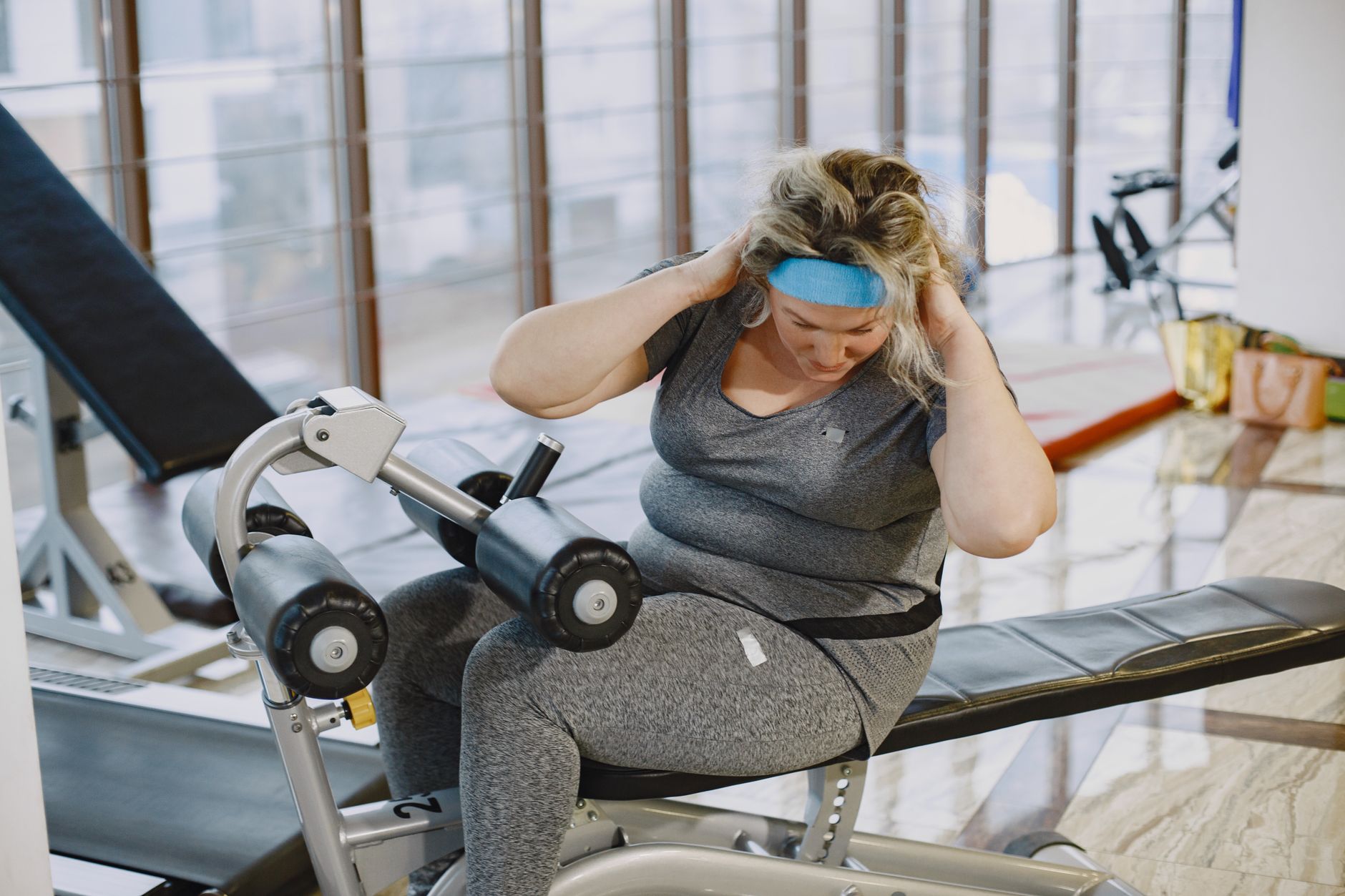
An ab crunch machine isn't the right buy for everyone.
- You have a lower-back injury — get clearance first; seated flexion can aggravate a disc issue even with good form
- You're chasing visible abs, not strength — definition comes down to body fat, which this machine does nothing to change
- You train at home with limited space and budget — an ab wheel or resistance bands cover most of the same effect for a fraction of the cost
If none of that applies, it's a solid, low-skill way to add progressive resistance to core training a floor crunch can't offer.
Rounding out a home gym setup? Browse lifting accessories at Flexi Muscles.
Frequently Asked Questions
What muscles does an ab crunch machine work?
Primarily the rectus abdominis, the muscle running down the front of your stomach, with secondary activation of the obliques as you curl forward. Because the machine locks your hips and legs in place, almost none of the work leaks into your hip flexors the way it does on an unsupported floor crunch.
How much weight should a beginner use on an ab crunch machine?
Fitbod's benchmark data, drawn from more than 4.5 billion logged sets, puts a beginner working set at around 60lbs for 8 reps, moving to roughly 75lbs at intermediate level and 85lbs once advanced. Treat these as a starting reference, not a target — form breaks down long before the weight stack runs out.
Is an ab crunch machine better than an ab wheel?
Neither is strictly better, they train different things. The machine isolates the rectus abdominis with adjustable resistance and near-zero balance demand, which suits beginners and controlled progressive overload. An ab wheel forces your core to stabilise your whole bodyweight through a longer lever, building more anti-extension strength but with a steeper learning curve.
Can an ab crunch machine cause back pain?
Used correctly it tends to reduce strain compared with floor crunches, since the backrest supports your spine and the pivot point is fixed. Pain usually shows up when the seat height puts the pivot above or below your hips, or when someone pulls with their arms instead of crunching through the torso.